Shopify Inventory Forecasting
Make Shopify inventory forecasting more actionable by using sales patterns and demand signals to anticipate future stock needs, improve buying decisions and reduce the risk of running out.
.avif)
How Fast-Growing Brands Use Prediko to Stay in Control
See how scaling D2C Shopify brands use Prediko to manage rapid growth with ease. We delve into real use cases with real results in this post.
By helping brands avoid stockouts and overstocks, Prediko has become a go-to tool for building leaner, more scalable operations.
How to Make Best Use of Prediko When Growing Quickly?
When growth kicks in, inventory is no longer just boxes on shelves. It's the difference between momentum and mayhem.
The faster you grow, the harder it gets to balance stockouts, overstocks, seasonal peaks, and supplier lead times.
This is where Prediko shifts from being an inventory management app to becoming a partner in your growth plans.
Let’s discover how:
01. Accurately predict demand with AI-powered forecasting
Most Shopify brands grow by riding waves of demand, be it seasonal spikes, new product launches, influencer marketing campaigns, or events such as Black Friday and Cyber Monday (BFCM).
Prediko’s algorithm for forecasting is trained on 25M+ SKUs across 15 industries, helps you anticipate demand with remarkable accuracy.
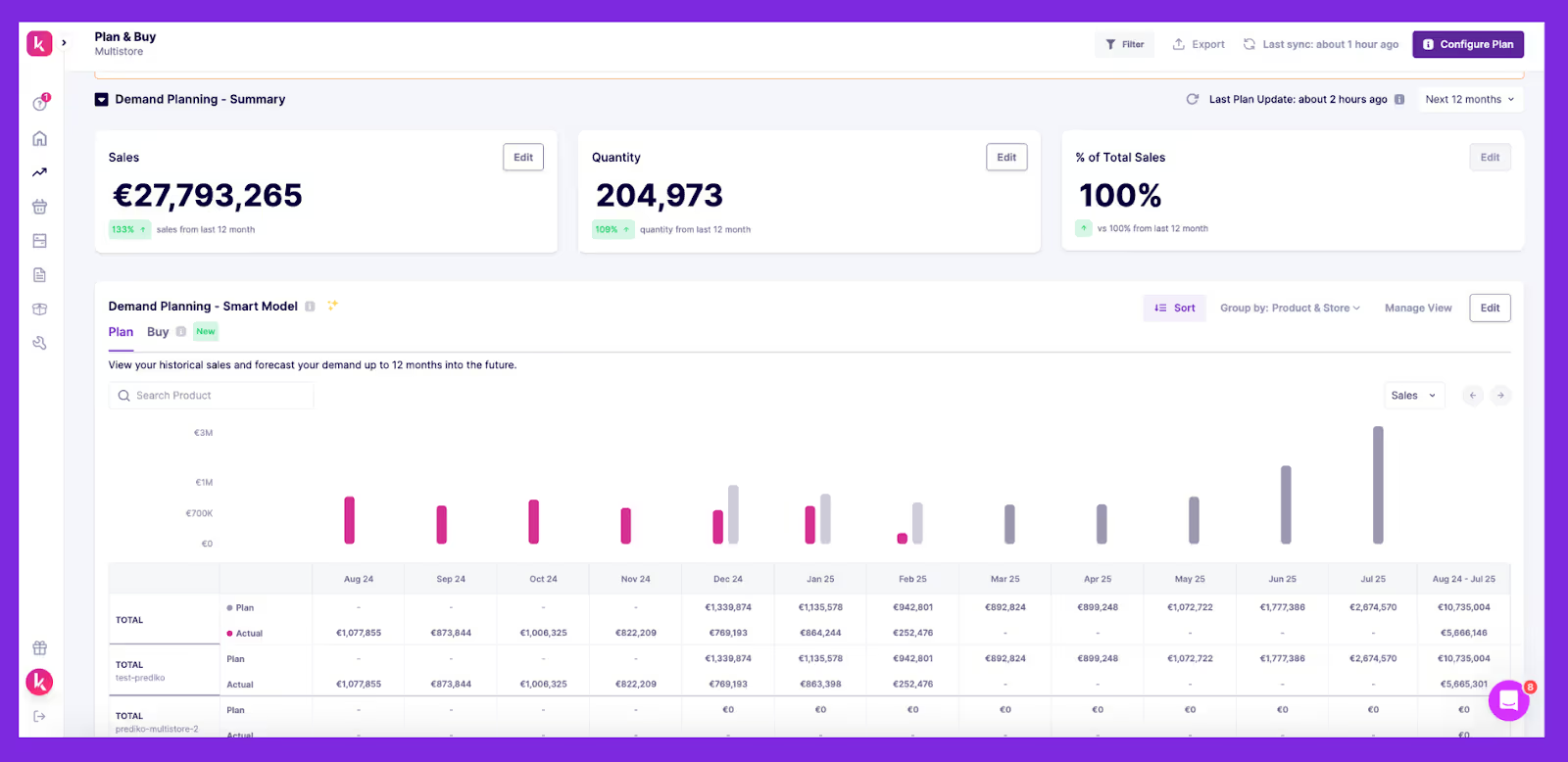
1. Plan for seasons and trends in advance
Take a skincare brand, for example. Every winter, sales of moisturizers triple. But instead of crunching numbers manually in Excel, Prediko’s AI-powered forecasting picks up on seasonality and product-level velocity automatically.
That same clarity is what drives growth for Madam Glam, a nail color brand. In beauty, success depends on timing and color seasonality.
With Prediko, they don’t just keep pace, they stay ahead by forecasting trending shades, planning launches around peak demand, and managing hundreds of SKUs with confidence so the right colors hit shelves at the right time.
Jewelry brand Kimaï has seen the same impact. Not every SKU moves the same way: their Oprah Eternity Ring peaks in wedding season, while the Wavy Ring sells steadily all year.
2. Forecast raw materials to fulfil the upcoming demand
If you are a brand with in-house production, demand doesn’t just affect finished products; it also extends to raw materials.
That’s why Bright Body, a skin, hair, and baby care brand, turned to Prediko. They had been “eyeballing and gut-checking raw materials and finished goods for years,” which often led to stockouts and delayed production runs.
With Prediko, Bright Body finds that setting production schedules and managing raw material orders is fast, easy, and reliable.
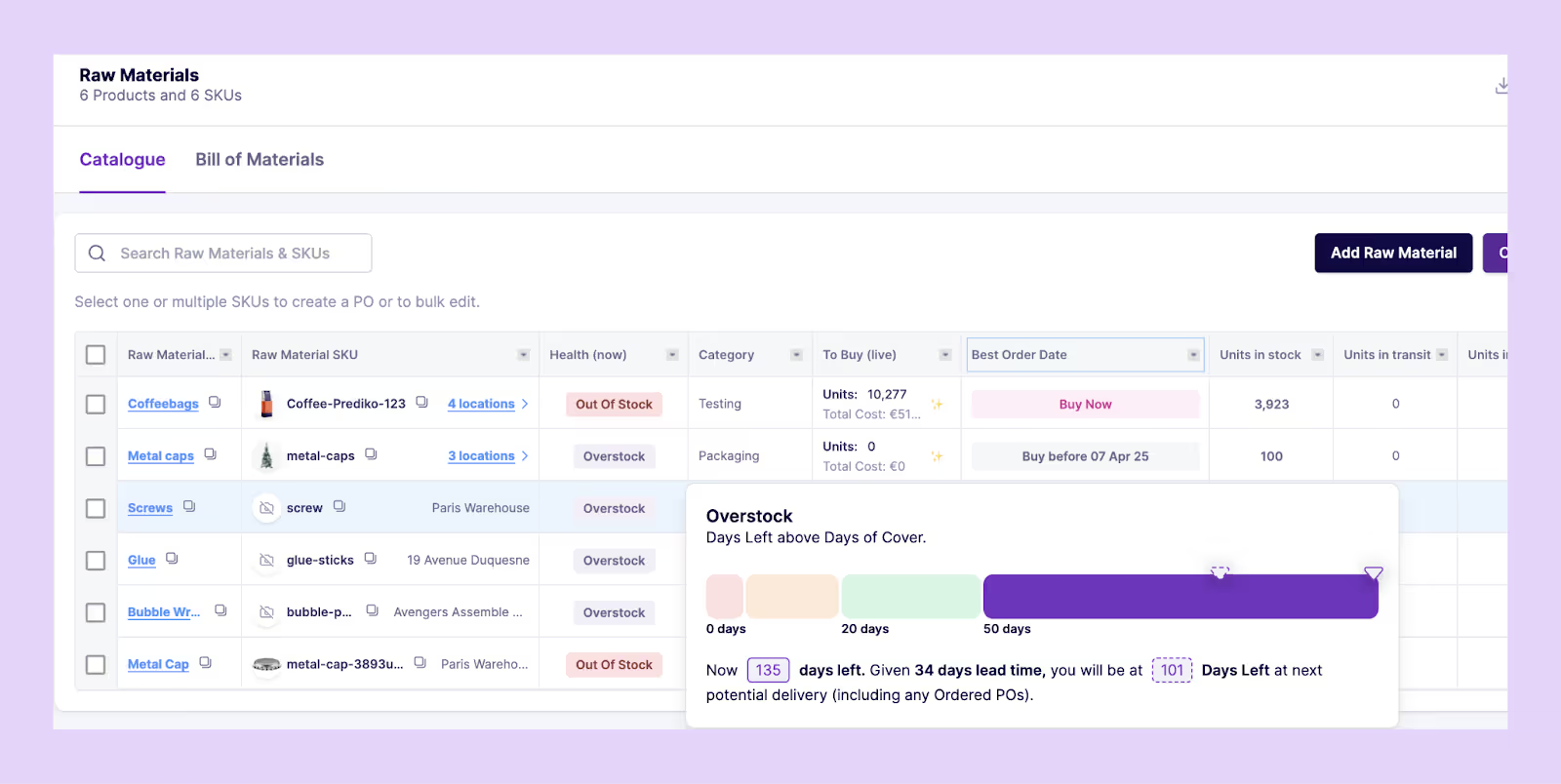
The platform has lifted a huge amount of decision fatigue for their team by bringing everything into one place (from Purchase and Production Orders to sales forecasts), so everyone can quickly check in on status and stay aligned.
02. Launch new products with confidence
When brands grow quickly, new product launches are a natural next step, but they are also make-or-break moments.
The biggest challenge most Shopify brands face is knowing how much to order due to the lack of sales data for new products: buy too much and you lock up cash in unsold stock, buy too little and you risk missing demand.
Madam Glam, known for launching fresh nail colors every month, uses Prediko to align raw material forecasts with production timelines, while easily planning new launches around peak demand.
Prediko’s forecasting AI makes the process predictable rather than stressful, spotting patterns and analyzing sales of similar products to generate precise inventory plans.
Raw materials and supplier schedules connect directly to those forecasts, reducing the risk of production delays.
Once the product is live, Prediko’s reports and analytics let you track early performance and sell-through rates, helping you adjust reorders quickly.
03. Save time by automating inventory management tasks
As volume picks up, what used to be a simple spreadsheet turns into hours of manual updates and supplier chasing.
That’s why Sozy, a fast-growing fashion brand, calls Prediko a lifesaver for their Shopify store. With consistently accurate forecasts, automated stock alerts, and real-time Shopify sync, they no longer worry about juggling spreadsheets.
Their team can trust Prediko to keep the right products in stock.
And it’s not just Sozy. With these features, Prediko takes repetitive tasks off your plate as well, giving you back valuable time to focus on growth.
- AI Buying Plan for accurate purchasing decisions: Prediko’s AI also lays out a buying plan for you that uses demand forecasts to generate precise purchase recommendations on what products to stock, when to buy, and in what quantities.
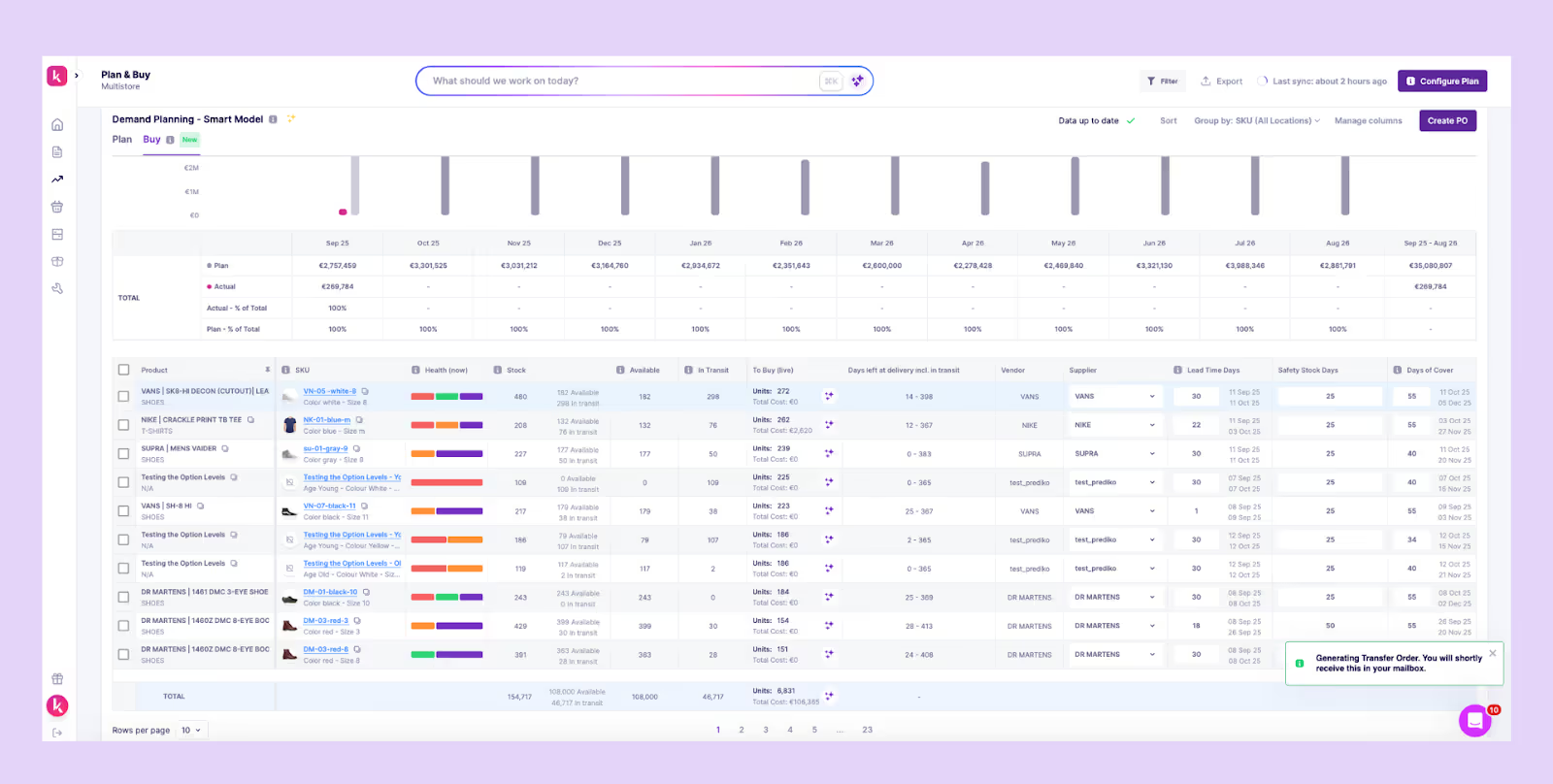
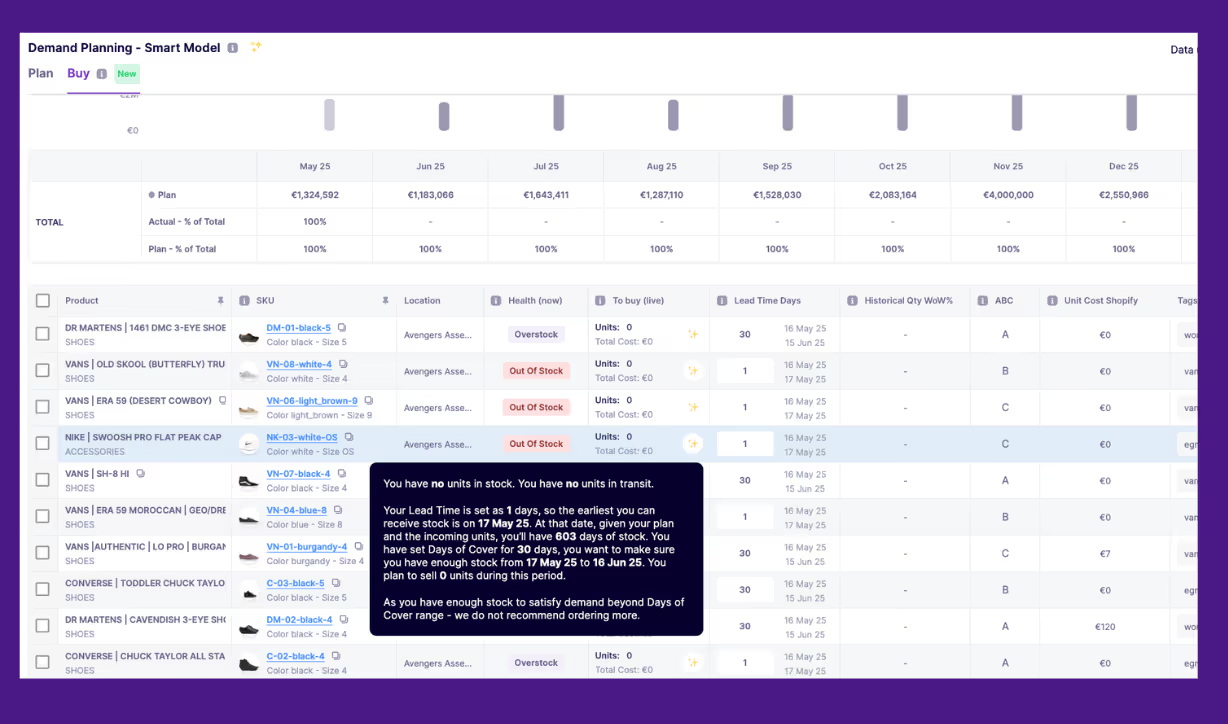
- Automated replenishment: The app automatically tracks stock levels and sends low-stock alerts, accounting for safety stock and lead time before you run out.
This way, you can stay ahead of demand spikes and avoid costly stockouts.
- Real-time inventory sync with Shopify: Prediko integrates natively with Shopify, syncing sales and stock movements in real time.
Every order automatically updates your inventory records. No spreadsheets, no manual updates, just accurate data you can trust.
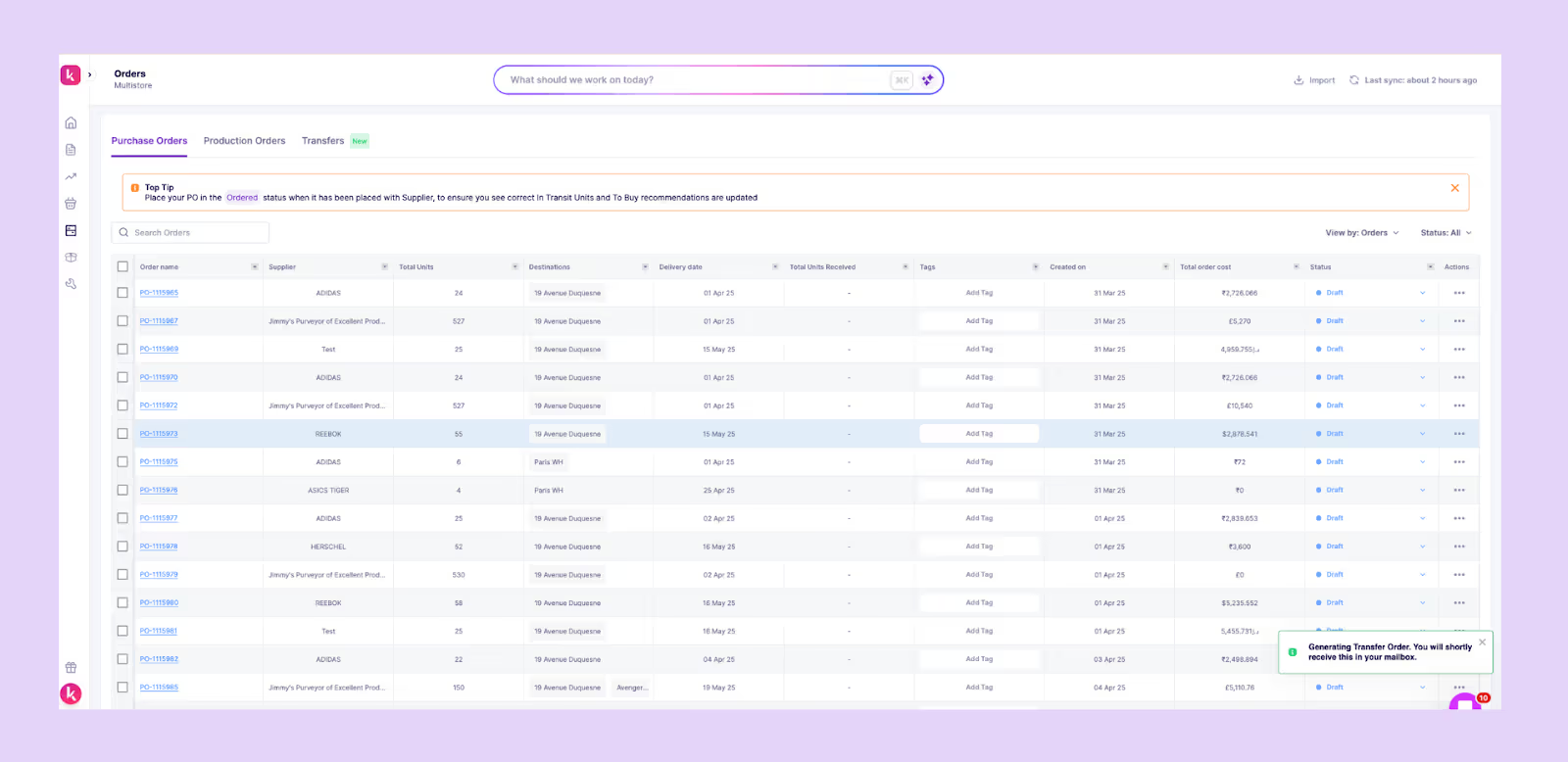
- In-built PO management: Once you know what to reorder, Prediko lets you create, track, and send purchase orders to your suppliers directly from the app in just a few clicks.
For example, you can instantly generate a PO for 5000+ units with supplier details pre-filled, saving hours of admin work and reducing errors.
04. Centralize multi-warehouse and location tracking
As brands grow, expanding across channels, stores, and warehouses is inevitable.
But with that growth often comes scattered stock, endless data reconciliation, and the risk of overstocking in one place while running dry in another.
Prediko solves this with
- Multi-store and warehouse tracking: You get one dashboard to monitor stock across all Shopify stores and warehouses.
Create demand plans and inventory insights by location or in a consolidated view to spot slow movers, prevent duplication, and keep every site stocked correctly.
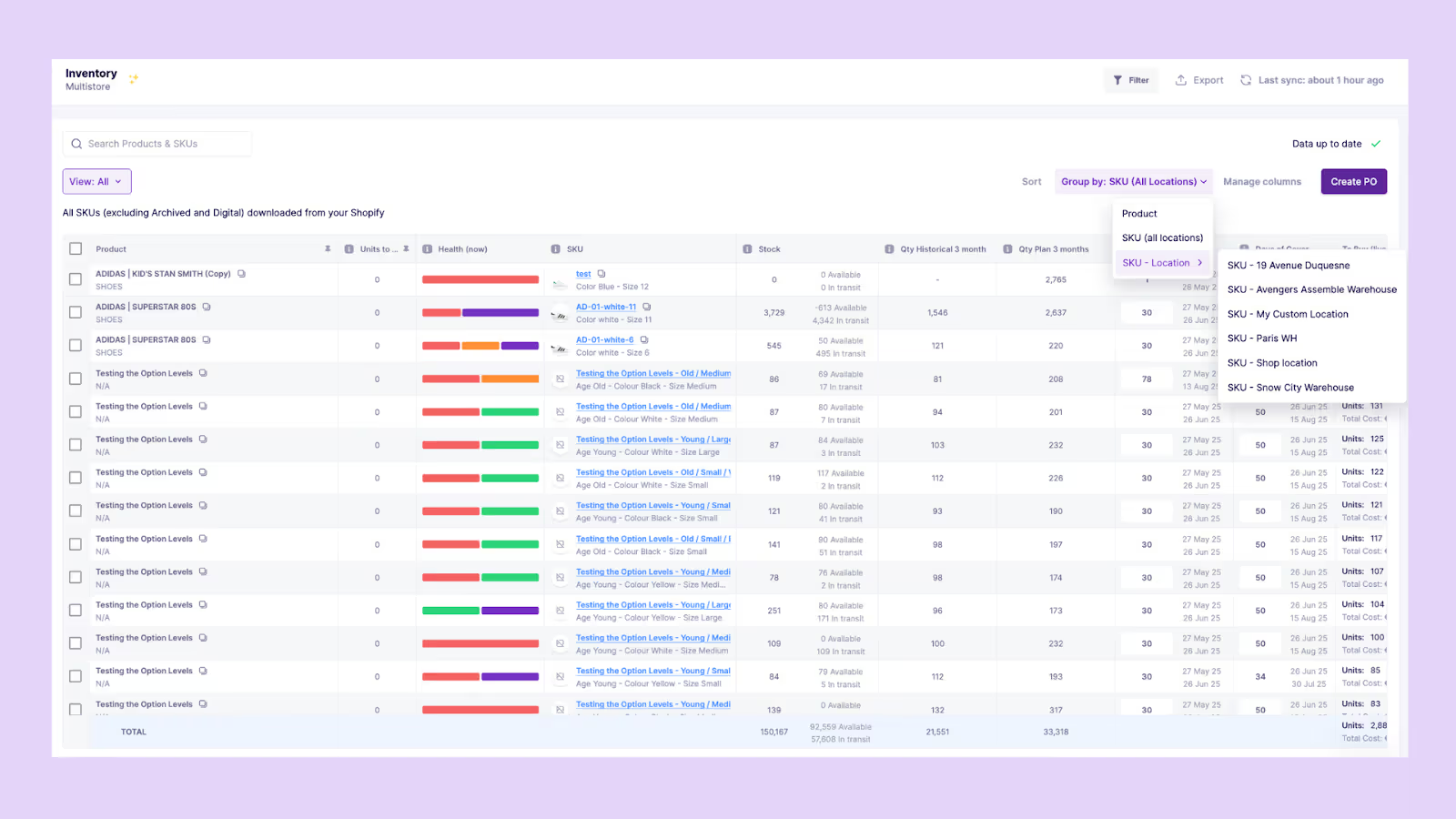
- Inventory transfers to shift stock where needed: Demand rarely spreads evenly across locations.
Prediko makes it easy to transfer inventory between warehouses or stores, so you can balance stock without overbuying. This way, slow-moving items don’t sit idle in one place while another location runs dry.

Zelva, the headwear brand, has seen the impact of that flexibility firsthand. They highlight how easy it is to set up different locations, group them, and choose which to use, giving their team full visibility and control as they scale across multiple sales channels.
05. Make smarter business decisions using reports & analytics
As your Shopify brand grows, decisions get harder. You’re juggling multiple products, warehouses, and channels.
Yet most teams are still buried in spreadsheets, trying to stitch together numbers just to answer simple questions like “What’s selling fastest?” or “Where are we at risk of stockouts?”.
Azio Beauty faced the same challenge before turning to Prediko. With its reporting, they’ve been able to stay ahead of the curve, ensuring products are always available when customers need them.
Prediko cuts through the data overload and fragmentation by offering
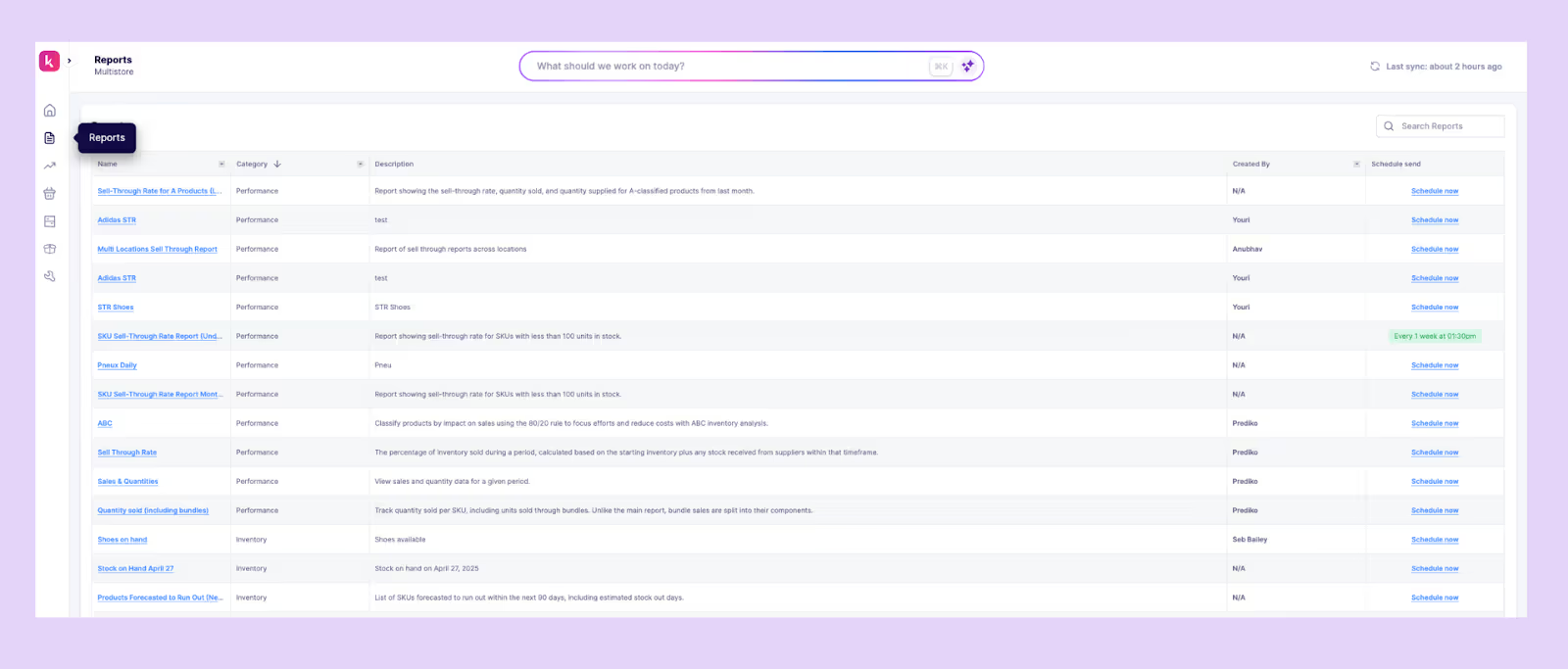
- Pre-built 20+ inventory template reports: Prediko removes the manual work of analysis with 20+ ready-to-use inventory and sales reports.
From SKU-level performance to stockout costs and turnover rates, you get the answers you need in a few clicks, no endless spreadsheet scrolls.
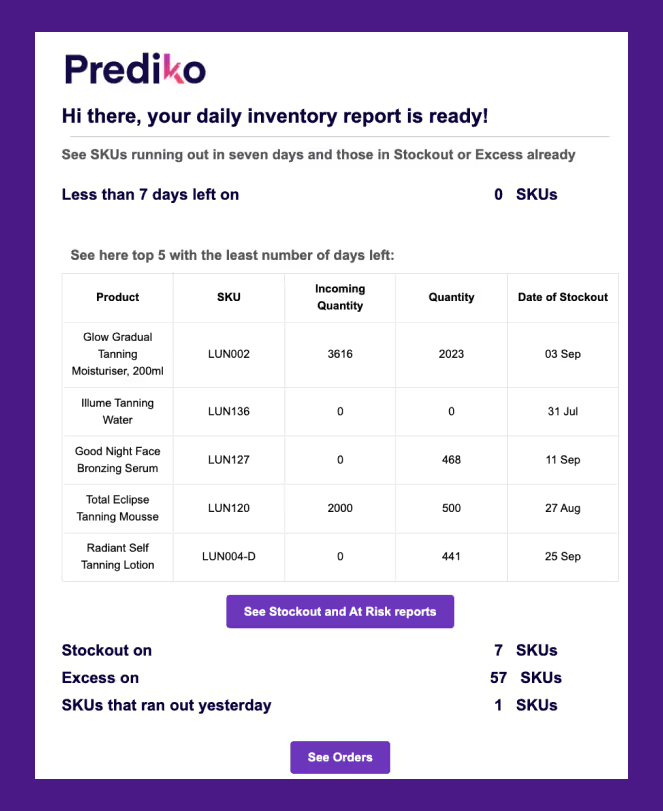
- Daily and weekly summaries: Instead of waiting for end-of-month reports from a teammate, Prediko delivers daily and weekly summaries straight to your email and dashboard so that you can spot trends early, course-correct quickly, and keep your growth sustainable.
Eleat, the high-protein breakfast brand, has also found that Prediko goes beyond simple tracking.
What really stands out for their team is the advanced analytics – Clear insights into trends, demand patterns, and performance metrics.
With this visibility, the team at Eleat can move past gut feel and make confident, data-driven decisions that keep their fast-growing brand on track.
Lean Everything About Shopify Inventory Forecasting For Beauty & Cosmetics Brands
06. Scale Operations with Prediko’s Integrations and AI agent
When brands start scaling, complexity multiplies. More channels, more suppliers, and more data often mean more tools to manage, and without the right systems, teams spend hours switching between platforms.
1. 100+ integrations with ecommerce tools, WMS, 3PLs
Prediko connects seamlessly with 100+ apps and platforms, from ecommerce tools to 3PLs and WMS.
This keeps your inventory, sales, and fulfilment data flowing automatically across systems, so nothing gets lost in silos and your team spends less time on manual updates.
With accurate data across the flow, everyone starts making educated decisions.
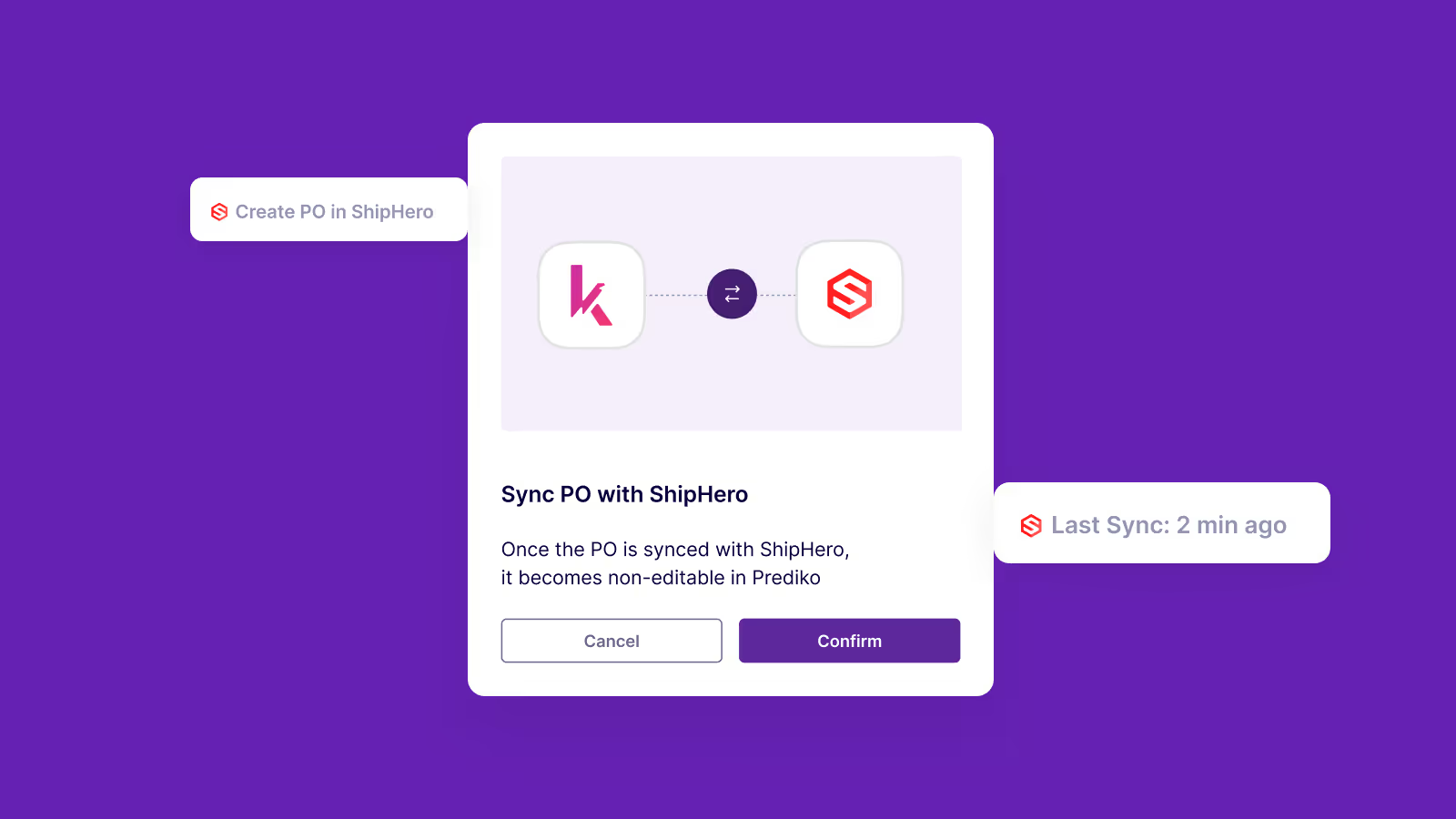
For example, with ShipHero’s Sell Ahead, instead of waiting for stock to arrive at your warehouse, you can sell units allocated from incoming purchase orders right away.
Prediko syncs this directly from ShipHero so your Shopify “Available” inventory reflects what’s already on the way.
It’s a powerful way to capture demand during high-volume events like Black Friday Cyber Monday.
We’re also deepening integrations on the support side. For example, with Gorgias, brands using Prediko have improved inventory ticket response times by up to 50%.
2. Inventory AI Agent
AI agents are reshaping how teams work. Unlike traditional chatbots that only answer questions, agents can actually take action: they understand context, remember sessions, and execute tasks on your behalf.
Think of them as digital teammates that carry out workflows instead of just surfacing information.
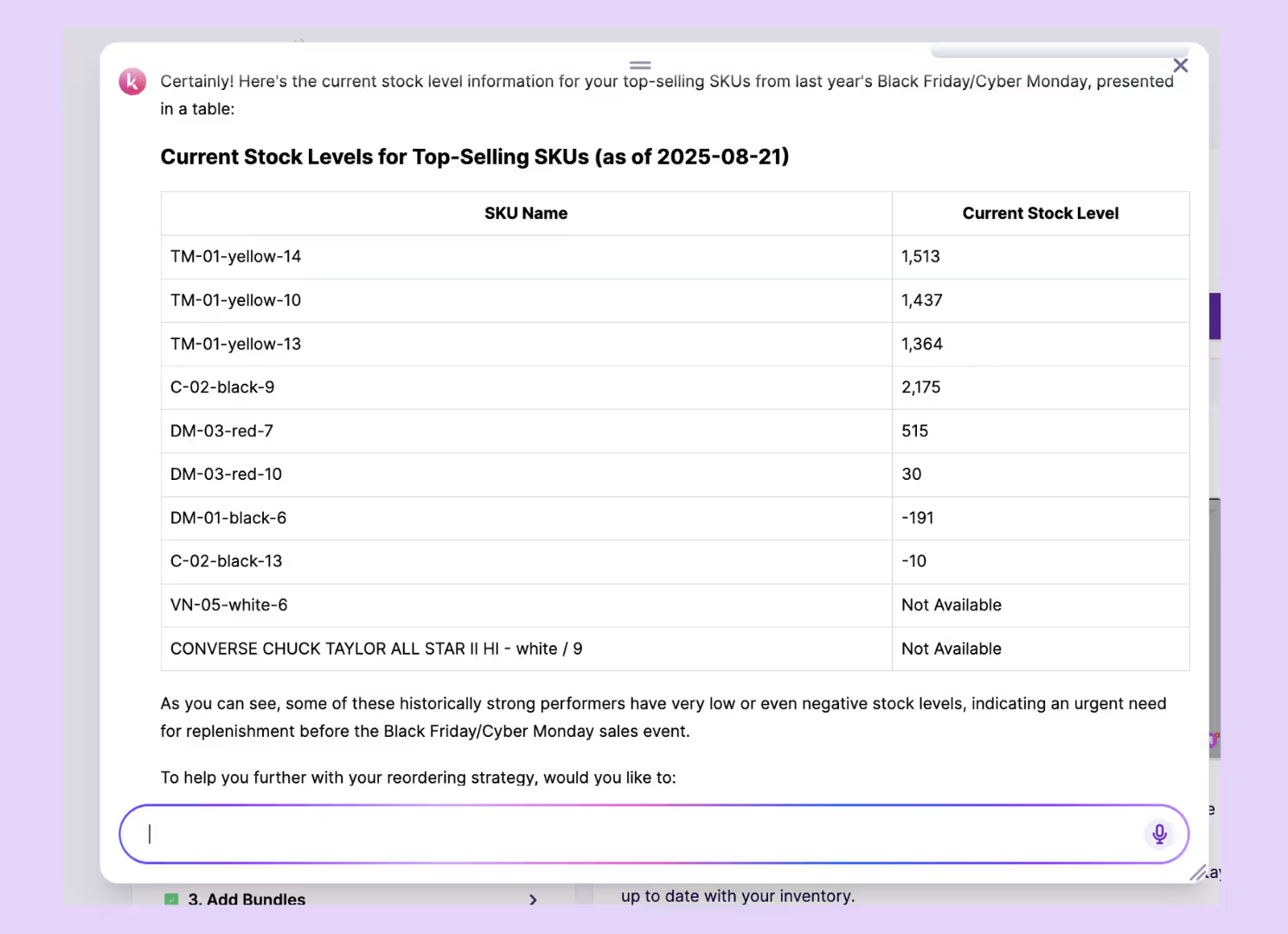
Prediko offers an AI Agent as well that helps you manage inventory at scale through simple natural language commands.
Instead of navigating across multiple screens, you can open or schedule reports, refresh demand plans, draft purchase orders, or update delivery dates directly from an in-app chat.
The agent has session memory and security controls, and shares page-aware suggestions that adapt to where you are in the app, making workflows fast and intuitive.
It also links directly to created reports or POs within the chat, so you can move from insight to action instantly.
Fast-Growing Brands like Madam Glam Choose Prediko
We’ve explored how Prediko’s features are supporting realities of fast-moving brands; the highs of rapid growth and inevitable dips along the way.
Shopify brands such as Baie Botanique, Love + War, and Oyo Skincare are already turning inventory management into a competitive advantage with Prediko, and you can too.
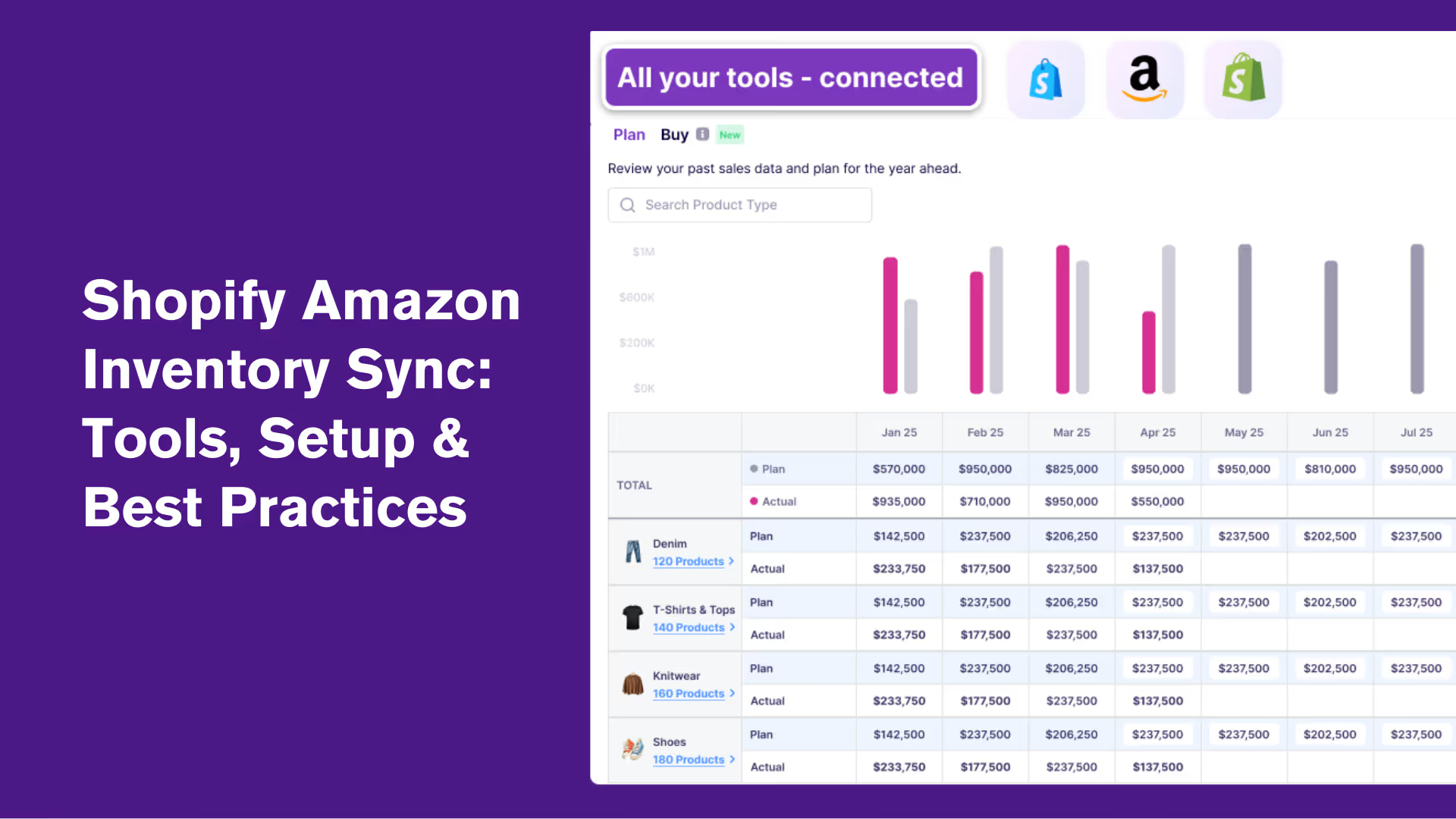
How to Do Amazon Shopify Inventory Sync: Step-by-Step Guide
Looking for an easy way to manage Amazon Shopify Inventory sync? Follow this step-by-step guide to keep stock updated in real-time across both platforms.
A customer finds your product on Amazon, adds to their cart, and checks out.
At the same time, another shopper buys the exact same item from your Shopify store. But only one unit was left in stock.
Now you’re forced to cancel the order, issue a refund, and risk a negative review that damages your seller rating. All because your systems weren’t in sync.
If you, like many other multichannel sellers, are tired of dealing with stock mismatches, canceled orders, and unhappy customers, this is for you.
We break down why you need Amazon Shopify inventory sync, the steps to set it up correctly, and the best practices that keep your operations running smoothly.
Why Amazon Shopify Inventory Sync Matters
Selling on both Amazon and Shopify opens up more opportunities, but it also makes stock management more complex. Here’s how:
1. Overselling risk
Imagine you have three units of a trending product. A burst of Amazon sales wipes out your stock, but Shopify still shows it as available.
Multiple customers place orders you can’t fulfill, and now you’re facing an avoidable mess.
When stock levels are not updated across platforms in real time, the same product can sell twice before it’s marked as unavailable. This can lead to:
- Order cancellations that frustrate buyers and make them less likely to purchase from you again.
- Refund processing that ties up time and resources, which could be spent fulfilling valid orders.
- Negative reviews that damage your seller ratings and lower your visibility on both platforms.
To avoid this, you need an automated inventory sync so that both platforms update instantly after every sale.
It ensures you only sell products that are actually in stock, protecting your reputation and keeping customers happy.
2. Customer dissatisfaction
Unsynced inventory across channels can turn an eager buyer into a lost customer. They place an order expecting quick delivery, only to find out days later that the product is not available.
Research from PwC shows that 32% of customers stop doing business with a brand they love after just one such bad experience.
Real-time, centralized inventory visibility allows customers to only purchase what is available. This helps you deliver on expectations, maintain positive ratings, and encourage repeat business.
3. Operational delays
Inventory errors do not just cause lost sales. They slow down everything behind the scenes.
Teams end up pausing fulfillment to sort through incorrect orders, verify stock, and contact customers about changes. Every extra step adds hours or even days to delivery timelines.
During busy periods like promotions or Black Friday, these delays can pile up quickly.
A single stock mismatch can disrupt multiple orders and push shipping back for dozens of customers.
4. Efficiency gains from fewer manual updates
Every order that comes in on Shopify or Amazon needs an inventory adjustment. Without automation, that means logging into both platforms and updating stock by hand, over and over again.
It’s slow, repetitive work, and even a single missed change can create a mismatch that leads to bigger problems later.
With real-time sync, stock updates happen automatically the moment a sale is made. Your team no longer spends hours chasing numbers, and you reduce the risk of human error entirely.
The time saved can be used for marketing, launching new products, or improving customer service.
Methods for Amazon Shopify Inventory Sync: Official Integrations and Beyond
Shopify offers official integrations and apps that connect directly with Amazon, covering everything from product listings to fulfillment management. Here are the key ones.
1. Marketplace connect
Marketplace Connect links your Shopify catalog to Amazon, allowing you to manage listings and pricing from one place. It provides a two-way sync of inventory and orders.
When a sale happens on Amazon, the product count is updated in Shopify automatically, and orders placed on Amazon appear in your Shopify admin for processing.
2. Amazon MCF app
Next is Amazon Multi-Channel Fulfillment (MCF) that connects Shopify orders directly to Amazon’s logistics network.
With this integration, your inventory is stored in Amazon’s fulfillment centers, and when an order is placed on Shopify, it is automatically sent to Amazon for picking, packing, and shipping.
3. CED Commerce
CED Commerce is an integration app that connects Shopify with Amazon while giving merchants more flexibility than Shopify’s native integrations.
Beyond syncing inventory and orders, it supports bulk product uploads, advanced pricing rules, and multi-account management.
For brands selling on multiple Amazon marketplaces (like US, UK, or Canada), the app helps centralize operations inside Shopify, making it easier to stay in sync and scale globally.
📢 Coming soon: Prediko is rolling out native integrations that go beyond Shopify, direct connections to WMS platforms like ShipHero, with sales channels like Amazon and other marketplaces so you get one synced view of stock, sales, and product data, not just inventory counts.
Third‑Party Amazon Shopify Inventory Sync Tools
Syncing inventory across Amazon and Shopify requires more than just built-in integrations.
Many merchants rely on third-party tools to handle complex workflows, such as managing large catalogs, syncing across multiple warehouses, or reconciling high order volumes during sales spikes.
These apps go beyond the basics by offering features like
- Real-time sync across multiple marketplaces and sales channels
- Advanced channel-wise inventory forecasting to predict demand and prevent stockouts
- Bulk listing and catalog management for larger product ranges
- Multi-warehouse support to allocate inventory across different fulfillment centers
- Granular analytics and reporting for smarter decision-making
See a complete breakdown of all the available Shopify sync apps.
How Prediko supports Amazon Shopify inventory sync
If you want a tool that not only syncs inventory but also helps you plan and manage stock across both platforms, Prediko should be your choice. To connect your Amazon store and configure the sync, follow the Prediko Amazon integration guide.
For now, to make Prediko work with Amazon and other marketplaces, you’ll first need to route those orders into Shopify using an app like CED Commerce.
CED Commerce centralizes your Amazon inventory and sales data in Shopify, allowing Prediko to capture the full picture. Once that’s in place, here’s how Prediko supports you.
- Real-time multi-location inventory tracking: Prediko continuously monitors inventory across Shopify and Amazon, updating quantities automatically whenever a sale is made. Even if you store stock across multiple warehouses or fulfillment centers, Prediko keeps both platforms aligned so product availability is always accurate.

- AI demand planning: Selling on both Amazon and Shopify can make forecasting demand tricky. Prediko analyzes your historical data, seasonality, and sales patterns across both platforms to predict how much stock you’ll need.

- AI supply planning: When Amazon and Shopify orders come in at the same time, Prediko creates smart buying plans that combine demand from both channels. It tells you what to order, when to order, and in what quantities, keeping your supply chain balanced.

- Purchase order management: Prediko makes replenishment easier by automating purchase orders linked directly to your Amazon and Shopify demand. Create, update, and track POs automatically, including supplier lead times and delivery schedules. You can also assign multiple suppliers to the same SKU and split POs between them.

- Analytics and reports: Prediko provides 20+ report templates designed for multichannel sellers. You can track Amazon and Shopify sales trends, monitor inventory turnover, and set low-stock alerts. This visibility helps you spot sync issues quickly and make decisions before they impact your customers.

Note: Prediko will soon launch native integration with channels like Amazon and TikTok Shop, as well as WMS platforms like ShipHero. This means you’ll be able to view, forecast, and report on inventory across all your channels in one place.
If TikTok is one of those channels, here’s how to sync Shopify products to TikTok Shop while keeping product data, variants, inventory, and orders aligned.
Step‑by‑Step Setup for Amazon Shopify Inventory Sync
To set up inventory sync, you’ll need to meet a few key requirements and follow the steps below to ensure the process runs smoothly and error-free
1. Set up your Amazon Pro Seller account
To sync inventory between Shopify and Amazon, you must have an Amazon Professional Seller account. The Individual Seller plan does not allow access to the necessary APIs that make real-time updates possible.
If you already have an Individual account, log in to Amazon Seller Central and upgrade to the Professional plan. This requires a monthly subscription fee but gives you the technical permissions needed for integration.
Once your Professional account is active
- See if your business information, bank details, and tax information are fully verified in Seller Central
- Check that your products comply with Amazon’s listing requirements, including UPC/EAN/ISBN identifiers
- Ensure you have access to the Marketplace Web Service (MWS) APIs or the newer Selling Partner API (SP-API), since these are what sync apps use to exchange data between Amazon and Shopify.
Completing this step makes your Amazon account eligible for integration so that inventory updates can flow through without disruptions.
2. Clean up product data in Shopify
Before connecting Shopify to Amazon, your product data needs to be standardized. The sync relies on identifiers like SKUs, variants, and barcodes to match products between platforms.
If these are inconsistent, the integration will fail or create duplicate listings.
Key actions to take
- Verify SKU naming: Every product and variant in Shopify must have a unique SKU. Use the same SKU in Amazon so the system can map inventory correctly. Even small differences (extra characters, dashes, or spaces) will break the sync.
For example, if a SKU in Shopify is “TSHIRT-BLK-M” but on Amazon it is “TSHIRT-BLK-M-01,” the two will be treated as separate products. - Check variants: Make sure all size, color, or style variants are set up properly in Shopify. Each variant should have its own SKU and barcode.
- Add valid barcodes: Assign UPC, EAN, or ISBN codes where required. Amazon uses these to validate listings, and many sync apps need them to connect products.
Cleaning up product data at this stage prevents mismatched inventory counts later. A short audit now saves hours of fixing errors after the sync is live.
3. Install and configure the sync app or integration
Once your product data is cleaned up, the next step is to set up the integration between Shopify and Amazon. Shopify’s official options are Marketplace Connect and the Amazon MCF app, but you can also use third-party apps like CED Commerce if they better fit your workflow.
To install
- Go to Shopify App Store and search for the app you want to use (e.g., “CED Commerce”, “Marketplace Connect”, or “Amazon MCF”)
- Click Add app and follow the prompts to install it in your Shopify admin
- Connect your Amazon Professional Seller account by logging in when prompted and granting the required API permissions
After installation, configure the app:
- Map your SKUs so the system knows which Shopify products correspond to which Amazon listings
- Set pricing and listing rules if you want Amazon prices to match or differ from Shopify
- Enable order sync so sales on Amazon flow into Shopify for centralized fulfillment tracking
Proper configuration ensures the two platforms exchange accurate product, price, and order data without duplication or mismatches.
4. Enable inventory tracking and sync rules
Inventory tracking must be turned on in Shopify for every product you plan to sync. Without tracking turned on, Shopify cannot monitor stock levels or send updates when items are sold.
Next, configure sync rules inside your app. Decide how frequently inventory should be updated, whether prices will be synced, and how orders from Amazon should appear in Shopify. Setting these rules clearly avoids surprises later.
5. Add buffer stock logic to reduce overselling
Even with real-time syncing, delays of a few minutes can cause overselling during peak traffic. To protect against this, set up a buffer stock.
This means reserving a small portion of inventory (e.g., 2–5 units) that will not be published to either channel.
For example, if you have 50 units, you might only list 47 as available. Most integration apps include buffer stock settings you can enable.
This small safeguard gives you room to handle sync delays, cancellations, or last-minute adjustments without letting customers order products you can’t ship.
6. Test sync with manual changes and order simulations
Before going live, test your sync thoroughly. Start by adjusting stock levels in Shopify and confirm that the changes appear correctly in Amazon.
Then do the same in reverse. Next, place test orders from both platforms and verify that inventory updates accurately and orders flow into Shopify without errors.
Check fulfillment workflows so that Amazon or your chosen method processes them correctly.
Testing helps catch SKU mismatches, sync delays, or incorrect rules before they affect real customers. A short testing phase builds confidence in the system once it’s live.
How to Avoid Shopify Amazon Inventory Sync Problems in 2026?
By now, you’ve learned how to set up Shopify Amazon inventory sync. Once the system is running, it’s important to follow a few best practices to prevent any disruptions.
1. Always enable "Track quantity" for products
Inventory sync will not work if “Track quantity” is turned off in Shopify. Without it, stock levels cannot be monitored or updated automatically, which means sales on Amazon will not reduce counts in Shopify.
Go into each product’s settings and confirm that “Track quantity” is selected for all synced products. It’s a small step, but forgetting it is one of the most common causes of sync failures.
Making it part of your product setup routine ensures that every new listing is always connected to real-time inventory updates.
2. Maintain buffer stock and monitor sync logs
Even with automated syncing, there can be slight delays during high traffic periods. To protect against overselling, maintain a small buffer stock.
This means holding back a few units from being listed so you can handle last-minute orders or sync lags.
Most apps allow you to set buffer stock rules.
In addition, make a habit of checking sync logs in your app’s dashboard. Logs show when updates are pushed and flag any failed attempts.
Regular monitoring helps you catch problems before they reach customers, giving you time to fix errors without impacting orders.
3. Audit SKUs regularly for mismatches
SKU mismatches are one of the most common reasons inventory sync breaks down. A small difference, such as an added dash, space, or character, can cause Shopify and Amazon to treat two listings as separate products.
To prevent this, schedule regular SKU audits. At least once a month, compare your product catalog in Shopify with your Amazon listings and look for discrepancies.
Correcting these early avoids bigger issues like duplicate listings or untracked stock. A simple, ongoing SKU audit process keeps your data consistent, and your sync continues working as expected.
4. Check sync latency and accuracy periodically
Different apps push updates at different speeds, and performance can vary depending on sales volume. To avoid surprises, test your system regularly.
Make a small stock adjustment in Shopify and track how long it takes to appear in Amazon, and then do the reverse.
Periodic checks confirm that your sync is not only working but also updating quickly enough to meet customer demand.
If latency is too high, you may need to adjust your app’s settings or switch providers. Monitoring accuracy and speed gives you confidence that your inventory is always aligned.
Read More: Best Amazon Inventory Forecasting Tools for Amazon Sellers
Start Multichannel Selling with Amazon Shopify Inventory Sync
Keeping your Shopify and Amazon inventory in sync is crucial for preventing overselling, reducing customer frustration, and eliminating manual fixes. This way, you can maintain accurate stock counts, faster fulfillment, and smoother operations.
This guide walks through everything you need to know about Amazon Shopify Inventory Sync, from account setup and product data cleanup to installing integrations, enabling sync rules, and testing your system.
With the right process and tools in place, inventory sync becomes the backbone of multichannel growth.
Prediko helps Shopify brands gain complete control and visibility over multi-channel inventory, so you spend less time troubleshooting and more time scaling your business.
Start your 14-day free trial and see how Prediko can help you with multi-channel inventory management.
Frequently Asked Questions (FAQs)
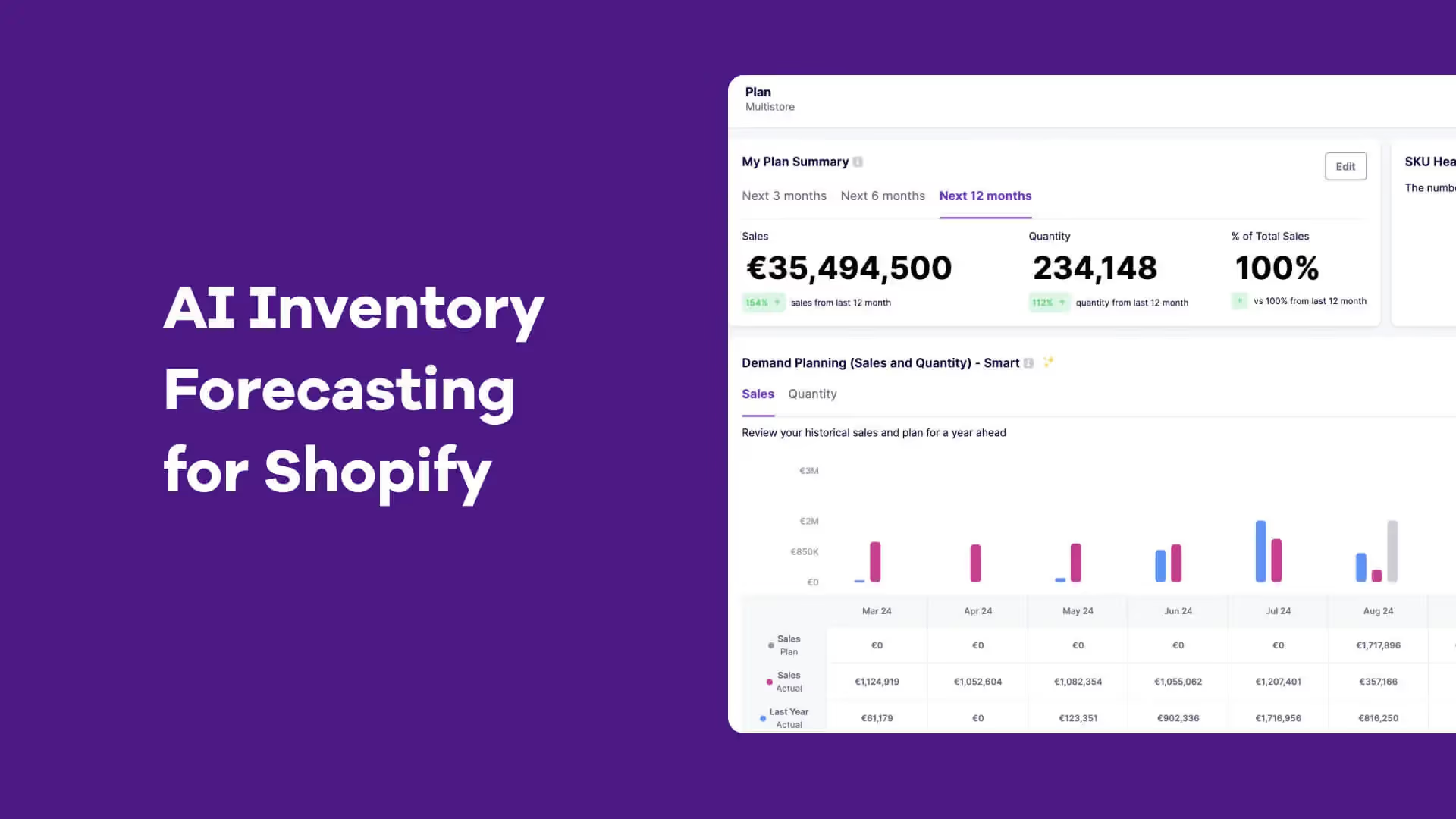
AI Inventory Forecasting for Shopify: How To Predict Excess Stock and Stock Outs Accurately?
AI inventory forecasting for Shopify uses machine learning models to predict demand based on past sales, seasonality, and market trends. It helps reduce stockouts, avoid overstocking, and automate purchase decisions.
Do all your inventory decisions feel like a gamble, and you either battle stockouts or draw in excess stock? If you can’t accurately predict your inventory needs, each mistake can cause production delays, sales, and customer trust.
This was the reality for Bright Body, a handcrafted wellness product brand until they discovered AI-based forecasting. By adopting a simple, reliable, data-driven way to manage inventory, they moved from guesswork to precision, saved countless hours, and reduced decision fatigue.
review.png)
If you're looking to optimize inventory planning for your Shopify brand, this article is for you. Discover how Prediko's AI inventory forecasting can help you manage your stock levels, streamline your operations, and boost profitability.
What is AI inventory forecasting for Shopify?
AI inventory forecasting for Shopify uses machine learning to predict future demand based on historical sales, trends, seasonality, promotions, and real-time store data.
Instead of relying on static spreadsheets or fixed formulas, AI continuously analyzes patterns and updates forecasts automatically.
This helps Shopify merchants make more accurate purchasing and replenishment decisions, reduce stockouts, avoid overstock, and respond quickly to demand changes, all while saving time on manual planning.
Why are traditional inventory forecasting tools not cutting it for Shopify business owners?
1. Difficulty in handling complex variables
Most e-commerce store managers use spreadsheets to produce forecasts, which do not have capabilities to analyze more complex variables such as seasonal trends, market fluctuations, and promotional events. These variables add complexities that non-AI tools cannot handle.
Moreover, these tools rely on simplistic models such as moving averages, linear regression, or basic time series analysis.
These methods do not capture the patterns that arise when these variables interact with each other, affecting inventory planning. For example, if the tool cannot analyze the inventory needed if a promotional event affects seasonal sales by calculating the relationship between them, then it may lead to stockouts.
2. Lack of Real-Time Data Integration
Many traditional forecasting methods rely on periodic data updates, leading to outdated information and reactive decision-making. Without real-time integration, businesses can't respond swiftly to market changes.
CloudSharks was facing this problem until they partnered with Prediko. CloudSharks was using a rudimentary inventory management solution that usually recommended how many SKUs to order. However, the solution calculated expected orders using current volume and velocity, without accounting for forward-looking variables.
With Prediko, they were able to better predict inventory needs as the AI incorporated current sales volumes and combined them with expected sales over 12 months to provide accurate recommendations on how much to order.
3. Slow, manual, and error-prone
While spreadsheets are a powerful tool to keep track of smaller inventories with a few SKUs, it’s not recommended for fast-growing brands that manage diverse products and variants.
Related Reads: Shopify Variant Inventory Tracker: Automate to Reduce Manual Oversight
With complex formulas and tedious manual entries, the practice often leads to errors and discrepancies despite your best efforts. By the time your formulas give you predictions for the following week, your bestseller is most likely out of stock already, and your inventory supplier won’t make it in time.
4. Why Shopify inventory forecasting fails with spreadsheets
Spreadsheets may work early on, but they struggle to keep up with growing Shopify stores. This is because
- Manual updates take time; forecasts quickly become outdated
- No real-time syncing with Shopify sales, returns, or channel data
- Seasonality and trends are hard to model accurately
- Promotions and demand spikes aren’t automatically reflected
- Human error in formulas and data entry leads to costly mistakes
- No automatic replenishment logic to guide purchasing decisions
- Difficult to scale as SKUs, variants, and sales channels grow
As complexity increases, spreadsheets require more manual oversight, not less. Instead of simplifying inventory planning, they often increase decision fatigue and operational risk.
How does AI solve these challenges?
AI tools like Prediko summarise several areas of the inventory management process – like quantities, costs, order tracking, and purchase order management – in an easy-to-use dashboard. For brands looking to replace guesswork with precision, embracing AI in inventory management enables data-driven forecasting that reduces both stockouts and overstocking. Using sales history and trends, these tools provide accurate demand forecasts and help Shopify businesses optimize stock levels and scale with confidence.
1. AI algorithms can handle vast amounts of complex data
Machine learning (ML) algorithms excel at processing and analyzing large datasets. Technologies like neural networks and decision trees can identify complex patterns and relationships within the data, providing more accurate forecasts.
2. Integrate with databases and update date automatically
AI solutions can integrate with databases, Shopify stores, and update forecasting based on real-time data, seasonal trends, etc. For example, Prediko integrates with Shopify stores, analyzes your historical sales data using our proprietary AI that’s trained on 25+ million SKUs, and generates a 12-month “Demand Smart Plan”.
.webp)
3. No lag in the accuracy of forecasting with an increase in volume
AI solutions are highly scalable, handling higher volumes of SKUs without compromising speed and accuracy.
These algorithms can quickly process complex data and identify patterns. Whether you have a single Shopify store or multiple stores, AI can process data with ease, enabling you to scale your business without adding additional capabilities to process higher volumes of data.
Also Read: How to Setup and Optimize Shopify Multi-Location Inventory?
Kate Hewko uses Prediko’s AI to streamline inventory management across its two warehouses. Prediko helped the online beauty store streamline its procurement process, and its AI-driven inventory forecasting ensures stock replenishments happen on-time across all locations.
Similarly, Kimai, an online jewelry brand, used Prediko to integrate its three Shopify stores and assimilated their historical sales, revenue, and product data in a single platform. Through Prediko’s forecasting features, the brand reduced delivery time by 43% and production costs by 11%.
There is a lot of change happening in the way Shopify brands forecast inventory.
How AI improves inventory forecasting (what it uses)
AI improves inventory forecasting by analyzing multiple data inputs at once, not just past sales.
Instead of relying on fixed formulas, it continuously learns from patterns and adjusts predictions as new data comes in.
Here are some important inputs your AI must include:
- Sales history to identify trends and demand patterns
- Seasonality to capture recurring peaks and dips
- Promotions and discounts to account for demand spikes
- Lead times to align forecasts with supplier timelines
- Current stock levels to understand the inventory position
- Past stockouts to correct for lost sales bias
- Channel data (e.g., online store, marketplaces) to forecast per channel
- Returns and cancellations to refine true demand
By combining these signals, AI produces more accurate, responsive forecasts, helping merchants reorder at the right time and in the right quantities.
How Can Shopify Brands Implement AI in Inventory Forecasting?
1. Deciding on the External and Internal Variables
Identify key external variables such as economic indicators and seasonal trends, and internal variables like past sales data and current stock levels.
These variables significantly influence forecast accuracy. You can extract the data for external variables from government websites, Nielsen’s insights, etc. You can gather data for internal variables from Shopify’s built-in analytics tools and the order management systems.
2. Preprocessing, Cleaning, and Integration of Data
High-quality data is essential for accurate forecasting. Preprocessing steps include handling missing values, removing duplicates, identifying outliers, and normalizing data. Data preprocessing enhances the reliability of these forecasts. For example, outliers such as a sudden spike in sales due to a one-time promotional event must be removed so that the AI is able to generate an accurate inventory plan.
3. Selecting the Right Forecasting Model
Choose from various forecasting models such as time series models (ARIMA, Exponential Smoothing) and machine learning models (Random Forest, Neural Networks). You must understand the nature of your sales data and the complexity of your inventory when selecting the right model.
4. Training Your Model
Train your model by splitting your data into training and testing sets, tuning model parameters, and evaluating performance.
Avoid overfitting by validating the model’s accuracy using techniques like cross-validation.
5. Piloting the AI System Before Implementing
Running a pilot program helps identify potential issues and understand system limitations. Set up a pilot by defining success metrics and gathering stakeholder feedback, ensuring a smooth transition to full implementation.
6. Integrating with Different Solutions
Ensure seamless integration of the AI system with existing tools and platforms like ERP systems, inventory management software, and sales channels. This integration maximizes the benefits of AI-driven forecasting.
By accurately predicting demand, businesses can reduce excess stock, avoid stockouts, and improve cash flow. This leads to better resource allocation, lower operational costs, and greater flexibility as the business scales.
Learn the difference between supply planning and demand planning.
KPIs to Track After Implementing AI Forecasting
Once Shopify AI inventory forecasting is in place, performance should be measured through clear inventory KPIs. These metrics show whether forecasts are improving availability, efficiency, and cash flow.
- Forecast Accuracy (MAPE): Mean Absolute Percentage Error (MAPE) measures how close your forecasted demand is to actual sales. Lower MAPE means higher forecasting accuracy.
- Stockout Rate: The percentage of SKUs that go out of stock. A declining stockout rate indicates better replenishment timing.
- Excess Inventory %: The share of inventory that exceeds projected demand. This helps track overstock and working capital risk.
- Days of Supply (or Days of Cover): The number of days the current inventory will last based on forecasted demand. It shows whether stock levels are balanced.
- Fill Rate: The percentage of customer demand fulfilled without delay. A higher fill rate reflects stronger inventory availability.
Tracking these KPIs helps ensure your investment in AI forecasting is translating into real-life improvements.
Real-World Results and ROI of Implementing Prediko’s AI Forecasting
Now, there are businesses/stores that are already using AI forecasting. If you’re still unsure whether it’s worth implementing, look at what changed for companies that made the shift.
- Bright Body, a clean beauty brand, was managing 170+ raw materials with manual, gut-based forecasting and informal workflows. Using Prediko’s AI, their forecasting and purchasing got 75% faster, cash flow improved, and they replaced intuition-driven decisions with structured, data-backed planning.
- Varusteleka, an outdoor gear retailer, struggled with complex long-lead-time purchasing and separate Excel-based raw material planning. After moving demand, supply, and material planning into Prediko, they gained 12-month visibility, cut planning time by 70%, and made purchasing decisions far more predictable.
- Lori Beds, a Murphy beds brand, struggled with unreliable forecasting and fragmented planning tools that made purchasing decisions hard to trust. After backing demand, supply, and PO management by Prediko’s AI, they achieved zero stockouts for 12+ months and made supply planning 90% more reliable.
How Prediko’s AI forecasting helps Shopify Businesses?
Don’t let outdated forecasting methods hold your business back. Embrace the power of AI with Prediko and make data-driven decisions to keep your growth on track.
1. Smart inventory management
Avoid spoilage by ensuring that products are sold and replenished before they expire, reducing waste and maximizing profitability. Prediko’s AI-powered capabilities analyze huge amounts of data, including historical sales, market trends, and customer behavior.
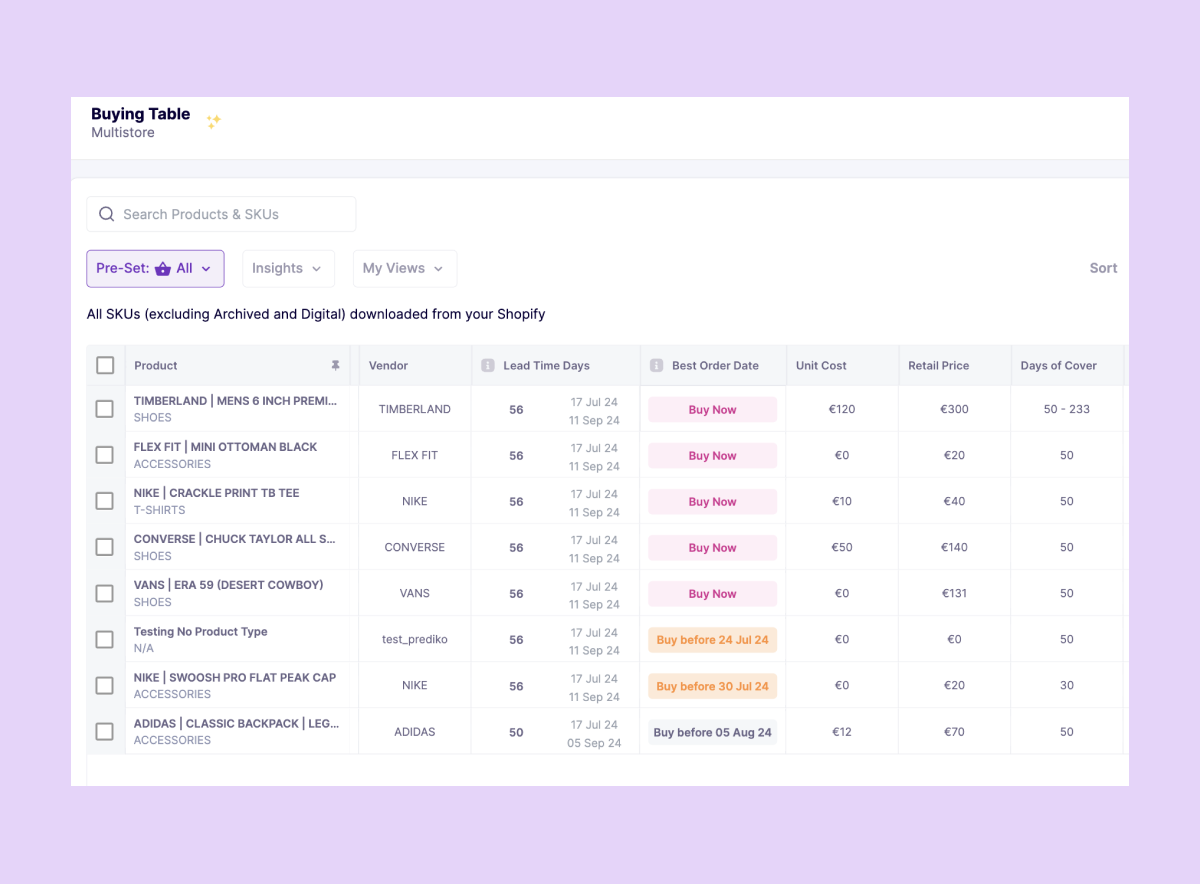
2. Make informed purchasing decisions
With Prediko, you can manage your inventory and place purchase orders based on accurate, real-time insights. Reduce the risks of overstocking and understocking inventories, enabling you to find the right balance between demand and supply. With this balance, you can reduce business costs, optimize operations, and increase revenue.
.webp)
3. Distribute sales across each month throughout the year
Prediko simplifies distributing sales forecasts across each month, also factoring in the seasonal fluctuations in customer demand. Based on these insights, Prediko creates a smart plan for you using AI forecasts for sales and SKU quantities.
.webp)
By providing a monthly breakdown of expected sales, Prediko helps you effectively plan your inventory purchases at a granular level. You can then maintain a smooth inventory flow and minimize disruptions to your supply chain processes and operations.
Maintain consistent stock levels and avoid the pitfalls of overstocking during slow periods or understocking during peak times.
4. Create an action plan for the operations team
Once you create your plans for the specific period, Prediko offers recommendations and actionable insights for your sales and revenue operations teams. These insights help you streamline how you procure goods, optimize stock levels, and improve the overall efficiency of your inventory management.
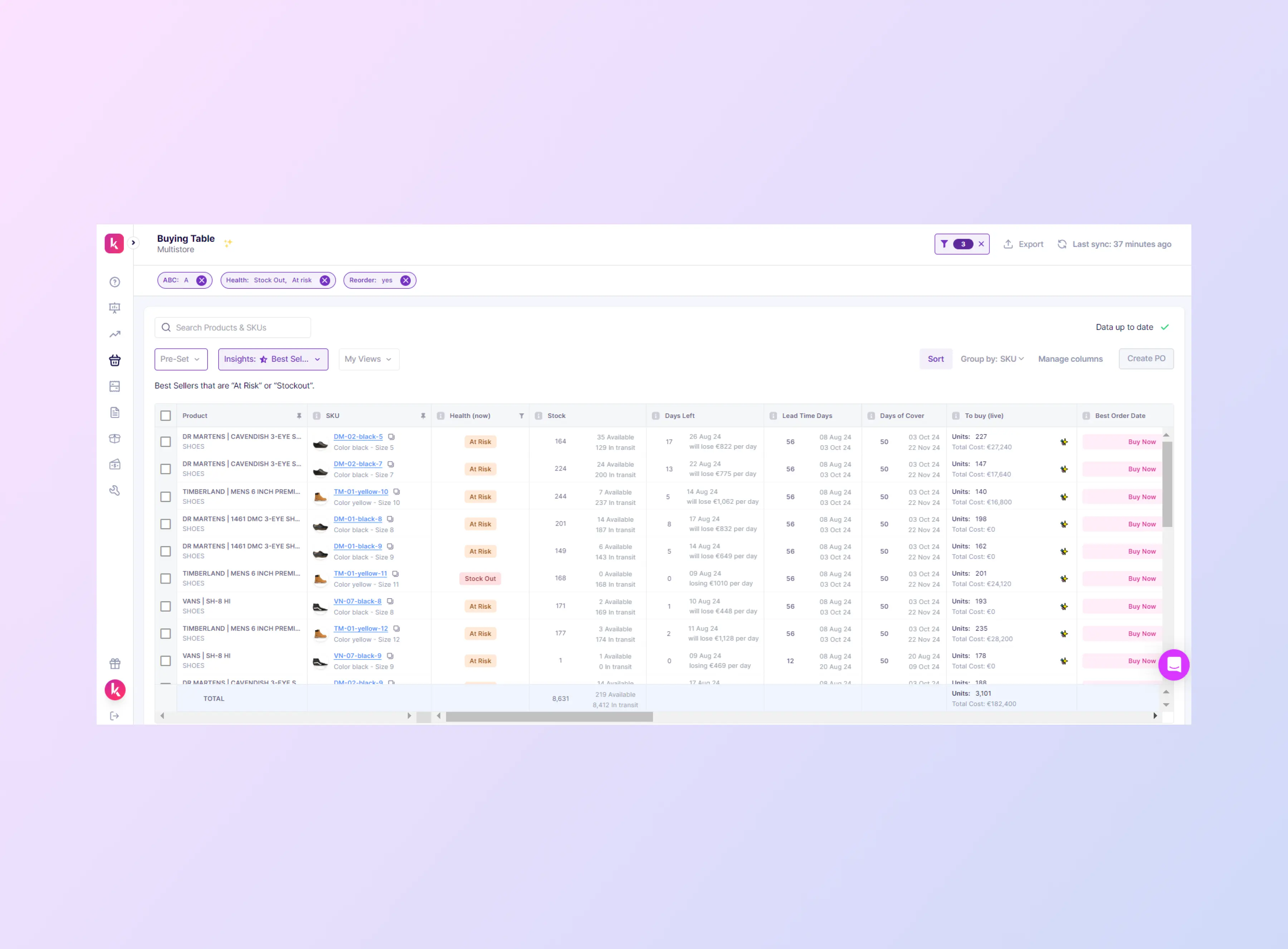
For instance, Prediko recommends specific reorder points and quantities based on its forecasts. It also lets you attach multiple suppliers to same SKU for easiy supplier switching and reordering. All of this ensures that you replenish your inventory at the right time and in the right amounts, reducing the risk of stockouts and overstock situations. Additionally, by providing clear, actionable recommendations, Prediko helps your team stay aligned and focused on meeting inventory goals.
See how Prediko uses AI forecasting to turn Shopify sales data into inventory plans, reorder recommendations, and purchasing decisions.
Many brands pair AI with a solid Shopify safety stock strategy, keeping a small buffer of high-priority SKUs on hand to stay protected when things don’t go as planned.
Frequently Asked Questions
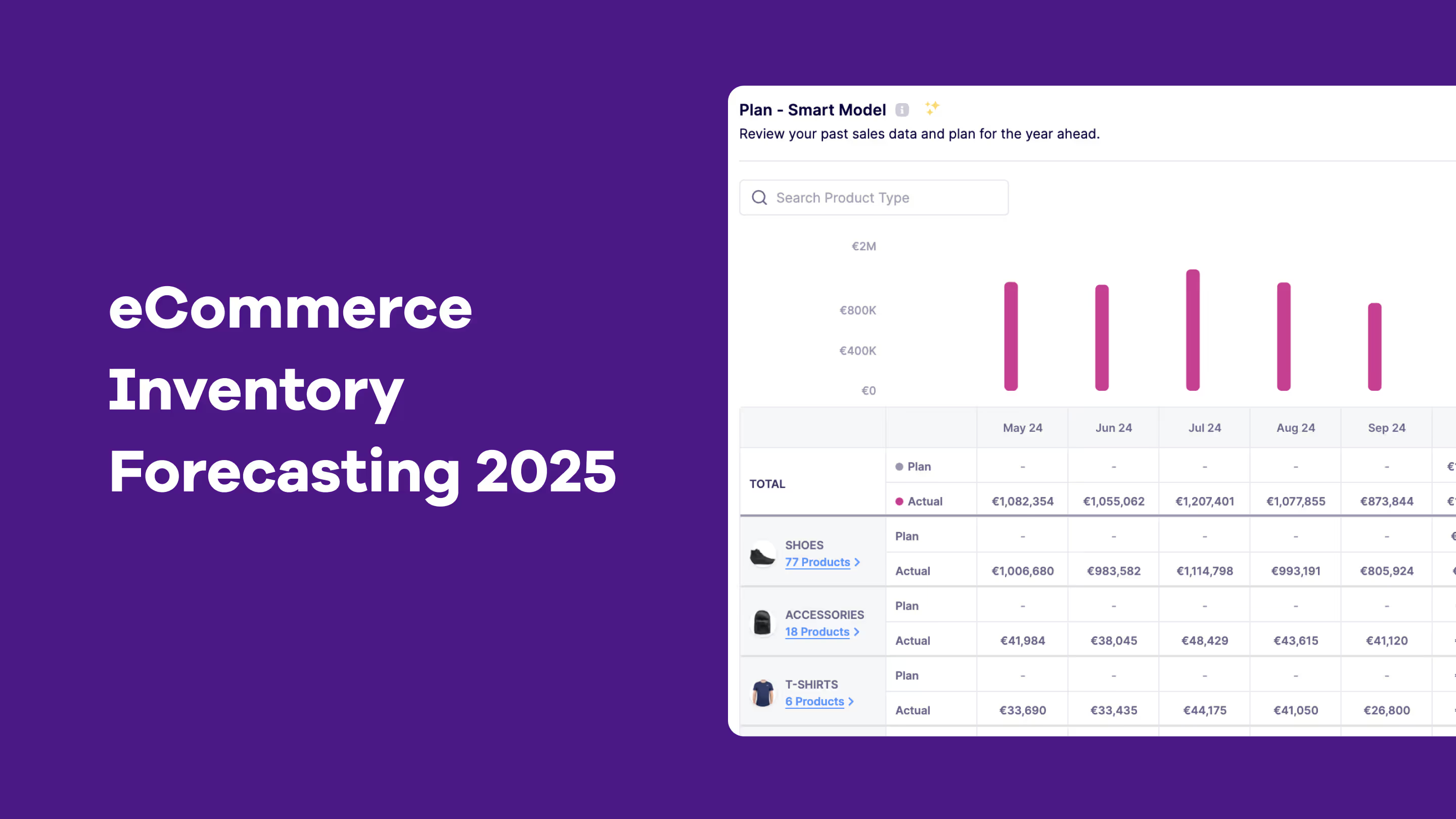
eCommerce Inventory Forecasting - The Right Approach for 2026
eCommerce inventory forecasting uses historical sales, real-time trends, and AI insights to predict future demand, helping brands reduce stockouts, overstock, and holding costs.
What is eCommerce Inventory Forecasting
eCommerce inventory forecasting predicts future product demand using past sales, market trends, and customer behavior. It helps online retailers maintain optimal stock, reduce holding costs, and support growth. Forecasting enables data-driven decisions on inventory levels, product selection, and purchasing strategies.
.avif)
How to do eCommerce Forecasting for 2026?
eCommerce forecasting is similar to charting a course through the unpredictable seas of market demand. First of all, businesses have to start by gathering and analyzing relevant data, including past sales figures, seasonal trends, and market conditions.
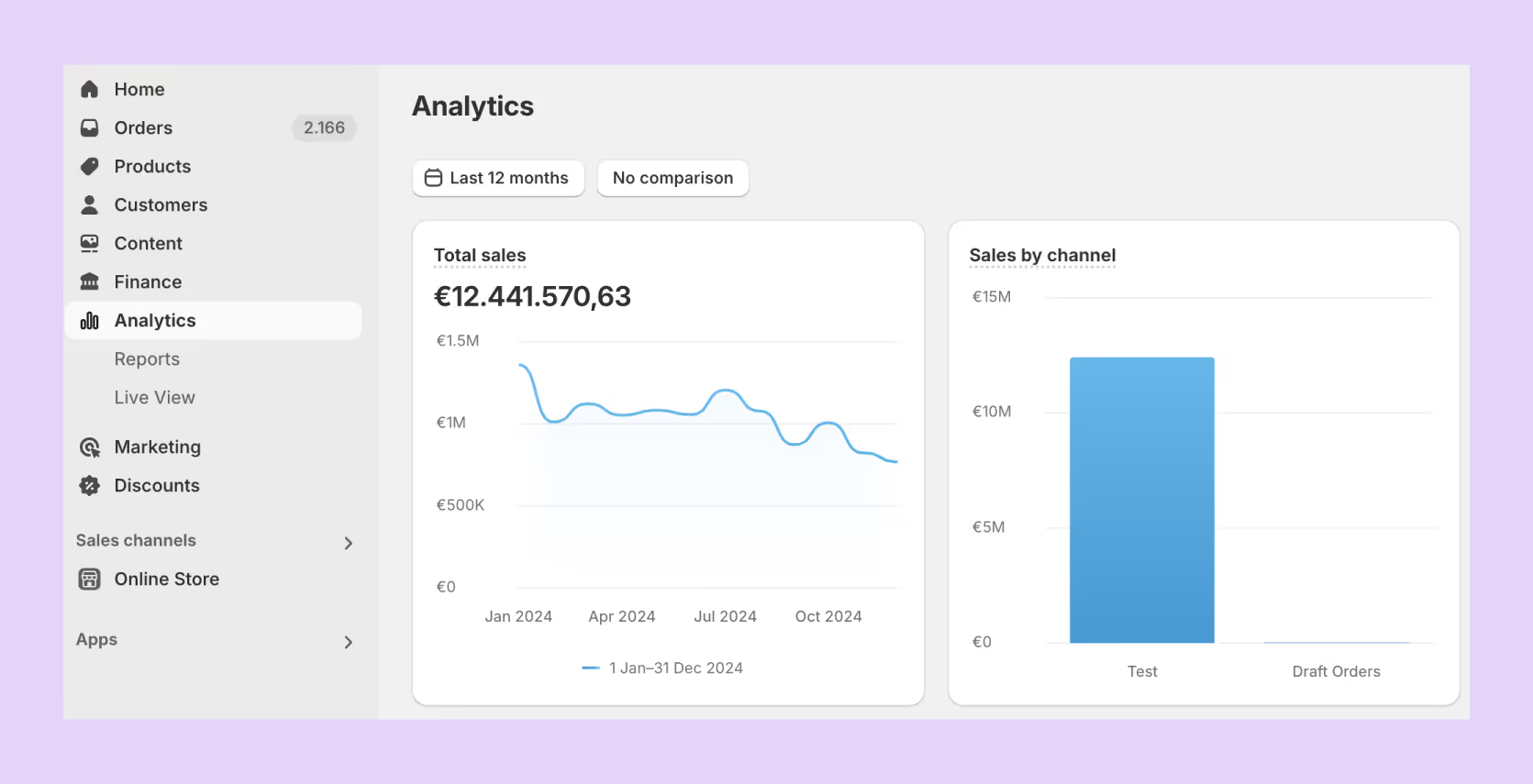
Retailers should start collecting and leveraging both quantitative and qualitative data to form a comprehensive view of future demand. The approach combines statistical methods with market analysis, considering promotions, new product launches, major marketing campaigns such as Black Friday & Cyber Monday, and seasonality factors that could impact demand.
eCommerce Forecasting Excel Template
An excel template for eCommerce forecasting provides a structured framework to organize your data and predictions. Inventory forecasting excel template typically include historical sales data, growth projections, and seasonal adjustments.
By inputting your data, you can leverage built-in formulas to forecast future demand at various intervals.
It's high time for Shopify D2C brands to ditch spreadsheets and go for a cloud-based solution.
At Prediko, we offer a 14-day Free Trial so you can first try out the platform without ditching your spreadsheets or excel. Compare the ease of doing an accurate forecast in a software vs running it daily yourself in an excel. Compare the ease of doing an accurate ecommerce demand forecasting in a software vs running it daily yourself in an excel
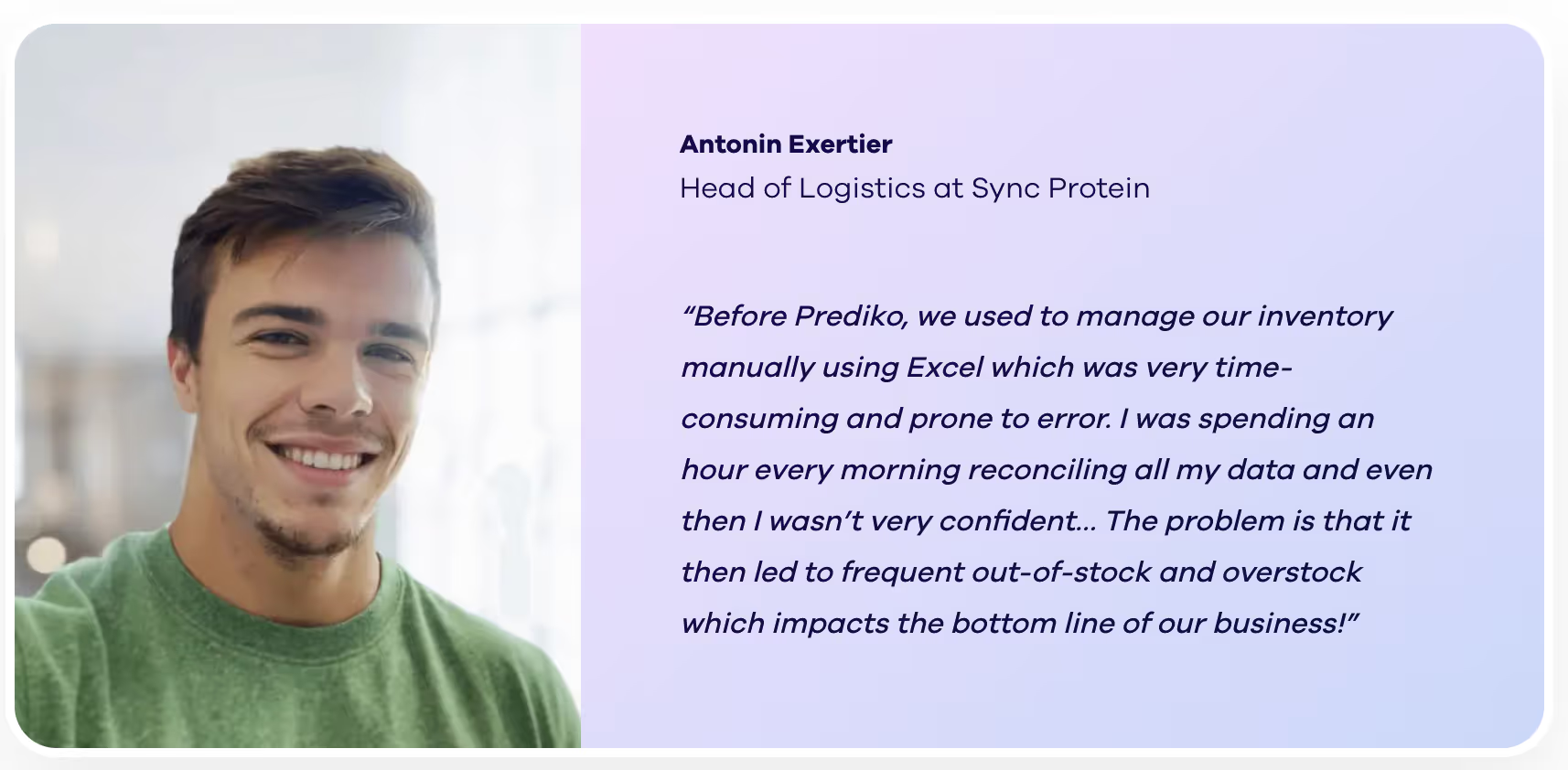
Here is a short case study on how Sync Protein, a popular 100% plant based nutrition brand, completely did away with their old way of forecasting through manual process and signed up for Prediko to forecast their sales and quantity.
They wanted to avoid constant data reconciliation, and that’s why they ditched Excel and signed up for Prediko.
See how our forecasting helped them avoid frequent out-of-stock and overstock situation👇
When to Invest in an Inventory Forecasting Tool?
Seeing following red flags in your inventory operations? It’s time to take control with the right inventory forecasting tool.
1. Frequent stockouts or overstocks
If your business struggles with running out of popular products or sitting on excess inventory, a forecasting tool can help balance supply and demand, reducing lost sales and storage costs.
2. High demand fluctuations
If your business experiences demand spikes during specific times of the year, such as holidays or sales events, forecasting helps predict inventory needs for these periods, preventing shortages or excess stock.
3. Manual forecasting is time-consuming and inaccurate
Spreadsheets and guesswork only go so far. If manual forecasting is leading to errors and inefficiencies, an inventory forecasting tool provides real-time, data-backed insights for educated decisions.
4. When expanding your product line or business
Expanding into new markets, launching multiple stores, or adding new sales channels increases inventory complexity. A forecasting tool ensures accurate stock planning across all locations.
5. High storage and holding costs
Excess inventory ties up capital and increases warehousing costs. A forecasting tool allows you to adjust stock levels, reducing unnecessary expenses.
6. Managing multiple suppliers
Managing different suppliers with different lead times can be challenging. Forecasting tools help anticipate demand and adjust reorder points for each product/SKU for smooth restocking.
7. When customer satisfaction is declining
Delayed deliveries, canceled orders due to stockouts, or incorrect inventory levels can harm your customer experience. A forecasting tool ensures accurate stock levels, enabling faster order fulfillment and improving customer satisfaction and loyalty.
Investing in an inventory forecasting tool at the right time can help you save costs, improve cash flow, and make your overall supply chain efficient.
eCommerce Forecasting Tools & Software
We’ll share a couple of amazing tools out there but we wanted to first highlight why Prediko is best suited to solve inventory forecasting for Shopify brands of all sizes.
- Input sales for your next 6 or 12 months and get your forecasted inventory requirements
- Buying Table that keeps you on top of your inventory count so you are aware which products are in stock out, which products do you need to reorder and which products are off the plan
- As a business owner, you get the full picture about how many days of inventory is left.
We understand it takes time, effort and important fit to find the right inventory forecasting tool. That's why we have created this list on the best available inventory forecasting software in the market in 2026
Other apps and software that help with inventory forecasting are:
- Inventory Planner: Offers demand forecasting and inventory optimization for your sales.
- Cogsy: Focuses on inventory planning and replenishment to ensure you're stocked. Cogsy alternatives may offer better support for growing Shopify brands needing flexible forecasting and end-to-end PO automation.
- Fabrikator: Combines inventory management with forecasting to optimize stock levels.
- DemandCaster: Provides supply chain planning, including demand forecasting and inventory optimization.
Each tool has its unique features and benefits, catering to different business sizes and needs. Evaluate them based on your specific needs and budget. For managing inventory for fashion brands, see this guide on apparel inventory management.
Role of AI in Enhancing eCommerce Forecasting
AI has changed the way eCommerce businesses operate. That’s why it was high time an app introduced the right AI model to predict demand and manage inventory.
It is one of the factors behind the start of Prediko’s AI inventory management for Shopify. By using the power of Prediko’s AI, retailers can analyse vast datasets more accurately and identify patterns and trends that human analysts might overlook.
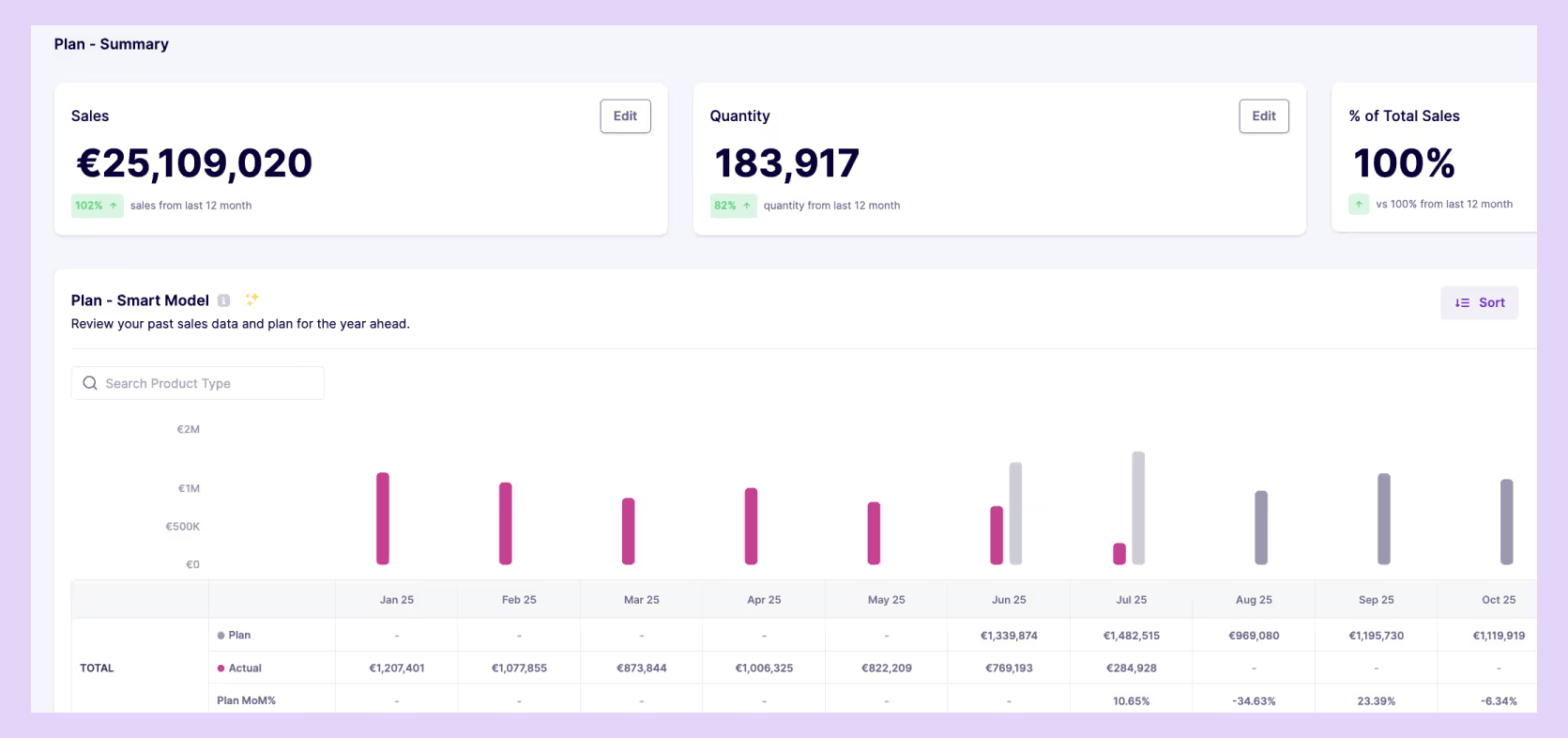
Our algorithm has been trained on 25 million+ SKUs from 15+ industries. That's why we are able to forecast demand at a granular level, considering factors like promotional activities, mega marketing events such as Black Friday / Cyber Monday, seasonal variations, and even social media trends.
A popular UK-based healthy living and self care brand, Healf, saw a “strong correlation between using Prediko and their out of stock percentage going down. They signed up for and their goal was to keep their inventory ready for rest of the year. See how other brands have benefited from our AI inventory forecasting Shopify app.

How is Prediko able to quickly generate a forecast for a Shopify store?
Prediko integrates in just 1-click with Shopify and takes into consideration historic sales data from your Shopify admin. Prediko also integrates with warehouse management solutions, and shipping apps such ShipHero and many more.
What are the best tools or software for eCommerce inventory forecasting
Choosing the right inventory forecasting tool is crucial for maintaining optimal stock levels and ensuring smooth operations. The best tools offer real-time data insights, automated demand forecasting, and seamless integration with eCommerce platforms like Shopify. Here are some of the top AI-powered inventory forecasting tools available in 2026:
- Prediko – A Shopify-first inventory forecasting platform that provides AI-driven demand predictions, automated replenishment recommendations, and real-time inventory tracking. Its one-click integration with Shopify makes it a powerful choice for D2C brands. See Prediko in action.
- Inventory Planner – Helps businesses optimize stock levels by predicting future sales trends based on historical data. Find the list of alternatives to Inventory Planner.
- Cogsy – A forecasting and inventory planning tool that helps brands manage stock and prevent sellouts by optimizing reorder timing. Compare Inventory Planner to Cogsy
- Fabrikator – Designed for fast-scaling eCommerce brands, Fabrikator combines AI-powered forecasting with inventory management to improve stock planning. See all the fabrikator alternatives.
What are the most effective methods or models for inventory forecasting?
The accuracy of inventory forecasting depends on the methods and models used to predict demand. Businesses can choose from various techniques based on their data availability, market dynamics, and operational complexity. Here are some of the most effective inventory forecasting models:
Choosing the right inventory forecasting technique depends on your sales history, SKU complexity, seasonality, and how quickly demand changes across your ecommerce channels.
Here are some of the most effective inventory forecasting models:
1. Time-Series Analysis:
Uses historical sales data to identify patterns and trends, making it ideal for stable demand environments. Common techniques include moving averages, exponential smoothing, and ARIMA models.
2. Demand Sensing:
Uses AI and real-time data from multiple sources (such as sales trends, weather patterns, and social media signals) to predict demand fluctuations more accurately.
3. Causal Models:
These models analyze external factors such as economic trends, market conditions, and promotions to refine demand forecasts.
4. Qualitative Forecasting:
Uses expert opinions, customer surveys, and industry insights to predict demand, especially for new product launches where historical data is limited.
5. Hybrid Forecasting:
Combines multiple forecasting models to improve accuracy. For example, a business might use time-series analysis for steady products while leveraging AI-driven models for fast-moving items with fluctuating demand.
For growing eCommerce brands, integrating AI-powered forecasting tools like Prediko can significantly improve inventory planning, reduce stockouts, and optimize cash flow.
Start eCommerce Inventory forecasting today with Prediko
eCommerce inventory forecasting is not just about predicting numbers; it's about creating a roadmap for sustainable growth and efficiency. As brands and businesses grow, it’s important to align the inventory requirements with market demand, current and future sales numbers, and projections. If you are a D2C brand on Shopify and are looking for the right inventory forecast for your eCommerce business, then just feel free to drop us a message or book a free demo of Prediko.





.avif)