


You know the drill: November hits and orders start rolling in faster than expected. Black Friday sales explode, holiday demand spikes, and suddenly, your bestsellers are out of stock weeks before Christmas.
Or worse, you prepare for a massive seasonal surge that never comes, leaving you with packed warehouses, tied-up cash, and markdowns that eat into your margins.
For too many eCommerce & Shopify D2C brands, seasonal demand forecasting is a gamble.
Some businesses rely on gut instinct, others try to patch together spreadsheets and outdated sales reports.
Core elements of Seasonal Demand Forecasting
1. Identifying key seasonal changes or trends
Some seasonal trends are obvious, holiday shopping, back-to-school rush, summer travel spikes. But not all demand shifts follow a calendar. Climate change, economic conditions, and viral trends can reshape sales in unexpected ways.
- Map out major retail events that impact your industry (e.g., Cyber Monday for electronics, wedding season for fashion)
- Track weather and climate trends that might shift purchasing behavior
- Monitor cultural and economic factors that could influence demand like an upcoming festival, government tariffs, etc
- Look beyond the season. Analyze pre-season and post-season sales to spot early and late surges
Swimsuit sales don’t peak in July, they start climbing in March when shoppers plan vacations. If you stock up too late, you’ll miss the wave.
2. Aligning inventory and supply chain
Your forecast is only as strong as the supply chain behind it. If your suppliers need three months’ lead time, but your demand spikes in six weeks, you're already too late.
The key is building flexibility into your supply chain so you can adjust based on real-time sales and updated forecasts.
- Keep safety stock.
- Have backup suppliers or alternate shipping routes in case of spikes or changes
- Optimize warehouse space. if you’re bringing in extra stock, make sure your logistics can handle it
3. Implementing dynamic pricing strategies
Important to think about prices with seasonal demand forecasting. If demand spikes and you’re still selling at last season’s prices, you're missing out on higher margins. On the other hand, if demand dips and you don’t adjust prices quickly, you’ll end up with excess stock.
- Start with early-bird pricing, offering discounts before peak season to lock in early demand
- Gradually increase prices as demand builds, rather than one big spike, steady adjustments keep sales flowing
- Use AI-driven pricing tools. They analyze real-time demand and competitor activity to set optimal prices.
- Bundle slow-moving products with seasonal bestsellers, maximizing revenue while clearing stock
Find the strategies for an effective seasonal demand forecasting
Seasonality vs Cyclical Effects in D2C
It's important to understand the difference between seasonality and cyclical effects because not every sales spike or dip follows the same pattern.
Seasonality is like clockwork. It’s a pattern that repeats every calendar year, making it relatively easy to predict.
- Holiday shopping madness? Expected
- Back-to-school sales in August? Always
- Winter coats sold out in December? No surprises there
These seasonal shifts happen at the same time every year, driven by things like holidays, weather changes, and cultural traditions.
Cyclical effects? A whole different thing.
These changes don’t follow a strict calendar schedule. Instead, they depend on broader economic trends and global events.
- A pandemic shuts down businesses overnight; suddenly, home fitness equipment is in massive demand
- A recession hits; luxury purchases drop while discount retailers see an uptick
- A tech boom floods the market with new gadgets; increasing demand for complementary products
- Tariff changes disrupt global supply chains (e.g., current U.S. tariffs on Canada and Mexico); causing price hikes or sudden shifts in sourcing strategies.
- Jersey sales went up during the 2026 World cup in United States
Unlike seasonality, cyclical effects are harder to forecast and can cause unexpected spikes or slowdowns in sales.
Methods for Seasonal Demand Forecasting
Forecasting seasonal demand and sales trends requires a structured approach and businesses typically rely on two key methods: qualitative and quantitative forecasting.
1. Qualitative forecasting
Numbers don't always paint the full picture. That’s where qualitative forecasting comes in. This method involves using human expertise, market knowledge, and external factors rather than historical sales data to predict seasonality.
When is this useful?
- New businesses without past sales data
- Unpredictable market shifts, like a sudden fashion trend or viral product
- Industry expertise, consulting with reliable suppliers, experienced sales reps, and customer insights
Example
A startup launching a new type of eco-friendly holiday decor can’t rely on past sales figures, they don’t exist yet. Instead, they gather feedback from industry experts, competitor trends, and customer surveys to estimate demand.
2. Quantitative forecasting
For businesses with historical data, quantitative forecasting is the go-to method. This approach uses hard numbers, statistical models, and past trends to predict future demand.
Common techniques include
- Time-series analysis: Looking at past seasonal trends to forecast future demand
- Moving averages: Smoothing out data to identify patterns
- Regression analysis: Identifying relationships between demand and other factors (e.g., how weather affects winter coat sales)
Example
A garden supply store knows from years of data that seed sales spike by 50% every March. Using this pattern, they accurately stock up before the season hits, avoiding stockouts or excess inventory.
The best approach, however, is a combination of both, data analysis backed by market research and expert opinions.
See rest of the important inventory forecasting techniques
How to Prepare for Holidays & BFCM Seasonality - Popular Demand Spike Period
BFCM is the most uncertain season for most D2C businesses out there. It brings unpredictable demand, intense competition, and an overwhelming surge in traffic.
Preparing for this particular part of the year isn’t just about marketing well, it’s about having the right tools that help you pivot quickly if needed.
We have created a guide on how to get your inventory ready for Black Friday
Challenges in Seasonal Forecasting & Practical Solutions
Even with the best forecasting tools, seasonal demand can be tricky to predict due to uncertainties. But smart businesses don’t just forecast, they adapt.
1. Relying too much on last year’s data
Many businesses assume that what happened last year will happen again. While historical data is valuable, it doesn’t account for market shifts, new competition, or global events.
Solution: Supplement past data with real-time insights. Track customer pre-orders, social media trends, and competitor activity. If an industry-wide shift is happening, you need to spot it early.
2. Ignoring external factors
Economic downturns, unexpected supply chain disruptions, or changes in consumer behavior can throw off even the most well-researched forecasts.
For example, during the COVID-19 pandemic, supply chain disruptions and delays left businesses struggling to keep up with demand. On the other hand, in businesses like formal wear, demand dropped sharply, leaving companies with excess inventory.
Solution: Stay informed. Monitor economic indicators, weather patterns, and industry trends to anticipate external impacts. You can do this using market analysis tools, industry reports and benchmarks, and news monitoring. If demand is shifting in your industry, your forecasts should adjust accordingly.
3. Setting forecasts too early and not adjusting
Many businesses lock in inventory months in advance but fail to adjust based on early sales and inventory performance. This can lead to overstocking or stockouts.
Solution: Use dynamic forecasting. Adjust predictions mid-season as real sales data rolls in. If demand is higher than expected, place high-volume POs. If sales are slow, pivot marketing campaigns or introduce promotions to get interest.
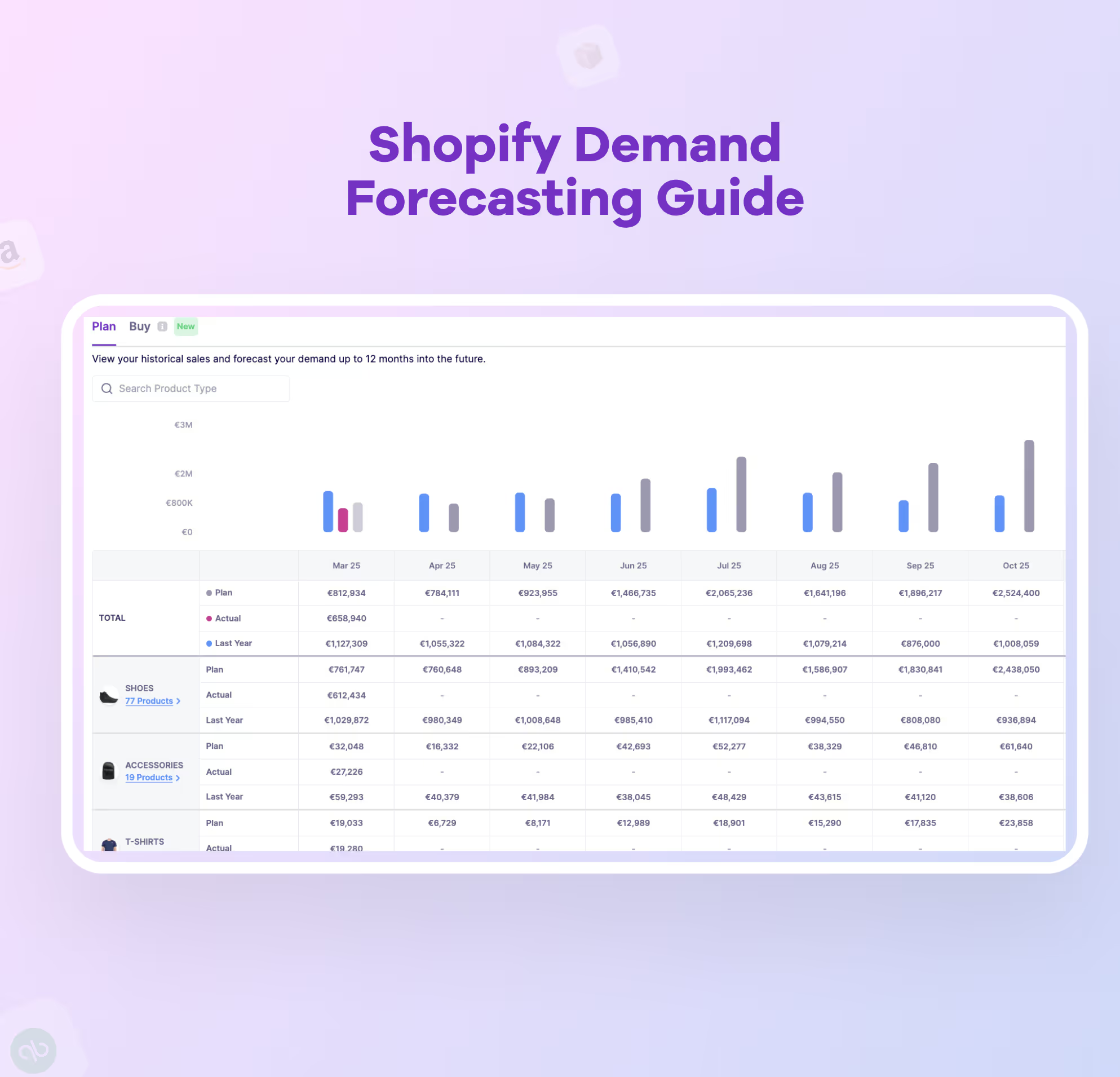
If actual numbers fall above or below projections, the model learns and adapts for more accurate future predictions. You can also modify AI-generated forecasts yourself, adjusting them based on your insights and external factors.
Make the Most of Your Peak Season
Seasonal demand forecasting isn’t as complicated as it looks. By analyzing historical sales data, planning for different demand outcomes, tracking supplier lead times, and keeping up with market trends, you can predict seasonal demand more accurately.
This helps you maintain balanced inventory levels and avoid costly stockouts or excess inventory.
Frequently Asked Questions
How do you forecast seasonal demand effectively?
Analyze past sales trends, consider external factors like market shifts and promotions, and use AI-driven forecasting software
What are the best methods for seasonal demand forecasting?
The most effective methods include analyzing historical sales data, conducting market research, using expert insights, and adopting AI-powered software.
What tools or software can help with seasonal demand forecasting?
Demand planning software help businesses accurately forecast seasonal demand and optimize inventory levels.
My demand plan applies a flat annual growth percentage across every month. How do I adjust it to reflect different growth rates by month?
Manually edit your plan month by month. For example, if you expect 100% growth in December and 10% in January, set those figures individually in your Demand plan. A good demand planning software will distribute your 12-month target based on seasonality, but manual edits give you more control when growth expectations vary by month.
How do I set up days of cover correctly when preparing for Black Friday and Christmas?
Temporarily increase your days of cover before Q4 to account for higher demand and longer supplier lead times. Calculate how many days of stock you need from your order date through the end of the peak period. After the season, return to your standard days of cover so you do not carry too much excess stock into the new year.
We're a seasonal business trying to order for Q4. Where do I start?
Start with your Demand Plan and confirm your expected Q4 sales targets at product or category level. Then check your Supply plan to see which months are at risk or unachievable based on current stock and incoming orders. Finally, see what to order and when. Work backwards from your peak date using supplier lead time.
My Shopify sales plan for a specific month is 3x higher than the same month last year. Is that accurate or a bug?
Check whether that month last year was affected by a stockout, slow period, or nearby promotional spike. If so, the increase may be correcting for distorted history. If there is no clear explanation, manually override that month's plan to a more conservative figure, monitor actual Shopify sales, and adjust if demand supports it.











.avif)