




Black Friday & Cyber Monday (BFCM) are periods when everyone is on the hunt for deals, creating both a huge opportunity and a major challenge for ecommerce brands.
While this means a massive jump in demand, it also calls for careful planning and flawless execution.
With so many moving parts during Black Friday and Cyber Monday, it's easy for things to slip through the cracks.
That's why we put together a Black Friday inventory management checklist to help brands make 2026 their most successful holiday season yet.
Your Free BFCM Inventory Checklist
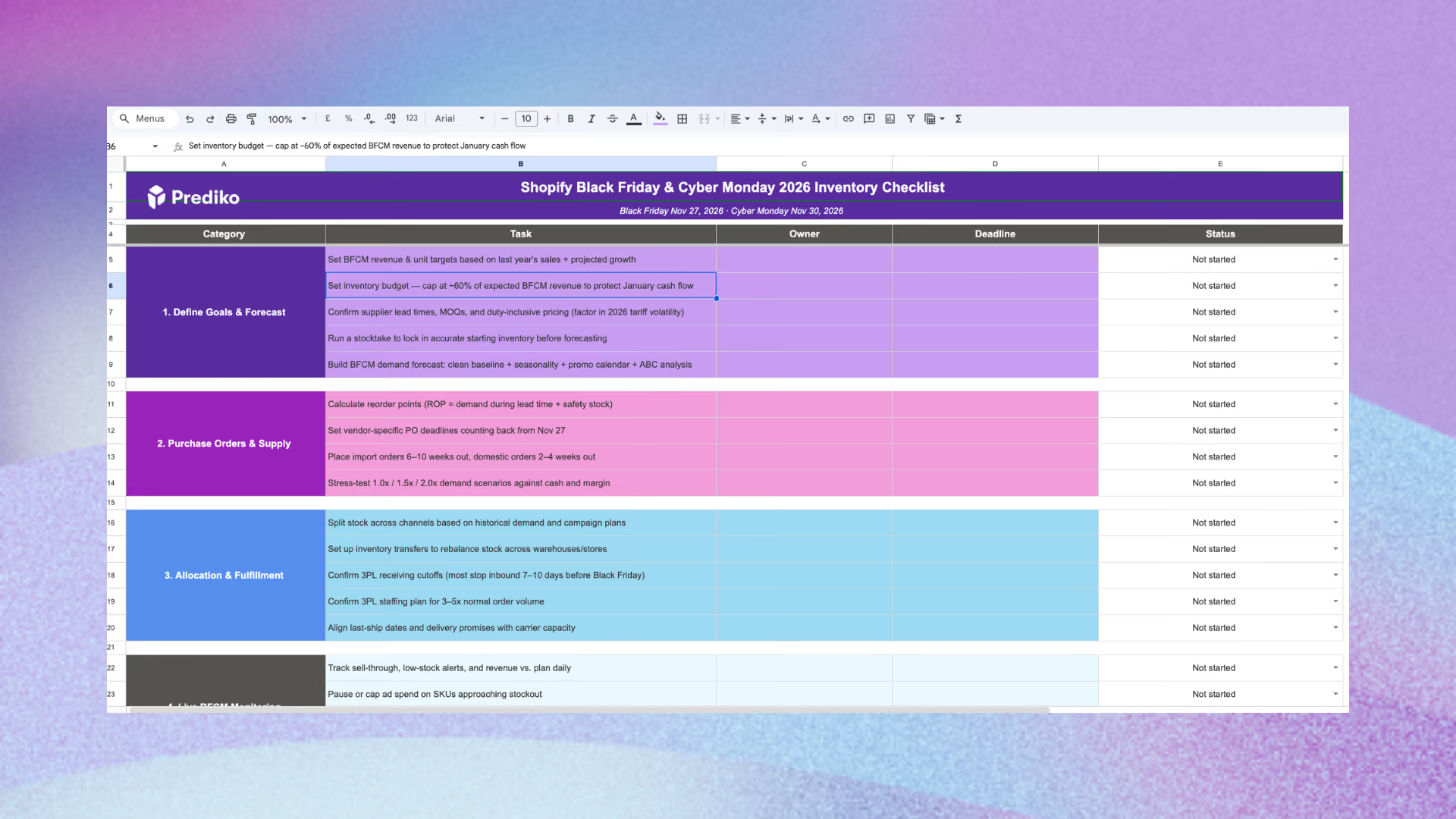
Keep every BFCM task in one place: from demand forecasting and PO deadlines to 3PL preparation, live monitoring, and your post-sale review.
Use it to assign tasks, track progress, and make sure nothing gets missed before November 27.
Why Early Inventory Planning Is Critical for Black Friday 2026
Black Friday and Cyber Monday (BFCM) bring the biggest demand storms of the year for Shopify and ecommerce brands.
U.S. online holiday sales continue to break records. Last year, Shopify merchants did a record $14.6 billion in BFCM sales, with Black Friday capturing a major share of that revenue. Millions of shoppers are active over the Thanksgiving–Cyber Monday weekend, making it a high-stakes period for inventory management.
Black Friday 2026 falls on November 27, and Cyber Monday falls on November 30; this should serve as your anchor date for planning everything.
Align purchase order cutoffs, supplier lead times, and inbound shipments well in advance so your shelves are stocked and ready.
Early preparation helps prevent stockouts, missed sales opportunities, and last-minute logistics chaos, so your store captures the holiday surge effectively.
We share actionable tips to help you get fully prepared for Black Friday now.
Your 7-Point Black Friday Inventory Checklist for 2026
To get ahead of Black Friday and Cyber Monday sales surges, we've compiled a list of 7 actionable steps to make you BFCM-ready.
1. Define goals and constraints before you forecast
First and foremost, set clear targets for what you want to achieve this Black Friday Cyber Monday.
- Set your BFCM target
Look at last year's sales, factor in your projected growth, and estimate lift from promotions. This gives you a concrete revenue and unit goal to aim for.
- Set your inventory budget
Next, determine your maximum inventory investment by setting a working capital limit you're comfortable carrying into January's slower period.
A safe rule: don't invest more than 60% of your expected BFCM revenue in additional inventory, as you'll need cash flow for January operations when sales typically drop 40-50%.
- Confirm supplier constraints
Factor in 2026 tariff volatility, too. Shifting tariff rates are adding weeks of uncertainty to import lead times and landed costs this year.
Ask suppliers for their
- current duty-inclusive pricing
- manufacturing deadlines
- Minimum order quantities
- Updated lead times
Build extra time into your PO deadlines for imported products instead of assuming last year’s lead times still apply. Some factories may also reduce or stop production ahead of Chinese New Year, making last-minute restocks difficult.
- Check your starting inventory
Before you forecast, run a quick stocktake so you're working from real numbers, not last quarter's guesswork. Prediko's Stocktakes let you count by barcode scan, spreadsheet import, or manual entry, and push the corrected counts straight to Shopify.
Lock in these constraints now, then forecast within these boundaries rather than creating unrealistic demand projections that exceed your operational or financial capabilities.
2. Build a demand forecast that fits BFCM behavior
The Black Friday Cyber Monday period doesn't follow the patterns of a regular week. A standard forecast won't cut it; you need one built for BFCM dynamics.
Here's how to make your demand forecast as accurate as possible:
- Start with a clean baseline: Normalize last year's sales data by adjusting for irregularities like stockouts, price changes, etc. BFCM shoppers often start their deal hunting before Cyber Week, so factor in early demand as well.
- Layer promo and seasonality factors: Once your baseline is clean, add in the effects of promotions and seasonal demand. Use category-specific past data and adjust for your promo calendar to anticipate spikes accurately.
- Prioritize with ABC Analysis: Not all products perform equally during BFCM. Classify SKUs by sales contribution and velocity. Focus inventory buffers and budget on A-items. B and C items can follow.
- Account for returns and cancellations: BFCM doesn't end when the weekend is over. Returns and cancellations create hidden demand shifts. Account for post-BFCM returns to avoid tying up cash in excess inventory.
How does this work inside Prediko
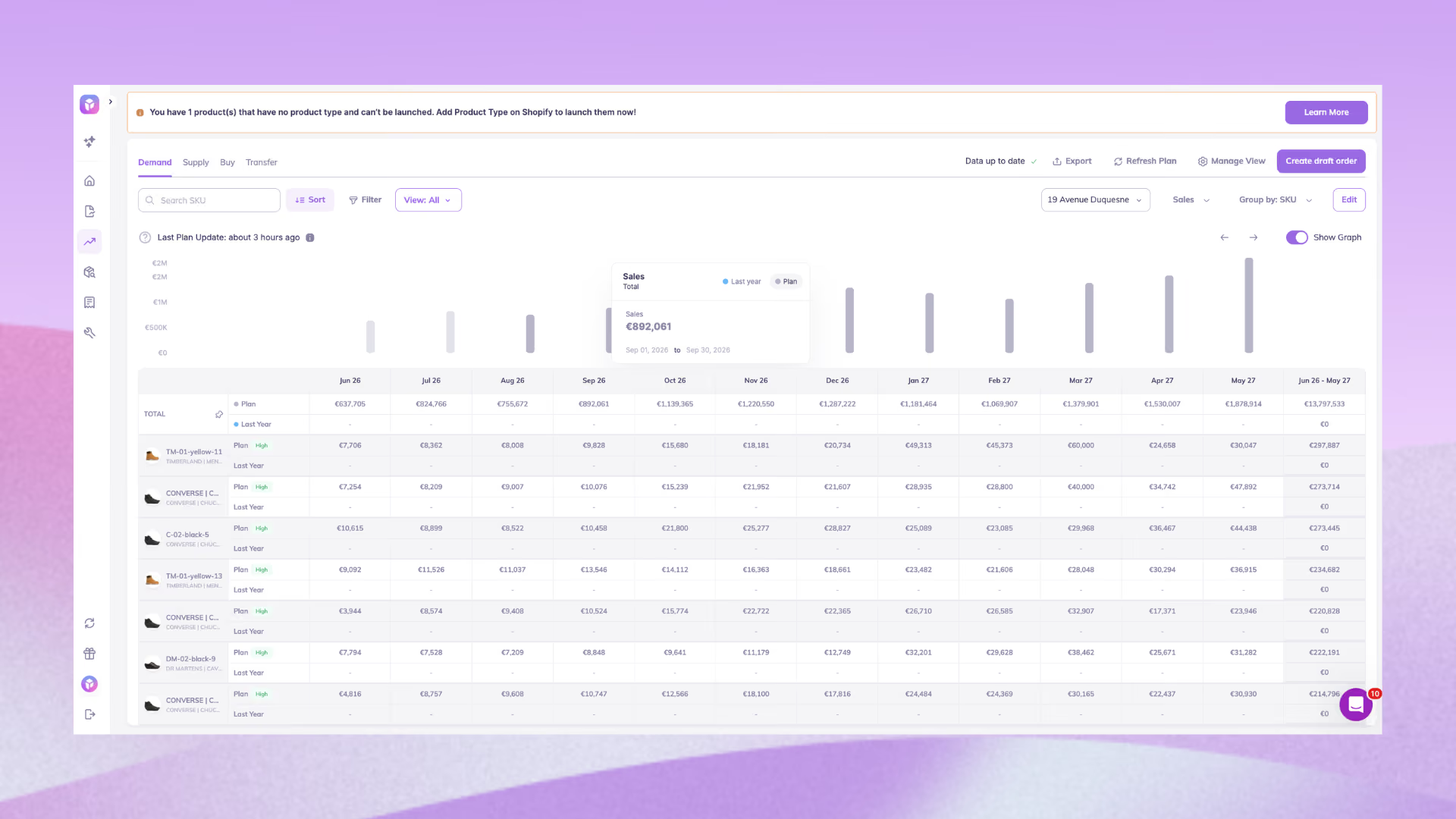
Prediko's AI makes forecasting easy by using the same period from last year's sales, then layering growth trends, ABC analysis, seasonality, and promotional factors to create accurate predictions.
From there, you can move into Supply Planning to check the forecast against your actual supplier capacity and a 12-month PO calendar, so you know it's achievable. You can also manually fine-tune the Black Friday numbers at any time.
3. Translate forecast into purchase quantities
To turn forecasts into action, convert them into precise purchase quantities.
- Start by calculating your reorder point
Use this formula: ROP = Demand during lead time + Safety Stock.
Safety stock should reflect Q4's higher variability and longer lead times, with an extra buffer for top-selling SKUs.
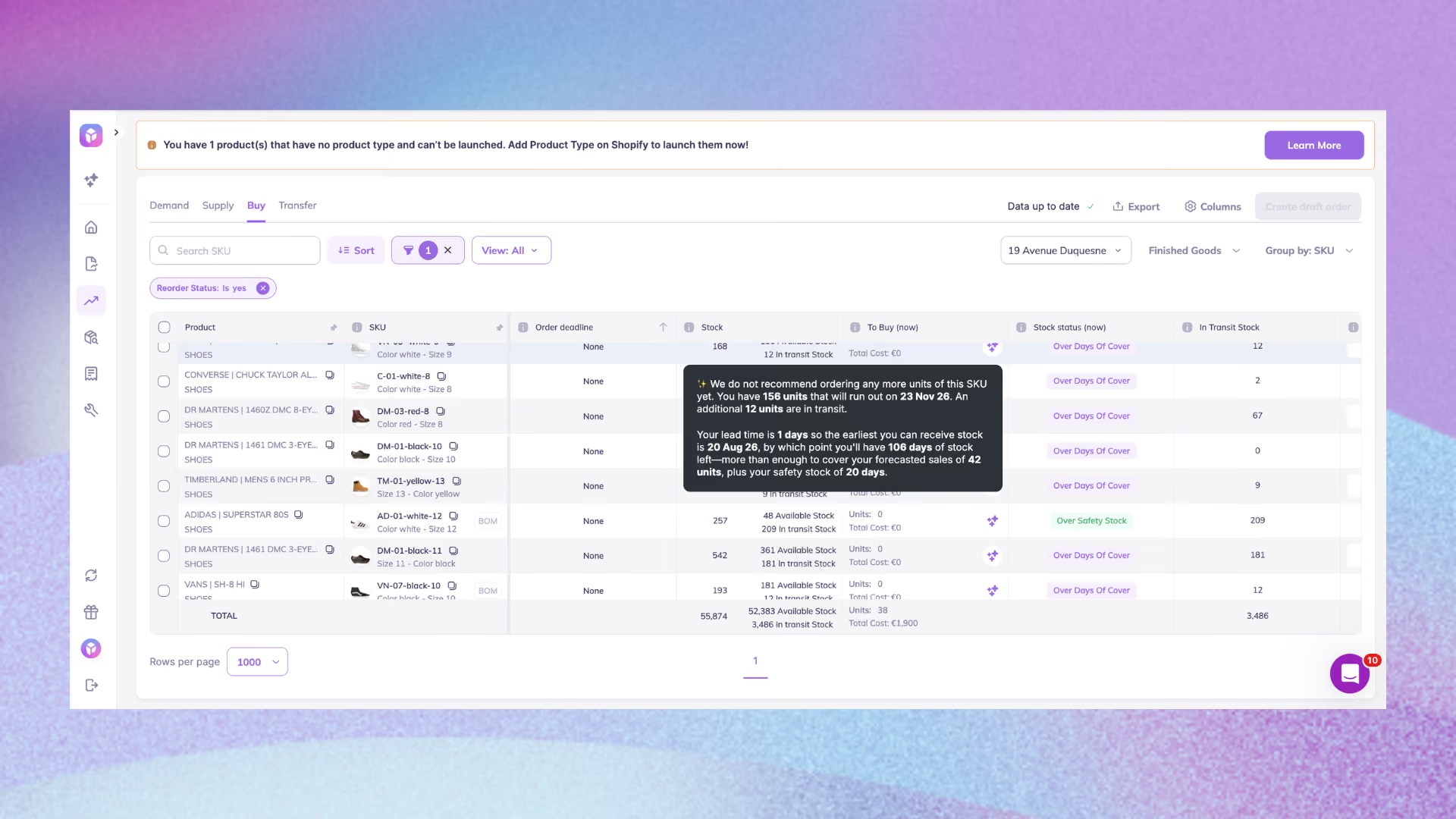
With Prediko, you don't need to manually calculate ROPs. Simply set safety stock and order frequency, and receive automated alerts for when and how much to reorder based on demand and lead times.
- Set PO deadlines
Next, set vendor-specific PO deadlines by counting backward from November 27, factoring in port congestion, customs, and 3PL intake to keep inventory flowing smoothly.
- Test different demand scenarios
Finally, plan for uncertainty with demand scenarios: 1.0x (baseline), 1.5x (moderate surge), and 2.0x (extreme surge), assessing the impact on cash, margins, and risk.
Prediko lets you edit demand plans instantly to see how changes affect inventory and finances.
4. Allocation, fulfillment, and 3PL readiness
Smart inventory allocation is what separates a successful BFCM campaign from a stockout disaster.
- Start with omnichannel allocation.
Split stock between channels based on historical demand and marketing campaigns. This prevents overselling or stockouts and maintains a consistent customer experience across channels.
If you sell across multiple warehouses or store locations, don't just guess where demand will spike. Use inventory transfers to move stock based on real demand signals.
- Coordinate early with 3PL partners to prevent fulfillment issues.
Confirm receiving cutoffs for new shipments. Most 3PLs stop accepting stock 7–10 days before Black Friday to focus on outbound orders.
Make sure they have staffing for 3–5x normal volumes and are clear on wave-picking schedules, so orders flow smoothly.
- Finally, tie your fulfillment plan to your marketing commitments.
Align pack-and-ship SLAs and delivery promises with carrier capacity and promotional deadlines. Accurately communicate last-ship dates to customers to manage expectations, reduce cancellations, and maintain trust.
5. Operate live during BFCM
It's essential to monitor your store in real time throughout BFCM. Keep a close eye on sell-through rates, low-stock alerts, and revenue versus plan.
Track how ad spend aligns with available inventory to avoid promoting items you can't fulfill.
If a SKU is at risk of stockout, pause or cap promotions immediately to prevent overselling and customer frustration.
Take an inventory-aware approach to merchandising. When top-selling SKUs hit thresholds, promote adjacent substitutes to capture demand without losing sales. Use bundles and kits to move B- and C-tier inventory strategically, maintaining margins while maximizing sales.
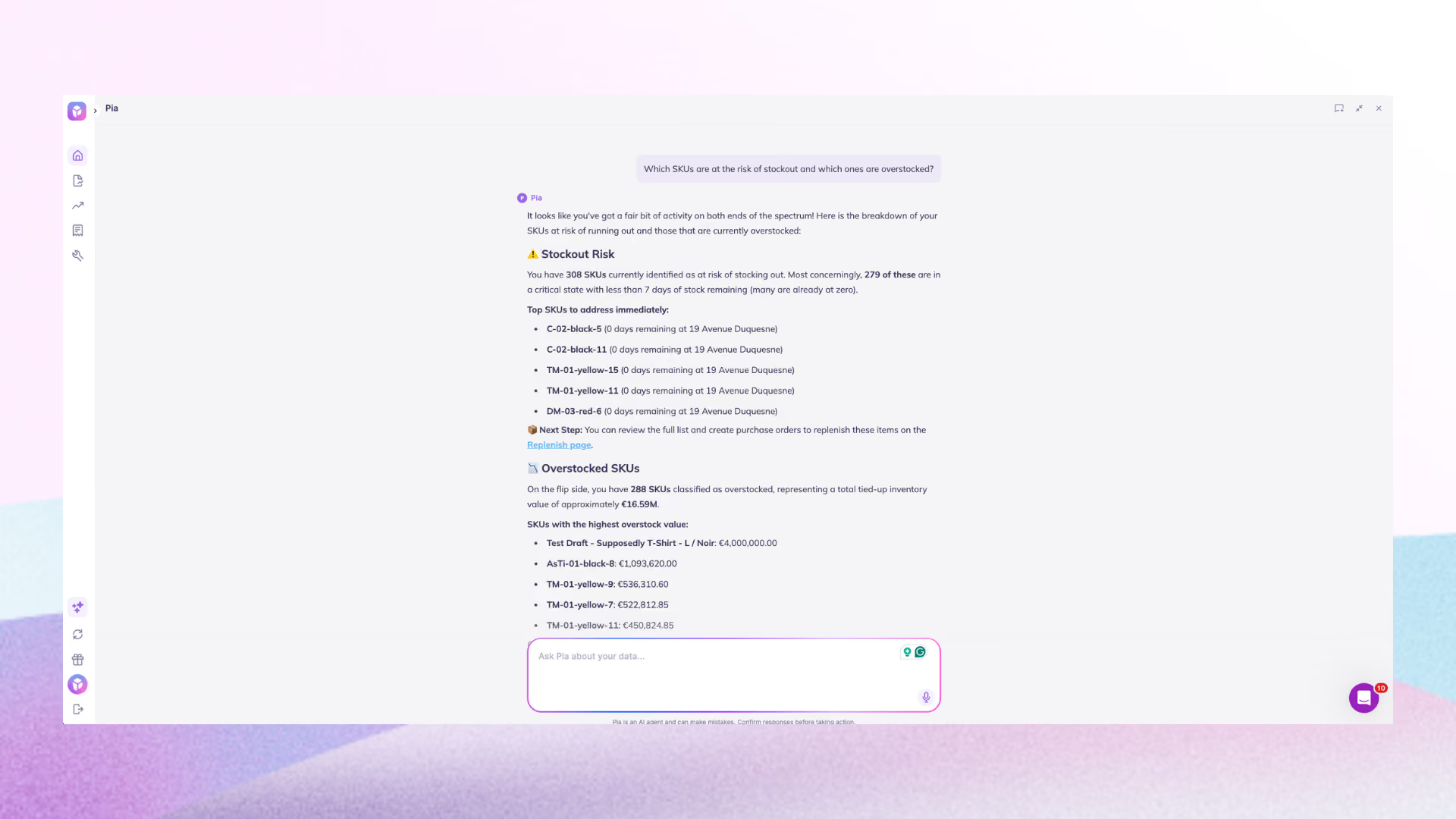
If you're using Prediko, it sends low-stock alerts factoring in safety stock and lead times so you're stocked before the demand hits. And if you don't have time to dig through tables during the rush, you can just ask Pia, their AI inventory agent.
6. Prevent stockouts without overbuying
When your bestsellers approach stockout, don't panic-order expensive inventory that might arrive too late. Instead, set up preorders and waitlists that capture customer demand while maintaining cash flow.
Set up preorders only when you have confirmed restock dates from suppliers. Customers will accept 2–3 week delays if you're transparent about timing, but they'll abandon orders if you keep pushing back delivery dates.
Create waitlists for uncertain restocks. Capture emails and phone numbers to retarget these high-intent customers with substitute products or future launches.
Deploy messaging to steer demand toward available products. For example, when your top-selling black hoodie hits low stock, send targeted emails/SMS to interested customers with your navy and gray options.
For financial safety, make it a habit to track Gross Margin Return on Investment (GMROI) daily, i.e., Gross Margin / Average Inventory Investment. Aim for a GMROI above 3.0. Track cash burn versus plan; if it's 20% over plan, tighten promos and pause non-essential POs.
7. Post-Black Friday Cyber Monday exit and debrief
After BFCM, it's critical to review what worked and what didn't. A clear post-BFCM debrief helps you manage leftover stock, process returns quickly, and gather insights to improve next year's strategy.
- Lay down a markdown and liquidation plan. Predefine markdown triggers based on sales velocity and remaining stock levels. For example, reduce price by 15% if 30% of stock remains 3 days post-BFCM.
Assign specific channels for liquidation and decide which SKUs can be bundled or offered as gifts to clear excess. Track performance to inform your strategy next year. - Set up a returns and refurb flow. First, separate return-prone SKUs and fast-track resellable items. Inspect returns immediately for damage, refurbishment, or repackaging, and restock quickly.
For unsellable items, decide whether to donate, recycle, or liquidate. Track high-return SKUs to guide future inventory planning and supplier negotiations. - Maintain a post-mortem template. Run a post-mortem within a week of BFCM. Record top and underperforming SKUs, lead-time deviations, and promotion impact on margin.
Note operational bottlenecks like stockouts or fulfillment delays. Use this template to refine forecasting, marketing, and operations for 2027.
Common Black Friday Inventory Questions, Answered by Prediko
You've got the checklist. Here are the practical questions that come up once you actually start executing it.
How much extra inventory buffer should you keep for Black Friday and Cyber Monday?
There's no single universal number; it actually depends on your sell-through history and how volatile your demand is. But a common range is 20-40% above your baseline forecast for proven bestsellers, tighter for anything new or untested.
Adjust the final buffer by SKU based on lead times, supplier reliability, and the cost of stocking out versus overbuying.
What's the best financing option for Black Friday inventory?
It depends on how fast you need the cash and how predictable your sales are:
- Shopify Capital: Fixed Funding gives a lump sum upfront, repaid as a fixed percentage of daily sales (no fixed due date, so it flexes with a slow week). Capital Flex is a revolving line of credit (US stores), you pay a monthly fee only on what you draw, redraw after repaying.
- Revenue-based financing (Wayflyer, Clearco, 8fig, Onramp Funds): approval is based mostly on your Shopify sales history, and repayment scales down automatically after BFCM instead of hitting you with a flat payment in a slower January.
- Supplier/PO financing: some partners pay your supplier directly against a confirmed purchase order, worth asking about if MOQs, not product cost, are your real bottleneck.
The goal isn’t to take on more debt. It’s to avoid buying too little simply because cash is tight. Before ruling out financing, calculate how much extra revenue that inventory could generate during Q4.
What if my 3PL can't handle Black Friday volume?
This happens more often than merchants expect. A 3PL that handles normal order volumes well may struggle when orders jump 5x and you might not know until shipments are already delayed.
Build the backup plan now, not on November 27th:
- Line up a secondary 3PL or overflow warehouse ahead of peak season, even just a signed agreement for emergency capacity, not a relationship you're paying for year-round.
- Diversify carriers. If your primary carrier hits a capacity or surcharge wall, a regional or last-mile carrier can absorb overflow without stalling your whole fulfillment chain.
- Consider a hybrid model. In-house fulfillment for bestsellers, 3PL for the long tail, co-warehousing in reserve. More moving parts, but no single point of failure.
- Start the conversation 3-4 months out. Backup 3PLs need lead time to forecast your volume and staff for it.
How can Shopify sellers prepare for Black Friday shipping surges?
A successful sale creates a second problem right behind the first: getting everything out the door on time.
- Confirm carrier peak-season cutoffs for guaranteed delivery and update your site's shipping estimates to match, so "arrives by Christmas" is a promise you can keep.
- Add extra time to your delivery promise, along with extra stock. A 3PL that ships the same day in October may take 48 hours during peak season, so set customer expectations before the sale begins.
- Ask your 3PL to prioritize fast-selling SKUs so your bestsellers do not get stuck behind slower-moving orders.
What do I do if I overstock after Black Friday?
Some SKUs will not sell through, even with a solid forecast. Use an excess/overstock inventory view to identify slow-moving inventory. Act early, because waiting until January ties up more cash and often forces deeper discounts.
- Run the GMROI check first. If a SKU's return on the shelf space it occupies has dropped below your threshold, it's a clearance candidate now.
- Bundle, don't just discount. Pairing slow movers with a bestseller (an ABC-analysis move) protects margin better than a blanket markdown.
- Clear through a separate channel: outlet collection, email-only flash sale, wholesale/liquidation partner, so discounting overstock doesn't train regular customers to wait for markdowns.
- Feed it back into next year's forecast. Log which SKUs overstocked and why (wrong size curve, over-forecast trend, weak creative) so it doesn't repeat.
What features should I look for in a managed webhook platform so no Black Friday orders slip through?
"100+ integrations" sounds reassuring until an order's placed and your inventory count doesn't move for twenty minutes. During BFCM, that's long enough to oversell a bestseller a dozen times over. Look past the integration count and check for:
- Real webhook coverage: orders/create, inventory_levels/update, and products/update should trigger an instant push in real time.
- A queue with retry logic: If an event fails during a traffic spike, it should be queued and processed again, not lost.
- Rate-limit handling: Shopify's API has hard request limits, and BFCM traffic is exactly when you'll hit them. The platform should manage that automatically instead of dropping updates.
- One inventory record: Shopify, your WMS, and your 3PL should all work from the same stock count.
Prediko syncs with Shopify in real time, updating your inventory whenever an order comes in. This keeps your buying plan and stockout alerts based on the latest stock levels.
How Prediko Helps You Nail Black Friday Inventory
Black Friday and Cyber Monday can make or break your year. Too little stock, and you miss sales. Too much, and cash gets tied up in inventory that may never move.
Here's how Prediko fits into your BFCM timeline, from the first forecast to the final debrief.
Brands using Prediko have cut stockouts from 4% to 1% in two months, reduced stockouts by 35%, and achieved 93% SKU availability while reaching their sales target.
Weeks before: build a forecast you can trust
Before you commit to a number, run a quick Stocktake so your starting counts are accurate. From there, AI-Powered Demand Forecasting turns last year's sales, seasonality, and growth trends into a SKU-level target.
AI Supply Planning checks that target against a 12-month PO calendar and your real supplier capacity, so you know it's achievable before you spend a dollar on stock.
Days before: get stock to the right locations
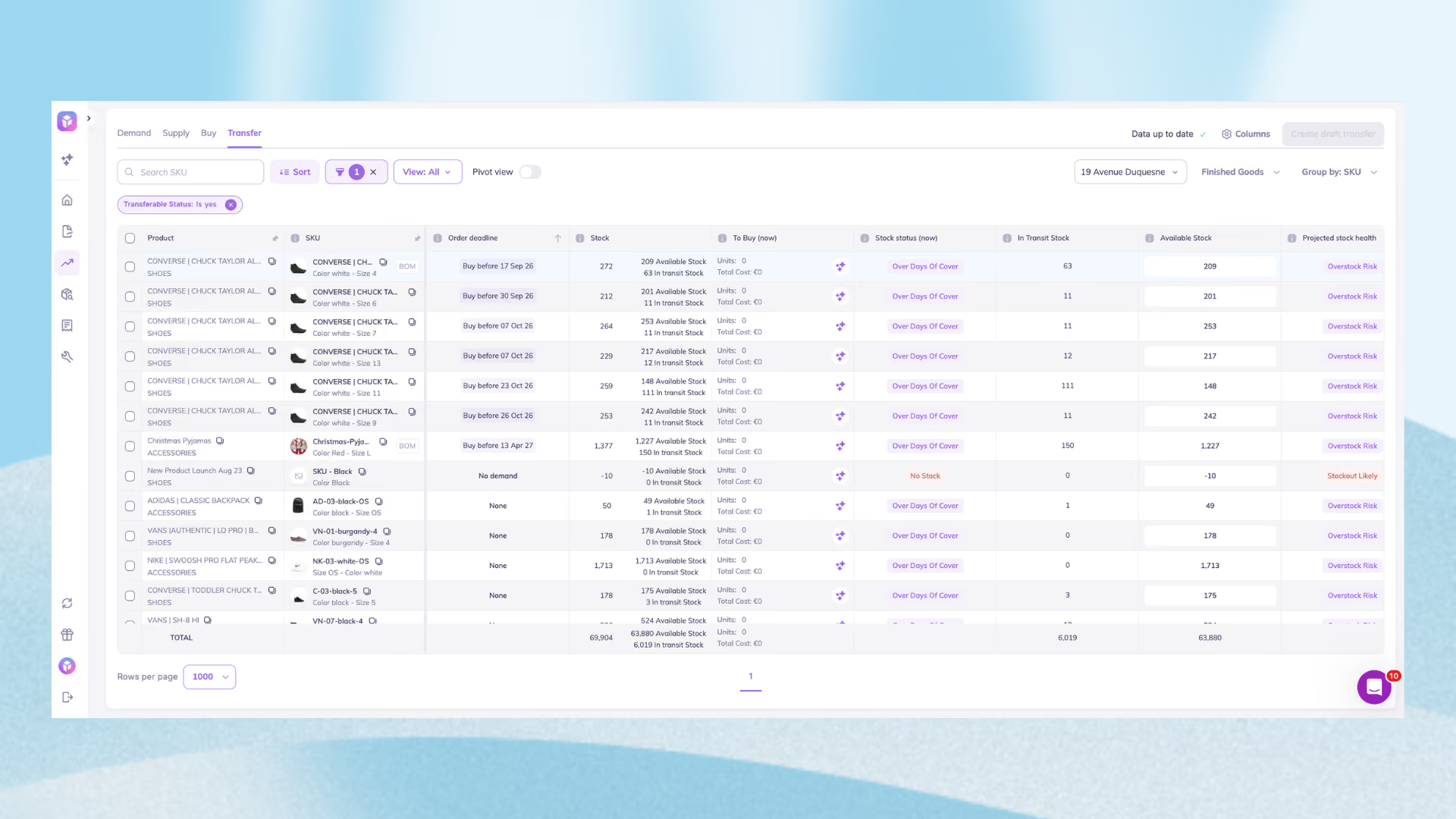
As POs land, multi-location inventory management keeps Shopify, warehouses, 3PLs, and POS locations in sync, with location-based restock suggestions so no site runs dry.
If demand is shifting toward specific warehouses or stores, AI-recommended Inventory Transfers tell you what to move and where, before you have to ask.
During BFCM: react before customers notice
Plan tracking & alerts flag when sales or inventory start drifting from your plan, giving you time to adjust.
Actionable Views surface at-risk SKUs, slow movers, and bundle opportunities across 100+ metrics. Prediko also tracks inventory at the component level, showing exactly how many units of each SKU a bundle requires. This helps you pair slow-moving C-tier stock with bestsellers and clear excess inventory without guessing quantities.
If you already work in Claude, connect it to Prediko through MCP to access your live inventory, forecasts, and purchase orders without switching tabs. Ask what is at risk, check what changed, or take action directly from the conversation.
You can also ask Pia, Prediko’s AI inventory agent, for instant answers, task handover, and proactive alerts inside Prediko, Slack, or WhatsApp.
For brands running production, Raw Materials Management keeps the right materials on hand throughout, so manufacturing doesn't become the bottleneck.
After BFCM: review what actually happened
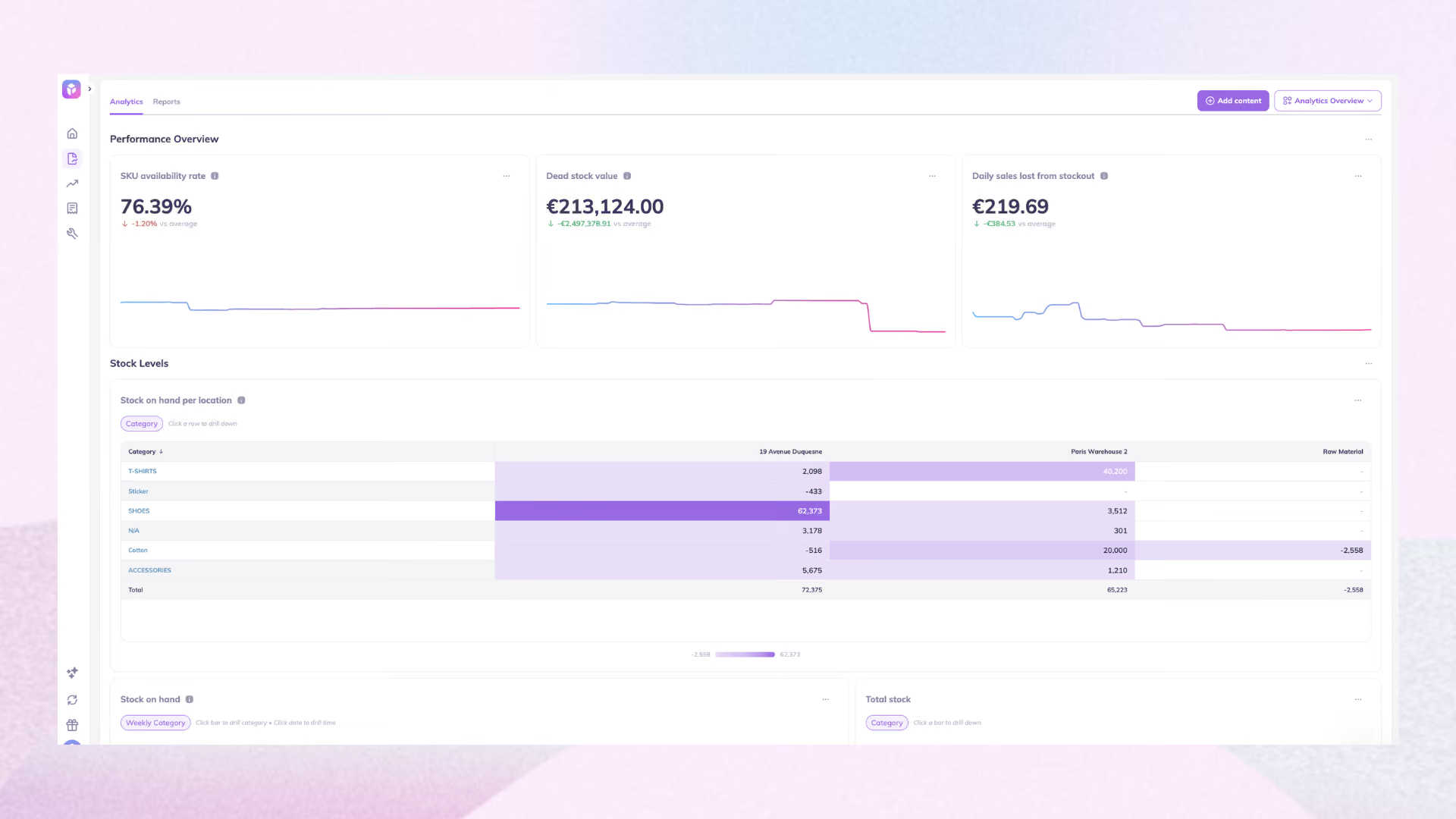
Once the dust settles, Granular Reports & Analytics give you 20+ ready-made reports and custom dashboards on sales performance, SKU profitability, and inventory tied up, scheduled straight to your inbox if you'd rather not go looking for them.
With Prediko, you get precision, visibility, and control over your inventory, so you can focus on growing revenue and delighting customers, rather than just trying to catch up;
Begin Your Black Friday Inventory Planning Today
Black Friday and Cyber Monday can be the most profitable period for your Shopify store. However, success comes down to how well you plan, execute, and adapt in real time.
By following this 7-point Black Friday inventory checklist- from pre-BFCM planning and allocation to live monitoring, stockout prevention, and post-BFCM debrief- you can stay ahead of demand, protect margins, and keep customers happy.
Prediko supports every step of the process, using AI to forecast demand and plan supply, track revenue against targets, manage multi-location inventory and transfers, streamline purchase orders, count stock accurately, and generate actionable insights for future peak seasons.
With the right preparation and tools in place, you can beat all your past BFCM sales records. Start your free 14-day trial of Prediko and take the first step today.
Other Frequently Asked Questions
When should I place purchase orders for imports vs. domestic?
Place import orders 6–10 weeks before BFCM, domestic 2–4 weeks prior, factoring in lead times and supplier reliability.
Should I manage BFCM inventory with a spreadsheet or dedicated software?
Spreadsheets can work at low order volume, but they don't update in real time and are error-prone at BFCM scale. Dedicated software that syncs live with Shopify (and your WMS) is what actually prevents overselling once volume spikes.
How do I forecast BFCM demand for a brand-new product with no sales history?
Use category or comparable-SKU benchmarks as a proxy, start with a conservative demand scenario, and plan for manual monitoring during Cyber Week so you can reorder quickly if it outperforms. Forecasting accuracy naturally improves once you have a few weeks of real sales data.










.avif)