




You're already using one of the best accounting tools out there: Xero. Clean, reliable, great at tracking cash flow, reconciling accounts, and keeping your books in order.
But if your inventory software doesn't connect with it, your business numbers will start to drift away from reality.
This is because your inventory system shows one number and Xero shows another. You end up with poor purchase decisions, stockouts, overstocks, and transfers recorded in one place but not the other.
To make cost-efficient and smart inventory decisions, you need to keep inventory operations in sync with your accounting.
This is why we're breaking down the best inventory management tools for Xero that integrate seamlessly with it.
8 Best Inventory Management Software for Xero
1. Prediko
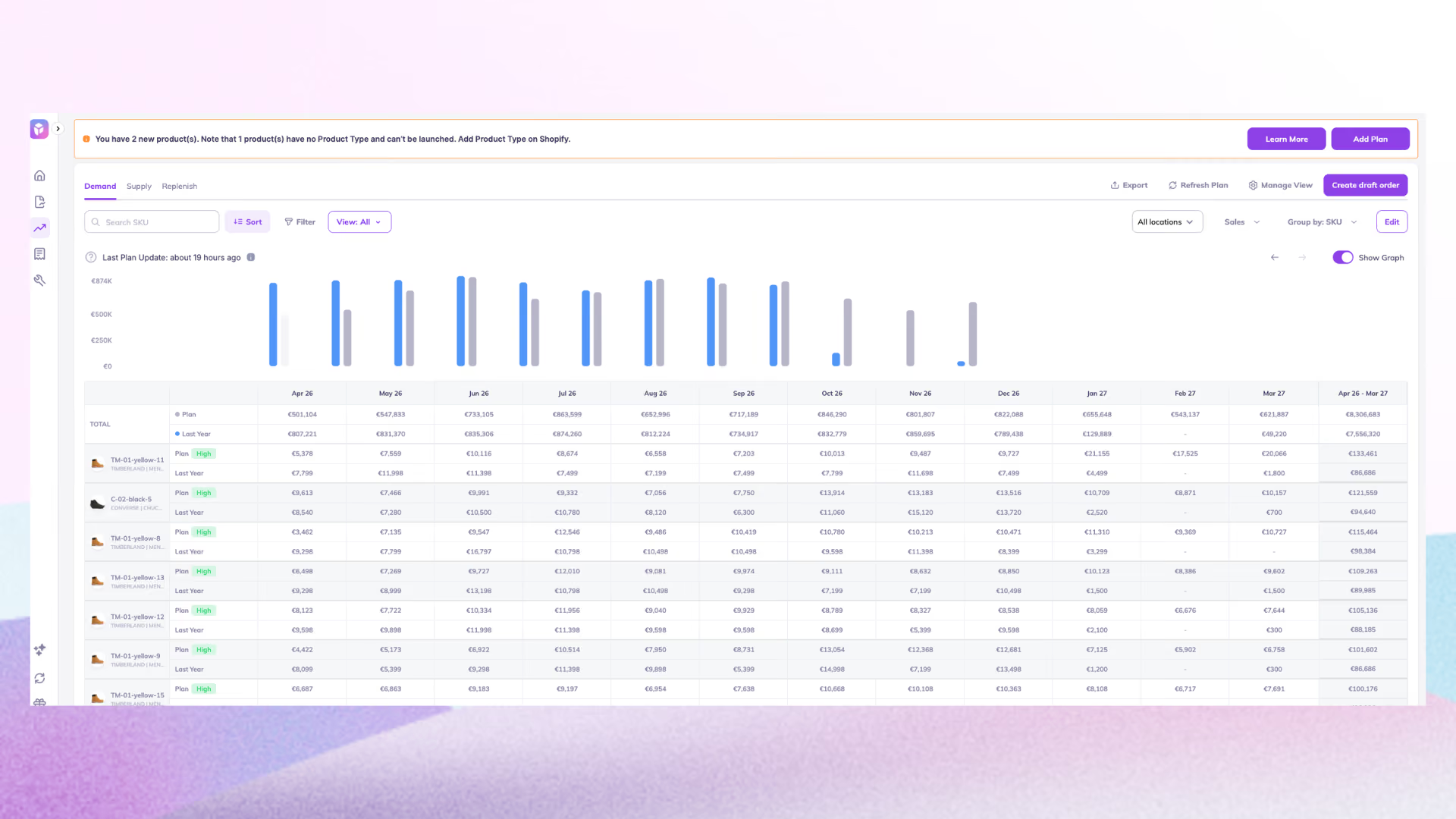
First up is Prediko, an AI-powered inventory management and forecasting tool built specifically for D2C brands.
It closes the loop between inventory management and accounting as POs in Prediko sync directly into Xero as bills, eliminating the manual entry that brands are still doing today.
It's the best inventory app for Xero integration on this list because it is purpose-built for how modern D2C brands operate.
Key Features
- AI demand forecasting that predicts what to order and when based on sales trends, seasonality
- AI supply planning and replenishment; auto-generates a 12-month PO calendar so you're always buying ahead of demand
- Purchase order management to create, send, and track POs to suppliers in clicks
- 20+ inventory reports and analytics templates built for D2C decision-making
- 100+ integrations with ecommerce tools, WMS, and 3PLs
- Multi-supplier management to assign multiple suppliers to the same SKU, each with its own lead time and pricing
Pros
- Highly reliable AI trained on 25 million SKUs across 15 industries
- Handles complex variants and bundles across channels
- Fast onboarding; most brands are live within hours
Cons
- Integrations with some WMS/3PLs are still in development
- May be more complex than needed for very small stores
Pricing
Prediko offers tiered pricing based on your store’s revenue. Plans start at just $49/month for small businesses and scale up with the revenue of the business. All plans include unlimited SKUs, purchase orders, and users.
2. Unleashed
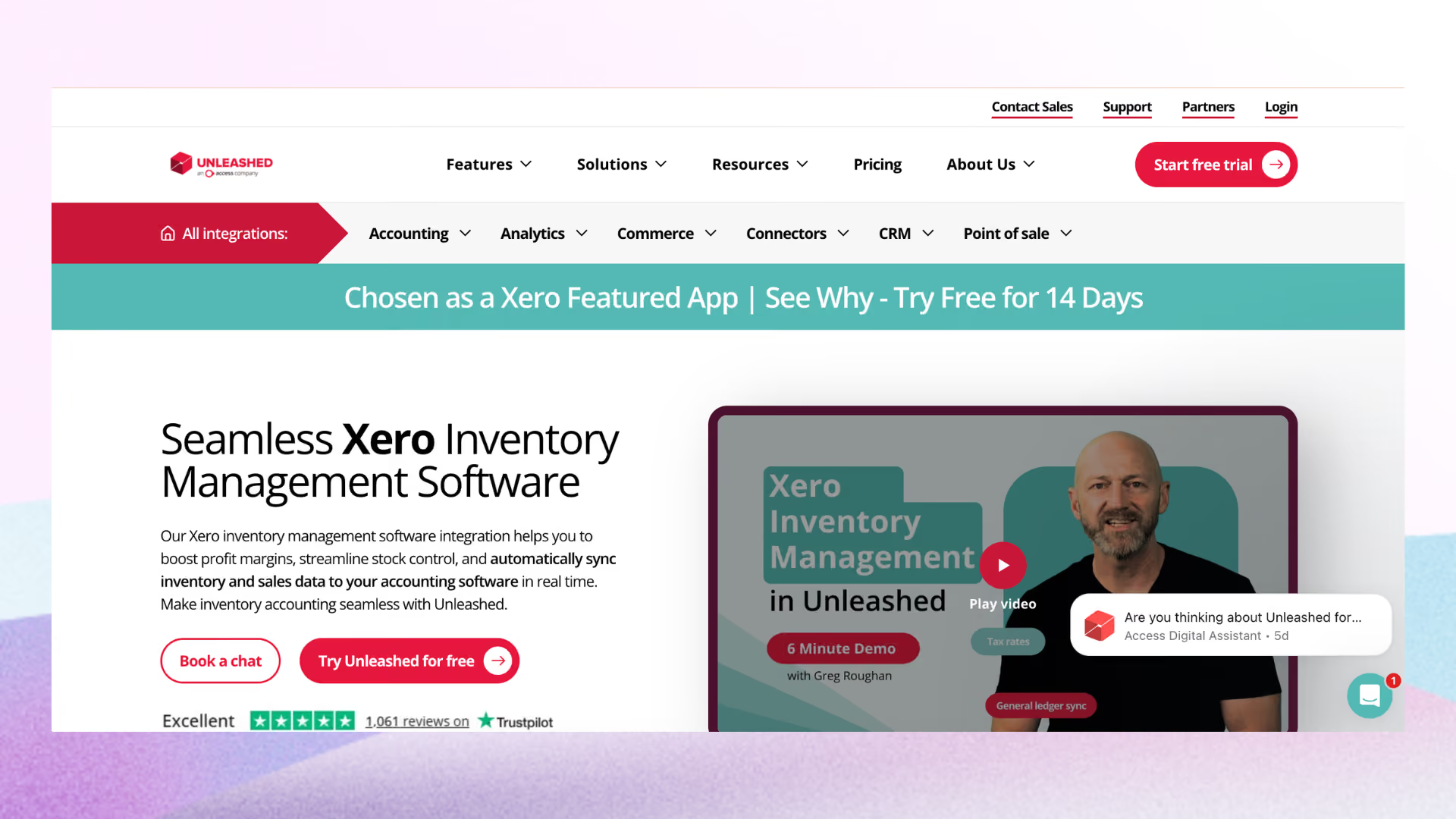
Unleashed is an inventory platform built for manufacturers, wholesalers, and distributors. It offers a Xero integration that works well for businesses with complex warehouse operations.
Key Features
- Real-time inventory tracking across multiple warehouses
- Purchase order management with demand forecasting
- Bill of materials and assembly management
- Xero native sync for stock movements, invoices, POs, etc
Pros
- Reliable Xero integration with strong user feedback
- Good reporting features for operations-heavy businesses
Cons
- Expensive compared to other options
- Steep learning curve, especially during onboarding
Pricing
Starts at $399/month. Free trial available.
3. Zoho Inventory
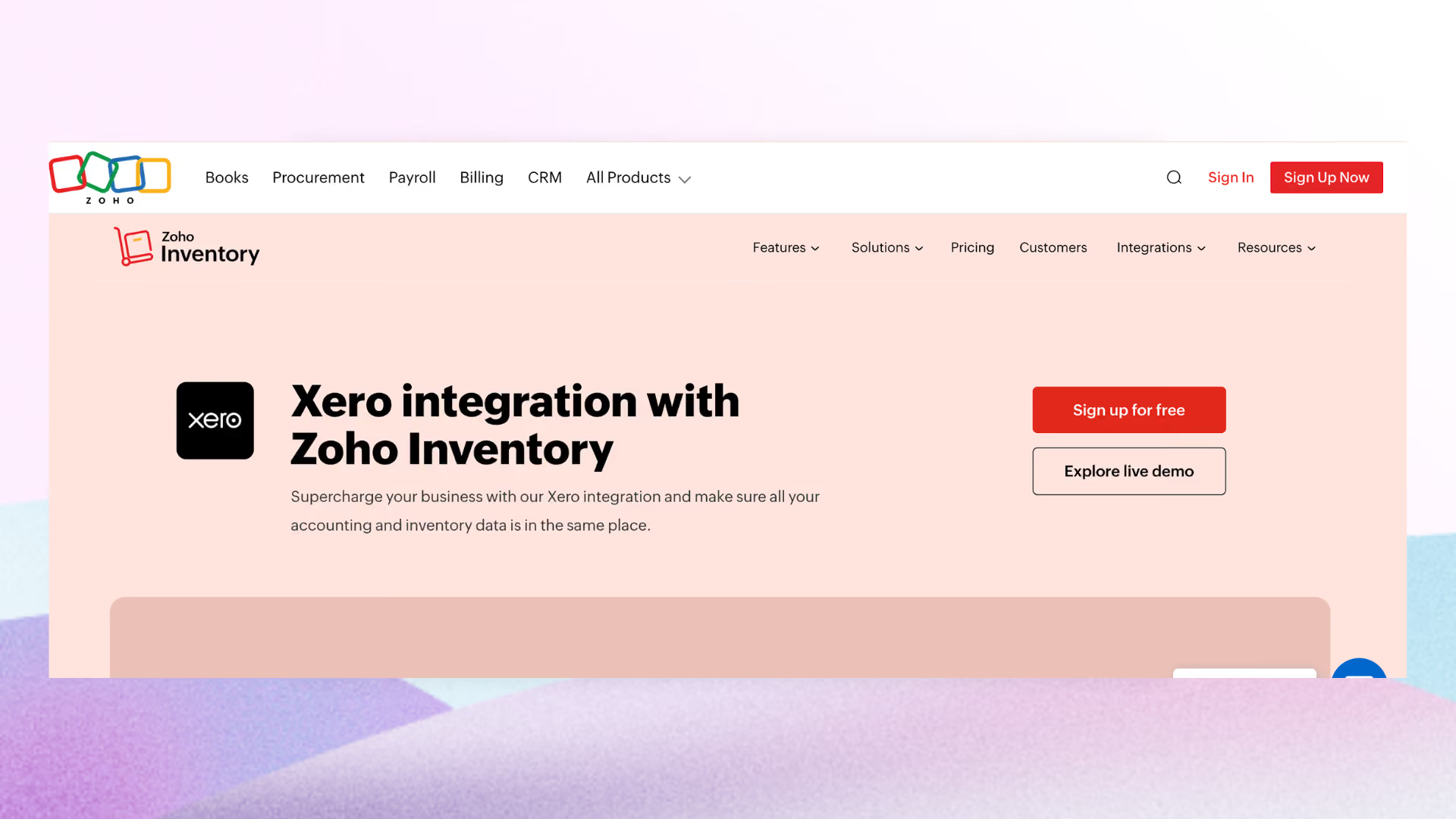
Zoho Inventory is best suited for businesses already using Zoho products, particularly Zoho Books, and for SMBs that need multi-channel inventory management without a high price tag.
Key Features
- Multi-channel inventory tracking across Shopify, Amazon, eBay, and Etsy
- Automated order processing from creation to shipping
- Batch and serial number tracking for product traceability
- Built-in shipping carrier integrations for label generation and rate comparison
- Deep integration with Zoho CRM, Zoho Books, and Zoho Analytics
Pros
- Paid plans are cheaper than some competitors
- Strong fit for businesses already in the Zoho ecosystem
Cons
- Xero integration is not its strong suit, works better with Zoho Books
- Limited reporting and customization
Pricing
Paid plans from $29/month
4. Katana
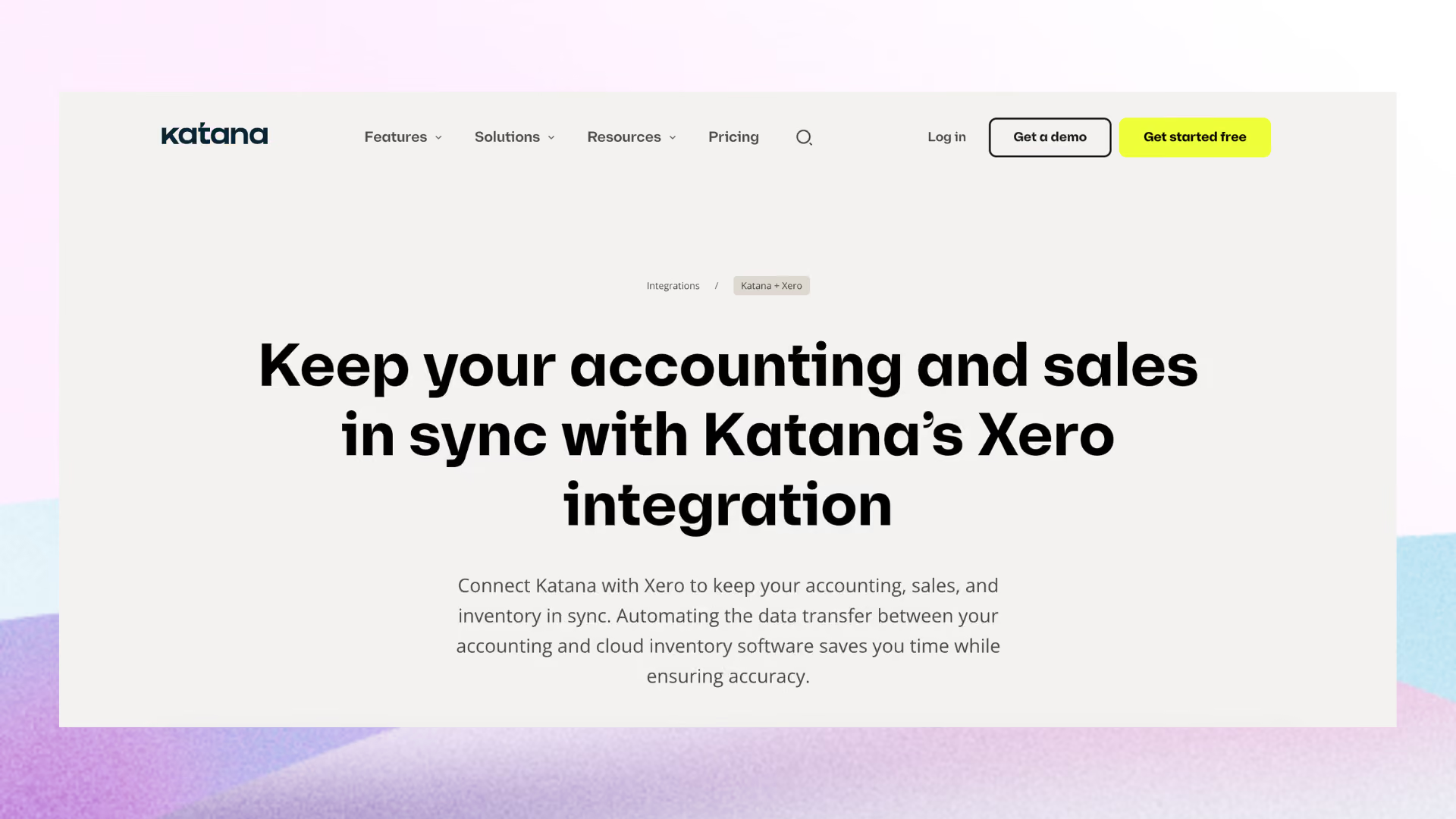
Katana offers a Xero integration that is particularly popular with D2C brands making their own products and need to connect production planning with eCommerce orders.
Key Features
- Real-time inventory tracking across raw materials and finished goods
- Visual production scheduler with drag-and-drop manufacturing order management
- Bill of materials management with multi-level BOM support
- Shopify, WooCommerce, and BigCommerce integrations with two-way sync
Pros
- Clean interface, easy to onboard
- Xero integration is widely praised by users
Cons
- Multiple users report unexpected price increases after year one
Pricing
From $299/month. Free trial available.
5. Cin7 Core
Cin7 Core is an order and inventory management software compatible with xero, that’s built for small to mid-size product businesses.
It works well for Xero users as its integration has been refined over time and is widely praised for sync depth. It handles inventory, purchasing, manufacturing, and multi-channel selling in one system.
Key Features
- Multi-location inventory tracking with real-time stock visibility
- Purchase order and sales order management with automated workflows
- Light manufacturing with BOM, assemblies, and job cards
- Omnichannel selling across Shopify, Amazon, eBay, and WooCommerce
- Integrated POS for physical retail
- Advanced reporting and analytics
Pros
- Xero integration is deep and reliable
- Unlimited users on all plans
Cons
- Frequent price increases reported by long-term users
- Occasional sync issues and bugs noted across reviews
Pricing
Starts at $349/month
6. Qoblex
Qoblex is an inventory and order management platform built specifically for eCommerce businesses and is a strong choice for brands that want a clean, focused Xero integration without the complexity of enterprise tools
Key Features
- Multichannel inventory tracking across Shopify, Amazon, and other platforms
- Purchase order and sales order management with real-time stock updates
- Bundle and kit management
- Multi-warehouse inventory transfers and tracking
- Demand forecasting and replenishment recommendations
- B2B ordering platform for wholesale
Pros
- Clean Xero integration with good user feedback
- Fast to implement and a responsive support team
Cons
- No AI-powered forecasting or demand planning
Pricing
Available on request
7. inFlow Inventory
inFlow is a reliable, easy-to-use tool for small businesses managing basic inventory.
The Xero integration pushes invoices, bills, and inventory asset values directly from inFlow, reducing double entry across your systems.
Key Features
- Real-time inventory tracking across multiple locations with bin management
- Purchase order and sales order management with barcode scanning
- Bill of materials and assembly tracking for light manufacturing
- 35+ eCommerce integrations including Shopify, WooCommerce, and Amazon
Pros
- Very easy to use, low learning curve
Cons
- Xero integration lacks depth
- No demand forecasting or AI-powered replenishment
- Manufacturing support limited to basic assemblies
Pricing
Starts at $129/month. 14-day free trial available.
8. Fishbowl
Lastly, we have Fishbowl, an inventory and manufacturing management platform for small and mid-size businesses, built specifically to extend the capabilities of accounting software like QuickBooks and Xero.
It was built for industrial and manufacturing use cases
Key Features
- Real-time inventory tracking across multiple warehouses and locations
- Auto purchasing with landed cost calculation and automatic accounting reconciliation
- Material requirements planning (MRP) for production & manufacturing management
- eCommerce integrations with Shopify, Amazon, WooCommerce, and eBay
- Warehouse management: pick, pack, barcode scanning, and 3PL support
Pros
- Deep, well-established Xero integration covering full AP/AR cycle
Cons
- Steep learning curve with time-consuming implementation
- Per-user and per-module pricing adds up quickly
- Not purpose-built for Shopify D2C brands
Pricing
Starts at $229/month
What to Look for in a Xero Inventory Add On
Xero does have a native inventory feature which lets you track stock levels, attach items to invoices and POs, and get a basic view of what's on hand. For a very small operation, that might cover you.
That said, as your business grows: more SKUs, more orders, more channels, you'll likely find yourself wanting more than it offers because it's an accounting-first tool.
This is why most growing product businesses eventually look for inventory apps for xero that sit alongside it. Here's what the good ones should offer:
1. Real-time, two-way Xero sync
POs become bills in Xero automatically, invoices reconcile, and COGS updates without anyone touching a spreadsheet.
2. Demand forecasting.
The right Xero add-on gives you a proper demand plan and tells you what to order, how much, and when, before you run out.
3. Multi-location tracking
If you have more than one warehouse, store, or 3PL, you need visibility across all of them in one place.
4. Purchase order management
The right inventory management system for xero lets you generate POs directly from your reorder recommendations, send them to suppliers without leaving the platform, and automatically update your stock levels when goods are received.
5. eCommerce integrations
Native connections to Shopify, POS, Amazon with stock levels that update across every channel in real time the moment a sale is made.
6. Reporting that's actually useful
You need reports that show margin by SKU, sell-through rate, days of stock remaining, and supplier performance.
The goal is to be able to answer questions like "which products are draining my cash right now?" or "which supplier consistently delivers late?" without exporting anything to Excel.
How to Choose the Best Inventory App for Xero
The right answer to this question depends on what kind of business you're running.
- You're a Shopify DTC or eCommerce brand: Go with Prediko. It's purpose-built for this, the AI forecasting is genuinely useful, and the Xero sync is tight. Nothing else on this list is designed specifically for how D2C brands operate.
- You manufacture your own products: Katana if you're small and want clean, fast onboarding. Fishbowl if you're larger and need full MRP with deep Xero AP/AR sync. Cin7 Core if you need manufacturing plus multichannel selling in the same platform.
- You're a wholesaler or distributor: Unleashed is the most reliable option with a strong Xero integration. Cin7 Core also works well if you're selling across multiple channels alongside wholesale.
- You need multi-channel eCommerce without enterprise complexity: Qoblex is lean and focused. Cin7 Core if you need more depth.
- You're a small business just getting started: inFlow is the easiest to pick up and run with. The Xero sync is basic but functional, and the interface won't overwhelm your team.
- You're already in the Zoho ecosystem: Zoho Inventory makes sense for the ecosystem fit, but go in knowing the Xero integration may not be its strongest feature.
No More Manual Xero Entries
Xero handles your finances. It's not supposed to run your inventory.
The sooner you pair it with a tool that does, the sooner your numbers actually agree with each other.
Shortlist two or three tools from this list. Take the free trials. Test the Xero integration specifically, push a PO, check if it lands in Xero correctly, and see how fast it syncs.
Frequently Asked Questions
What is the best inventory management software for Xero?
It depends on your business type. For Shopify D2C brands, Prediko is the strongest choice with native Xero PO sync and AI forecasting. For manufacturers, Fishbowl or Katana. For multichannel sellers, Cin7 Core or Qoblex.
Does Xero do inventory management?
Xero has a basic inventory feature for tracking stock and attaching items to invoices. It works for very small operations but lacks forecasting, multi-location tracking, and PO automation that growing businesses need.
Why do I need an inventory app if I already use Xero?
Xero is an accounting tool, not an inventory tool. As you grow, you'll need demand forecasting, automated POs, and real-time stock visibility. An inventory app handles all of this and keeps your Xero accounts in sync automatically.
What features should I look for in a Xero inventory add-on?
Real-time two-way sync, demand forecasting, PO management, multi-location tracking, eCommerce integrations, and solid reporting. The deeper the Xero sync, the less manual work at month-end.
Do all inventory apps integrate equally well with Xero?
No. Some offer deep native sync where POs, invoices, and COGS flow automatically. Others are basic one-way pushes that still need manual reconciliation. Always check the depth of the integration, not just whether it exists.








.avif)