




Inventory forecasting on Amazon isn’t hard because demand is unpredictable. It’s hard because most tools don’t reflect how inventory decisions are made.
Many tools surface numbers, but stop short of helping sellers act on them with confidence. Some are built mainly for reporting, while others focus on replenishment, multi-SKU planning, and execution. These differences have a real impact on day-to-day decisions.
We compared the best Amazon inventory forecasting tools in the market based on how well they support real planning decisions.
The 8 Best Amazon Inventory Forecasting Tools (Tested & Reviewed)
1. Prediko
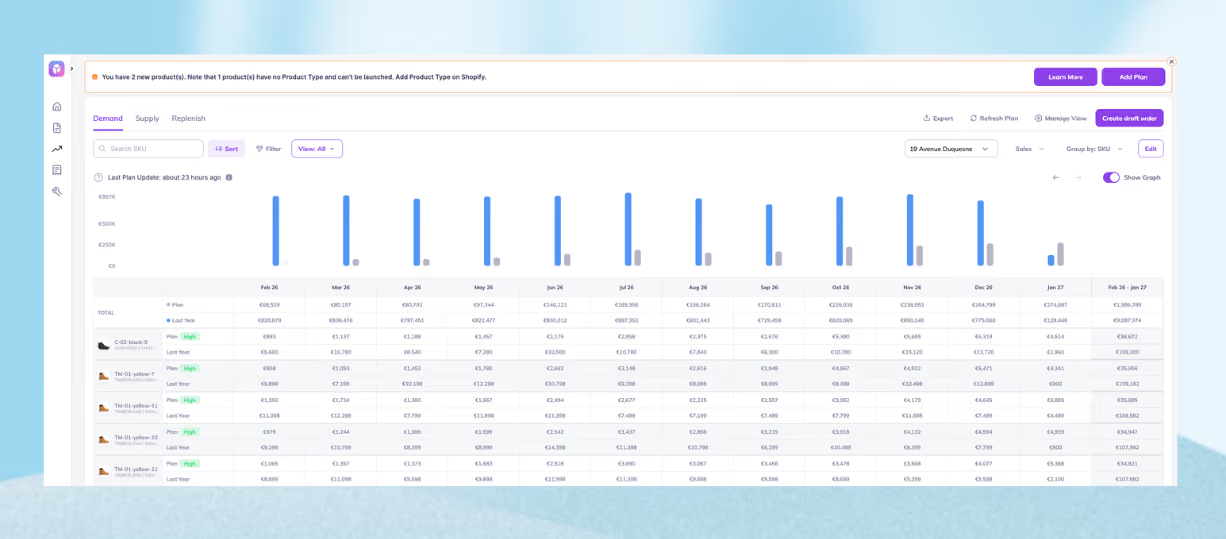
Prediko is one of the best inventory forecasting and replenishment platforms built for brands selling on Amazon (and Shopify)
Instead of treating forecasting, replenishment, and purchase orders as separate steps, Prediko connects them into a single, automated workflow.
It pulls real-time Amazon sales and inventory data directly from Seller Central (via CED Commerce), structures it, and continuously generates SKU-level demand forecasts that account for seasonality, sales velocity, promotions, and planner inputs.
With Prediko, teams can see what to buy, when to buy it, and in what quantities while coordinating finished goods, raw materials, bundles, and multi-location inventory in a single system.
Key features
- SKU-level demand forecasting using AI trained on historical sales, seasonality, growth trends, and promotions
- Supply planning to align demand plans with reality and validate the budget
- Replenishment recommendations based on lead times, safety stock, and current sales, with support for multiple suppliers per SKU
- Real-time multi-location inventory tracking across warehouses and stores.
- 1-click PO creation and tracking, with status updates and supplier sharing
- Raw material forecasting based on bills of materials (BOMs) and finished goods demand
- Bundle inventory planning that links bundle sales to individual components
- 20+ customizable inventory and sales reports, with scheduled delivery
Pros
- Highly reliable AI trained on 25 million SKUs across 15 industries
- AI agents to execute tasks for you
- Intuitive interface suitable for growing brands moving past spreadsheets
- Handles complex variants and bundles across channels
- Responsive support team
Cons
- Integrations with some WMS/3PLs are still in development
- May be more complex than needed for very small stores
Pricing
Prediko offers tiered pricing based on your store’s revenue. Plans start at just $49/month for small businesses and scale up with the revenue of the business. All plans include unlimited SKUs, purchase orders, and users.
💡 Prediko is expanding beyond Shopify to native, direct integrations with additional sales channels (like Amazon and TikTok Shop) and WMS platforms (like ShipHero), syncing catalog, inventory, and sales data across all of them, with planning and reporting broken out per channel and store. Start a free 14-day trial.
Prediko ratings and reviews
- Shopify: 4.9/5
- G2: 4.7/5
2. SoStocked
SoStocked is an Amazon inventory management tool built for sellers who want manual control and visibility over their replenishment logic instead of automated forecasts.
It is commonly used by advanced FBA sellers who plan inventory using spreadsheets and want a structured system that mirrors that level of control inside a dedicated platform.
Key features
- Forecasts Amazon demand using historical sales trends and real-time velocity
- Accounts for seasonality to improve forecast accuracy and inventory planning
- Identifies ASINs at risk of stockouts or overstock before issues occur
- Calculates optimal reorder points based on lead times and demand patterns
- Provides visibility into future inventory coverage across FBA and FBM locations
Pros
- Highly customizable; almost every variable in the forecast can be manually adjusted.
- Built by Amazon sellers specifically for the unique pain points of FBA logistics.
Cons
- Requires significant manual input and setup compared to automated tools
- Not well-suited for sellers looking for simple, hands-off inventory recommendations
Pricing
Available on request
3. Jungle Scout

Jungle Scout is a comprehensive Amazon seller platform built to help brands and individual sellers research product opportunities, track performance, manage inventory, and grow their FBA business.
Key features
- Forecasts Amazon inventory demand using historical sales data + supplier lead times
- Calculates how much inventory to reorder and when to replenish each SKU
- Flags products at risk of stockouts or excess inventory before issues occur
- Helps reduce long-term FBA storage fees by preventing over-ordering
Pros
- Offers a Chrome extension for quick market research
- Easy-to-use interface with clear insights, frequently praised by Amazon sellers
Cons
- The inventory management side is less advanced compared to specialized tools
- Data accuracy can sometimes vary in very niche or low-volume categories.
Pricing
Plans start at $29 per month.
4. Veeqo
Veeqo is a multichannel inventory and order management platform designed for ecommerce sellers who want to centralize operations across Amazon, Shopify, eBay, and other sales channels. Owned by Amazon, it focuses on real-time inventory control, shipping automation, and basic demand visibility.
Key features
- Forecasts future product demand using historical sales performance
- Fine-tunes demand forecasts using sales uplift, stock holding time, and lead times
- Provides inventory quantity and valuation visibility by SKU and warehouse location
- Shows sales revenue performance by SKU & product category across marketplaces
- Centralizes forecasting and reporting across FBA, 3PLs, and multichannel sales
Pros
- Owned by Amazon, providing direct integration and built-in claims protection
- Cost-effective for smaller businesses
Cons
- Inventory forecasting features are relatively basic
- Customer support is frequently reported as slow or difficult to reach
Pricing
Plans start at $19 per month.
5. Linnworks
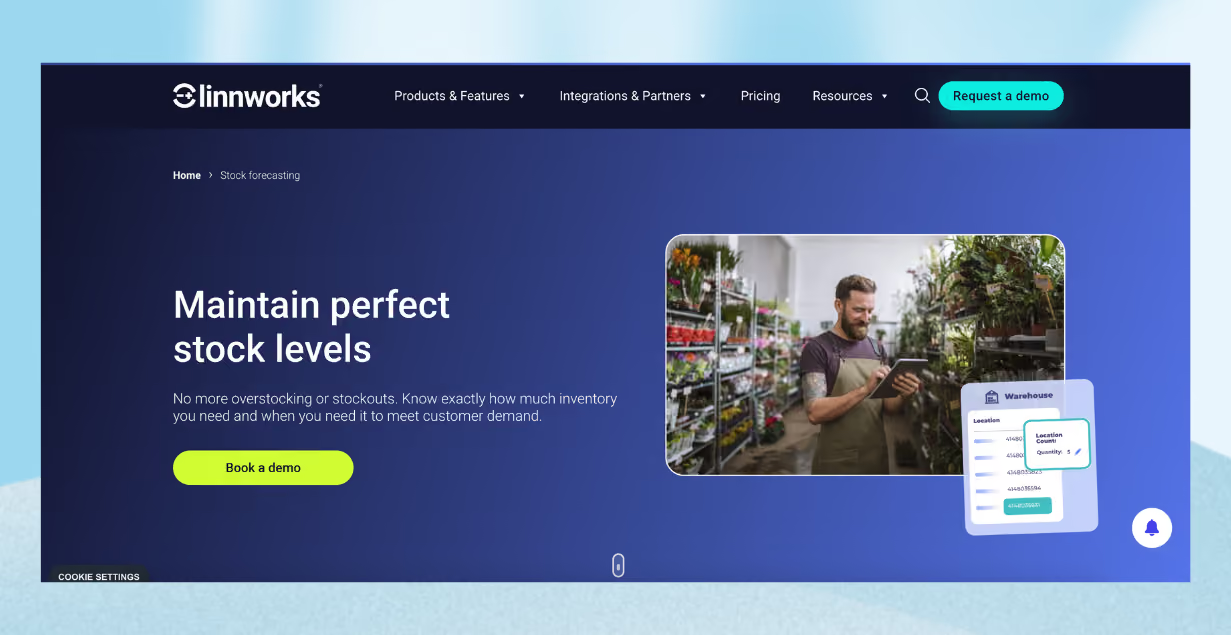
Linnworks is an Amazon-compatible inventory and order management platform that helps sellers forecast stock needs by tracking real-time inventory movement across Amazon and other sales channels.
Key features
- Provides centralized inventory visibility across warehouses and fulfillment types
- Supports forecasting through real-time stock tracking and inventory aging insights
- Helps identify low-stock and out-of-stock risks using inventory alerts and reporting
- Consolidates sales and inventory data in one system
Pros
- Highly stable and scalable
- Centralizes global operations into a single operational hub for unified forecasting
Cons
- Implementation is a long process, typically taking around 2 months
- The reporting features can feel clunky when trying to extract custom insights
Pricing
Available on request
6. RestockPro
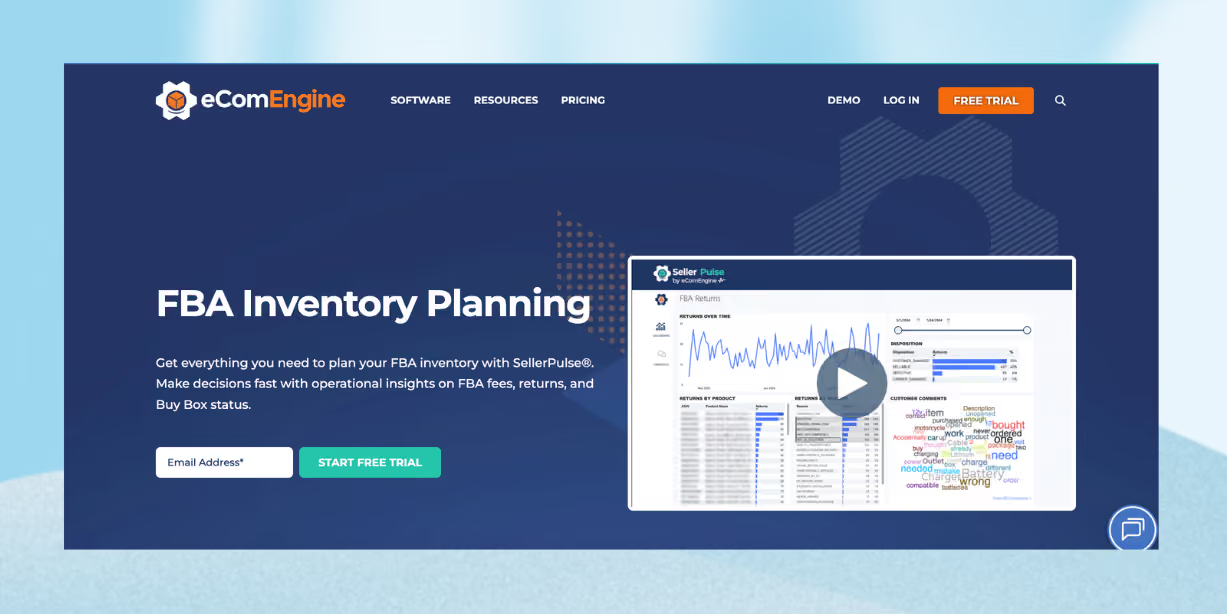
RestockPro is an Amazon FBA inventory forecasting and replenishment tool. It calculates reorder quantities and timing based on SKU-level sales velocity, supplier lead times, seasonality, and Amazon storage limits.
Key features
- Generates FBA restock recommendations using historical sales + inventory metrics
- Calculates days of supply to help sellers maintain optimal inventory levels at FBA
- Flags at-risk SKUs to help avoid low-inventory-level and aging inventory fees
- Supports replenishment planning by combining demand insights with PO workflows
- Evaluates product demand and profitability to guide stocking and kitting decisions
Pros
- Good for Amazon FBA kitting where businesses sell multipacks or bundles.
- Included profitability analysis is a standout feature
Cons
- Interface feels dated and can be difficult to navigate for first-time users
- Not suitable for sellers needing inventory forecasting beyond Amazon
Pricing
Plans start at $49 per month for inventory operations.
7. Helium 10
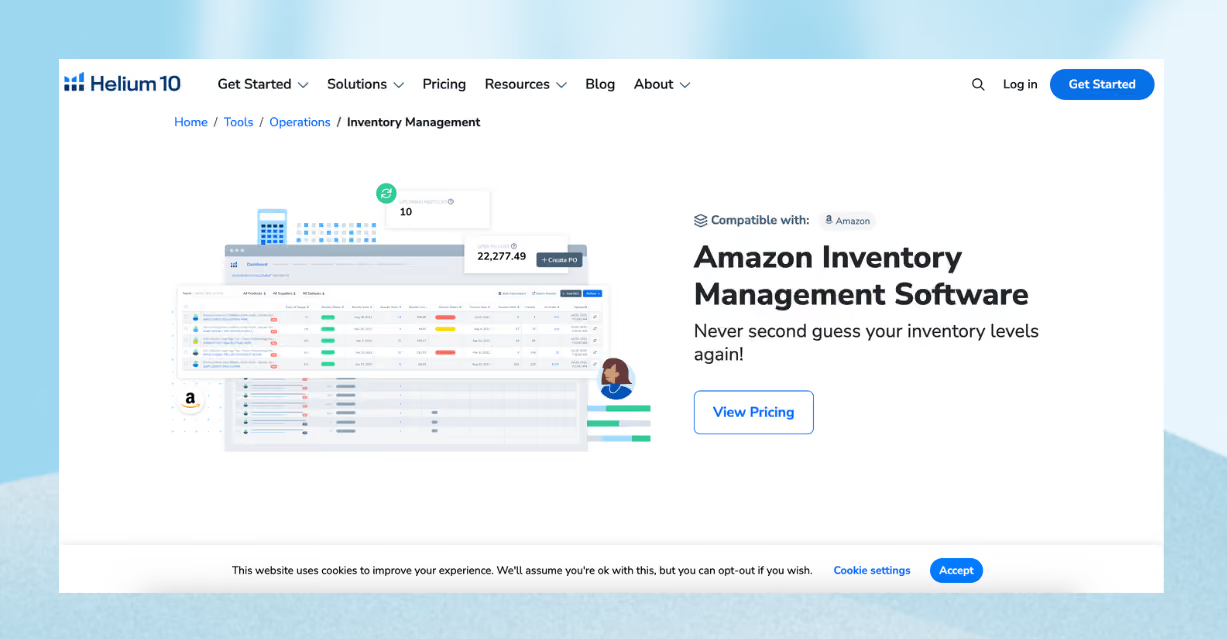
Helium 10 approaches Amazon inventory forecasting as part of a broader seller intelligence suite rather than a standalone replenishment system.
Its inventory functionality helps sellers monitor stock levels, anticipate demand changes, and time reorders, but are primarily designed to complement product research and listing optimization workflows.
Key features
- Predicts Amazon inventory needs using sales trends and restock recommendations
- Quantity tracking and alerts to help prevent stockouts and over-ordering
- Connects purchase order creation and inventory replenishment
- Maintains up-to-date inventory visibility to support accurate planning
Pros
- Combines inventory planning with research and optimization tools
- User-friendly dashboards that make inventory data easy to understand and act on
Cons
- The wide range of 30+ tools can be overwhelming and cluttered for new users
- Can be expensive for sellers who only need inventory planning rather than a full suite
Pricing
Plans with inventory management start at $359 per month.
8. Brightpearl
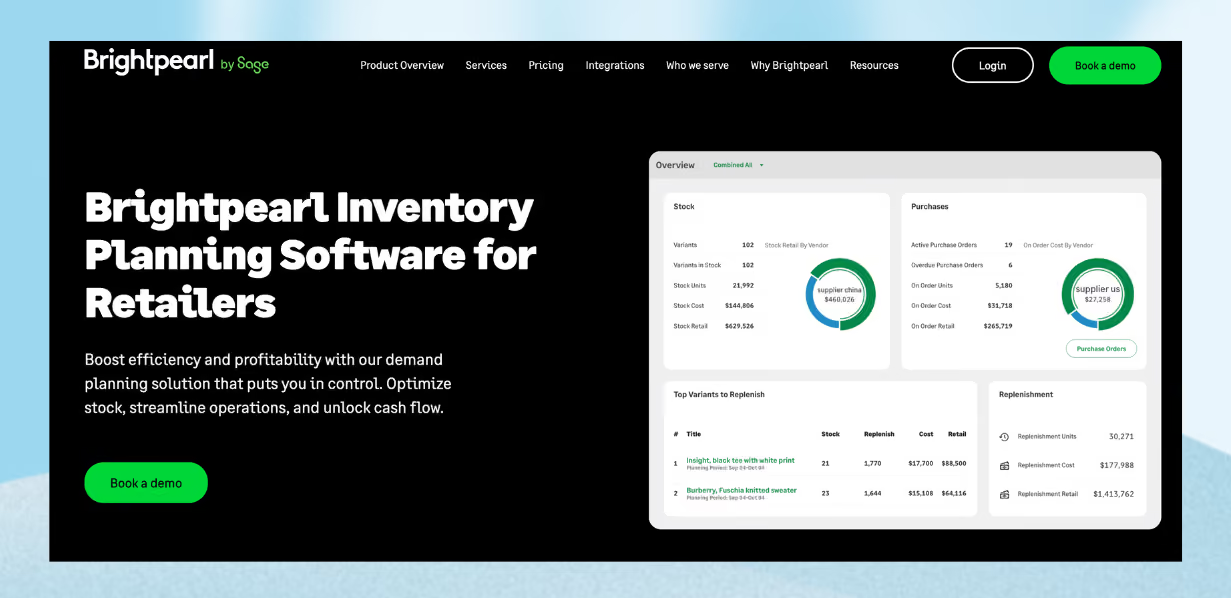
Brightpearl is a retail operations platform that supports Amazon inventory forecasting by synchronizing sales, inventory movement, and fulfillment data across channels.
Rather than focusing purely on forecasting models, it helps Amazon sellers plan replenishment by maintaining accurate, real-time inventory data tied to order flow and warehouse operations.
Key features
- Inventory buying recommendations based on demand forecasts & sales trends
- Factors seasonality, promotions, and supplier lead times into inventory planning
- Forecasts inventory needs across warehouses, stores, 3PLs, and Amazon FBA
- Optimizes stock levels by recommending inventory reallocation across locations
Pros
- Replaces the need for separate accounting software like QuickBooks
- High scalability for brands that also sell in physical retail stores (POS integration)
Cons
- Reporting and analytics are often described as rigid or difficult to customize
- Implementation is slow and expensive, often requiring months of setup
Pricing
Available on request
Important Things to Consider When Choosing an Amazon Inventory Forecasting Tool
With eight tools to evaluate, it’s essential to look beyond features and consider how each handles the following areas.
1. How demand variability on Amazon is modeled
Amazon demand is rarely linear or predictable. Sales fluctuate due to seasonality, advertising activity, Buy Box eligibility, promotions, and even temporary listing disruptions.
A reliable forecasting tool must recognize this volatility and adjust projections dynamically, layering in variables rather than relying on simple historical averages.
Tools that fail to model demand variability accurately are often detached from reality, leading to late reorders or replenishment quantities that no longer align with actual demand.
2. Whether replenishment timing reflects the full FBA timeline
Inventory isn’t sellable the moment it leaves a supplier. In reality, replenishment timing is shaped by supplier lead times, freight transit, prep and labeling, Amazon receiving delays, and occasional inbound backlogs.
A forecasting tool should account for this entire FBA timeline when calculating reorder points. Tools that only factor in supplier lead time often cause sellers to place purchase orders too late, increasing the risk of stockouts despite timely reordering.
3. How the tool incorporates Amazon storage and inbound constraints
Amazon inventory planning is governed by storage limits and restock caps that shift over time and vary by seller account.
Forecasting tools that ignore these constraints can recommend reorder quantities that aren’t actually sendable to FBA, leaving sellers stuck holding excess inventory off-Amazon or delaying inbound shipments.
Effective tools surface these limits directly within the planning process so that replenishment decisions are practical, compliant, and executable.
4. Accuracy of inventory status across all Amazon inventory states
Forecasts depend on having an accurate view of how much inventory is actually available. This includes sellable FBA stock, reserved units, inbound shipments, and stranded inventory.
If a tool misclassifies or omits any of these states, its forecasts will be skewed and reorder quantities will be incorrect. Reliable inventory forecasting starts with correctly interpreting Amazon’s inventory statuses.
5. Level of control and granularity at the SKU level
Inventory forecasting on Amazon is fundamentally an SKU-level exercise. Different products behave differently in terms of demand, seasonality, margins, and risk tolerance.
Tools that aggregate data too broadly make it difficult to plan effectively for individual SKUs. A useful Amazon inventory forecasting tool allows sellers to evaluate and act on inventory decisions at the SKU-level, especially as catalogs grow more complex.
6. How clearly forecasts translate into purchasing decisions
Forecasting is only useful when it’s actionable. Sellers need to know when to reorder, how much to purchase, and what the consequences are if they delay or reduce an order.
Tools that require heavy interpretation or manual translation into purchase decisions undermine their own value. The most practical forecasting tools connect projections directly to replenishment decisions and highlight the risks involved in taking or not taking action.
This is also what separates basic Amazon reporting tools from the best AI-powered inventory forecasting software: the forecast should not just show expected demand, but also guide what to reorder, when to reorder it, and how much inventory risk each decision carries.
Common Features of a Good Amazon Inventory Forecasting Tool
When evaluating Amazon inventory forecasting tools, a small set of features makes the biggest difference in day-to-day planning. These include
1. Forecasting that adjusts for seasonality and growth
An Amazon inventory forecasting tool needs to account for seasonality and growth patterns to ensure accuracy.
Amazon sales fluctuate due to seasonal demand, promotions, and changes in search rankings. If forecasts don’t adjust for these patterns, reorder quantities quickly become inaccurate, causing inventory to arrive too early, too late, or in the wrong amounts.
2. Replenishment recommendations tied to lead times
Forecasts need to translate into clear, actionable reorder timing. A useful Amazon inventory forecasting tool factors in supplier lead times, shipping transit, and Amazon receiving delays to determine when purchase orders should be placed.
Without this connection, sellers end up reacting once stock runs low instead of placing orders early enough to prevent stockouts.
3. Awareness of Amazon storage limits and restock caps
Inventory planning must operate within Amazon’s storage and inbound limits.
A reliable forecasting tool should surface current storage usage (days of cover) and restock caps so sellers don’t plan reorders that can’t be sent to FBA.
Ignoring these limits leads to blocked shipments, delayed replenishment, and inventory sitting idle upstream.
4. Visibility across available, inbound, and reserved inventory
Accurate forecasting depends on a complete view of inventory across all states.
This includes sellable FBA stock, reserved units, inbound shipments, and any buffer inventory held outside Amazon.
Without this visibility, forecasts become distorted, and reorder timing quickly becomes unreliable.
5. Inventory decisions connected to cash flow impact
Inventory forecasting should also reflect financial consequences. Reorder quantities directly affect cash tied up in stock, storage fees, and exposure to long-term storage penalties.
Effective tools offer budget planning, stockout cost visibility, revenue targets vs. actuals, and inventory valuation, so every purchasing decision is made with a clear understanding of its cash flow impact.
What Should You Choose: Amazon MCF vs. TikTok Shop Fulfillment?
If you're selling on both Amazon and TikTok Shop, one question comes up constantly in seller communities: should you fulfill TikTok Shop orders through Amazon's Multi-Channel Fulfillment (MCF), or stick with TikTok Shop's own fulfillment (TTS)?
- Cost. Amazon has been running promotional pricing specifically for this, up to 35% off MCF fulfillment for TikTok Shop orders when you connect through a supported integration partner. That materially changes the cost comparison versus TTS's native fulfillment, at least while the promotion runs.
- Delivery time. There's no definitive public benchmark comparing MCF and TTS delivery speed directly, but sellers report running MCF successfully across both Shopify and TikTok Shop, suggesting it holds up operationally across channels.
- Seller preference. Anecdotally, many experienced multi-channel sellers say they prefer MCF over TTS once they're running orders across more than one channel, it consolidates fulfillment into a single system instead of managing separate logistics per platform.
- Other perks. Amazon also offers FBA credits tied to units shipped through MCF, which can offset some of the cost gap further.
The bigger point for inventory planning: if TikTok Shop orders fulfill through Amazon MCF, your Amazon and TikTok Shop demand are now pulling from the same stock pool, making accurate, channel-aware forecasting more important, not less.
This is exactly the kind of complexity Prediko is building toward. We're expanding beyond Shopify to native, direct integrations with additional sales channels (like Amazon and TikTok Shop) and WMS platforms (like ShipHero).
Replace Manual Planning with Automated Amazon Inventory Forecasting Tools
Most Amazon inventory problems don’t come from sudden demand spikes. They come from forecasting that’s too slow, too manual, or disconnected from how FBA actually operates.
Prediko helps Amazon sellers move from reaction to planning. It continuously analyzes sales trends, seasonality, lead times, and inventory data to surface risks before they turn into blockers. Forecasts flow directly into replenishment decisions, so you know what to order and when.
If you’re ready to plan inventory with more confidence and less guesswork, start Prediko’s 14-day free trial and see it working with your own data.










.avif)