




Managing inventory replenishment has traditionally been a manual and reactive process. But this approach often starts breaking as brands grow.
AI stock replenishment agents flip this process by automating and optimizing replenishment decisions using real-time data and predictive intelligence so that you can easily avoid stock issues.
We drill down into what AI stock replenishment agents are, their capabilities, how they differ from traditional processes, how to implement them, and when to be cautious.
What is an AI Stock Replenishment Agent?
In short, an AI stock replenishment agent is a system that automatically decides or tells you when to reorder inventory and how much to order.
Unlike traditional inventory tools, AI agents continuously learn from new data. But general-purpose AI chatbots are not always built for inventory planning workflows, which is why tools like Claude can struggle with SKU-level forecasting, lead times, and replenishment logic. For a deeper breakdown, read Why Can't Claude Forecast Inventory
They analyze patterns in demand, seasonality, growth trends, and supply constraints to make better replenishment decisions over time.
Since replenishment sits at the center of inventory operations, a single decision, how much to reorder, can directly affect
- Revenue (avoiding stockouts)
- Cash flow (avoiding overstock)
- Warehouse space
- Fulfillment efficiency
- Customer satisfaction
For most brands, this decision has to be made across hundreds or thousands of SKUs, often every week or even every day.
That is why replenishment is one of the most valuable areas for AI: it is high-frequency, data-heavy, and operationally critical.
Let’s have a look at how inventory replenishment has evolved over time
Human planning is flexible but slow and reactive, and rule-based systems automate decisions but lack adaptability, whereas AI replenishment agents combine automation with learning to continuously improve inventory decisions as more data becomes available.
What are the Benefits of Using AI Stock Replenishment Agents
Companies deploying AI stock replenishment agents are already experiencing measurable improvements in how they manage inventory.
Because replenishment decisions happen frequently and across hundreds or thousands of SKUs, even small improvements in decision quality create a significant impact.
Some of the most common benefits include.
1. Improved fill rate
AI agents monitor granular, SKU-level demand and supply continuously and trigger replenishment earlier when stock risk appears.
This helps maintain product availability so that a higher percentage of customer orders can be fulfilled without delays, improving the overall fill rate.
2. Reduced stockouts
Stockouts often happen when demand changes faster than manual planning cycles.
Instead of relying on periodic plan reviews, AI agents track demand signals daily (in real-time) and adjust reorder timing and quantity accordingly.
This way, teams can catch potential stockouts earlier and react before SKUs go out of stock.
3. Lower holding costs
AI replenishment agents recommend order quantities that balance demand forecasts, supplier lead times, and safety stock requirements. This reduces unnecessary over-ordering and helps companies keep inventory levels lean without risking availability.
4. Planner hours saved
Replenishment planning traditionally requires significant manual analysis and calculations across spreadsheets and reports.
AI agents automate much of this process by continuously analyzing data, generating replenishment recommendations, and highlighting exceptions.
This allows planners to spend less time on repetitive tasks and more time on strategic decisions like supplier management and assortment planning.
How AI Stock Replenishment Agents Work
At a practical level, AI stock replenishment agents operate like a continuous planning loop.
Instead of reviewing inventory once a week or month, the system constantly monitors demand, inventory levels, and supply constraints to decide when replenishment is needed.
Here’s how an AI stock replenishment agent typically works in real-life.
1. Gathers demand forecasting inputs
The first step is forecasting future demand at the SKU level. AI agents combine multiple real-world signals to estimate how quickly inventory will sell.
Typical forecasting inputs include
- Historical sales data
- Seasonality patterns
- Promotions and events
- Marketing campaigns
- Sales channel mix (DTC, marketplaces, wholesale)
- Growth trends or recent velocity changes
For example, if a product typically sells 50 units per week but demand jumps to 80 units after a marketing campaign, the agent updates the forecast automatically instead of waiting for the next planning cycle and recommends the appropriate reorder timing and quantity accordingly.
This is where inventory forecasting agents become especially useful. They help connect demand signals, sales velocity, and replenishment logic so reorder decisions are based on what is likely to happen next, not just what happened in the last planning cycle.
2. Factors in supplier lead times
Once demand is estimated, the agent factors in supplier lead times to determine when replenishment should happen. In practice, this means calculating how long it takes for inventory to arrive after an order is placed.
Lead time should include
- Supplier production time
- Freight transit time
- Port delays or customs clearance
- Warehouse receiving time
If a supplier takes 45 days to deliver inventory, the system will trigger replenishment earlier compared to a supplier with a 10-day lead time.
3. Calculates safety stock buffers
Because demand and supply are never perfectly predictable, the agent also adds a safety buffer.
Safety stock protects against demand spikes, shipment delays, and forecast variability.
Instead of using a fixed buffer for every SKU, AI agents often adjust safety stock dynamically.
Fast-moving or volatile products receive larger buffers, while stable products require smaller ones.
4. Determines reorder timing and quantity
Once demand forecasts, lead times, and safety stock are calculated, the agent determines two things:
- When inventory needs to be reordered
- How much should be ordered
At this stage, the system may generate actions such as
- Creating a purchase order recommendation
- Increasing an existing supplier order
- Delaying replenishment due to excess stock
These recommendations update automatically as sales or inventory levels change.
5. Either recommends or executes the decision
Most AI replenishment agents can operate in two modes, depending on how much automation a company wants.
1. Recommendation mode
- The system generates replenishment suggestions for planners to review
- Teams can approve, adjust, or reject recommendations before placing orders
- This mode is common during early adoption.
2. Autonomous mode
In more mature setups, the agent can automatically generate purchase orders or trigger replenishment when conditions are met.
Human planners then focus mainly on exceptions such as supplier issues, major promotions, or unusual demand spikes.
5 Best AI Stock Replenishment Agents & Platforms
There are multiple options available in the market for AI stock replenishment agents. Some are broader decision-making agents, while others focus specifically on replenishment.
However, since this category is still emerging, the number of mature solutions remains relatively limited.
Some of the first-movers in this category include
1. Prediko
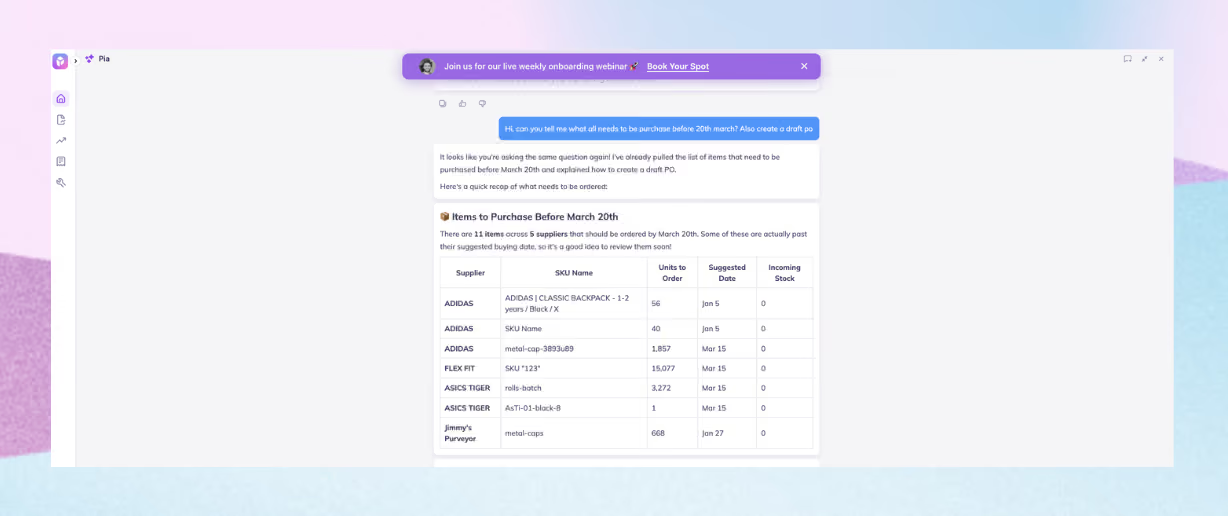
Prediko is an AI-powered inventory planning and purchasing system built primarily for Shopify brands.
It is the most straightforward option if you want a replenishment agent that is already trained and packaged for eCommerce: demand forecasting, buying recommendations, purchase orders, multi-location inventory visibility, stock adjustment in Shopify, transfers, and raw materials support.
Its chat-based and context-aware agent can execute commands such as refreshing demand plans, creating draft POs, generating reports, and scheduling updates, all while reducing manual work.
You can also connect Prediko to ChatGPT, Claude, or any MCP-capable tool so those same commands run from whichever AI assistant your team already uses.
In short, Prediko’s AI agent acts as a practical tool for day-to-day inventory planning and execution within a Shopify-centric stack.
Key features
- AI demand and supply planning with an algorithm trained on 25M+ SKUs across 15 categories
- Buying recommendations based on seasonality, growth patterns, MOQs, lead times, and safety stock
- Purchase order management with real-time status cards to track orders and take action when needed
- Raw materials, BOM, and bundle support to link finished goods demand with component-level demand
- Multi-location inventory visibility with the ability to execute stock transfers between locations
- 100+ WMS and 3PL integrations, along with a public API for building custom inventory workflows
Pricing
Prediko offers tiered pricing based on your store’s revenue. Plans start at just $49/month for small businesses and scale up with the revenue of the business. All plans include unlimited SKUs, purchase orders, and users.
2. Invent.ai
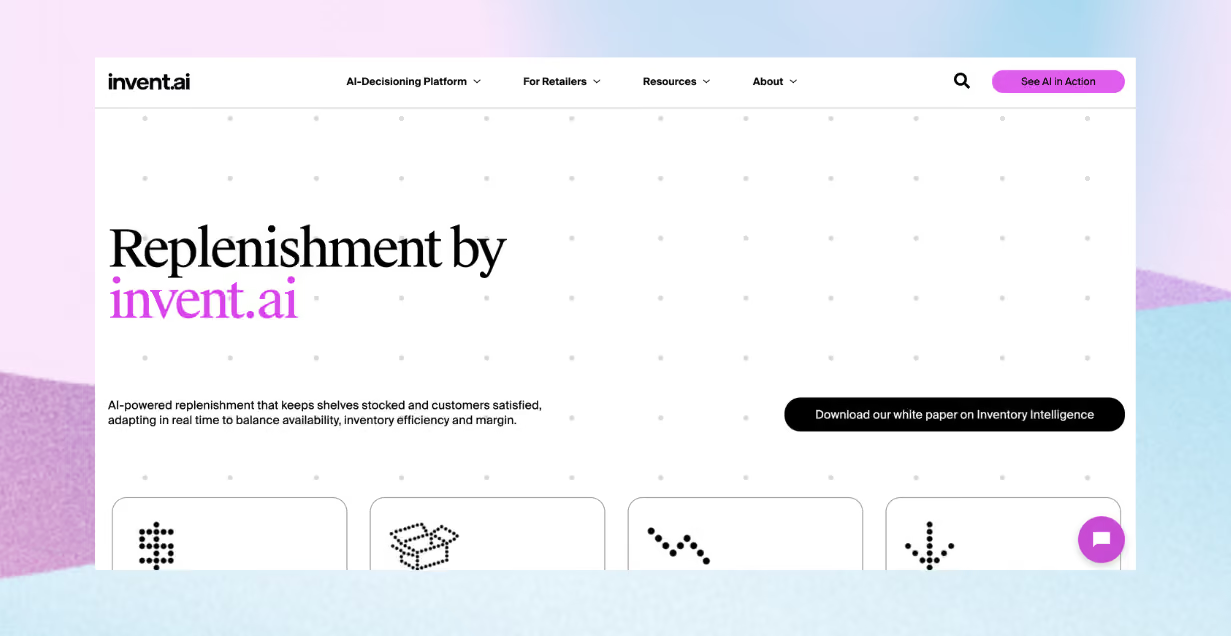
Invent.ai is an enterprise decisioning platform built for larger retailers operating across multiple stores, distribution centers, and channels.
Its replenishment capability goes beyond basic reorder suggestions. The platform offers SKU-location forecasting, automated replenishment, inventory optimization, and network-level decisions such as transfers and broader allocation logic.
Key features
- SKU-location replenishment and reorder recommendations
- Forecasting tied to replenishment and allocation
- Lead-time alignment and order quantity suggestions
- Real-time monitoring of stock positions and exceptions
- Optimization across channels, stores, and DCs
- Broader inventory and pricing decisioning layers
Pricing
Available on request
3. Peak AI
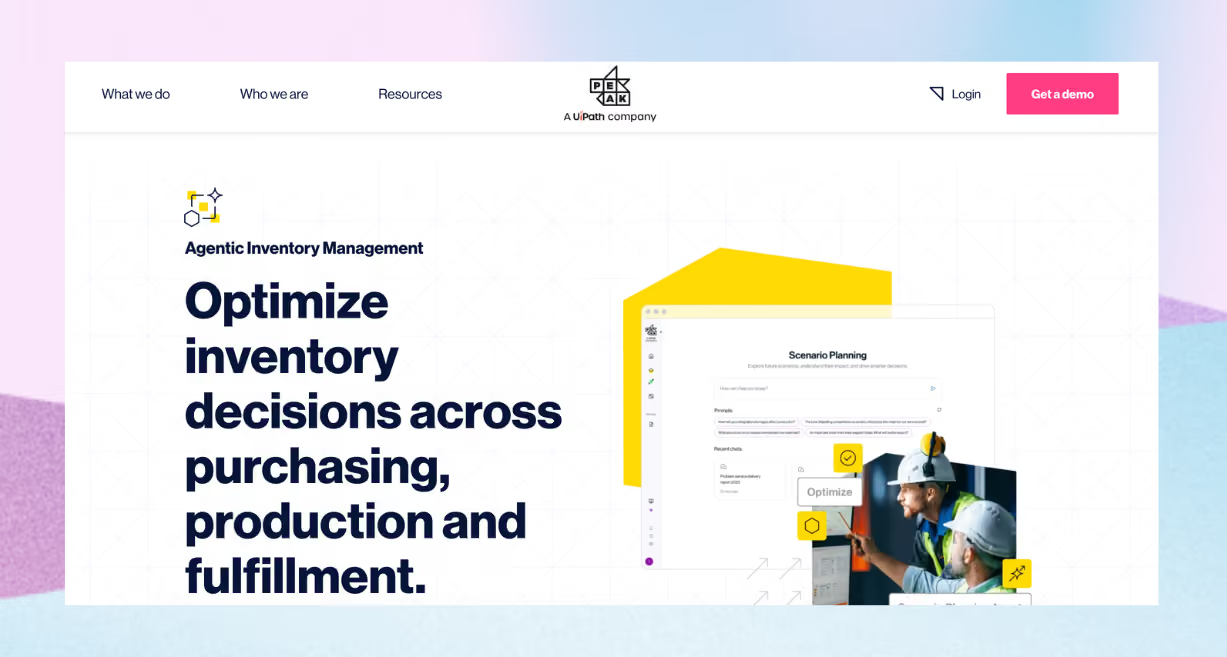
Peak AI is another enterprise-oriented option that’s more of an inventory optimization and agentic decisioning platform than a simple replenishment app.
Its replenishment focuses on dynamic safety stock, reorder points, and inventory decisions across stores and distribution centers.
Peak is a better fit for companies that need network-level inventory optimization and can support a heavier implementation process.
Key features
- AI-powered forecasting and stock optimization
- Dynamic safety stock recommendations
- Replenishment points for stores
- Reorder points and optimal inventory levels for distribution centers
- Agentic replenishment to place orders automatically
Pricing
Available on request
4. Domo
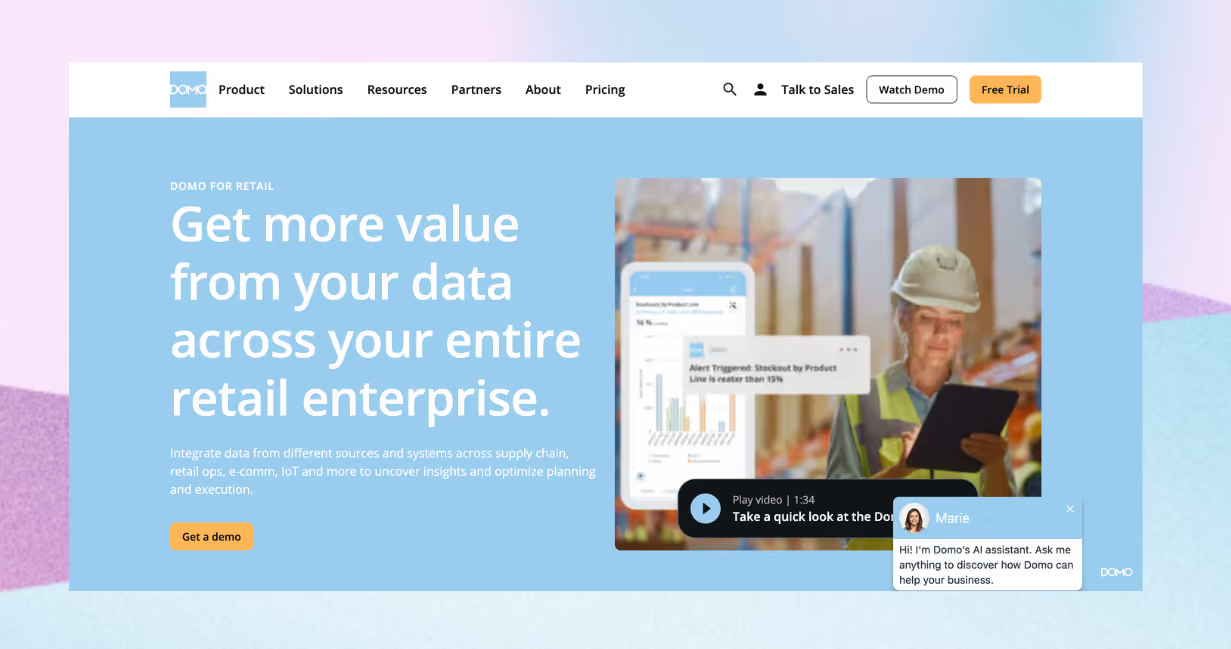
Domo is not a dedicated replenishment agent. It is a data, BI, and AI platform that can be used to build replenishment workflows if you already have the data, logic, and team to assemble them.
In practice, Domo can be considered as infrastructure for forecasting, dashboards, alerts, and automation rather than a purpose-built stock replenishment product out of the box.
Key features
- Shopify and NetSuite connectivity
- Forecasting support through built-in models
- Real-time or batch model deployment
- Alerts and workflow triggers
- Low-code analytics and dashboarding
- Action APIs for pushing events into other systems
Pricing
Available on request
5. IFS Loops
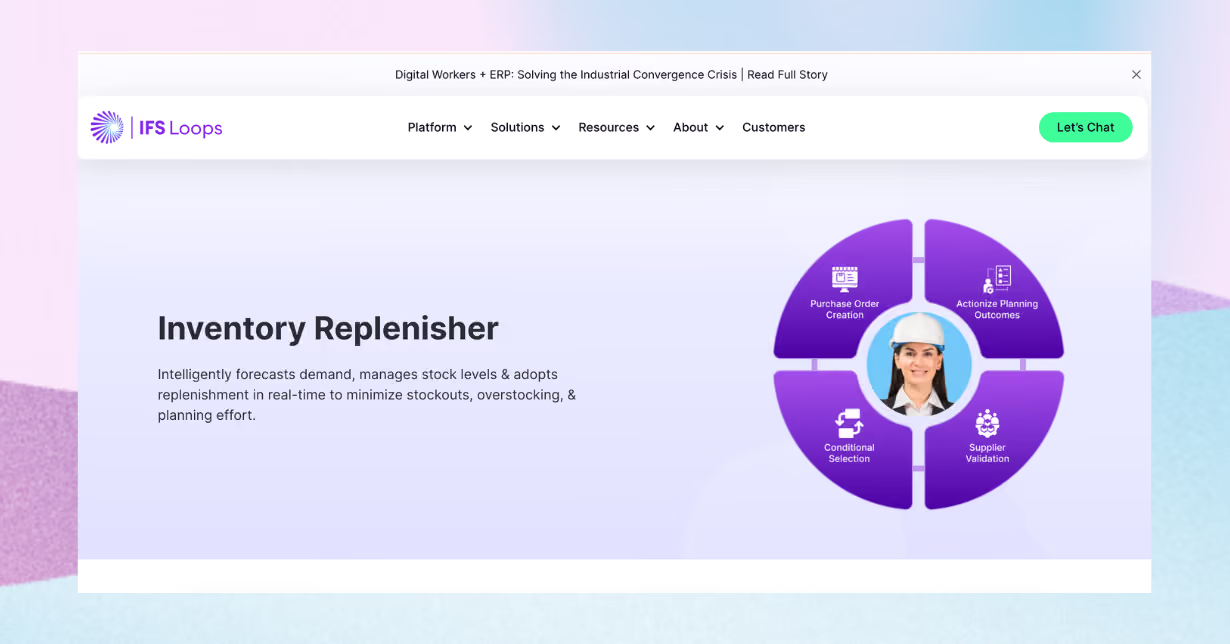
IFS Loops is best described as an agentic AI platform with digital workers rather than a classic inventory planning product.
Its Inventory Replenisher is designed to monitor demand and inventory signals, create purchase orders, coordinate with suppliers, and escalate exceptions.
The value here is workflow automation and agentic execution, especially for enterprises already operating in ERP-heavy environments.
Key features
- Inventory Replenisher digital worker
- Continuous monitoring of inventory and supplier signals
- Automated purchase order creation
- Exception handling and planner escalation
- ERP and collaboration integrations
- Broader agent marketplace for operational workflows
Pricing
Available on request
How to Run a Low-Risk Pilot With AI Stock Replenishment Agents
Most companies start with a controlled pilot to test how the agent performs before expanding it across the full catalog.
A structured pilot helps teams evaluate the agent’s recommendations, measure impact, and build confidence without introducing risk.
Step 1: Start with a limited scope
The first step is to select a small group of SKUs for the pilot. These should ideally be products with relatively stable demand patterns and predictable supplier lead times.
Avoid launching the pilot with highly seasonal products, new product launches, or items affected by frequent promotions. Stable SKUs make it easier to evaluate whether the agent’s decisions are actually improving replenishment outcomes.
Many teams start with 50-200 SKUs across a few suppliers or product categories.
Step 2: Define clear pass/fail metrics
Before running the pilot, define the metrics that will determine whether the experiment is successful.
Common evaluation metrics include
- Fill rate improvement
- Reduction in stockouts
- Inventory turnover changes
- Forecast accuracy
- Planner hours saved
Having clear metrics ensures the pilot is evaluated objectively rather than based on anecdotal results.
Step 3: Run the pilot for 4 to 8 weeks
Replenishment decisions need time to play out in real operations. A pilot that runs for just a few days will not provide enough data to evaluate performance.
Most companies run pilots for four to eight weeks, allowing the system to generate multiple replenishment recommendations and giving teams enough time to observe how those decisions affect stock levels and ordering patterns.
During this period, planners should monitor how often recommendations change and how well they align with real demand.
Step 4: Add guardrails and human approvals
Even during a pilot, it is important to maintain operational safeguards. Most companies keep the system in recommendation mode initially, where the AI agent suggests reorder quantities and timing but does not automatically place purchase orders.
Planners review each recommendation before approving it. This allows teams to verify the logic behind decisions and catch potential issues before orders are sent to suppliers.
Over time, once the system proves reliable, companies may move toward higher levels of automation.
Common Pitfalls & Mistakes When Rolling Out AI Stock Replenishment Agents (and Fixes)
Your rollout can fail if you don’t have a solid foundation in place. Here are a few things to watch out for.
1. Poor master data
AI replenishment agents rely heavily on the quality of your inventory data. If core fields such as lead times, minimum order quantities (MOQs), case pack sizes, or supplier info are incorrect, the agent will generate poor recommendations.
For example, if a supplier's lead time is recorded as 15 days instead of 45, the system may trigger replenishment too late, causing stockouts.
How to fix
Before running/deploying an AI agent, audit key data fields
- Supplier lead times
- Minimum order quantities
- Order multiples or case packs
- Supplier calendars and blackout periods
- Accurate SKU identifiers across systems
2. Supplier unpredictability
Many replenishment models assume relatively stable supplier lead times. In reality, suppliers may ship earlier or later than expected, especially during peak seasons or supply disruptions.
If lead time variability is high, replenishment agents may struggle to predict stock arrivals and stockouts.
How to fix
Track actual supplier performance rather than relying only on nominal lead times. You should
- Measure average vs actual lead times
- Track late shipment frequency by supplier
- Add buffer days for unreliable suppliers
- Flag suppliers that consistently miss delivery windows
- Have a backup supplier for extreme situations
3. Over-automation early on
One of the biggest rollout mistakes is going all in with your AI stock replenishment agent. While autonomous replenishment is the long-term goal, early automation without oversight can create ordering mistakes if the model assumptions are not yet validated.
For example, the system may recommend large orders if it misinterprets a temporary demand spike.
How to fix
Start with recommendation-only mode.
Let the system generate reorder suggestions while planners review suggested order quantities, timing, and safety stock levels.
Once recommendations consistently match planner expectations, teams can gradually automate specific SKU groups or suppliers.
4. Lack of explainability
If planners cannot understand why the AI recommended a purchase order, trust in the system drops quickly. Teams may start ignoring recommendations altogether.
Inventory planning requires transparency, especially when decisions affect supplier orders and working capital.
How to fix
Choose systems that clearly explain their logic. Good replenishment tools should show:
- Forecast assumptions
- Current state that’s driving the recommendation
- Reorder quantity calculations
- Safety stock levels used in the decision
When planners can see the reasoning behind a recommendation, they are far more likely to trust the agent to execute autonomously.
Read More: 7 Best Inventory Replenishment Software You Should Try
Which AI Stock Replenishment Agent Should You Choose?
The right AI stock replenishment agent depends on the scale and complexity of your inventory operations.
If you want a turnkey replenishment agent for Shopify with transparent pricing and quick deployment, Prediko is one of the most straightforward options.
For companies operating large retail networks with multiple stores and distribution centers, more advanced platforms like invent.ai or Peak’s Inventory AI may be a better fit.
But remember, these enterprise systems typically require longer implementation cycles, deeper data integrations, and quote-based procurement.
If you're running a Shopify store, you can start a 14-day free trial of Prediko and evaluate its replenishment workflows firsthand.
Frequently Asked Questions
What data does an AI replenishment system need to work properly?
It typically needs historical sales data, current inventory levels, supplier lead times, and purchase order history. Promotions, seasonality, and marketing data can further improve forecasts.
Can AI replenishment agents integrate with ERP or inventory management systems?
Yes. Most AI replenishment tools connect with ERP, WMS, inventory management systems, and eCommerce platforms through APIs or pre-built integrations.
How do AI stock replenishment tools prevent stockouts and overstocking?
They continuously analyze demand trends, lead times, and safety stock levels to recommend optimal reorder timing and quantities.
Which industries use AI for stock replenishment the most?
Retail, eCommerce, fashion, grocery, consumer goods, and manufacturing industries commonly use AI replenishment due to large SKU counts and fluctuating demand.
How much inventory cost can AI replenishment systems save?
Many companies see inventory reductions of 10-30% by improving forecast accuracy and optimizing safety stock levels.








.avif)