




Peak week is the most demanding period of the year for many Shopify brands. Sales spike quickly, customer expectations are high, and even small operational gaps can turn into missed deliveries, oversold inventory, or poor customer experiences.
For direct-to-consumer and multi-channel brands, success during peak season depends less on marketing and more on how well fulfilment, inventory, and transportation systems are prepared in advance.
This checklist breaks down the operational areas Shopify brands need to review before peak season hits, with a focus on execution, coordination, and risk reduction.
Why Peak Season Readiness Often Breaks Down
Peak week failures rarely come from a single issue. They usually happen when several small problems stack up at the same time.
Common breakdowns include
- Inaccurate demand forecasts
- Delayed inbound inventory
- Warehouses running at capacity limits
- Carriers missing delivery windows
Many Shopify brands also struggle with visibility. Orders move across multiple partners, but no one has a full picture of what’s happening in real time.
As fulfillment networks become more complex, some brands look beyond traditional third-party logistics models toward a more comprehensive system. This often leads teams to explore how fourth-party logistics structures work.
These fourth-party logistics providers, or 4PLs, allow inventory, fulfilment partners and transportation to be managed through a single control layer, helping brands coordinate like a pro during one of the busiest times of the year.
Peak Season Fulfilment Readiness Checklist for Shopify Brands
With these challenges in mind, the following elements should be included in your checklist when preparing for peak season.
1. Demand planning and inventory readiness
Successful peak week execution starts with accurate demand planning. Shopify brands should build forecasts using multiple data points rather than relying solely on last year’s sales.
Key inputs include:
- Prior year peak season sales adjusted for growth
- Promotional plans and discount depth
- Marketing spend changes
- Channel mix shifts (DTC vs wholesale vs marketplaces)
- Lead times for replenishment
Inventory buffers are also essential. Many brands aim to hold extra safety stock for top SKUs, especially items with long supplier lead times.
Inaccurate demand planning remains one of the top drivers of supply chain disruption during peak periods.
Brands should also confirm that inventory is correctly allocated across fulfilment locations. Stock sitting in the wrong warehouse is as risky as stock that doesn’t exist at all.
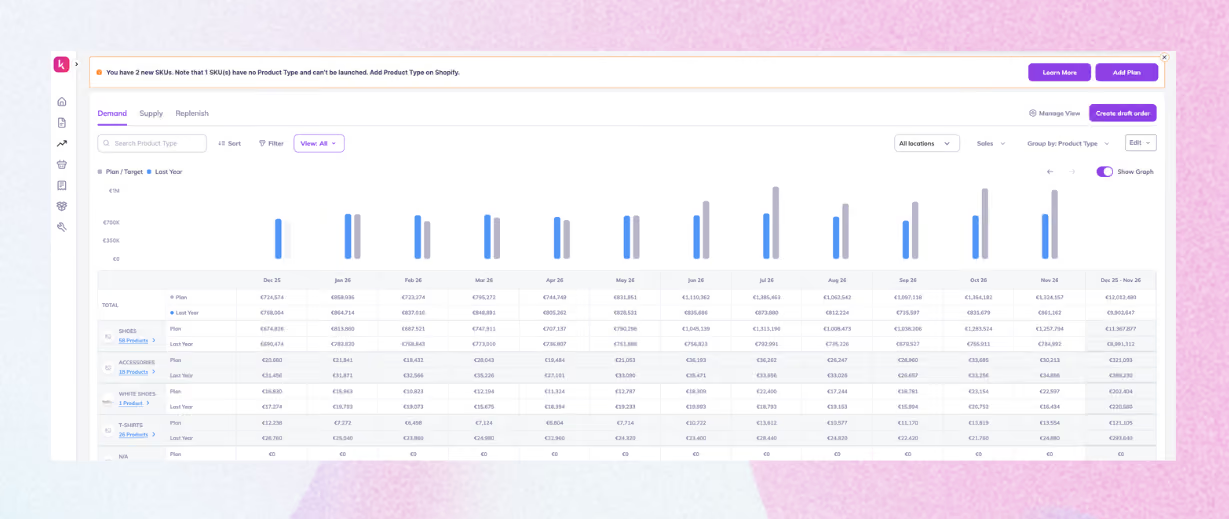
Prediko helps Shopify brands evaluate and improve their demand planning and inventory readiness. It combines historical sales data, seasonality, growth patterns, and real-time inventory to produce accurate AI-powered demand forecasts.
Teams can track stock across locations, identify potential stockouts early, and generate purchase recommendations based on demand forecasts and supplier lead times. This helps ensure the right inventory is available in the right locations ahead of peak demand.
2. Purchase orders and inbound tracking
Inbound delays are another common cause of peak week failure points. Purchase orders may be approved, but inventory that hasn’t arrived cannot be sold.
Before peak season:
- Confirm all critical POs are released and acknowledged
- Review supplier production timelines
- Validate inbound appointment schedules at warehouses
- Track inbound shipments daily, not weekly
Using milestone-based inbound tracking helps teams spot delays early. So, instead of only tracking when a shipment is delivered, teams monitor each stage of the inbound journey.
Proactive inbound visibility helps maintain service levels during high-volume periods. Brands should also prepare contingency plans.
If inbound shipments are delayed, teams should know which SKUs can be substituted, repriced, or temporarily removed from promotions.
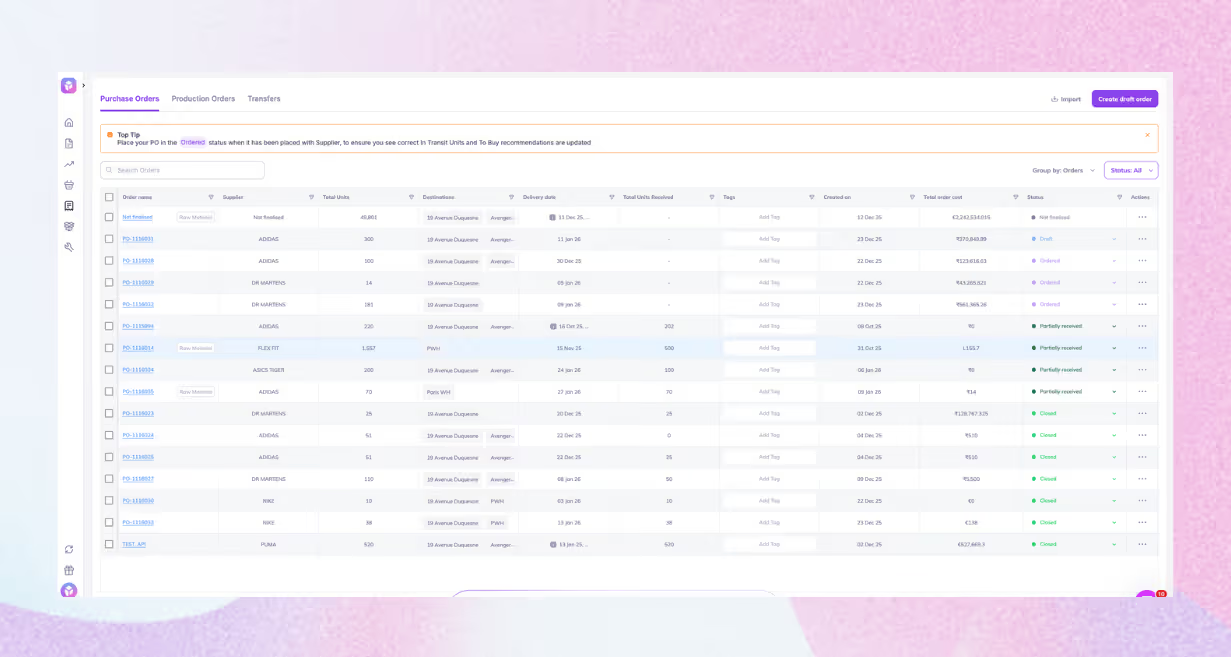
Prediko provides real-time status of inbound inventory and automatically updates your stock levels as purchase orders are received. This helps teams track incoming shipments, understand when inventory will be available, and maintain accurate inventory records across locations.
3. Fulfillment capacity and warehouse operations
Now, having enough inventory is only half the battle. Brands must also ensure their fulfillment operations can support it. This includes labour availability, packing speed, dock scheduling, and system throughput.
Brands should confirm
- The maximum daily order volume each warehouse can handle
- Temporary labour plans and training schedules
- Cut-off times for same-day fulfilment
- Overflow strategies if volume exceeds forecasts
Stress testing fulfillment operations before peak season is critical. Running simulated high-volume days can expose bottlenecks in picking routes, packing stations, or returns processing.
4. Shipping and carrier preparedness
Transportation performance directly affects customer satisfaction during peak week. Carrier networks are often under heavy strain, and capacity may not always be guaranteed.
Preparation steps include
- Confirming carrier service levels and cut-off times
- Securing backup carriers for key regions
- Reviewing zone skipping or regional carrier options
- Verifying label compliance and manifest processes
Brands should also review delivery promise messaging. Overly confident delivery estimates increase customer service volume and refund risk.
Aligning delivery promises with realistic carrier performance during peak demand helps to maintain customer trust during busy periods.
5. Shopify systems and order routing
Shopify system readiness is often overlooked until increased order volumes begin to strain operations.
Key areas to review
- Order routing logic across fulfilment locations
- Inventory sync frequency and accuracy between systems
- Automation rules for order holds and exceptions
- App dependencies that affect checkout or fulfilment
Brands operating multiple warehouses should check that order routing rules prioritize speed and cost appropriately during peak season. Manual overrides should be documented and tested in advance.
It’s also important to ensure reporting dashboards update in near real time. Lagging data makes it harder to react to issues quickly.
6. Customer communication and support workflows
Customer experience during peak week is shaped as much by communication as by delivery speed.
Support teams should be prepared for
- Increased “Where is my order?” inquiries
- Address change requests after checkout
- Delivery delay escalations
- Return and exchange questions
Proactive communication reduces ticket volume. This includes clear shipping timelines on product pages, order confirmation emails with realistic expectations, and automated shipping updates. In general, brands that proactively communicate delays see significantly higher customer satisfaction scores during peak periods.
Support teams should also have clear escalation paths to fulfilment and transportation partners, so issues can be resolved quickly.
Bonus: Have a peak season execution plan
An execution plan helps keep every team aligned during peak week. It should clearly set out daily order volumes, who is responsible for making decisions if something goes wrong, how often teams communicate, and what actions to take when common issues arise.
Many brands also run a peak season war room with short daily check-ins during the busiest days. This brings marketing, operations, customer support, and leadership together and helps everyone respond quickly. Clear, written plans reduce confusion and make decisions easier when pressure is high.
Conduct Post-Peak Reconciliation for Improvements
Once peak week ends, the work isn’t over. Post-peak analysis helps brands perform better next year.
Key review areas include
- Forecast accuracy by SKU
- Fulfilment and transportation performance
- Carrier exception rates
- Customer support volume and resolution times
- Returns and refund trends
The goal is not just to identify what went wrong, but to understand why. Brands that invest time in post-peak reconciliation consistently improve margins and customer experience year over year.
Peak season success for Shopify brands depends on preparation across inventory, fulfilment, transportation, systems, and communication. With clear planning, strong coordination, and realistic expectations, brands can protect both revenue and customer trust during the most demanding time of the year.
Tools like Prediko can support this process by giving teams clearer visibility into demand forecasts, inventory health, and purchasing decisions. If you’re looking to streamline planning before your next peak season, you can try Prediko with a free 14-day trial.









.avif)