




Inventory planning and order-to-cash are usually managed by different teams, on different systems, with different KPIs.
Operations looks at stock levels and reorder points. Finance looks at invoicing and collections.
In practice, though, both sit on the same working capital cycle, and when they're not aligned, cash gets stuck somewhere in between.
Link Between Inventory Planning and Working Capital
Working capital is often analysed through the cash conversion cycle: how long it takes for cash spent on inventory to come back in as cash collected from customers.
According to the Hackett Group's 2025 US Working Capital Survey, the largest 1,000 US public companies collectively had $1.7 trillion trapped in excess working capital, with receivables and inventory lagging behind payables as the main drag on performance.
A significant share of that is simply unsold inventory. Research puts the figure at roughly 25 to 30 percent of a typical business's working capital tied up in inventory at any given time.
But inventory that's sold doesn't automatically become cash either. If the order-to-cash process is slow or error-prone, revenue can sit in receivables for weeks after the stock has already left the warehouse.
That gap between fulfilment and collection is where revenue leakage begins.
It rarely comes from one major failure. Instead, it builds through small, repeated mismatches: quantities that don’t match shipments, duplicate credit notes, or contract terms missing from invoices.
Four Practical Fixes That Improve Working Capital for eCommerce brands
1. Reconcile shipped-versus-billed weekly
When inventory and billing systems are disconnected, invoices get generated from outdated or incomplete order data, which leads to disputes, short payments, or delayed collections while someone corrects the error after the fact.
Instead of waiting for a customer to flag a mismatch, build a standing weekly check that compares what fulfillment recorded as shipped against what billing actually invoiced.
Catching a mismatch within a week is a five-minute fix. Catching it three months later, after a dispute, takes much longer.
2. Put inventory and receivables on the same dashboard
Tracking inventory and receivables together gives a clearer picture of where cash sits at any point in time, rather than treating stock levels and outstanding invoices as two separate reports read by two separate teams.
If operations and finance are still working from different spreadsheets, start with one shared view.
On the inventory side, tools like Prediko can give teams a live view of stock value, incoming inventory, demand forecasts, and what needs to be reordered.
Pair that with receivables ageing, and it becomes much easier to see where working capital is tied up, whether that's in excess stock or unpaid invoices.
Even a basic combined view makes it obvious where cash is stuck.
3. Apply the same "ageing" discipline to stock and to accounts
Apply the same logic that flags slow-moving inventory to slow-paying accounts. Set a standard cadence, monthly is usually enough, to review both lists side by side.
This should cover which SKUs have been sitting too long, and which accounts have been overdue too long. Use that combined view to decide what to reorder and who to chase first.
4. Forecast demand and cash from the same data
Finance teams forecasting cash flow and operations teams forecasting demand often look at the same information - how much is being sold, what needs to be bought, and how much cash those decisions will require.
If those forecasts are built from separate extracts, taken at different times, they will drift apart.
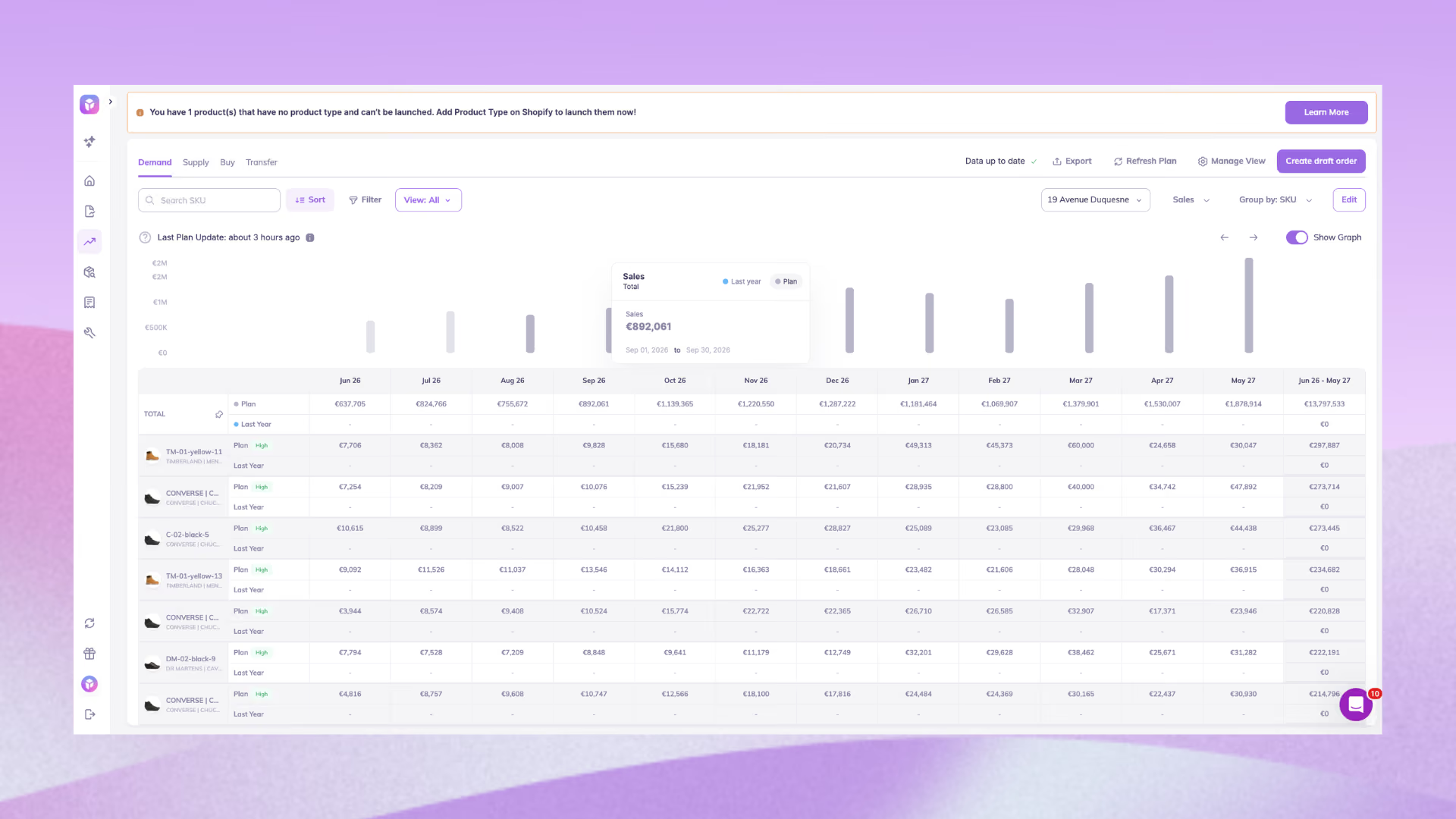
Prediko helps close that gap by connecting demand forecasts with current stock, incoming POs, and future purchasing requirements.
That gives operations a clearer view of what needs to be bought while giving finance better visibility into the cash those inventory decisions will require.
The goal is simple: both teams should be planning from the same underlying data, even if they use it differently.
How AI Helps Optimise Inventory and Cash Flow
Applied to specific, well-defined tasks, AI has shown measurable results across both sides of this equation.
- On the inventory side, McKinsey research on operations forecasting found that AI-driven demand forecasting can reduce errors by 20–50% and cut lost sales from stockouts by up to 65%.
- On the finance side, AI can catch mismatches between orders and invoices before billing, prioritise collections by payment risk, and spot ageing receivables patterns that finance teams might otherwise miss.
Deloitte's most recent Working Capital Roundup notes that while the overall cash conversion cycle improved modestly in 2025, days sales outstanding kept rising as collections pressures persisted, which is exactly the kind of gap AI-assisted monitoring is being used to close.
The common thread is that AI works best on specific problems, such as forecasting demand for a SKU or flagging invoices that don’t match the original order. Used this way, it helps planning and finance teams make better decisions rather than replacing their judgement.
Three Habits Worth Building Into Your Purchase Order-to-Payment Journey
- Keep inventory and order data in sync so what's recorded as shipped matches what's billed. This is often the single biggest fix available, and it's largely a process fix, not a technology one.
- Agree on shared metrics between operations and finance, such as days inventory outstanding alongside days sales outstanding, so both teams are looking at the same cash picture instead of two separate reports that quietly disagree.
- Build in regular reconciliation between fulfilment records and invoicing, rather than only catching mismatches when a customer disputes a bill.
Cash tied up in unsold stock and cash delayed in collections both come from the same root cause. A gap between what operations knows about the business and what finance is acting on.
Closing that gap, with better shared data and, where appropriate, targeted use of AI, is one of the more direct ways organisations can free up working capital without changing how much they sell.
%20(1)%20(1).avif)










.avif)