Shopify Raw Materials Management
See how Shopify brands connect raw materials, components and production needs so teams can plan purchasing, avoid shortages and keep finished goods in stock.
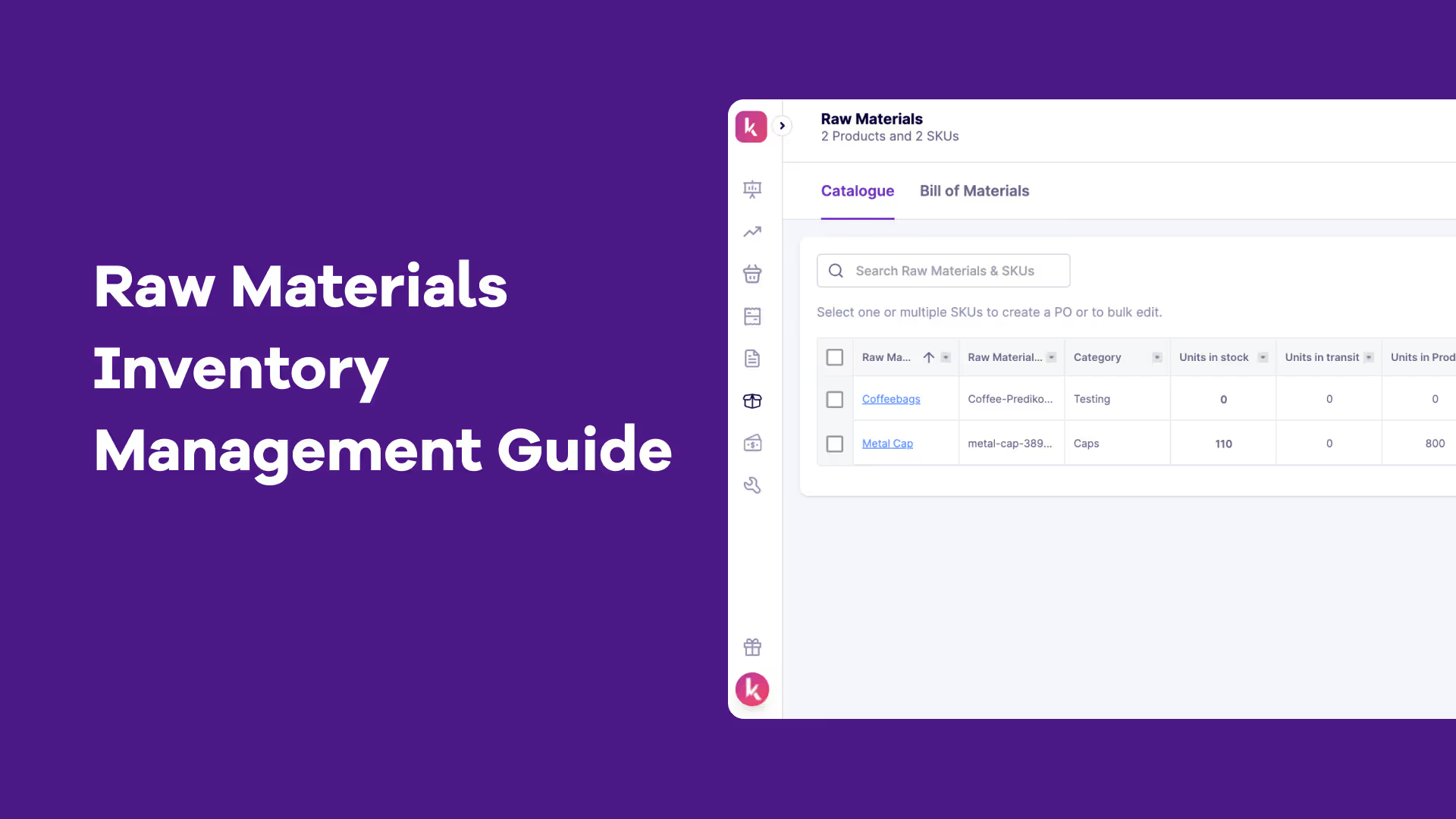
Raw Materials Inventory Management Complete Guide
Raw materials inventory management ensures components and supplies are tracked, forecasted and controlled to avoid stockouts and excess, improve production efficiency and reduce cost, with real‑time data, demand forecasting and supplier oversight for Shopify brands.
In world of manufacturing and production, raw material inventory management is a critical task. It's the backbone of efficient operations, directly impacting cost reduction and production efficiency.
What is Raw Materials Inventory Management?
Raw materials inventory management is total cost of a manufacturer's components, subassemblies, and supplies in stock that are not in production. This includes both direct materials (DM) and indirect materials (IM) essential for manufacturing a final product.

A proper raw materials inventory management is important for efficient production processes and cost control. There are two types of raw materials:
What are direct vs indirect raw materials?
1. Direct Materials
Direct materials are components or substances that are used in the final product and can be easily traced to it. These direct materials are a part of the finished product and constitute a significant portion of the product's cost. Examples of direct materials include raw materials like wood in furniture manufacturing, steel in car production, or fabric in clothing manufacturing.
2. Indirect Materials
Indirect materials are materials that are essential for manufacturing a final product but are not directly incorporated into the end product. These materials do not become part of the final product but are necessary for the production process. Examples of indirect materials include lubricants, cleaning supplies, gloves, and other items used in the manufacturing process but not physically present in the final product.
How is Raw Materials Inventory Management defined in context of Shopify brands?
Raw materials inventory management in context of Shopify brands refers to the process of overseeing sourcing, procurement, and utilization of raw materials needed for manufacturing products sold by Shopify brands.

This includes activities such as inventory control, supplier management, cost optimization, and ensuring the availability of necessary materials to meet production demands. Efficient raw materials management is crucial for Shopify brands to maintain product quality, control costs, and meet customer demand.
Why is efficient raw materials inventory management essential?
Raw material inventory management is crucial for businesses for several reasons. Efficient raw material inventory management can lead to significant cost savings. By avoiding overstocking, businesses can reduce storage costs and prevent capital from being tied up in unused materials.
Moreover, raw material inventory management impacts the financial health of a business. It ties up capital, and poor management can lead to unnecessary costs. That's why it's really important for businesses to properly manage raw materials.
Effective raw material management also plays a role in maintaining quality standards. It ensures that the best materials are used, contributing to the production of high-quality products. Whether you're a supply chain manager, a procurement professional, or a business owner, you'll find valuable information in this guide to help you optimize your raw material inventory management process.
In addition, efficient management can contribute to sustainability efforts. By reducing waste and optimizing the use of materials, businesses can minimize their environmental impact.

Importance of raw materials management from the POV of Shopify brands
Shopify brands can benefit a lot from a proper raw materials management process. First of all, raw materials management helps in maintaining product quality by ensuring that the right materials are available in the right quantities at the right time. This can lead to consistent product quality and customer satisfaction.
By managing raw materials efficiently, Shopify brands can meet customer demand more effectively, leading to improved customer loyalty and increased sales.
Common challenges in managing raw materials
1. One of the common challenges faced by Shopify brands is overstocking. This occurs when businesses order more materials than needed, leading to increased storage costs and tied-up capital.
2. The second key challenge is stockouts. This happens when businesses run out of materials, causing production delays and potential loss of sales.
3. Accurate demand forecasting is another challenge. Predicting the exact amount of raw materials needed can be difficult, especially in volatile markets.
How to be efficient in raw materials management?
Enter raw material inventory management software. A good software can help in streamline the entire process, making it easier to compute, track, and record raw material inventory.
These features ensure that the software can handle complex operations and scale with your business. So how do you choose the right software for your needs? What features should you look for? And how can you leverage this technology to its fullest potential?
Key features of raw material inventory management software
When evaluating inventory management software, there are several key features to look for:
- Automation: This can help you in saving time and reducing errors by automating tasks like data entry and calculations.
- Reporting & analytics: Reporting provides valuable insights into inventory performance and trends. They help businesses make informed decisions and improve their inventory management practices.
- Scalability: This is another important consideration. The software must be able to handle the number of inventory units that you have within the brand.
- User-friendly interface: The software should be easy to use and navigate, ensuring that all users can effectively utilize its features.
It’s very difficult to find a software that has all these features especially when handling a large number of raw materials for a particular Shopify brand. We have also created a list of top raw materials inventory management apps.
How Prediko helps Shopify brands overcome challenges
Prediko offers several key features to help Shopify brands manage raw materials effectively:
1. Real-time Tracking
Prediko provides up-to-date information on inventory levels across multiple warehouses and locations. This feature allows businesses to respond quickly to changes in demand and maintain steady production flows. By knowing exactly what materials are on hand, businesses can avoid overstocking and stockouts, ensuring a smooth production process.
2. Improved Forecasting and Demand Planning
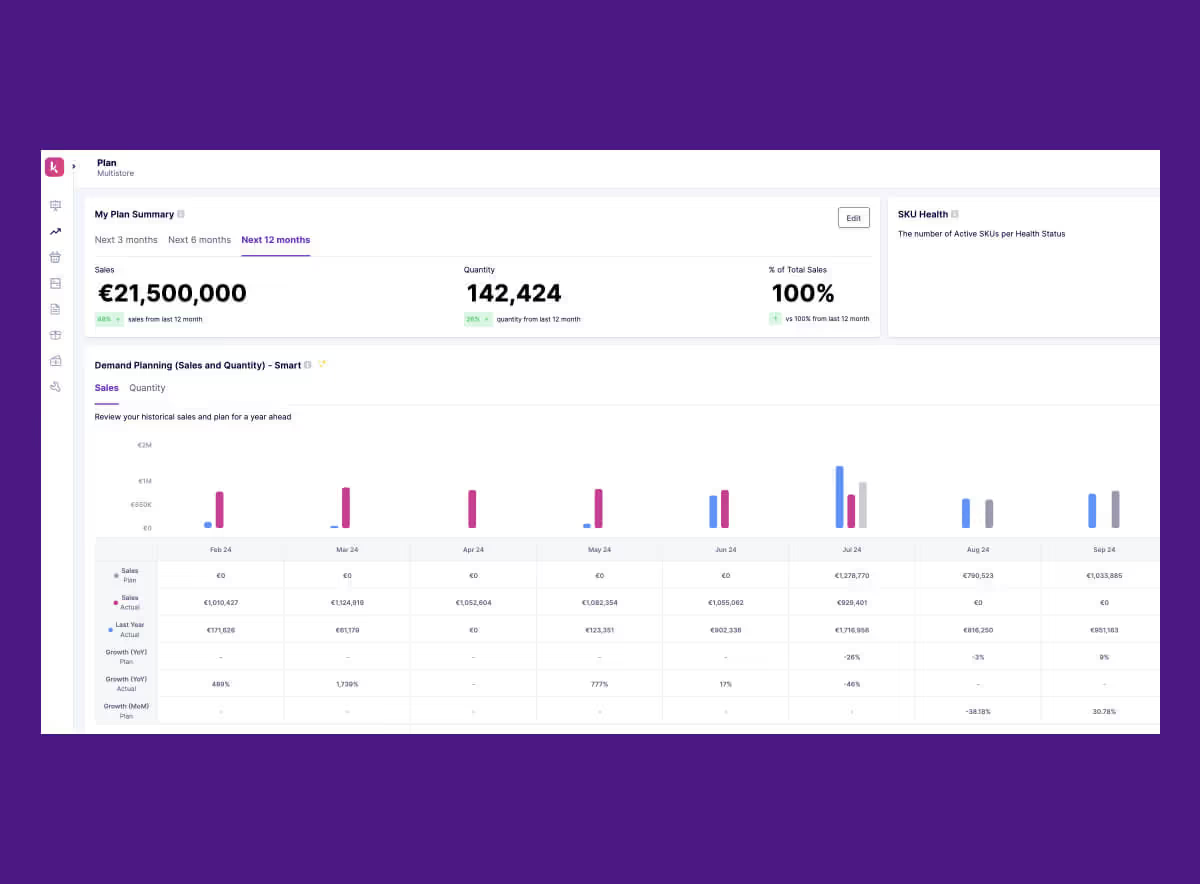
With advanced data analytics tools, Prediko integrates raw material data with production schedules and sales forecasts to provide a holistic view of demand. The system uses historical sales data to predict future demand, helping businesses plan their raw material needs more effectively. This integration ensures that companies have the right materials at the right time, reducing the risk of overstocking or stockouts.
3. Integrated Data Analytics
Prediko combines various data points, including historical sales data, production schedules, and market trends, to generate accurate demand forecasts. This data-driven approach allows businesses to make informed decisions about inventory management, optimizing order quantities and reducing excess stock. The in-depth reporting and analytics provide valuable insights into inventory performance and trends, helping businesses identify cost-saving opportunities.
4. Cost reduction and efficiency
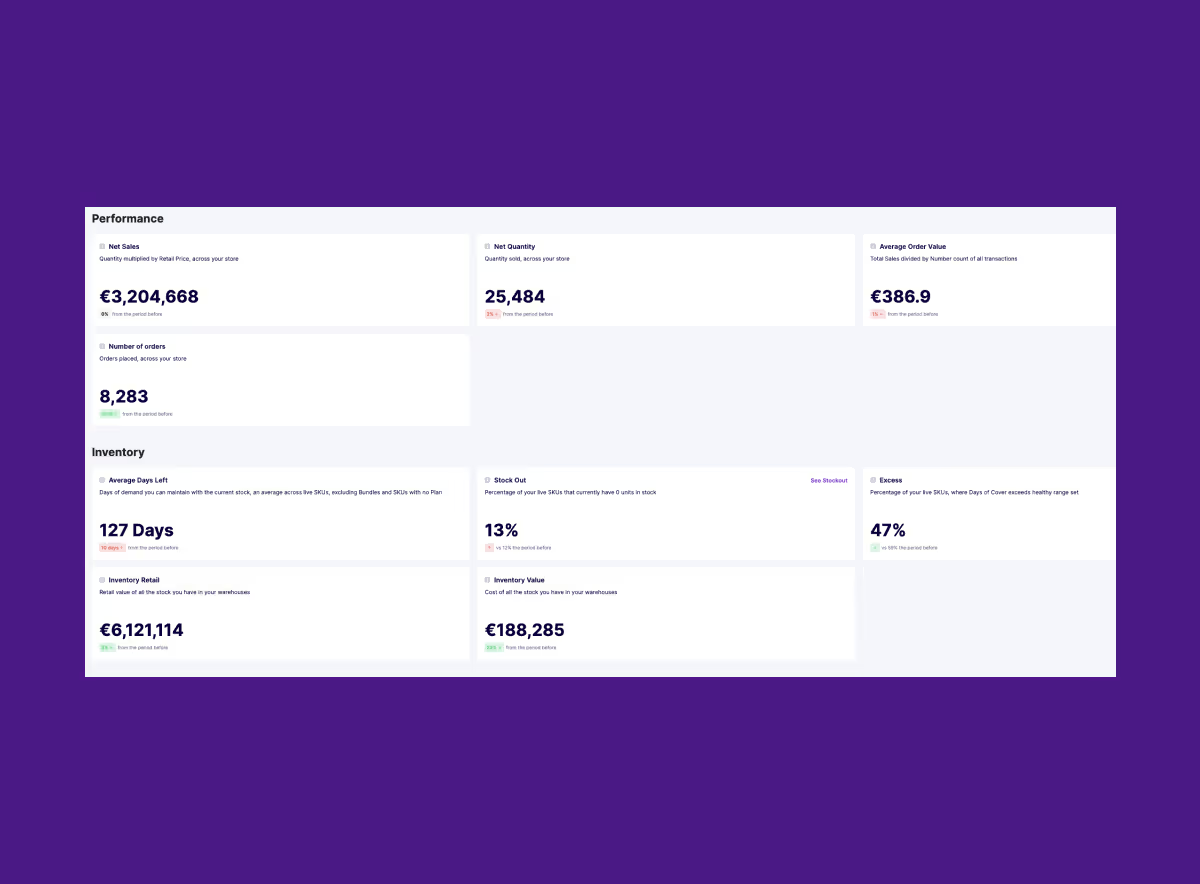
Prediko automates routine inventory management tasks, such as tracking stock levels, creating purchase orders, and updating records. This automation reduces the burden on staff and minimizes errors, leading to increased efficiency and cost savings. The detailed reports and analytics help businesses optimize their order quantities, reducing excess stock and minimising storage costs.
5. User-friendly interface
Prediko’s platform is designed with a user-friendly interface that makes it easy for all users to navigate and utilize its features effectively. This ensures that businesses can quickly adopt the software and start benefiting from its capabilities without a steep learning curve.
6. Scalability
Prediko is designed to handle complex operations and scale with your business. Whether you're managing a small or large inventory, the software can accommodate your needs, providing reliable support as your business grows.
7. Supplier Management
Prediko also offers tools for managing supplier relationships. By tracking supplier performance and lead times, businesses can ensure that they receive high-quality materials on time, supporting consistent production and maintaining product quality.

By leveraging these features, Prediko helps Shopify brands overcome common challenges in raw material inventory management, leading to improved efficiency, cost savings, and better overall performance.
Calculating & recording raw material inventory
Calculating and recording raw material inventory is a key aspect of raw materials management. This involves determining the quantity and value of materials on hand. This process is crucial for financial reporting. It affects the calculation of cost of goods sold, gross profit, and net income. Learn how to identify and calculate direct raw materials to be used for D2C brands.
Moreover, an accurate calculation and recording can provide valuable insights. It helps businesses identify trends, spot inefficiencies, and make informed decisions. However, this process could be complex. It involves various methods and techniques, each with its own pros and cons.
Learn how you can calculate direct raw materials cost for your Shopify brand. In addition, it requires meticulous record-keeping. Errors or discrepancies can lead to inaccurate financial reports and potential regulatory issues.
How to compute raw materials inventory management
There are several methods for computing raw materials inventory. One of the most common is the First-In, First-Out (FIFO) method. This assumes that the first materials purchased are the first ones used in production. Learn how to use FIFO to calculate your inventory.
Another method is the Last-In, First-Out (LIFO) method. This assumes that the last materials purchased are the first ones used. Learn how to use LIFO to calculate your inventory. There's also the weighted average method. This calculates the average cost of all the materials on hand, regardless of when they were purchased.
Tracking raw materials inventory management - Get techniques and tools
Tracking raw material inventory is an important part of the process. This involves monitoring the movement of materials from receipt to use in production. Tracking raw materials helps in preventing stockouts and overstocking. These tools can also provide valuable data for forecasting and decision-making.
For brands managing multiple locations or working with contract manufacturers, the ability to transfer inventory Shopify between warehouses or production sites is essential to maintaining balance and avoiding bottlenecks.
However, tracking raw material inventory is challenging. This requires a system that can handle large volumes of data and provide real-time updates. Fortunately, there are various techniques and tools available. These include barcode scanning, RFID technology, and inventory management software.
These tools can automate the tracking process, reduce errors, and provide real-time visibility into inventory levels.
How to effectively track raw materials within Shopify
To effectively track raw materials in Shopify, you can utilize inventory management apps or tools that integrate with Shopify. These tools can help you monitor the quantity of raw materials you have on hand, set up alerts for low stock levels, and track the movement of materials in and out of your inventory.
By maintaining accurate records of your raw materials, you can optimize your production processes, reduce waste, and ensure that you always have the necessary materials on hand to fulfill orders.
Real-time tracking within Prediko and its advantages
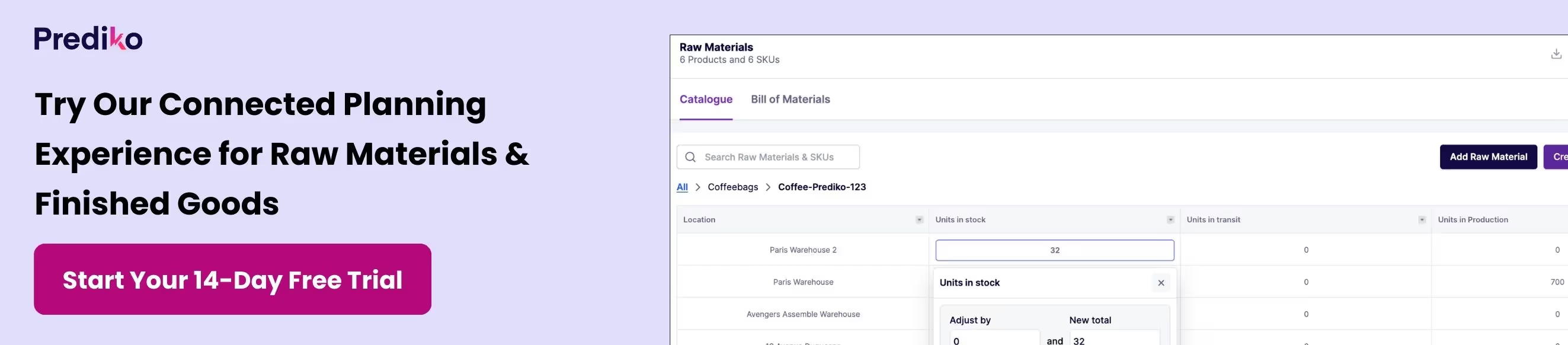
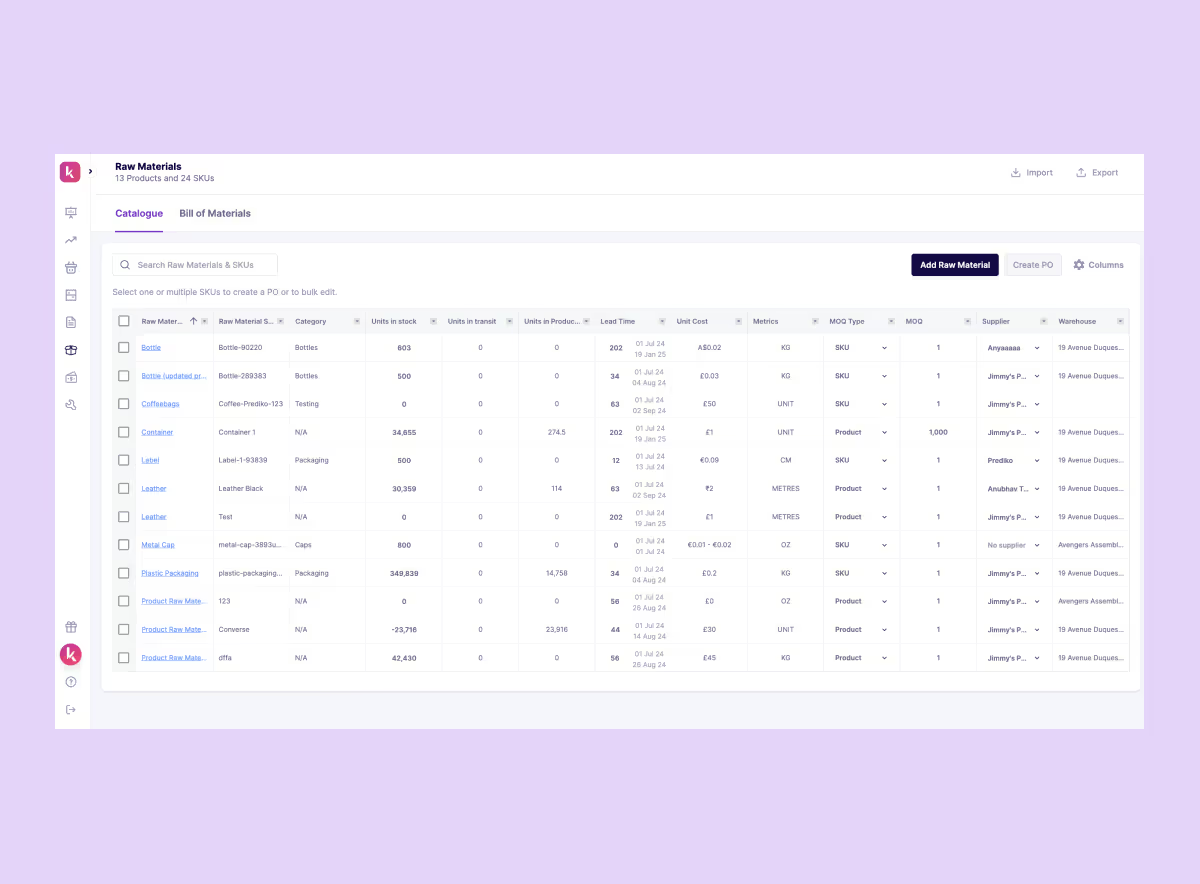
Within Prediko, you get a real-time update on how many raw material units you currently have in stock, how many units are in transit and how many units are in production. By knowing exactly what materials are on hand, businesses can plan production schedules more effectively.
Moreover, real-time tracking can support better decision-making. This provides accurate, timely data that can be used for forecasting, budgeting, and strategic planning.
How Can ABC Analysis Improve Raw Materials Inventory Management?
Not all materials impact production equally. That’s why ABC Analysis is a powerful tool in raw materials inventory management—helping Shopify brands prioritize control, forecasting, and purchasing strategies.
What is ABC Analysis?
ABC Analysis segments materials based on their impact on cost and operations:
- A Items: ~10–20% of items that account for 70–80% of inventory value. These are high-priority, high-value materials needing tight control, accurate forecasts, and frequent reorders.
- B Items: ~20–30% of items, contributing ~15–20% of value. These require moderate oversight and scheduled reviews.
- C Items: ~50–60% of items but only ~5–10% of value. These are low-priority, inexpensive items, typically stocked in bulk.
Benefits of ABC Analysis
This segmentation helps businesses:
- Set tailored reorder points and safety stock thresholds
- Allocate resources efficiently, focusing cash and attention on what matters most
- Reduce waste and stockouts by adjusting control levels per material class
How Prediko Automates ABC Analysis for Shopify Brands
Prediko streamlines ABC analysis directly within your inventory dashboard by allowing you to:
- Auto-classify SKUs using value-based consumption trends
- Visualize A/B/C materials to allocate forecasting intensity and reorder logic
- Customize replenishment triggers for each category
- Track how high-priority materials impact stockouts or production delays
Example: Prediko may set real-time alerts for A items when inventory dips below lead-time thresholds, while allowing longer cycles or higher batch orders for C items.
Setting reorder points and economic order quantities
Setting reorder points and economic order quantities is another important aspect of raw material inventory management. Reorder points determine when new orders should be placed, while economic order quantities determine how much should be ordered.
How does setting up this work in Shopify?
Once your Shopify store installs Prediko's app, they don't have to set reorder points and economic order quantities. Prediko's Buying Table analyzes your existing inventory levels and shares in an interactive way on when to order and how much to order.

They ensure that businesses have the right amount of materials on hand at the right time. Setting these metrics requires careful analysis. Businesses need to consider factors like lead times, demand patterns, and storage costs to determine the optimal reorder points and order quantities.
How do you calculate raw materials inventory turnover?
The raw materials inventory turnover ratio gauges how effectively a company utilizes its raw materials in manufacturing. To determine this ratio, you need the following data:
Cost of Goods Sold (COGS): This represents the total cost of raw materials consumed in production over a specific period, encompassing materials that were converted into finished products.
Average Raw Materials Inventory: This is calculated by adding the raw materials inventory at the beginning of the period to the inventory at the end of the period and dividing by two. This calculation provides the average inventory value for that timeframe.
With these values in hand, the formula to calculate the raw materials inventory turnover is:
Raw Materials Inventory Turnover = COGS / Average Raw Materials Inventory
The resulting figure indicates how many times the company’s raw materials inventory is cycled through and replaced within the given period. A higher turnover rate signifies efficient material usage, whereas a lower rate may point to overstocking or production inefficiencies.
Future trends in Raw Material Inventory Management
The future of raw material inventory management is promising, with several trends and innovations on the horizon. Predictive analytics, IoT integration, and blockchain technology are here to revolutionize inventory management.
- Predictive analytics and demand forecasting: AI and machine learning technologies can analyze data to predict future demand and optimize inventory levels.
- Blockchain for transparency and security: Blockchain technology can enhance transparency and security by providing a secure, decentralized record of transactions, reducing the risk of fraud and errors.
Also read: A Complete Guide to Shopify Inventory Management
Impact of software on raw material inventory management
Investing in the right raw material inventory management software can bring significant benefits, including streamlined processes, reduced errors, and valuable insights.
It enhances visibility and control over inventory, helping businesses avoid overstocking and stockouts while facilitating compliance with industry regulations.
Ultimately, such an investment can optimize inventory management processes, improve the bottom line, and maintain competitiveness in the market.
Frequently Asked Questions
.avif)
A-Z of Bills of Material Management: Types, Best Practices, Tools
A complete guide to managing your Bills of Materials, improving the accuracy, and optimizing processes.
Production halts, missing components, unexpected cost spikes, wasted resources, and frustrated customers are just some of the consequences of mismanaging your bills of material.
Trust us, things can get even worse.
This is why having a solid Bills of Material (BOM) inventory management process is important. It ensures you’re always prepared, with every component accounted for and your production running smoothly.
This article will cover everything you need to know about BOMs, including the different types, a step-by-step process to manage them, common challenges you might face, and a review of the top 5 software for BOM management.
What is the Bill of Materials in Inventory Management?
A Bill of Materials (BOM) is a detailed list of all the parts, materials, and subassemblies needed to make a product. It also includes information like quantities, costs, lead times, and part numbers. Simply put, it’s the blueprint to turn raw materials into a final good.
The Bill of Materials (BOM) for a wooden table could look something like this
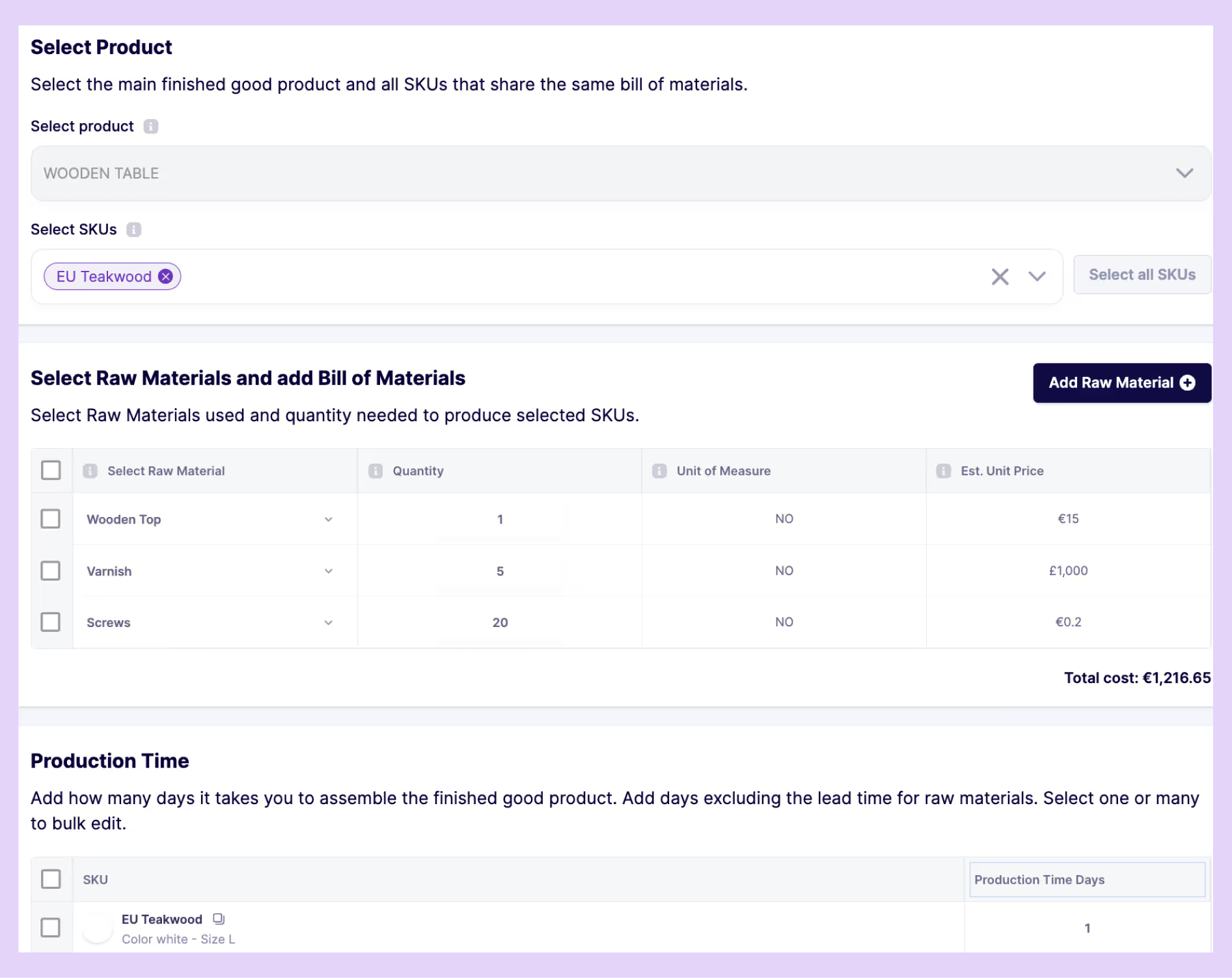
This BOM details the components (wooden top, screws, varnish), the quantities required, unit costs, and total costs for each part of the table. This helps manufacturers understand exactly what is needed to produce the table, along with the total production cost. It also provides a part number for tracking and reordering components.
Why is BOM Management Important?
By maintaining detailed BOMs of all components, raw materials, quantities, and their associated costs
- Minimize excess inventory and stock outs by knowing exactly how many components you will need for each production cycle
- Accurately calculate product costs, forecast future expenses, and identify areas for cost-cutting
- Better negotiate with vendors through accurate and predictable order volumes
- Eliminate production delays and accurately schedule manufacturing runs with on-time availability of components
- Maintain product quality and compliance by tracking and documenting every component used in production
- Expedite the product development cycles with error-free and smooth production. Reduce time-to-market and execute product launches faster
- Improve coordination among various departments (engineering, procurement, production) with BOMs acting as a shared reference
Types of Bill of Materials
There are different types of BOMs and each serves a distinct purpose. Understand the differences and choose the right BOM type based on factors like product complexity, customizations, and your manufacturing process.
1. Single-Level BOM
A Single-Level BOM, also known as a flat BOM or level-0 BOM, is the simplest form of materials listing. It represents all components and their quantities needed for a finished product in a single, non-hierarchical format. This is best suited for simpler products.
A basic wooden table will have a single-level BOM that lists individual components like wood, nails, paint, and screws but doesn't involve any assembly beyond the basic construction.
This type of BOM is particularly great for simple products where only a few components come together in a straightforward assembly process. However, this simplicity can become a limitation when dealing with more complex products.
2. Multi-Level BOM
A Multi-Level BOM (aka hierarchical BOM) is used for more complex products that consist of multiple sub-assemblies, parts, and raw materials. It gives a complete view of product structure by showing parent-child relationships between components.
This helps understand how different parts come together to form sub-assemblies, and how these sub-assemblies ultimately create the final product.
Commonly used in complex manufacturing industries like automotive and electronics, a Multi-Level BOM breaks down products like a car into sub-assemblies, such as the engine, chassis, and interior, further breaking down the components of each.
3. Configurable BOM
A Configurable BOM is ideal for products that offer multiple variations or customization options or made-to-order processes. This BOM type allows manufacturers to configure the components, materials, and parts based on customer preferences, such as color, size, or features.
It is particularly useful in mass customization, made-to-order, or build-to-order processes where each unit or batch may have different configurations.
Computer manufacturing may have a configurable BOM to adjust component requirements based on customer choice for processor type, memory capacity, storage options, and display specifications.
4. Engineering BOM (EBOM)
An Engineering BOM is created during the product design phase and includes the technical specs, material requirements, design parameters, and CAD file references. This type of BOM is important for product development and engineering teams to translate the conceptual design into an actual product.
Unlike other BOM types, the EBOM focuses more on the design part rather than production or assembly.
5. Manufacturing BOM (MBOM)
A Manufacturing BOM is tailored for production needs. This is used by production teams and focuses on the materials and components required for the assembly and manufacturing of the product. It includes all the components listed in the EBOM but also adds production-specific details such as assembly steps, tools, packaging, and any special instructions.
The MBOM is essential for production managers and shop floor workers, providing them with all relevant information to efficiently manufacture the product while maintaining quality standards.
A manufacturing plant producing a television would have an MBOM that lists all components like the screen, electronics, casing, screws, and packaging materials along with assembly instructions.
Common Challenges in BOM Management
As you step into the complex process of managing Bills of Materials, some issues are bound to surface. Here are the most common challenges, along with actionable strategies to overcome them.
Typical obstacles & inefficiencies
Managing BOMs involves handling complex information like detailed component lists, quantities, costs, etc. A single error, such as an incorrect part number or missing materials, can lead to major production disruptions.
Inconsistent communication between teams can also lead to inaccurate supply of raw materials and delays. Manual data entry is another major setback that makes BOM management on Shopify prone to human errors and slows down updates.
Solution: Conduct regular BOM audits to check for inconsistencies and data accuracy. Set up a structured process for BOM updates. You can establish clear guidelines and a checklist for creating and updating BOMs.
Prediko allows you to import material lists and make them readily accessible along with your final goods inventory, giving your team a single view of both raw materials and finished products. This results in more accurate planning and execution.
Keeping BOMs updated
Products undergo revisions over time based on customer needs. As designs evolve or suppliers change, keeping the BOMs updated gets difficult. This leads to issues like the wrong materials being used or delays in production while waiting for the right components.
Solution: Automate change notifications to relevant departments whenever a component is revised. Schedule routine BOM reviews, especially when a design change or new version is introduced.
Use a tool like Prediko that allows you to easily update BOMs as product requirements change, quickly assess the impact of modifications, and keep all stakeholders on the same page
Managing multiple BOMs across product lines
If your company manufactures different products or variants, managing separate BOMs can lead to confusion and overlap, especially if common components are used. Products with different variants make the process even more complex. Mismanagement can affect multiple production schedules and increase inventory costs.
Solution: Build templates and reusable sub-assemblies to quickly create new BOMs for similar products. Deploy an inventory management software like Prediko that allows you to assemble detailed BOMs for each product across multiple warehouses, locations, and product lines on one dashboard. This helps manage storage and distribution.
Integrating BOM data across ERP systems
BOM data is often managed separately and needs to be connected with ERP, MRP, or inventory management apps. Lack of integration creates data silos where information is scattered across various platforms and departments, making it hard to maintain a single source of truth. This can cause order errors, skewed inventory records, or even financial mistakes.
Solution: Choose an inventory management software with bills of materials management capabilities or integrations for managing inventory and related processes. Look for tools that offer native integrations or, at least, support API connections.
Prediko’s inventory management solution has in-built BOM management features, giving your team a single view of the entire supply chain, from raw materials to finished goods.
Implement Effective BOM Inventory Management
Follow this step-by-step approach to create a solid and reliable BOM inventory management system that supports your operational goals.
Step 1: Standardize BOM structures across departments
The BOM inventory management process begins with creating a BOM template (use Google Sheets) that includes key details such as part numbers, detailed descriptions, required quantities, sourcing data, and a complete revision history.
Maintain standardization in naming conventions such as PP-001 for purchased parts and MA-001 for manufactured assemblies. Also, clearly define which fields are mandatory and which are optional. Document the creation process for reference across departments or new team members.
Step 2: Choose an inventory management system that supports BOMs
Next, select an inventory management system that accommodates multi-level BOMs and also provides real-time finished goods inventory tracking.
Jot down the detailed requirements and specific needs of the company. Go for a cloud-based solution. Then, engage with multiple vendors and request detailed demos from at least 3-5 potential providers. Include IT, production, and engineering teams in the selection process to consider all perspectives.
If you’re a Shopify store owner, Prediko is a perfect choice as it combines both raw materials and finished goods tracking across your supply chain with its extensive inventory management and BOM features.
Step 3: Train staff on BOM maintenance & updates
Develop an exhaustive training program that covers important BOM management concepts, like system-specific features, detailed data entry rules, change management processes, team/department roles, and quality control protocols. Also include common tips and mistakes to avoid.
Use actual examples from your company's operations to make the training more relevant and practical. Record all training sessions and create a library of resources to be accessed in the future.
Step 4: Integrate BOM with real-time inventory tracking
Now that you have a system in place to view both raw materials and finished goods on one interface, make sure to sync the BOM data with real-time inventory tracking. This will help improve production planning, procurement, and order fulfillment.
Step 5: Implement regular audits & updates for BOM accuracy
Regular audits and updates are a must for accurate BOM inventory management. Establish a detailed audit schedule that includes weekly data accuracy checks, monthly inventory reconciliation, quarterly BOM reviews, and annual full audits.
Keep verifying supplier information and cost in the audit processes. Create detailed audit checklists and rotate audit responsibilities among team members for fresh perspectives and objectivity.
Prediko lets you update and modify the Bills of Materials(BOMs) as needed, ensuring your production line stays on track.
if you have more questions, you're not alone. Get answers to the 5 most pressing inventory questions from the Limited Supply Podcast in this article.
Best Practices for Optimizing BOM Management
To produce and manage your BOMs efficiently, it's important to keep in mind the following practices.
Automate processes and integrate tools
Integrate your BOM solution with ERPs to centralize data and sync BOM management with other critical functions such as procurement, production planning, sales forecasting, and financial reporting. This centralization makes the right materials and resources available when needed.
Moreover, manual processes like entering part numbers, quantities, or updating versions are error-prone and time-consuming. Relying on them can be costly. Automation pulls accurate data from integrated sources so that your BOMs are always up-to-date and all stakeholders (internal teams and external suppliers) are working with the correct information.
If possible, look for inventory management software that can do BOM management along with finished goods so that a seamless flow of data can be created.
Prediko is an inventory management software for Shopify brands that lets you manage almost every aspect of your supply chain, from finished goods inventory and raw material tracking to purchase order management and sales forecasting.
Monitor Data in Real-time
Live data is important if you are executing the just-in-time inventory management strategy, where the stock arrives as it is needed for production.
Relying on outdated or batch-processed information can result in stockouts or excess inventory, both of which can be costly. Real-time monitoring lets you make quick, informed decisions and have the right materials on hand at the right time.
It also helps you spot issues well in advance like discrepancies in inventory levels, overdue orders, or delays in the supply chain before they become bigger problems.
Document and standardize processes
Without standardized processes, different departments may manage the BOM in different ways, leading to confusion and inconsistency.
Begin by creating a master template or SOP that defines mandatory fields, naming conventions, and clear approval workflows. It should specify exact procedures for BOM creation, updates, and version control. This SOP allows all teams, whether in procurement, production, or inventory management, to be on the same page.
Give relevant members from each team access to BOM management software and establish team communication channels, if necessary. You may also create video tutorials that walk employees through the procedure of BOM management.
Do Forecasting and Demand Planning
Preplan your raw materials inventory and demand to avoid over-ordering materials or running into shortages. Use historical data, market trends, customer order patterns, and production schedules to forecast demand for raw materials and components.
The more accurate your forecasts, the better you can plan your BOMs to meet production needs without excess waste. Plus, using the BOM for production planning ensures that you have the exact parts needed for each phase of production.
Choosing Right Software for BOM Inventory Management
Manually managing BOMs is not an effective approach and gets difficult as your production scales. To maintain accuracy, efficiency, and seamless communication across departments while managing BOMs, it’s important to make use of technology.
A dedicated BOM software can simplify key stages in BOM management including updating and managing the BOMs, integrating these with other processes, and forecasting demand.
Choosing the right software brings you a step closer to an optimized production process.
Here are the key features you must look for in a BOM inventory management software
1. Real-time inventory tracking
Choose a solution that gives you real-time visibility into current inventory levels across multiple locations. This enables you to track stock as it’s received, used in production, or transferred, preventing discrepancies and supporting quick decision-making.
2. Multi-level BOM support
The software should also offer multi-level BOMs for complex product structures with hierarchical component relationships. This feature allows you to precisely track both parent and sub-assemblies, providing a complete and detailed view of the production needs.
3. Integration capabilities with other tools (ERP, CRM)
Ensure the platform integrates with other business tools, such as ERP and CRM for seamless data flow between them. Integrations eliminate manual data entry and provide a unified view of business operations across different tools.
4. Customizable fields and flexible BOM management
The tool must offer configurable templates and field options to accommodate unique industry or company-specific requirements. With such a feature, you can easily modify BOMs, support version control, and quickly adapt to design changes or product variations.
5 Popular BOM Inventory Management Tools for Shopify Stores
Now that you understand the key features to look for in a BOM inventory management software, here are five popular options to consider.
No.1 👉 Prediko's AI Inventory Management App
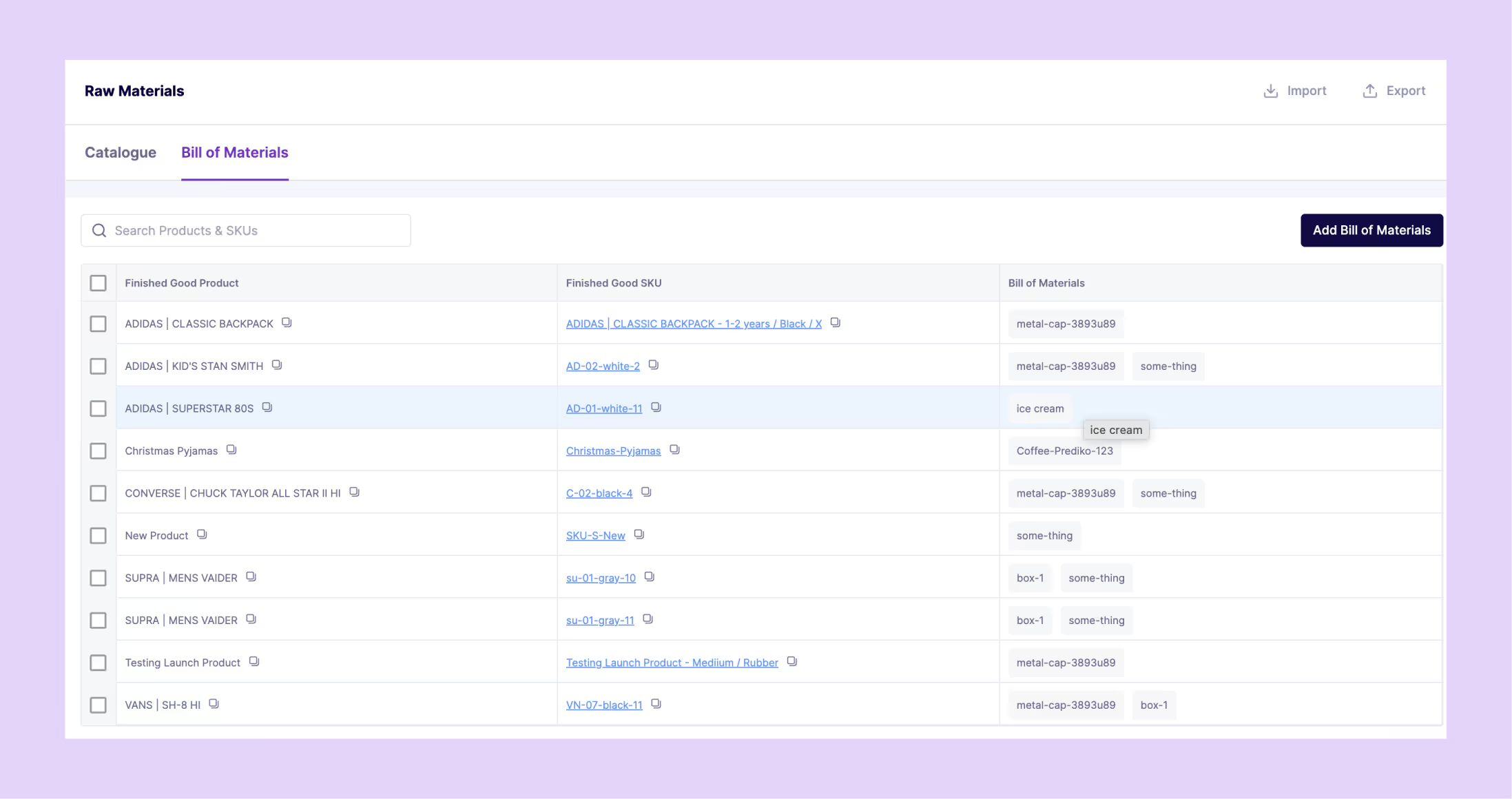
Prediko is a full-fledged inventory management solution that enables you to plan and manage both finished goods and raw material inventory simultaneously.
You get a unified dashboard to track and oversee all aspects of your supply chain– Raw materials, BOMs, purchase orders, finished goods inventory, and even sales forecasts. Its seamless integration with Shopify makes it a great choice for Shopify stores dealing with complex production workflows.
Key features
- Import raw material data: Fetch your entire raw material data in bulk with a single import and easily manage your inventory.
- Multi-warehouse support: Optimize storage and distribution by managing raw materials across multiple locations.
- BOM creation and tracking: Quickly create detailed BOMs for each product and update them as needed to ensure production runs smoothly.
- Made-to-stock production orders: Create made-to-stock production orders to keep inventory levels ready to meet demand without overproducing.
- Demand planning for raw materials: Prepare for future inventory needs by forecasting the raw materials required to meet production and customer demands. (coming soon)
- Finished goods inventory management: Plan and manage finished goods inventory with AI-powered forecasting, buying table, automated suggestions, inventory reports, and purchase order creation.
Pricing
Prediko offers three pricing plans; Starter at $49/month, Growth at $199/month, and Enterprise at $349/month. All plans include the same core features, with plans varying based on your business's revenue volume.
2. Katana
Katana is a comprehensive inventory software that helps businesses manage everything from from purchase of raw materials to the delivery of finished goods across multiple sales channels.
Key features
- Real-time data for production planning
- Made-to-order and made-to-stock workflows
- Supports the creation of multi-level and single-level BOMs
- Automated manufacturing cost calculations
- Shop floor app to access real-time shop floor insights
Pricing
Plans start at $179 per month, billed annually.
3. MRPeasy

MRPeasy is a material requirements planning software specifically designed for small to medium-sized manufacturers and distributors, typically with 10 to 200 employees. It adds efficiency and brings together various aspects of manufacturing operations.
Key features
- Single-level and multi-level BOMs creation along with CSV uploads
- Matrix BOM functionality to configure products
- Automatically calculates order costs and checks material availability.
- Scheduling of manufacturing and purchase orders
- Integrations to manage production planning, inventory, sales, and more in one place
- Version control system to record changes in your BOMs
Pricing
Plans start at $49 per month.
4. Unleashed inventory management
Unleashed is an inventory management tool designed for retailers, manufacturers, wholesalers, and distributors. It provides control over stock levels, production, and purchasing processes, enabling you to operate proactively and efficiently.
Key features
- Manage multi-level Bills of Materials
- File library to manage all the production documentation
- Stock ordering for production based on your BOMs and existing inventory
- Disassembly for selling individual products
- Build kit sets or bundles on the fly
- Automated calculations of production costs to see precise profit margins
Pricing
Plans start at $349 per month.
5. Craftybase

Lastly, we have Craftybase, which simplifies inventory management for small manufacturers by allowing them to easily generate accurate BOMs in minutes. It helps businesses track materials and update BOMs as needed, ensuring they always know exactly what’s needed for production.
Key features
- Create and manage complex multi-level BOMs
- Track both raw materials and finished products
- Automated calculations for inventory and COGS
- Easily forecast and schedule production requirements
Pricing
Plans start at $24 per month.
Prediko’s inventory management solution stands out with its extensive and powerful BOM management features. Think it can fit right into your business operations? Start a free 14-day trial now and see for yourself.
.avif)
Easy Guide to Creating Bill of Materials (BOM) for Shopify D2C Brands
A simple and straightforward guide to creating Bill of Materials (BOM) for Shopify D2C brands.
Imagine you're putting together a complex puzzle. In manufacturing, the Bill of Materials (BOM) is like the picture on the puzzle box. It shows you what the final product should look like and what pieces you need.
We quickly cover how to create, why BOM is crucial, and how you can use it to make things easier and cheaper, getting your products ready faster.
What is Bill of Materials (BOM)?
Think of a BOM as a unique shopping list for making a product. It lists down everything you need, like materials and parts, along with the right instructions on how to put all of them together.
There are different kinds of BOMs used at various stages of making a product, from designing it to actually building it.
Each type of BOM is tailored to meet the needs of different teams working on the product.
Why is Bill Of Materials Important?
A bill of materials helps in bringing clarity, managing stock, and figuring out costs. A well-made BOM makes sure you have everything you need when you need it without wasting time or money.
A well made BOM makes sure you have everything you need, when you need it, without wasting time or money.
.avif)
How to Create a Bill of Materials Appropriate for D2C Manufacturing?
1. Start a clear and complete list with all the items required.
2. Add the information about where to get each item and how many you need- Supplier & Quantity.
3. The issue with creating a Bill of Materials manually or even in Excel is that it requires regular upkeep and people waste time on doing that.
For a high-growth brand, time is money. It’s better to invest in an app that actually helps you to quickly generate BOMs based on your raw materials and also manage them in a single place.
Changes happen often and it's essential to make sure every person on your team sees the latest version. Also, making sure that BOM works and integrates well with other systems in your business. But these challenges are easily manageable in a modern-day inventory management solution like Prediko. It just takes 3 steps to quickly create a Bill of Material within Prediko.
Managing BOM in the Time of Fast-Moving & High-Growth D2C Brands
The future is exciting. With new apps in the Shopify ecosystem with their own proprietary AI, creating and managing BOMs would become streamlined and automated (internet-connected devices).
All these new generation apps make it easier to keep track of materials, predict needs, and even spot problems before they happen, keeping the production line running smoothly.
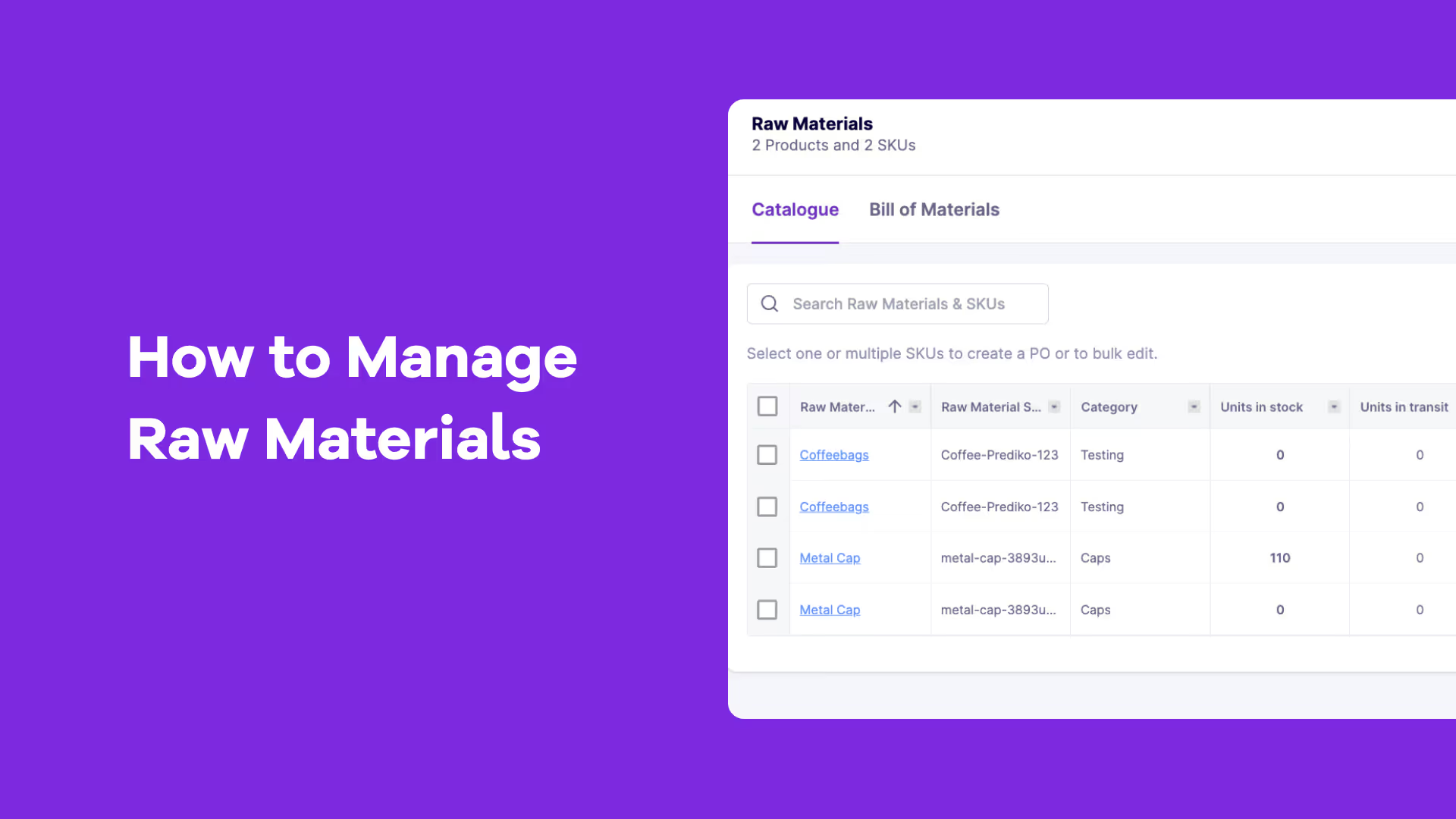
How to Manage Raw Materials Effectively for Your Shopify Brand?
Learn how you can easily manage raw materials for your Shopify brand using Prediko.
Best Practices for Raw Material Management for Shopify Brands
Adopt best practices to help you achieve optimal raw material inventory management and prevent common pitfalls. Here are a couple of strategies:
1. Regularly review and adjust inventory levels
Regularly review your inventory levels to help identify trends, such as seasonal demand fluctuations or changes in production rates. Adjust inventory levels accordingly to ensure that you always have the right amount of raw materials on hand. This approach helps in maintaining balance between supply and demand.
If you're still unsure which inputs should be tracked as direct raw materials vs. general supplies, we’ve shared this in our post on how to find direct raw materials used in D2C brands.
Prediko's predictive analytics tools enable you to forecast demand accurately and adjust raw material inventory levels in real time, thereby reducing risk of stockouts or excess inventory.
2. Create, manage and track raw materials within Prediko’s Shopify app
- First step is to create all your raw materials within Prediko’s Shopify app.

- Import raw materials using the Import function

- See entire catalogue of your raw materials within Prediko

- Create and track Bill of Materials (BOM) for D2C & B2B brands

3. Conduct regular audits
Periodic audits of your inventory helps in verifying the accuracy of your records and identifying discrepancies. This involves physical counts of materials or cycle counting, where a subset of inventory is counted regularly.
Regular audits ensure data integrity and help in identifying and addressing any issues promptly.
4. Collaborate with suppliers
Build strong relationships with suppliers to improve communication and lead to better terms and more reliable deliveries. Sharing production schedules and inventory levels with suppliers helps them anticipate needs and reduce lead times.
Collaboration also leads to more favourable pricing and priority service during high-demand periods.
During Covid-19 pandemic, businesses faced significant supply chain disruptions. The pandemic highlighted the importance of having strong supplier relationships and robust communication channels. Companies invested in these areas were able to navigate shortages and delays.
Prediko facilitates easier supplier collaboration by providing an interface where you can see all your suppliers, lead time and currency details.

One can easily enhance supply chain resilience, ensuring operations remain smooth even during unforeseen disruptions.
5. Strategic material sourcing
Material sourcing is a critical aspect of raw material management. It involves identifying, evaluating, and procuring materials from suppliers. The goal is to secure high-quality materials at the best possible price. But it's not just about cost. Timeliness, reliability, and supplier relationships also matter. Strategic sourcing can help you balance these factors. It can lead to better supplier partnerships, improved quality, and cost savings.
6. Selecting right suppliers
Choosing the right suppliers is a critical step. It's not just about who offers the lowest price. Consider factors like quality, reliability, and delivery times. Also, assess the supplier's financial stability and reputation. A good supplier is also a valuable partner. They help you navigate market changes and ensure a steady supply of materials.
7. Diversification of supply sources
Relying on a single supplier can be risky. Any disruption in their operations impacts business. Diversifying supply sources mitigates this risk. It ensures steady supply of materials, even if one supplier faces issues. Diversification also gives you more bargaining power. It helps negotiate better prices and terms.
8. Negotiating terms and prices
Negotiation is a key skill in material sourcing. It's not just about getting the lowest price. Consider other factors like payment terms, delivery schedules, and MOQ. Also, discuss contingency plans for supply disruptions.
Remember, negotiation is a two-way street. Aim for a win-win outcome that strengthens the relationship with the supplier.
9. Train Staff
Proper employee training ensures that staff understands the importance of accurate inventory management and are familiar with the systems and processes in place. This reduces errors and improves overall efficiency. Well-trained staff are equipped to handle inventory-related tasks, leading to smoother operations and fewer disruptions.especially when using material inventory management software that integrates across teams.





.avif)