




A Shopify founder pastes 18 months of order data into Claude and asks it to build a reorder model.
Two hours later, they have a working dashboard. It pulls Shopify data, calculates days of cover, and sends Slack alerts when stock dips.
It works. Genuinely. And it cost them nothing but an afternoon.
Six months in, they’re sitting on $40,000 of overstock because the model missed the real-world context outside Shopify, one spreadsheet stayed disconnected, and no one updated the lead times that changed four months ago.
That’s the problem with vibe-coded forecasting.
We cover where vibe-coded forecasting helps, where it fails, what's actually happening under the hood when you ask an LLM to forecast, and where purpose-built tools like Prediko handle it better.
Can Claude or ChatGPT forecast demand?
Short answer: it depends, definitely not in the way a buying decision needs. Not because the model isn't smart enough, but because of what it's mechanically built to do.
We will share our honest version of why, and then what to use instead.
Claude forecasting feels exciting at first. It is fast, flexible, and gives you something that looks useful. But there are moments when this shiny setup starts to show its limits.
1. It's the wrong kind of model for the job
Claude is a large language model. Its job is to predict the next piece of text, not future demand.
That creates two problems for inventory forecasting:
- It isn’t built for precise numerical forecasting. In a chat window, Claude handles numbers as tokens, not values, which makes raw arithmetic less reliable. (Hand it code to run instead, and that part gets fixed, but that just shifts the real problem to the point below.).
- It gives you an answer, not a risk range. Ask Claude for next quarter’s demand and you’ll usually get a single estimate. But buyers need to know the uncertainty around that number too.
There’s a big difference between forecasting 10,000 units and knowing demand could realistically land between 8,000 and 12,000 units. That range affects how much safety stock you carry and how aggressively you buy.
Forecasting with dedicated tools like Prediko runs at the SKU level and is built to express that range, so a buy plan can be set to the service level you actually want to carry, not to whatever single number a chat window happened to return.
2. It only knows what you've told it
A Claude-powered forecasting model trained on your last 18 months of Shopify data knows your store. It knows your average sell-through rate, your seasonal peaks, and your top SKUs. That's genuinely valuable.
What it doesn't know: how your category behaves across thousands of brands. Whether a demand dip in February is specific to you or universal across skincare DTC. What typical lead time variability looks like for your supplier category. How brands with similar SKU profiles navigate Black Friday without going into overstock.
That context doesn't live in your data. It lives in aggregated, cross-brand pattern data that no general-purpose AI has access to unless it's been specifically trained on it.
3. It reads your sales history, not your real demand
Another problem is that sales data isn’t always the same as demand data.
When a SKU sells out, sales drop to zero. But demand may still be there. If a forecasting tool reads that sales history at face value, it can mistake a stockout for weak demand and under-forecast your bestsellers for the next cycle.
A Claude script would need to be explicitly built to correct for that, and many aren’t until you've been burned by it once.
4. It has no answer for day-one launches
Ask a Claude-built model to forecast a brand-new SKU with zero sales history and you'll get either a refusal or a guess dressed up as a number. There's nothing in an 18-month CSV of your own sales to learn from for a product that's never existed before.
This matters because new launches are exactly when a bad buy hurts most; too little and you miss the launch window, too much and it's dead stock with no sell-through to justify it.
A forecasting system designed for this problem should be able to estimate demand for a new product using data from similar products, rather than making assumptions without any basis.
5. It can't build a system of record
Here's a quieter problem. Every time you start a new Claude session, the conversation starts fresh. Your historical forecasts, your PO decisions, your supplier notes, your past stockout events none of that is stored, tracked, or referenced in future planning cycles.
A forecasting system that doesn't accumulate history isn't getting smarter over time. It's starting from zero every session. For operational planning, that's not a tool. That's a very capable calculator that forgets every calculation.
As the Slack conversation shared above puts it: "Building with Claude on top of Shopify data, their data won't be stored anywhere and will continue to be siloed."
6. Every action is infrastructure you have to build and maintain yourself
Claude can execute. It can call the Shopify API, generate a PO, and send a supplier email only if you've built that integration. The capability exists.
Every action requires explicit engineering, and once built, you own it. Every Shopify API update, every new supplier, every channel you add is more surface area your script has to cover.
Purpose-built tools give you the capability and execution that's already built, maintained, and connected, without the ongoing tax of keeping it alive yourself.
7. It has no view of the messy middle
Claude’s Cowork cannot account for the fragmentation and complexity of a traditional inventory setup.
A real Shopify supply chain isn’t one clean data source. It’s stock split across a 3PL syncing on batch cycles, wholesale allocations sitting in a spreadsheet, supplier lead times buried in emails, bundles that aren’t tracked at the component level, and inbound POs that don’t exist in any system until someone manually enters them.
A custom Claude script handles the inputs you've thought to give it. The messy middle, the things you didn't think to account for until they caused a problem, is exactly what separates a forecasting model built on Claude from a real forecasting system.
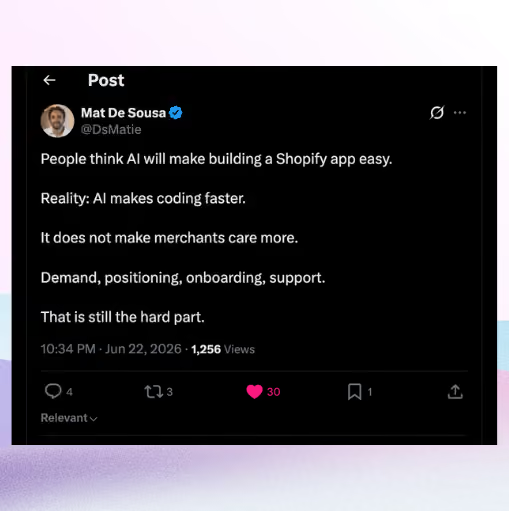
Big names in the Shopify ecosystem are saying it out loud now: AI can make coding faster, but it doesn’t make building a Shopify app easier.
Merchants still need clear positioning, real onboarding, strong support, and a product that solves an actual problem.
That’s exactly why Prediko isn’t just another AI layer. It’s built around the messy, operational work Shopify brands actually deal with every day.
The Three Things Vibe Coding (Claude) Gets Right for Inventory
For ecommerce operators, vibe coding opened a door as you no longer need a developer to connect to your Shopify API, calculate days-of-cover per SKU, or build a reorder alert system.
To be fair, vibe coding does solve real problems for Shopify brands.
1. It eliminates spreadsheet dependency
The most common inventory management setup for under $5M Shopify brands is still a combination of Shopify's built-in reports and an ever-growing Google Sheet.
Vibe coding replaces that with a proper automated system that reads live data and surfaces actionable alerts.
2. It compresses time to tool
What once required a developer, a Shopify API integration, and three weeks of back-and-forth now takes an afternoon.
Gartner predicts 60% of all new code will be AI-generated by the end of 2026, and the speed gains are real.
3. It handles structured, repeatable logic well
Calculating reorder points, tracking days of cover, flagging when stock drops below a threshold, all of these are straightforward tasks. You give AI the formula and it applies it reliably across your SKU catalogue. That part works.
Here’s the catch. Demand forecasting isn't a formula problem. It's a pattern recognition problem. And pattern recognition requires data that vibe coding, by definition, doesn't have access to.
Prediko's Pia vs Claude: Compare Why Brands Should Choose Prediko
This isn't a takedown of Claude. It's a clarification of what each tool is actually built for.
That's the distinction. Claude is a generalist that can narrate inventory. Prediko is a specialist built to run it.
What Good Inventory Forecasting Actually Requires
Let's be specific. Here's what separates Claude-based forecasting from a forecasting system that actually protects your margins.
1. A forecast that reconciles to both your revenue target and SKUs
A forecast on its own is a prediction. A plan is a decision and the two aren't the same thing. A SKU-level forecast tells you the granular truth of what's likely to sell.
But finance is holding you to a revenue and margin number for the season, and if those two views live in separate spreadsheets, they drift apart fast.
A good demand planning system connects both in one model, so every change to the SKU forecast immediately updates the wider revenue plan.
2. Cross-brand pattern data
Your own historical data is a starting point, not a training set.
Accurate demand forecasting draws on patterns across thousands of similar brands to account for category seasonality, demand volatility benchmarks, and supplier behaviour norms that your data alone can't surface.
3. A persistent system of record
Every forecast, every PO, every supplier note, every actual vs. predicted difference should be stored and feed into the next planning cycle.
If your forecasting system doesn’t learn from past decisions and outcomes, it doesn’t improve over time. It just keeps making the same level of guesses.
4. Closed-loop action capability
The forecast should connect directly to the replenishment action: a purchase order generated, sent, and tracked. It shouldn’t just be a recommendation that someone has to manually act on.
5. Continuous model improvement
AI forecasting reduces forecast errors by 20-50% compared to traditional methods.
But that improvement requires a model that learns from new data and improves over time not a static prompt that runs the same calculation regardless of what's changed in your market.
6. Ops that scale without rebuilding
A 4-person brand and a 40-person brand have fundamentally different planning needs. The tool that works today needs to grow with you not require a rebuild every time your operational complexity increases.
Where Claude Genuinely Helps and How It Plugs Into Prediko
Here's the part most vendor comparisons skip, and it's worth saying plainly: we're not anti-Claude. Claude is a genuinely excellent tool for language. The mistake isn't using it, it's asking it to be the forecasting engine instead of the interface on top of one.
Prediko is now available in Claude. That means you can connect Pia directly into Claude and ask questions about your actual Prediko data: forecasts, POs, supplier status, in plain language, from inside Claude or ChatGPT.
So you don't have to choose between the conversational interface you like and a forecasting engine that actually works. You get both: the interface powered by real inventory intelligence, not a spreadsheet you had to upload by hand.
Claude, on top of Prediko, is genuinely good at:
- Drafting supplier emails and PO communications - Claude is great at this.
- Explaining inventory reports to non-technical stakeholders.
- Ad hoc data analysis - asking "why did my sell-through drop in March?" on top of a Prediko export.
- Forecasting narratives - turning Prediko's numbers into a board update or a quarterly review.
- Custom integrations - brands have used the Prediko API plus the Claude MCP to build their own PO automation workflows on top of Prediko's data, rather than instead of it.
The pattern that works: Prediko runs the inventory logic. Claude handles the language, the communication, and the custom workflows on top.
How Does Prediko (and Pia) Stack Up Against Claude For Forecasting
Prediko is built specifically for Shopify DTC brands that have outgrown spreadsheets and do not want to maintain custom Claude dashboards that break every time an API changes, a spreadsheet gets missed, or someone forgets to update the data.
Here’s where Claude stops making sense and Prediko takes over.
- AI demand forecasting that predicts sales at the SKU level up to 12 months out, factoring in seasonality, promotions, bundle demand, supplier lead times, and inbound stock. Trained on cross-brand data from 25 million SKUs across 15+ categories, not just your historical sales.
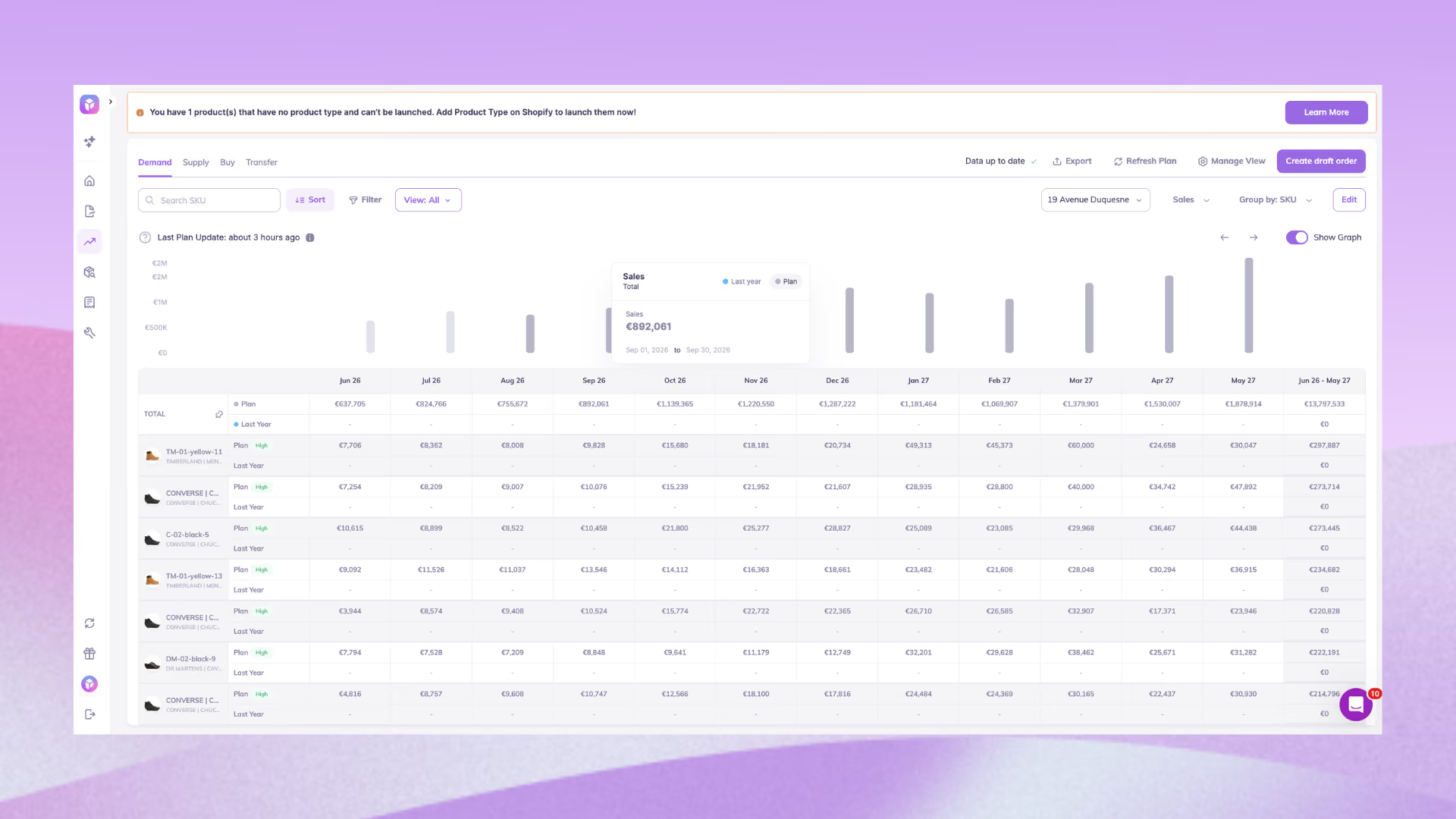
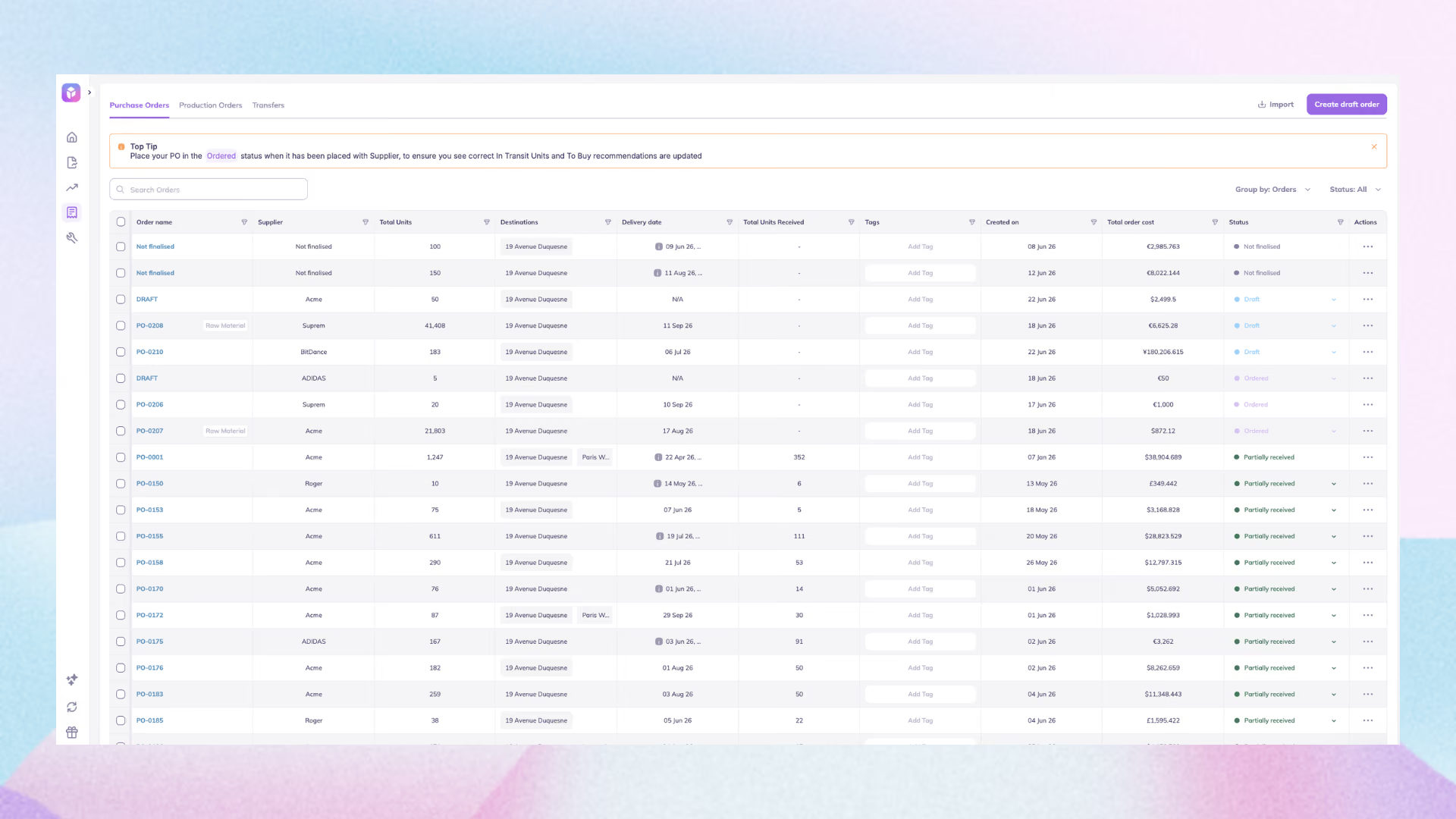
- One-click purchase order generation from forecast to PO to supplier in minutes. No manual translation from recommendation to action required.
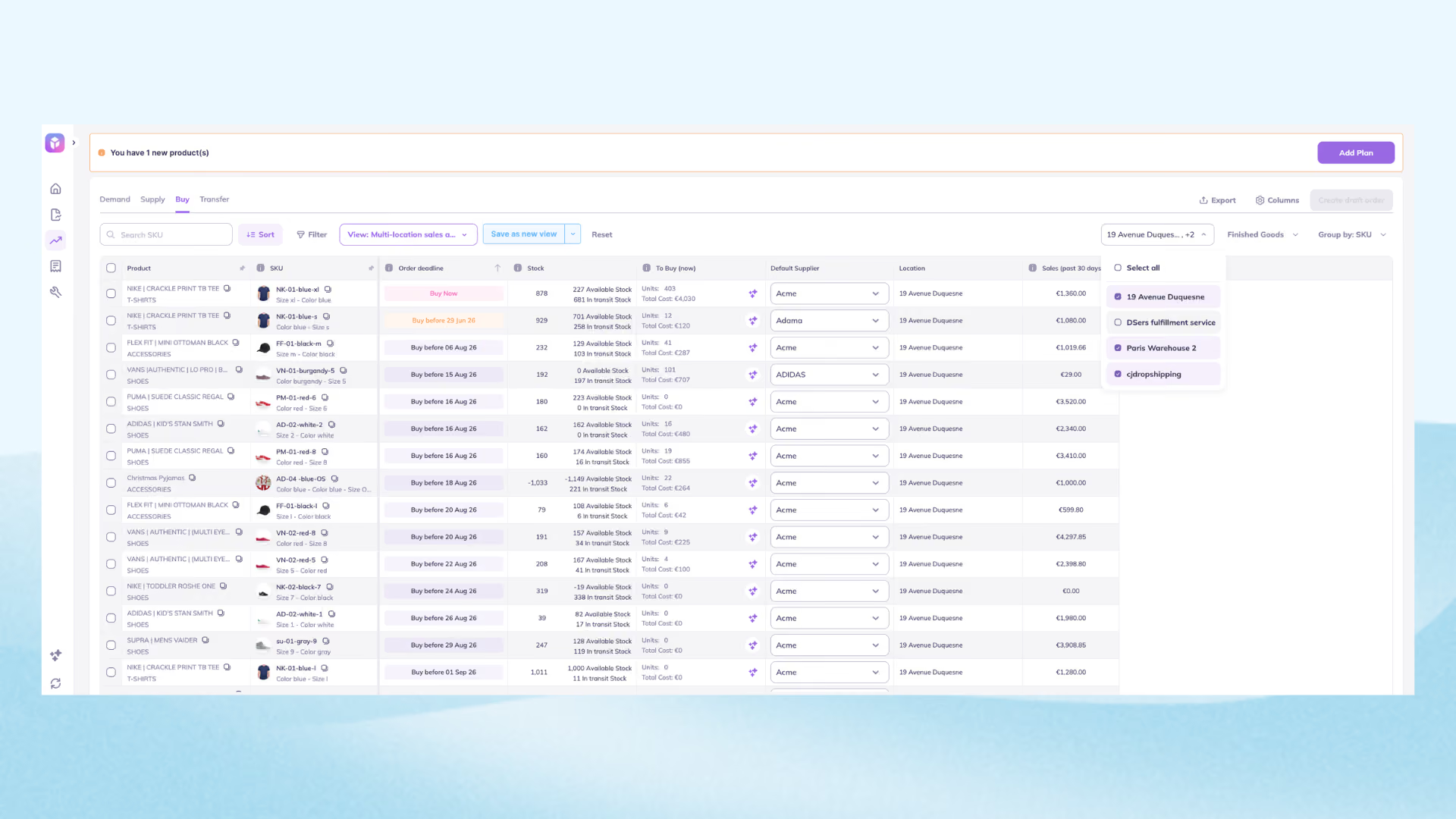
- Real-time multi-location stock visibility unified view across all warehouses, 3PLs, and Shopify locations that updates in real-time. Available-to-sell calculations are done automatically, accounting for what's actually available, not just what Shopify shows.
- A persistent system of record for every demand plan, PO, supplier note, and forecast variance is stored and accessible. Your inventory knowledge lives in the platform, not in someone's head or a session that resets.
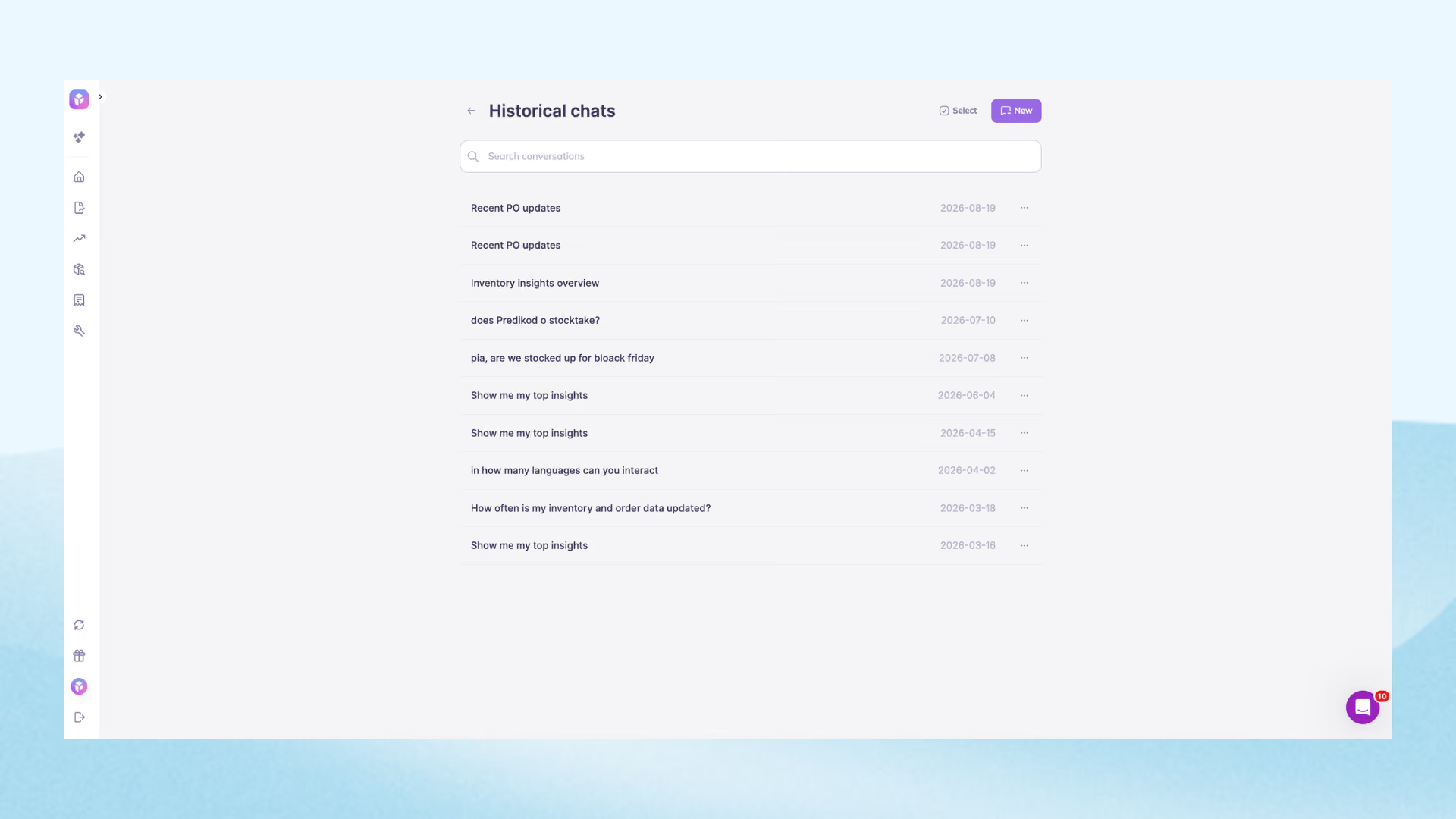
- Chat-based planning interface (Pia): Prediko's AI agent executes commands: refreshing demand plans, generating POs, flagging at-risk SKUs, surfacing insights. The difference from a general-purpose AI: Pia is trained on inventory-specific data and operates within a closed-loop system where actions have real consequences.
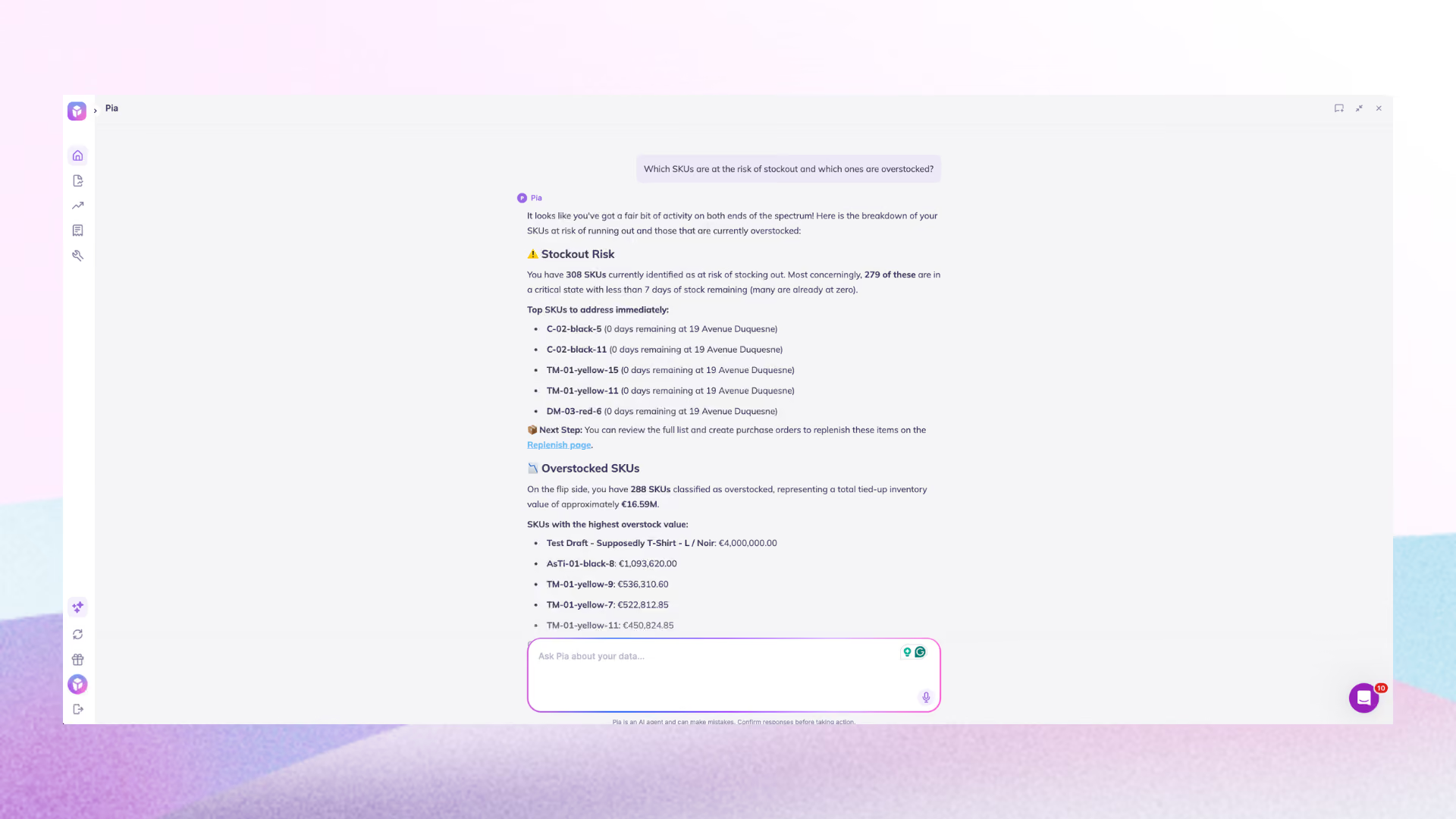
The result is less time maintaining a custom AI setup, more time making better inventory decisions. Prediko keeps the data connected, the planning history intact, and the next action clear.
Questions to Ask Before You Trust Any AI Tool With Your Inventory
Not just Prediko, any tool, including ones you build yourself.
These are the questions that separate a real forecasting engine from a chat window with a retail prompt:
- Does it correct for stockouts in your sales history? If it reads raw sales as demand, it will under-buy your winners without you ever seeing why.
- How does it handle a brand-new SKU with no sales history? "It needs a year of data first" is a real limitation to know about before launch season.
- Is there a persistent system of record? Or does every planning cycle start from a blank chat window and a spreadsheet you have to rebuild?
- Does the forecast connect to an action? A number in a CSV isn't a purchase order. Ask whether it actually generates and tracks the PO, or just hands you a recommendation to act on manually.
- Who maintains it as you grow? A script that works at 20 SKUs and 1 warehouse needs to be rebuilt by someone at 200 SKUs and 3 warehouses. Ask who that someone is.
Honest Take on Vibe Coding for Inventory
Vibe coding isn't wrong for inventory. It's a powerful starting point and for a brand early in its journey, a Claude-powered alert system is meaningfully better than a spreadsheet.
The mistake is confusing the prototype for the system.
At some point, your operations grow past what a custom-built script can handle reliably. Your team stops having the bandwidth to maintain it. The edge cases multiply. The forecasting errors get more expensive.
And you realise that what you built is a mirror of your own historical patterns useful, but blind to everything outside your own data.
That's the ceiling. Prediko is what comes after it. Start a free 14-day trial with Prediko and see the difference.
Frequently Asked Questions
What is vibe coding and why are ecommerce brands using it for inventory?
Vibe coding is when you describe what you want in plain English and AI generates the code. Ecommerce brands use it to build quick inventory dashboards, reorder alerts, and forecast scripts without a developer.
Can Claude do inventory forecasting for Shopify brands?
Claude can help analyze Shopify data, calculate days of cover, flag reorder points, and draft PO summaries. What it cannot do on its own is use cross-brand demand patterns, maintain a lasting system of record, send POs, or improve forecasting accuracy over time.
What’s the difference between Prediko and Claude-powered inventory forecasting?
Claude works from the data you give it. Prediko is built for Shopify inventory planning, with forecasting models trained across thousands of brands, plus persistent planning history, PO creation, supplier context, and replenishment workflows built in.
Can I use Claude and Prediko together?
Yes. Prediko's account data is available as a Claude MCP server, so you can ask Claude questions about your live Prediko data: forecasts, POs, supplier status, directly, without leaving Claude or ChatGPT.
What is a system of record in inventory planning and why does it matter?
A system of record is one place where forecasts, POs, supplier lead times, inbound stock, and forecast accuracy live. It matters because every planning cycle builds on the last instead of resetting across chats, spreadsheets, or exports.
When should a Shopify brand move from DIY AI tools to a purpose-built forecasting solution?
Move when planning takes too much time, stockouts or overstock keep slipping through, or your team spends more time fixing the tool than using it. That’s usually when a purpose-built system like Prediko starts making sense.
Is vibe coding secure enough for live ecommerce operations?
It can be fine for internal tools that read data, but anything that writes to your live Shopify store needs proper review and guardrails. AI-generated code can introduce bugs or security issues, so it should not run critical operations unchecked.









.avif)