




Most e-commerce brands think that never running out of stock is the goal.
Well, that sounds fair and responsible. But in trying to always stay stocked, many brands end up overstocking, which can be even more expensive than stockouts.
The actual goal is to know when you’re about to stock out, so you can restock on time without overbuying. And inventory optimization software helps you do just that.
We compare the top 7 inventory optimization software options and what to look for when choosing one, especially if you’re a Shopify brand.
What Is Inventory Optimization Software?
Inventory optimization software is a tool that helps you maintain the right amount of stock (not too much or too little) at the right time and in the right place.
An inventory optimization software acts as the layer between your Shopify data and your supply chain decisions.
Instead of manually checking reports and building spreadsheets to reorder, the software analyzes your sales, lead times, and slow movers to tell you exactly what to buy and when.
More broadly, inventory planning software combines demand forecasts, current stock, supplier lead times, and purchasing recommendations to decide how much inventory to order and when.
The best tools for Shopify go further. They pull your real-time sales data, sync across warehouses and locations, and generate POs automatically, so you're making decisions based on what's actually happening.
The 8 Best Inventory Optimization Software for Shopify
1. Prediko: Best overall for D2C Shopify brands
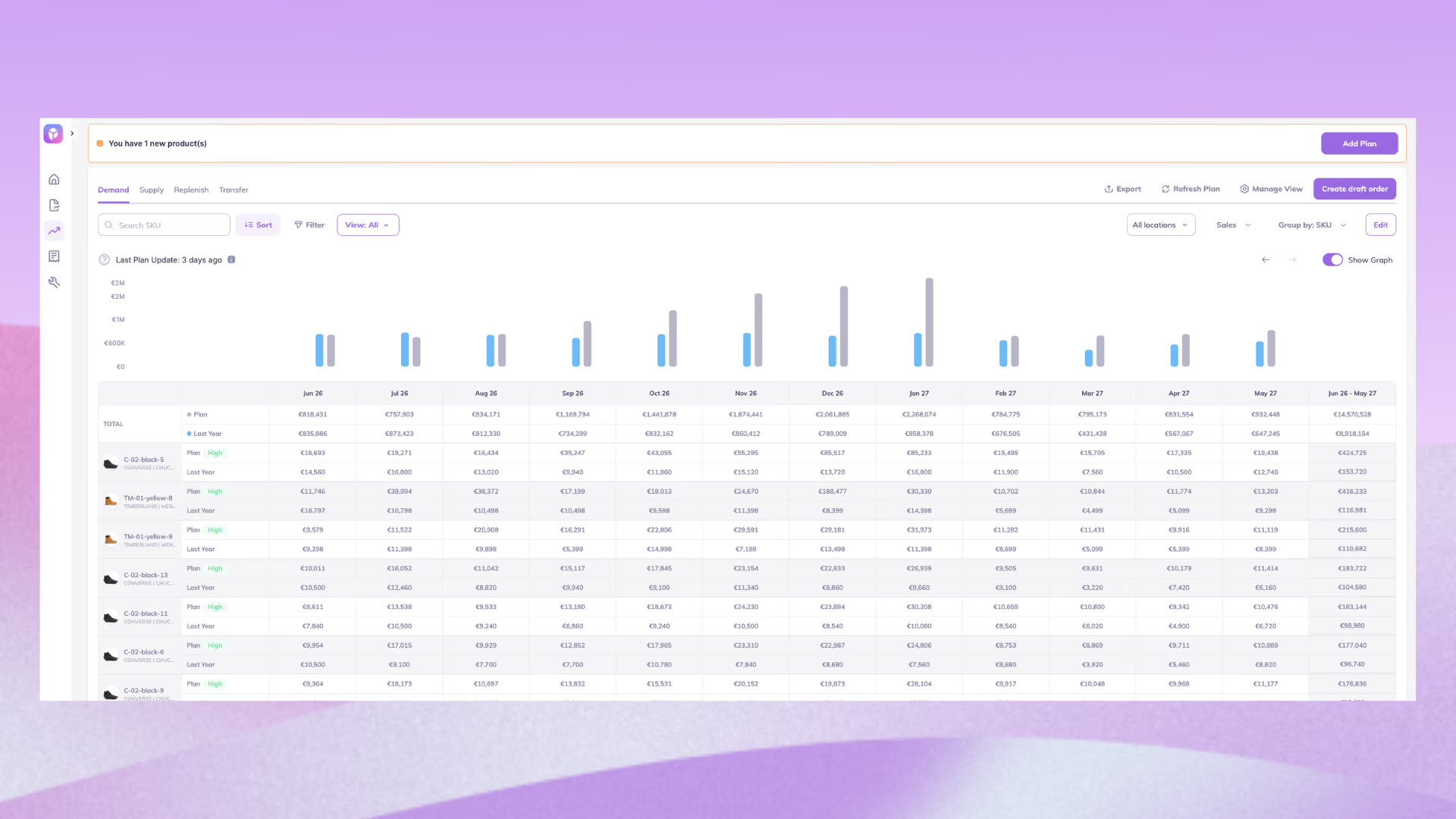
Prediko is an AI-powered inventory planning platform built specifically for Shopify D2C brands. If you're past the spreadsheet stage and want a single tool to handle forecasting, replenishment, and purchase order management. This is it.
It connects to your Shopify store and immediately starts working with your sales history, stock levels, and supplier lead times to build SKU-level demand forecasts. It surfaces which products are trending toward a stockout, which ones are sitting as dead stock, and exactly how much to order, while also letting you create a share-ready PO in a click.
It also supports raw materials, bundles, and finished goods inventory, which makes it useful for brands that sell kits, multipacks, or products that depend on component-level planning.
Key features
- Shopify-native: no complex integration required; connects to your store in minutes
- AI demand and supply planning at the SKU, category, and product level, accounting for seasonality, trends, and sales velocity
- Automated restock alerts with stock health indicators so you know what to act on, right now
- Purchase order management with bulk editing, supplier lead times, and real-time Shopify sync
- 20+ inventory reports with scheduled insights and a fully customizable analytics dashboard
- Multi-location support for brands managing stock across multiple warehouses or 3PLs
- Agentic interface of Pia that lets you quickly get answers to stock-related questions and maintain optimal inventory quantities.
Pros
- Clean, intuitive UI that doesn't require training
- Fast onboarding; most brands are live within hours
Cons
- Some integrations are not fully developed
Pricing: Prediko offers tiered pricing based on your store’s revenue. Plans start at just $49/month. All plans include unlimited SKUs, purchase orders, and users.
2. Inventory Planner by Sage: Best for detailed forecasting reports
Inventory Planner is a forecasting-first platform that takes your historical sales data and turns it into precise replenishment recommendations, with a good level of reporting depth.
It does a pretty good job in the buying decisions. Inventory Planner doesn't just tell you what to reorder. It shows you the cash flow impact of that order, so you can weigh buying decisions against your working capital position.
Key features
- Forecast-driven purchase order recommendations
- Replenishment based on historical sales, lead times, and seasonality
- Direct Shopify integration with multi-channel support
- Cash flow impact analysis on buying decisions
Pros
- Helpful for managing cash flow alongside inventory
- Responsive customer support
Cons
- UI can feel dated compared to newer tools
- Onboarding has a steeper learning curve
- Occasional sync delays between platforms
Pricing: Available on request
3. Katana MRP: Best for Shopify brands that manufacture
Most inventory tools assume you're buying finished goods and reselling them. Katana is built for a different kind of Shopify brand: one that makes what it sells.
If you're producing your own products, you've got a layer of complexity that standard inventory apps just don't handle: raw material tracking, bill of materials management, production scheduling.
Katana brings all of that into the same platform as your Shopify order management, so you're not bouncing between a production spreadsheet and your inventory system.
Key features
- Bill of materials (BOM) management for made-to-order and batch production
- Real-time raw material and finished goods tracking
- Production scheduling and shop floor control
- Shopify order sync and inventory updates
Pros
- Strong Shopify and QuickBooks/Xero integrations
- Clean, visual interface
Cons:
- Overkill if you're purely reselling rather than manufacturing
- Custom price for full feature access
Pricing: Starts at $299/month
4. Cin7 Core: Best for Multi-Channel Operations
Cin7 Core is one of the more comprehensive platforms on this list, and that's both its strength and its challenge.
It's built for brands that have outgrown a single sales channel and need a central system to manage inventory, orders, and fulfillment across Shopify, wholesale, marketplaces, and more.
Key features
- Multi-channel order and inventory management
- Wholesale and B2B order management
- Manufacturing module for light production
- 700+ integrations, including 3PLs, carriers, and accounting platforms
Pros
- Extremely broad integration ecosystem
- Handles both B2C and B2B in one place
Cons:
- Complex to set up; expect a longer implementation
- Can be overwhelming for smaller teams
- Sudden price hikes with pricing climbing quickly with add-ons
Pricing: Starts at $349/month.
Still comparing options? Read our Cin7 alternative guide to find a better fit for your forecasting, replenishment, and Shopify inventory planning needs.
5. SKULabs: Best for warehouse operations
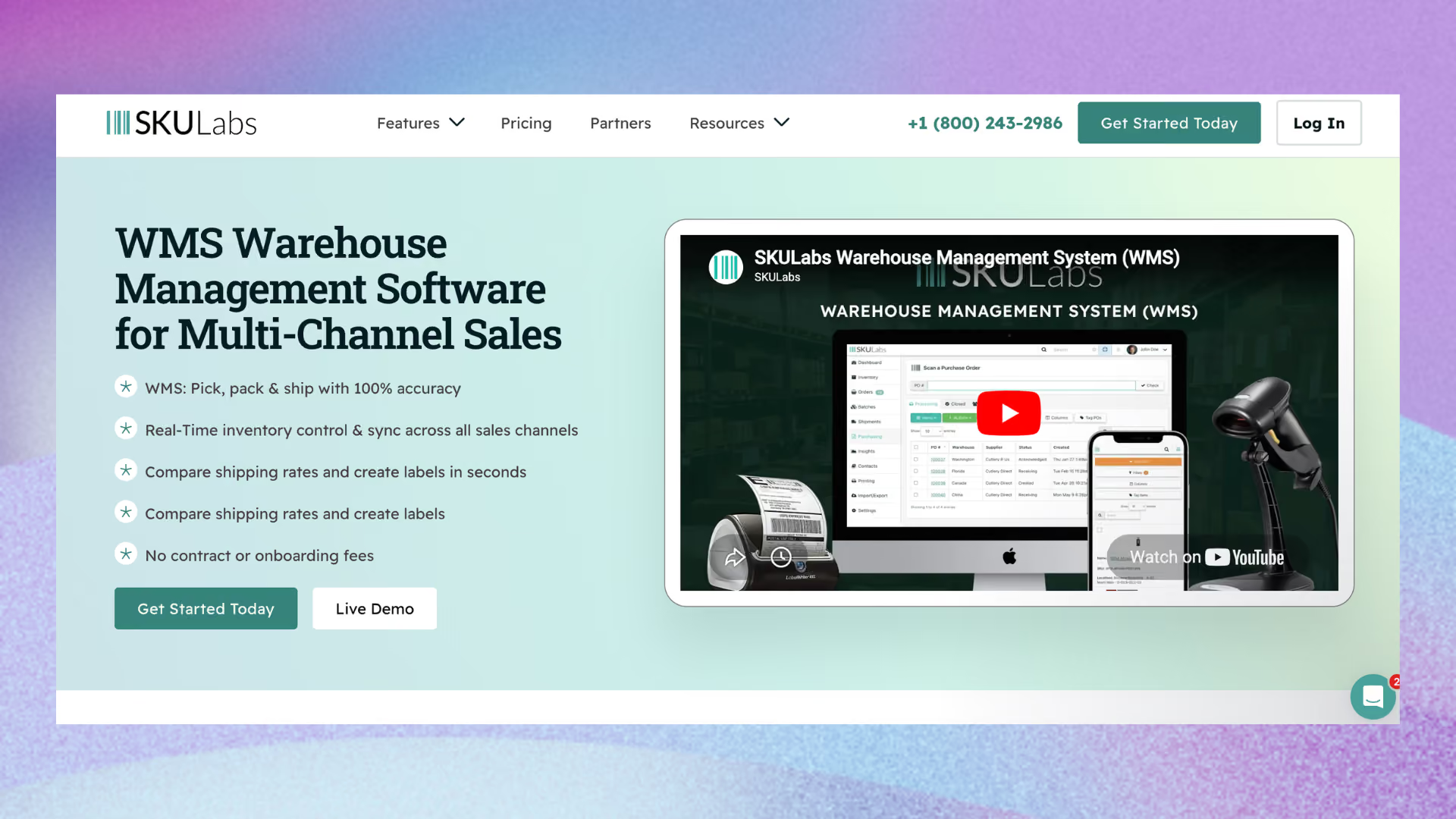
SKULabs isn't really a forecasting tool, and it doesn't try to be. It focuses on what happens inside your warehouse: accurate picking, clean receiving, error-free packing, and multi-channel order consolidation from a single interface.
For high-volume Shopify brands that fulfil their own orders, the cost of warehouse mistakes adds up fast. A mis-pick leads to a return. A missed count leads to an oversell.
SKULabs addresses this with barcode scanning across the entire fulfillment workflow, from receiving to shipping confirmation and batch picking.
Key features
- Barcode scanning for receiving, picking, and stocktakes
- Multi-channel order consolidation (Shopify, Amazon, eBay, Walmart)
- Batch and wave picking tools
- Real-time inventory tracking across locations
Pros
- Excellent at reducing pick and pack errors
- Strong barcode scanning functionality
- Solid multi-channel support
Cons:
- Not a forecasting tool; you'll need a separate solution for demand planning
- Interface feels more operational than strategic
Pricing: Starts at $299/month.
6. ShipHero: Best for 3PL and high-volume fulfillment
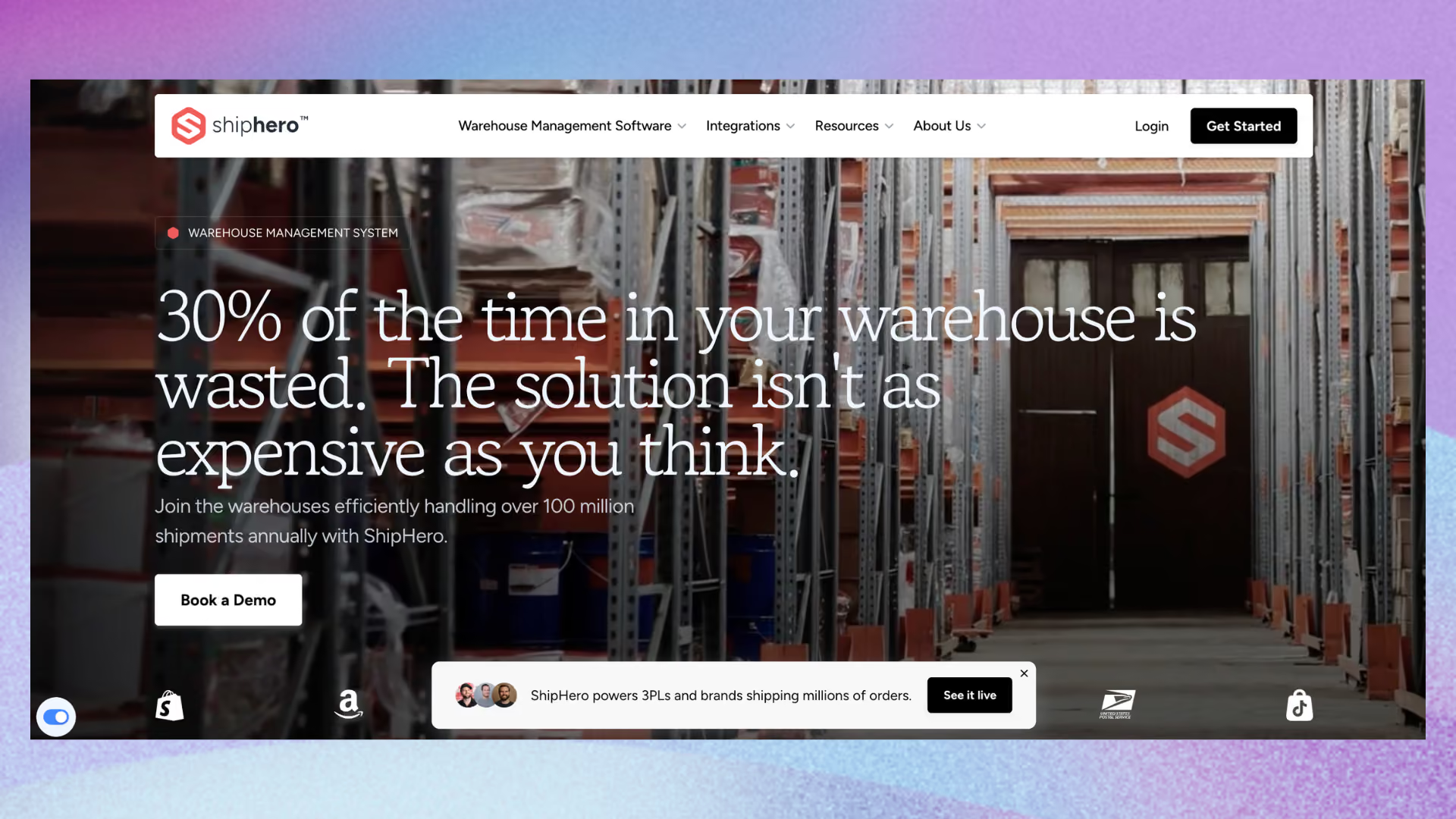
ShipHero sits at the intersection of inventory management and fulfillment infrastructure. It's designed for two types of brands: those running their own warehouse at high volume, and those plugging into ShipHero's own fulfillment network across North America.
On the warehouse management side, it covers real-time inventory tracking, barcode scanning, cycle counting, and automated alerts, all synced with Shopify.
On the fulfillment side, ShipHero's network gives you access to distributed warehousing that can reduce shipping costs and speed up delivery times without managing physical space yourself.
Key features
- Multi-warehouse inventory tracking with automatic alerts
- Pick, pack, and shipping tools built in
- Integrates with 50+ carriers and marketplaces
- Barcode scanning and cycle counting
Pros
- Strong fulfillment-side functionality
- Handles complex multi-warehouse routing
- Built for scale
Cons:
- Pricing can be expensive for smaller brands
- Less focused on demand forecasting and buying decisions
Pricing: Starts at $1,850/month
7. Assisty: Best budget option with AI insights
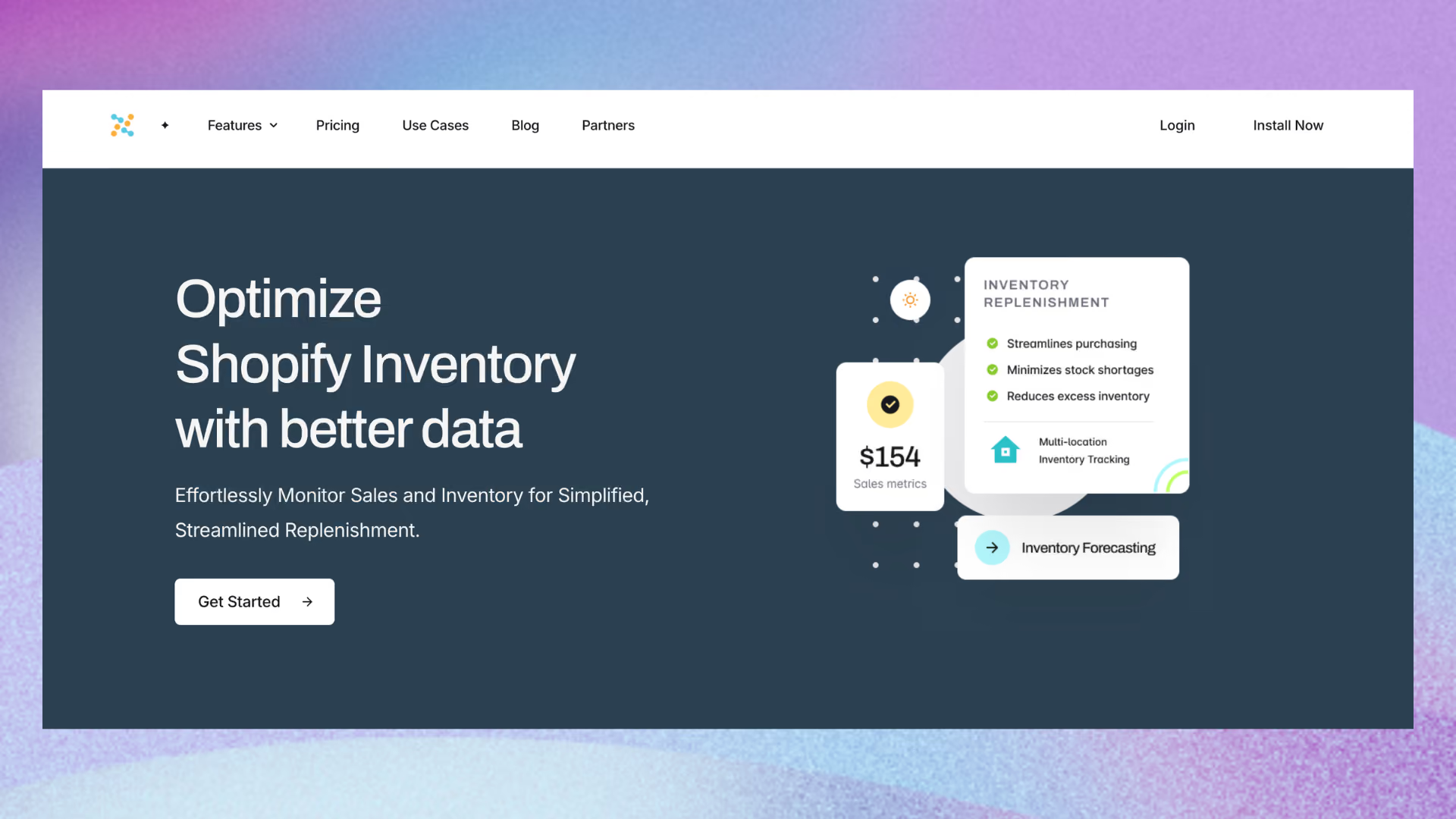
Assisty is a Shopify-native inventory app that offers a lot for its price point.
It connects directly to your store and uses AI to surface reorder recommendations, flag slow-moving products, and generate reports, replacing manual analysis.
It's well-suited for smaller brands that want data-driven insights without the overhead of a full inventory planning platform.
Key features
- AI-powered reorder suggestions based on sales data
- Sell-through analysis, dead stock reports, among others
- Create, track, and send POs in one system
- Automated inventory reports delivered by email
Pros
- Clean interface, fast setup
- Strong customer support
Cons:
- Less powerful forecasting than other dedicated tools
- Limited PO management features
- Better suited for brands earlier in their growth
Pricing: Paid plans from $19/month
8. Fabrikator: Best for pre-order and backorder management
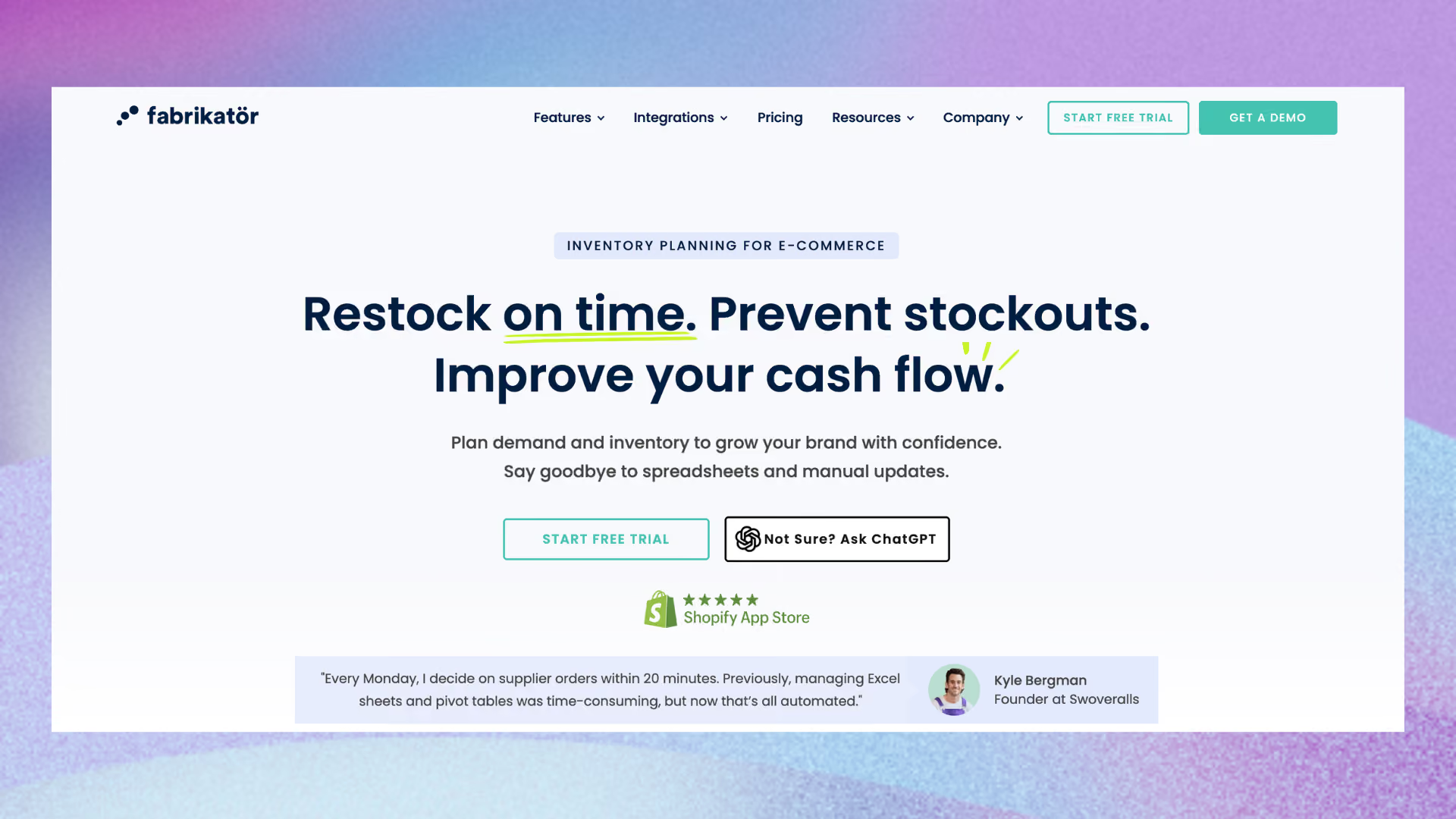
Fabrikator fills the gap between what happens when you're selling products you don't have yet.
For Shopify brands that run limited drops, pre-launch campaigns, or operate on a made-to-order model, Fabrikator is designed around stock you're about to have.
It gives you prediction tools to plan buys before demand peaks, and backorder management to keep customers informed when items aren't immediately available.
Key features
- Inventory predictions for the upcoming stock
- Pre-order and backorder management
- Tailored reporting for stock planning
Best for: Shopify brands that run pre-orders, limited drops, or operate on a made-to-order model.
Pros
- Automated demand forecasting and PO management
- Handles the pre-order flow that most tools ignore
- Useful analytics for planning future buys
- Free plan available
Cons
- Limited forecasting depth for large catalogues
- Less suitable if your main challenge is replenishment and buying decisions
Pricing: Paid plans from $99/month
Key Features to Look for in Shopify Inventory Optimization Software
When it comes to the features, here's what actually moves the needle for Shopify brands:
- Native Shopify integration: Real-time, two-way sync with your store. Changes in sales, inventory changes, product updates, order activity, and POs should flow automatically.
- AI-powered demand forecasting: Predictions built on your actual sales history, accounting for seasonality, trends, and SKU-level variance.
- Automated replenishment alerts: Low-stock alerts and reorder points that trigger based on demand, lead times, and current stock levels instead of waiting until a product hits zero
- Purchase order (PO) management: Create, send, and track POs without leaving the platform or switching to a spreadsheet.
- Multi-location support and transfers: If you've got more than one warehouse or 3PL, the software should handle stock across all of them and let you transfer whenever needed.
- Inventory health reporting: Clear visibility into days of cover, dead stock, overstock, and sell-through rates.
- Supplier management: The software should let you track supplier performance, minimum order quantities, and delivery timelines so you can plan purchases accurately.
- Integrations: You should be able to connect with the rest of your tech stack, including accounting tools like Xero or QuickBooks, 3PLs, marketplaces, and other sales channels.
How to Choose the Right Tool for Your Shopify Store
The right software depends on where your brand is and where it's going. Here's a quick framework to take that decision.
- You're an early-stage brand (under 100 SKUs, single warehouse): Start with Assisty or Fabrikator. Get the basics right, build a sales history, and upgrade when you're ready for AI forecasting.
- You're a growing D2C brand (100–1,000 SKUs, one or two warehouses): Prediko is built for you. You'll get AI-powered forecasting, automated restock alerts, and PO management without the complexity of an enterprise platform.
- You manufacture your own products: Katana handles the production planning side that generic tools miss entirely.
- You're running a complex multi-channel operation (wholesale + Shopify + marketplaces): Cin7 Core gives you the broadest integration ecosystem to manage it all in one place.
- You've got high order volumes and own your warehouse: SKULabs or ShipHero will give you the warehouse-level control you need.
Inventory Management vs. Inventory Optimization: What's the Difference?
These two terms get used interchangeably, but they're not the same thing. Knowing the difference helps you pick the right tool.
Inventory management is about control. It answers: what do I have, where is it, and how do I track it? It covers stock counts, order receiving, adjustments, and syncing quantities across your channels. Most Shopify apps, including Shopify itself, do this reasonably well.
Inventory optimization is about decisions. It answers: how much should I have, when should I reorder, and am I buying the right quantities? It uses your sales data, lead times, and demand patterns to make sure every buying decision is grounded in real-time data.
Most brands start with management-only tools and only switch when a bad stockout, or a warehouse full of dead stock, makes the cost of guessing painfully clear.
The best tools on this list do both. But if you're choosing between a pure tracking app and one that forecasts and optimizes, the latter pays for itself faster, especially as your SKU count grows.
Every Stockout You've Had Was Predictable
To never run out of stock, you don’t need to hoard SKUs in your warehouse. You need a system that can read that data and act before the shelf goes empty.
The data is usually already there: sales velocity, supplier lead times, seasonal spikes, and SKU-level demand patterns.
An inventory optimization software turns the inventory data you already have into timely decisions, so you know what to reorder, when to reorder it, and how much to buy.
For Shopify brands, Prediko makes inventory optimization easier, faster, and more accurate. Start your 14-day free trial and see how much time and money you can save.
Frequently Asked Questions
Does Shopify have built-in inventory optimization tools?
Shopify includes basic inventory tracking, but it doesn't include demand forecasting, automated purchase order creation, or AI-driven replenishment recommendations. For those, you'll need a dedicated inventory optimization software.
What's the difference between inventory management and inventory optimization?
Inventory management is about tracking what you have. Inventory optimization goes a step further: making sure you always have the right amount of stock, in the right place, at the right time.
How much does inventory optimization software for Shopify cost?
Pricing ranges widely from $19/month to even $2,000/month, depending on which tool you choose. Most tools offer free trials, so you can test before committing.
Can I use inventory optimization software with multiple Shopify stores?
Some tools support multiple Shopify stores from a single dashboard. Prediko and Cin7 Core both do.
How long does it take to set up inventory optimization software?
Most Shopify-native tools connect to your store in minutes. The real setup time goes into configuring your products, suppliers, lead times, and reorder points, which can take a few hours to a few days, depending on catalogue size.
Will inventory optimization software help me reduce overstock?
Yes, that's one of its core jobs. By forecasting demand accurately and recommending buy quantities based on projected sell-through, good inventory software stops you from overbuying.







.avif)