


When planning inventory and supply chains, businesses rely on two closely connected processes: demand planning and supply planning.
Key Difference Between Demand Planning and Supply Planning Software
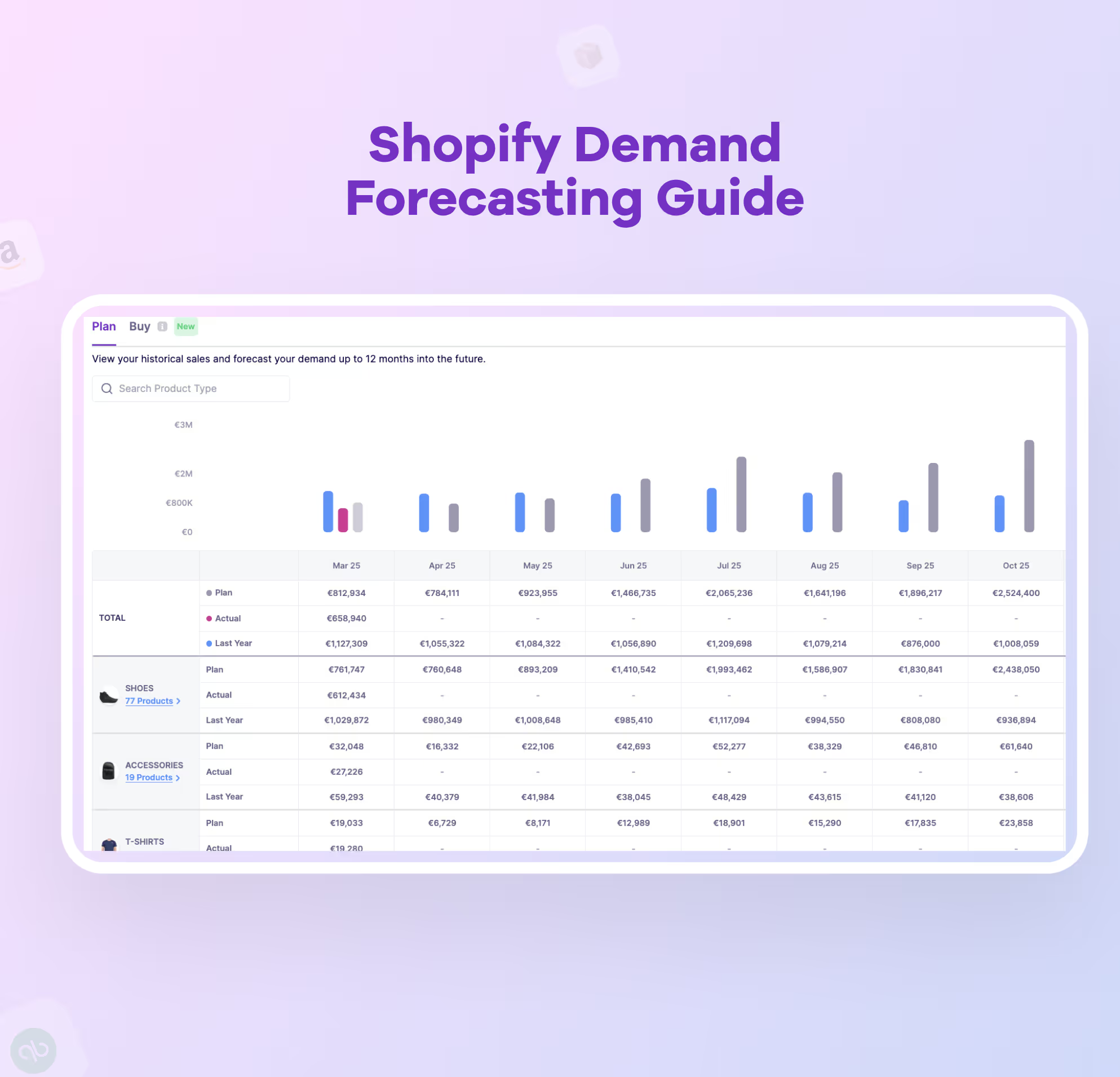
Demand planning forecasts what customers will buy and when using historical sales data, trends, and forecasting models.
Supply planning takes those forecasts and determines how to meet that demand, including purchasing, production, inventory allocation, and logistics.
In simple terms:
- Demand planning predicts demand
- Supply planning fulfills demand
.png)
Both processes work together to ensure products are available without overstocking or stockouts.
What is Demand Planning?
Demand planning is the process of predicting future customer demand for a product. Learn everything about in our Demand planner's guide to Demand forecasting & planning
What is Supply Planning?
Supply planning is the process of managing inventory, production, and purchasing so that you have the right products, in the right place, at the right time.
Simply put, it turns forecasts into actionable steps by coordinating with suppliers, tracking lead times, and optimizing inventory levels to meet customer demand efficiently. Again an integral part of inventory management.
💡See which apps make it to the list of the best inventory management Shopify apps.
Components of Supply Planning
Important elements of supply planning include
1. Material requirement planning (MRP)
This involves calculating the materials and components needed to meet production demands. It helps you to have the right quantities of raw materials or parts at the right time, based on schedules and forecasts.
2. Production planning
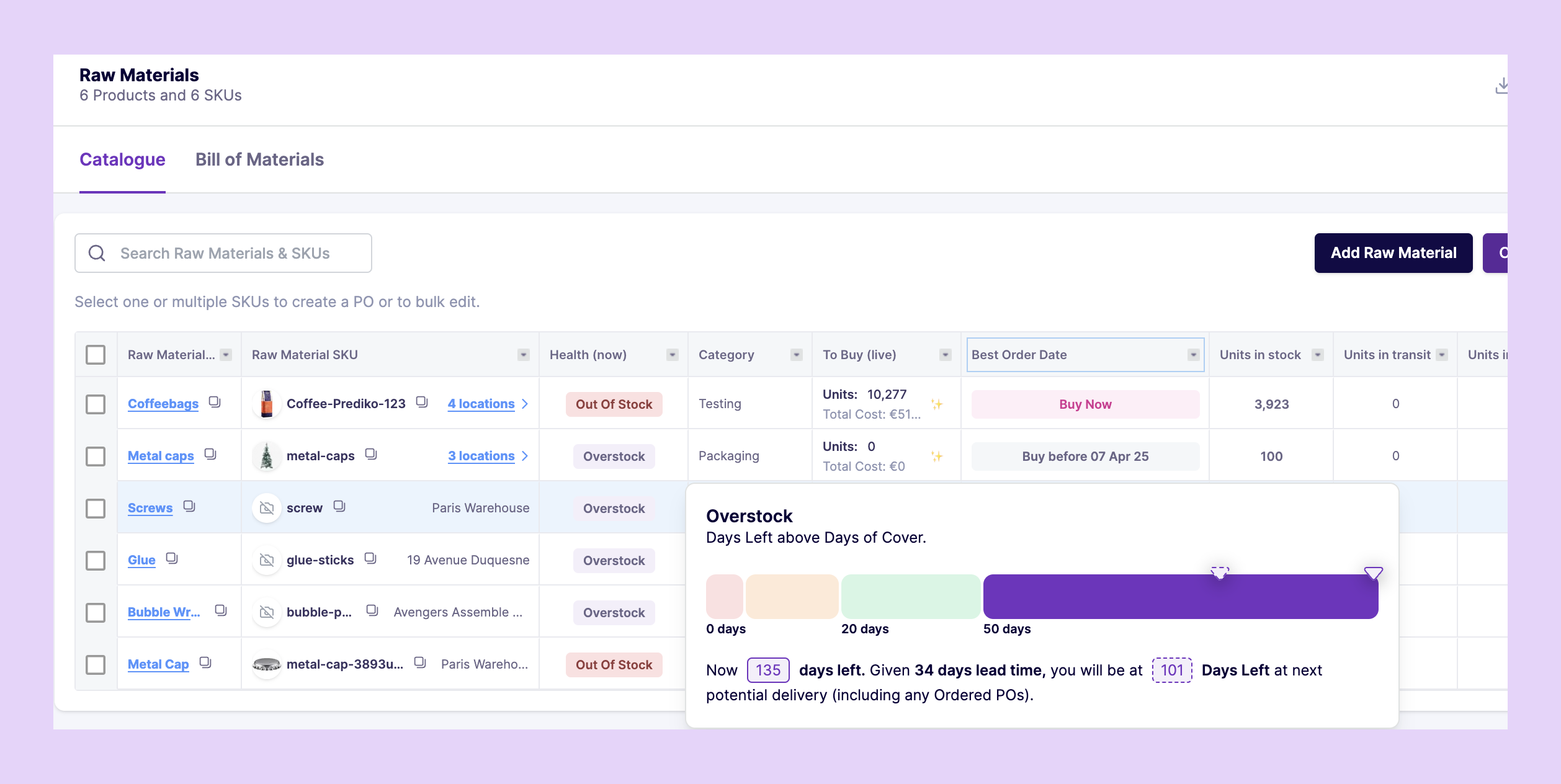
This focuses on scheduling and organizing the manufacturing process. It determines what to produce, in what quantities, and when to schedule production runs, balancing demand with production capacity.
It also includes managing resources such as labor and machinery to manufacture products efficiently and on time.
3. Logistics and distribution
This covers the movement and delivery of goods, from coordinating transportation to managing warehouses, so that products reach customers or retailers efficiently.
Planning this improves customer satisfaction and reduces operational costs.
Benefits of Effective Supply Planning
Effective supply planning brings a range of benefits to your business, which are
1. Cost savings
By aligning supply with demand plan, brands cut unnecessary expenses across the board.
You avoid overstocking, which ties up cash (storage and insurance) and risks spoilage or loss of value. It also eliminates the need for costly last-minute solutions, like expedited shipping or overtime labor to fix shortages.
Fewer stockouts mean no lost sales or customer goodwill, while efficient procurement reduces administrative overhead.
2. Better supplier terms & coordination
Supply planning gives a clear picture of your inventory needs: volume, timing, and frequency, which strengthens your position at the bargaining table. When you can commit to consistent, predictable orders, suppliers are more likely to offer discounts or favorable terms, as it reduces their uncertainty.
It also builds long-term trust, opening doors to perks like extended payment terms or exclusive access to limited stock.
3. Smoother supply chain operations
Smarter supply planning keeps the entire operation running like clockwork.
Production schedules align with material arrivals, so there's no downtime or rushed rework. On-time order deliveries become the norm, not the exception, reducing complaints and returns.
It also enables quick pivots and risk mitigation, say, shifting resources when demand unexpectedly spikes, keeping operations adaptable. This eases pressure on staff, cuts chaos and idle time in the supply chain, and keeps everything flowing seamlessly.
Youri, founder of Prediko, shares insights on building strong supplier relationships in a Limited Supply webinar.
Demand Planner vs Supply Planner
A demand planner and a supply planner might sound like they do the same thing, but they actually manage different parts of the supply chain.
A demand planner is responsible for forecasting customer demand using historical sales data, market trends, seasonality, and external factors like promotions or competitor activity. Their main goal is to predict how much of a product will be needed in the future so the company can avoid stockouts or overstocking. Demand planners work closely with sales, marketing, and finance teams to ensure forecasts correspond to the business goals.
A supply planner, on the other hand, takes that demand forecast and turns it into an actionable supply plan. They manage supplier relationships, production schedules, lead times, and inventory levels so that you have the right amount of stock at the right time. Supply planners work closely with demand planners, procurement, manufacturers, suppliers, logistics teams, and warehouse teams.
Challenges in Supply Planning & Best Practices
Challenge 1: Inaccurate demand forecasts
Supply planning depends on demand projections, but if those forecasts are off, due to poor data or unexpected shifts, supply gets messed up.
How to address this
- Regularly sync with demand teams to refine forecasts using real-time sales, customer insights, and market signals. Adjust plans based on current data rather than sticking to static predictions.
- Use AI-driven forecasting software that analyze historical sales and trends to create forecasts, but let you review and modify outputs for accuracy.
Challenge 2: Inefficient supplier coordination or delays
Suppliers might miss deadlines due to production issues, poor communication, shipping delays, or raw material shortages. This can lead to stock issues and unfulfilled customer expectations.
How to address this
- Communicate regularly with suppliers. Set up regular check-ins and shared platforms with them to track progress and spot issues early. Define expectations via contracts or SLAs.
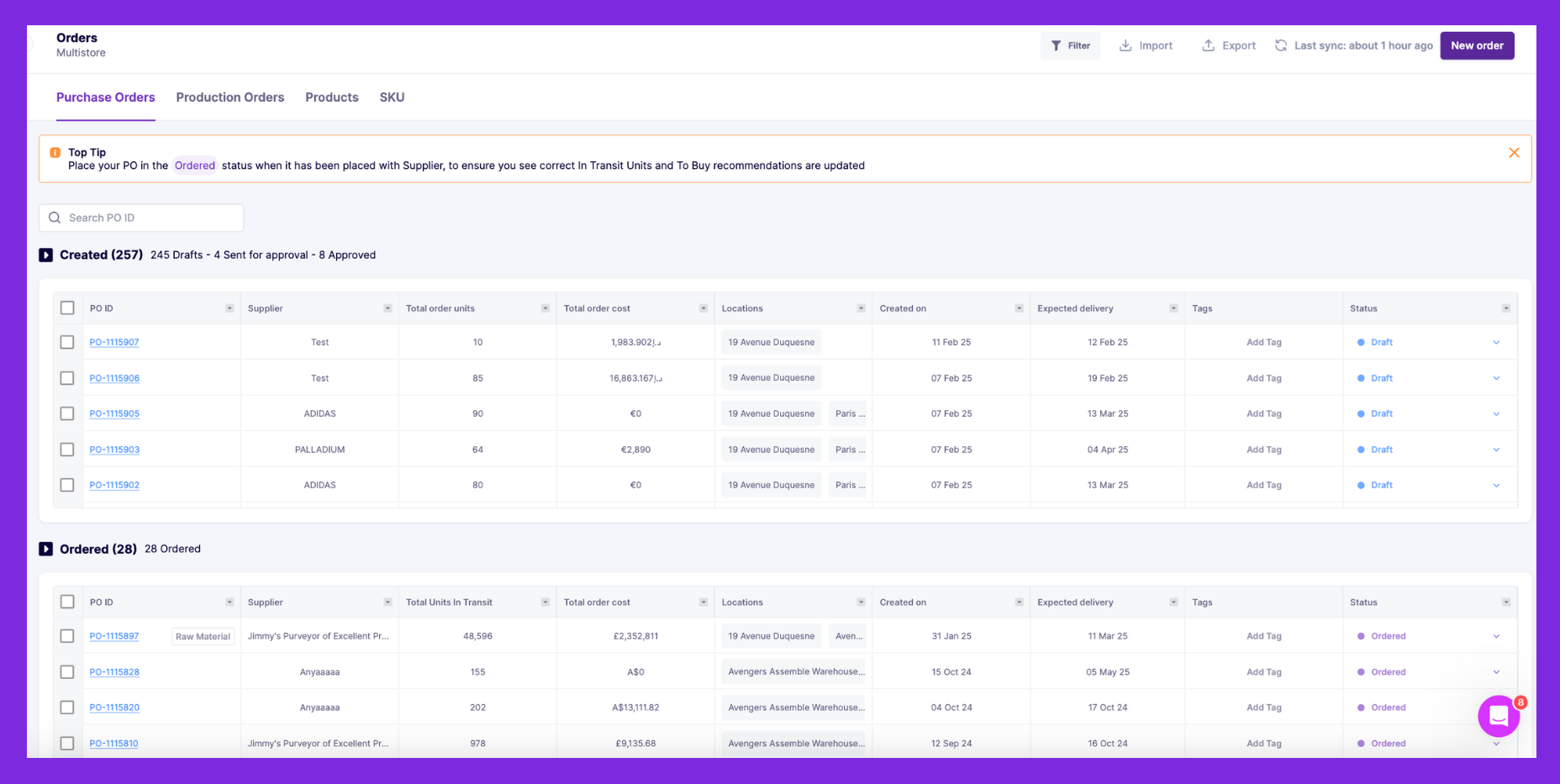
- Diversify and work with multiple suppliers to spread risk and use performance metrics (e.g., on-time delivery rates) to prioritize reliable partners. Always have backup suppliers ready.
Challenge 3: Inventory imbalances
Inaccurate stock levels, whether due to misjudged forecasts or supplier delays, can leave you with too much or too little inventory. Surpluses drain cash and space; shortages cost you sales and customer trust.
How to address this
- Implement inventory control techniques like safety stock for volatile items and just-in-time ordering for stable ones, guided by real-time inventory tracking.
- Analyze stock turnover rates and demand shifts weekly or monthly to rebalance inventory, clearing slow movers with promotions if needed.
- Reliable communication and strong partnerships with suppliers can help you manage lead times, minimize delays, and respond quickly to unexpected changes.
How Demand Planning and Supply Planning Work Together
Demand planning and supply planning must work in harmony to ensure a business can meet customer needs efficiently and profitably.
While demand planning focuses on predicting what customers will want, supply planning makes sure the resources and processes are in place to deliver it.
Here's how they collaborate
1. Supply chain execution
An accurate demand forecast is the foundation for supply planning. Once the data and external factors are analyzed, a demand plan is created that guides supply decisions.
For example, if demand planning predicts a 20% spike in holiday sales, supply planning ensures enough raw materials are sourced, warehouse space is secured ahead of time, and other resources are allocated.
Without an accurate forecast, supply planning could over- or under-prepare, leading to waste or shortages.
2. Manage stock levels
Demand planning identifies patterns and trends in customer demand. And supply planning adjusts the supply chain to match those fluctuations
If during demand planning, a drop in interest for a product is expected, supply planning would include scaling back orders to avoid excess stock.
Conversely, if a new product is expected to take off, supply planning ramps up procurement and logistics to meet the spike, ensuring no lost sales.
3. Data sharing and feedback loop
Demand planning and supply planning together create a continuous feedback loop wherein the former generates insights and the latter offers real-world data back to demand planning to help refine future forecasts.
For instance, if supply planning reports a supplier can't deliver on time, demand planning adjusts forecasts to reflect realistic availability, while supply planning explores alternative vendors. Over time, this collaboration sharpens accuracy and responsiveness.
4. Risk management
Demand planning and supply planning team up to create resilience for your business. Demand planning anticipates risks like demand volatility or market disruptions (e.g., a competitor's launch) that could throw off projections.
Supply planning builds contingencies (like safety stock or flexible supplier agreements) to handle those risks without affecting your operations.
Dive deeper and learn how to build supply chain resilience.











.avif)