




A shopper opens ChatGPT and types: "Find me the best clean face wash under $35, shipped by Friday."
The agent doesn't scroll your product page. It doesn't browse your store. It queries structured data across merchant catalogs, checks real-time inventory and delivery windows, and shortlists the brands that pass the test.
Learn what agentic commerce means for Shopify brands, why inventory accuracy matters, and how to build inventory infrastructure AI can trust.
What Is Agentic Commerce and Why It's Moving Fast
Agentic commerce is a new model of shopping wherein AI agents act as autonomous shoppers on behalf of real consumers.
Instead of a human Googling, clicking, and comparing tabs, the AI agent handles the entire journey: interpreting intent, querying product catalogs, evaluating options, and completing the transaction.
A shopper says: "I need trail running shoes under $150, size 10, delivered by Thursday." The agent doesn't ask for clarification. It goes and finds them.
The numbers tell you how quickly this is becoming real
- Since January 2025, AI-driven traffic to Shopify stores has grown 8 times year-over-year, while orders from AI-powered searches have increased 15 times.
- According to McKinsey, agentic commerce could generate up to $1 trillion in US retail revenue by 2030, with global projections reaching $3-5 trillion.
- Bain forecasts the US agentic commerce market alone will be worth $300-500 billion by 2030, representing 15-25% of total eCommerce sales.
- AI-driven visits to US retail sites increased 393% year-over-year in Q1 2026, and those AI-referred shoppers converted 42% better than non-AI visitors.
The infrastructure is already in place. ChatGPT now enables US users to buy directly from Shopify merchants. Microsoft Copilot Checkout is live in the US with Shopify, PayPal, Stripe, and Etsy integrations.
Google launched the Universal Commerce Protocol (UCP) at NRF in January 2026, enabling AI agents to interact with merchant catalogs and complete purchases through a single open standard.
Why Inventory Is the New Storefront
Here's what most brands are getting wrong about agentic commerce: they're treating it as a marketing problem.
They're optimizing product descriptions. Cleaning up metadata. Making sure their catalog is fed into AI platforms. All of that matters, but it's only half the equation.
The other half? AI agents don't browse a store the way a human does. They read structured data: product titles, descriptions, images, pricing, inventory, shipping speeds, and use it to decide what to recommend.
The quality and completeness of that data determine whether a product surfaces in a conversation or gets passed over.
Inventory accuracy is a ranking signal.
An AI agent evaluating two merchants selling the same product at the same price will choose the one with faster, more reliable, cheaper delivery. That decision is made programmatically, based on structured fulfillment data. If your delivery data is not readable by an agent, your store is invisible.
The same logic applies to stock. If an agent can't verify that an item is actually available at the moment of purchase, not when it was last scraped, not when you last updated your admin, it will route the sale elsewhere.
Real-time data, in the context of AI commerce, refers to product information (pricing or inventory) that is accurate at the moment of the shopper's query, not at the moment the LLM last scraped your website.
Now, it's not just price and stock, either. When a shopper asks an agent "does this brand do free returns?" or "is this in stock in my size?", the AI answers from whatever data it can find. A wrong or stale answer costs you a sale you never even see happen, the shopper just moves on to whichever brand had the right answer ready.
One distinction worth keeping straight is discoverability and sellability aren't the same thing. Shopify Catalog is the syndication layer. It's what makes your products discoverable across AI platforms, and it's automatic. Agentic Storefronts is the selling layer, it's what lets checkout complete inside the AI conversation itself. You can be perfectly discoverable and still lose the sale if checkout can't close.
The Inventory Gaps That Get Brands Excluded
Most Shopify brands have some version of the same problem: inventory data that's accurate enough for humans, but not accurate enough for machines.
Here's what that looks like in practice.
1. Stale stock counts
You updated your stock levels last night. This morning, an agent queries your catalog. But between last night and now, you sold 40 units through your DTC site, your Amazon listing, and a wholesale order.
The agent sees stock that isn't there. It recommends you. The purchase goes through. Then your customer gets a cancellation email.
One cancelled agent-driven order is a trust signal sent directly back to the AI platform. Agents depend on accurate availability signals across every node to recommend what's actually purchasable.
If your availability data is unreliable, you get deprioritized. Quietly. Automatically. :(
2. No safety stock buffer for sales spikes
Agentic commerce introduces a new kind of demand pattern: sudden, multi-platform, simultaneous purchasing.
When an AI agent recommends your product across ChatGPT, Copilot, and Google AI Mode at the same time, you can get an order spike that looks nothing like your historical data.
For high-volume or frequently changing inventory, consider setting up automated inventory management or integrating with your warehouse management system to prevent overselling during busy periods when AI agents may be making multiple consumer purchasing decisions simultaneously.
If your safety stock is set according to your old demand patterns, it won't hold.
3. Replenishment that lags too far behind
If agents are shaping how shoppers discover products, inventory agents can help brands keep up behind the scenes.
Inventory agents can watch sell-through, safety-stock, and inbound signals to prompt earlier replenishment actions, reducing delayed cycles where stockouts trigger last-minute fixes instead of planned moves.
This is also where Best AI Agents for Inventory Forecasting becomes a useful next read, especially for brands looking at AI agents that can forecast demand, monitor stock risk, and support replenishment decisions before products go out of stock.
The problem is that most brands are still running replenishment cycles that are two to three weeks behind demand.
That was fine when your worst case was a missed restock email. In agentic commerce, a two-week gap between a stockout and a replenishment PO means two weeks of being invisible to AI-driven shoppers.
4. Fragmented multi-location visibility
If you're fulfilling from multiple warehouses, 3PLs, or retail locations, the agent needs to know what's available where, not just what's available in aggregate.
An agent promising a Friday delivery needs to know that the item is in a warehouse that can actually hit that window.
Without a unified real-time view across locations, your availability data is effectively lying to AI agents and to your customers.
What "Agentic-Ready" Inventory Looks Like
The good news: getting agentic-ready doesn't require a platform migration or a six-month implementation. It requires getting the fundamentals right.
Here's what the infrastructure should look like:
The brands that are already winning in agentic channels are the ones showing up consistently in AI recommendations. And they aren't necessarily the biggest. They're the ones whose operations are legible to machines.
Important note
If your store is still running Shopify's legacy checkout.liquid, you're structurally locked out of agent-initiated checkout. The layout isn't standardized enough for AI platforms to send it a structured purchase request.
Non-Plus stores have until August 26, 2026 to migrate to Checkout Extensibility, after which Shopify auto-upgrades you anyway. Check Settings > Checkout in your admin and if you see an "Upgrade" prompt, you're still on legacy. Fix this first; everything below assumes it's already handled.
How to Build It: 7 Steps to Inventory Readiness for Agentic Commerce
1. Make your product data readable to AI agents
Before your inventory can show up in agent-driven shopping, AI agents need to be able to find, read, and trust your product data.
First, check whether Agentic Storefronts are active in your Shopify admin. Go to Settings > Sales Channels and look for the Agentic Storefronts section. For eligible stores, ChatGPT may be on by default, while Copilot and Google AI Mode may need direct checkout toggled on manually per channel.
Remember, catalog eligibility has quiet failure points. A product with no image, a $0 price, unlisted status, or a missing product URL gets silently excluded from the feed and it doesn't show up. Run a quick audit of your top 20 SKUs against those criteria before assuming your whole catalog is syndicating.
2. Audit your real-time sync gaps
Start by mapping where your inventory data lives and how often it updates. If you're selling across Shopify, Amazon, wholesale, and any other channel, every sync delay is a window where your stock data is wrong.
Identify the gaps and close them either through native Shopify sync or a unified inventory layer.
Pay attention to the sync cadence, not just whether sync exists. Google Merchant Center's default feed sync runs hourly: fine for steady sellers, but it leaves a window where an AI agent can recommend a product that sold out 40 minutes ago. If you run flash sales or limited drops, that gap is where agent-driven cancellations come from.
3. Recalibrate your safety stock for multi-channel demand
Your safety stock formula needs to account for the new reality: demand spikes can now come simultaneously from multiple AI platforms.
Revisit your safety stock calculation using current lead times, current demand variability, and a buffer for agentic volume spikes. Even a modest increase, say, an extra 7 days of cover on your top 20 SKUs, can protect you during a sudden spike.
4. Move replenishment earlier in the cycle
If you're currently triggering purchase orders when you hit your reorder point, you're already behind. Agentic demand doesn't give you the same warning signs as traditional channels; the spike comes before the stockout signal.
Shift to forecast-led replenishment: instead of reacting to low stock, you're ordering based on what demand is projected to be 60-90 days out. A tool like Prediko can help with this (more on that in the next section)
This is the shift from reactive inventory management to proactive planning and it's the single biggest advantage you have for staying in stock across AI channels.
5. Unify your multi-location view
If your stock is split across locations, warehouses, or 3PLs, build toward a single real-time view. AI agents can choose fulfillment paths based on availability, proximity, promised delivery windows, split-shipment trade-offs, and costs.
But they can only do that if the data is there to query. A unified inventory layer, even a simple one, makes your operations readable to the agents that are routing orders.
In practice, this means every location should update stock in real time, stock should be tracked by location, inbound purchase orders should be visible with expected arrival dates, and reservations should update immediately when orders are placed.
6. Get your PO cycle time down
The faster you can generate and execute a purchase order, the faster you recover from a stockout. If your PO process involves spreadsheets, email chains, and manual approvals, that's three to four days of dead time every replenishment cycle.
Streamline it. Automate what you can. The goal is a PO that goes from "we need stock" to "supplier confirmed" in hours.
7. Test whether it's actually working
Don't assume readiness, check it. Search your own top products on ChatGPT, Gemini, and Copilot and see if they show up with accurate stock and pricing. Run a full purchase through an agent if the channel supports it.
Then keep watching: monitor your Catalog sync health for rejected products, and track AI-attributed orders in your Shopify analytics so you know if a fix actually moved the needle.
How Prediko Helps Shopify Brands Get Agentic-Ready
This is exactly the problem Prediko can help you solve.
Prediko's AI-powered demand forecasting predicts sales and quantities with high accuracy, factoring in seasonality, trends, stockouts, bundle demand, and incoming POs. This helps brands reduce stockouts by up to 35% and avoid tying up capital in overstock.
Where most inventory tools give you a dashboard and leave the thinking to you, Prediko acts more like your teammate with features including, but not limited to
- Forecast-led replenishment: smart "Buy Now" recommendations for up to 12 months out, based on AI-modelled demand, lead times, and safety stock targets.
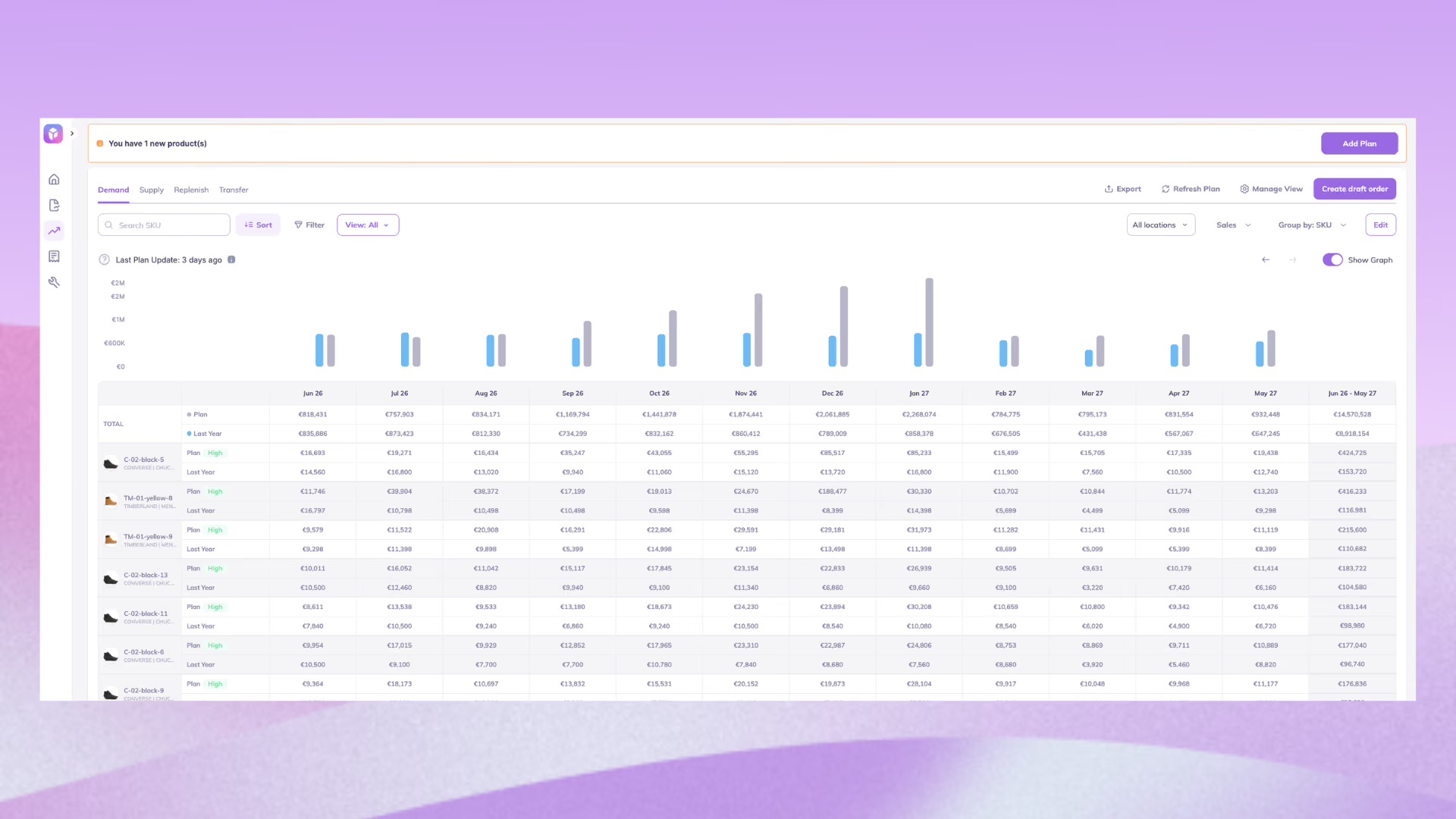
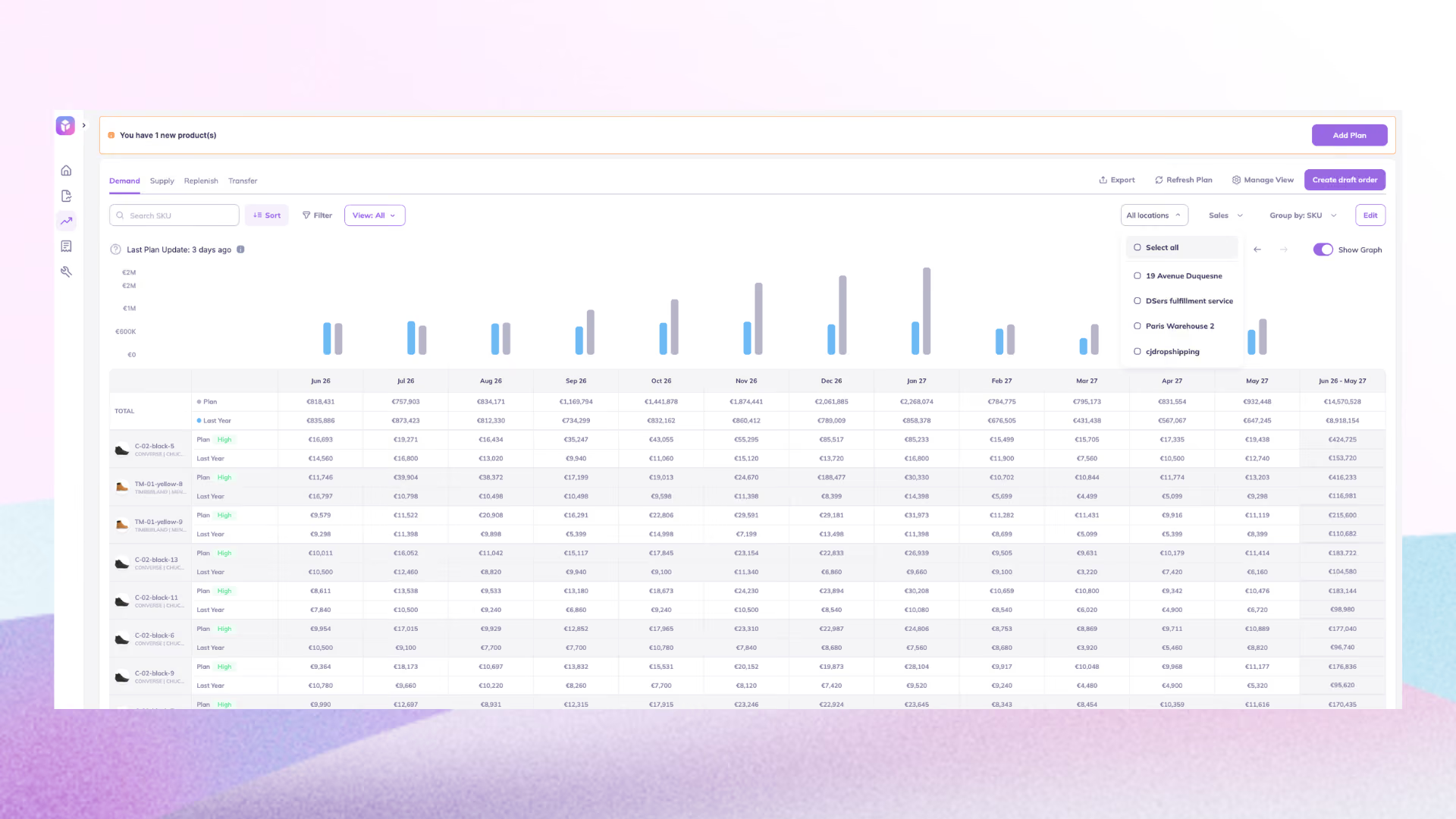
- Real-time multi-location visibility: track stock health across all SKUs, stores, and warehouses with automatically updated dashboards, so every channel (including AI agents) is working from accurate data.
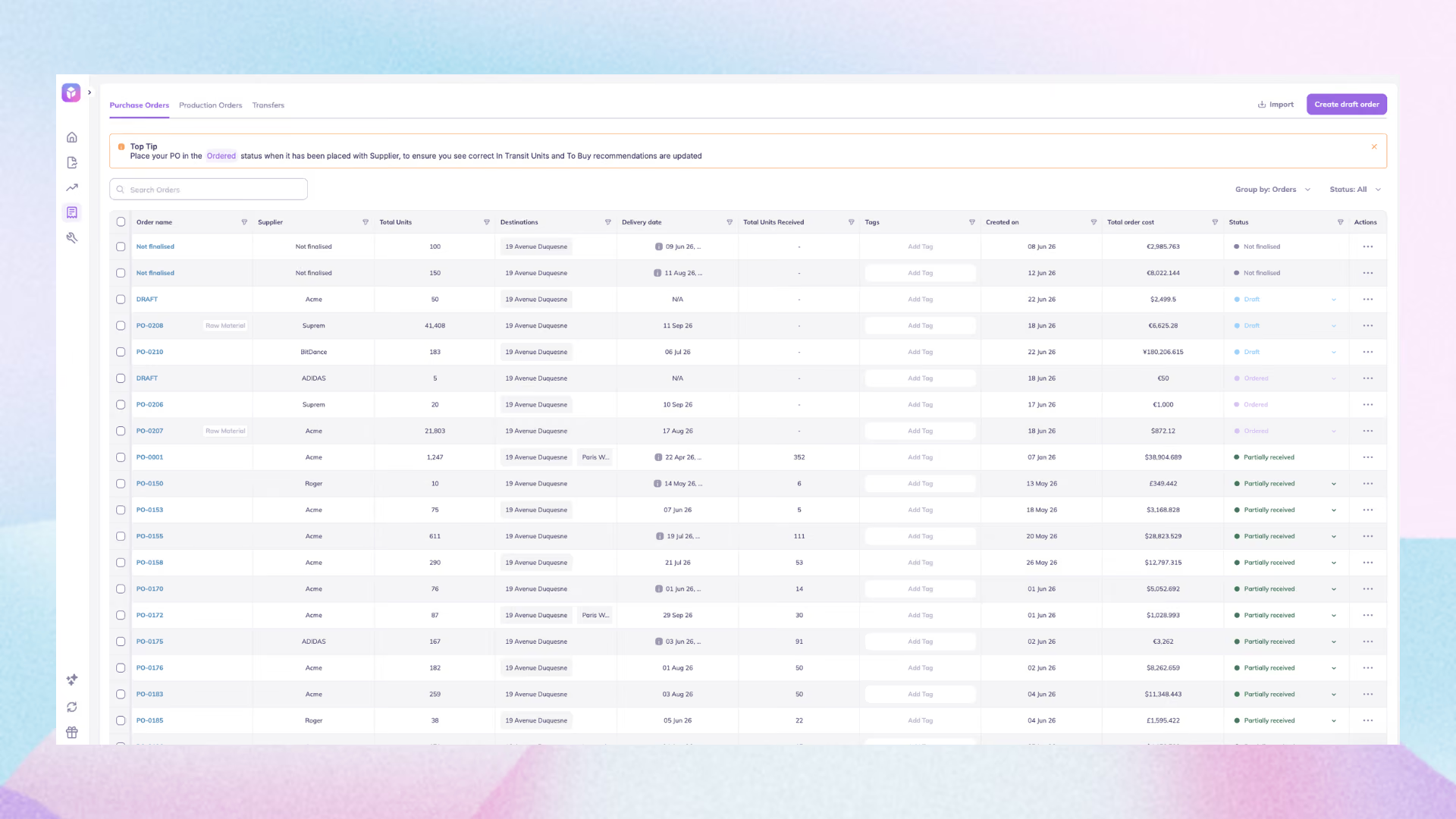
- One-click PO creation: generate and send purchase orders in minutes. When demand spikes from an AI-driven channel, you can respond fast.
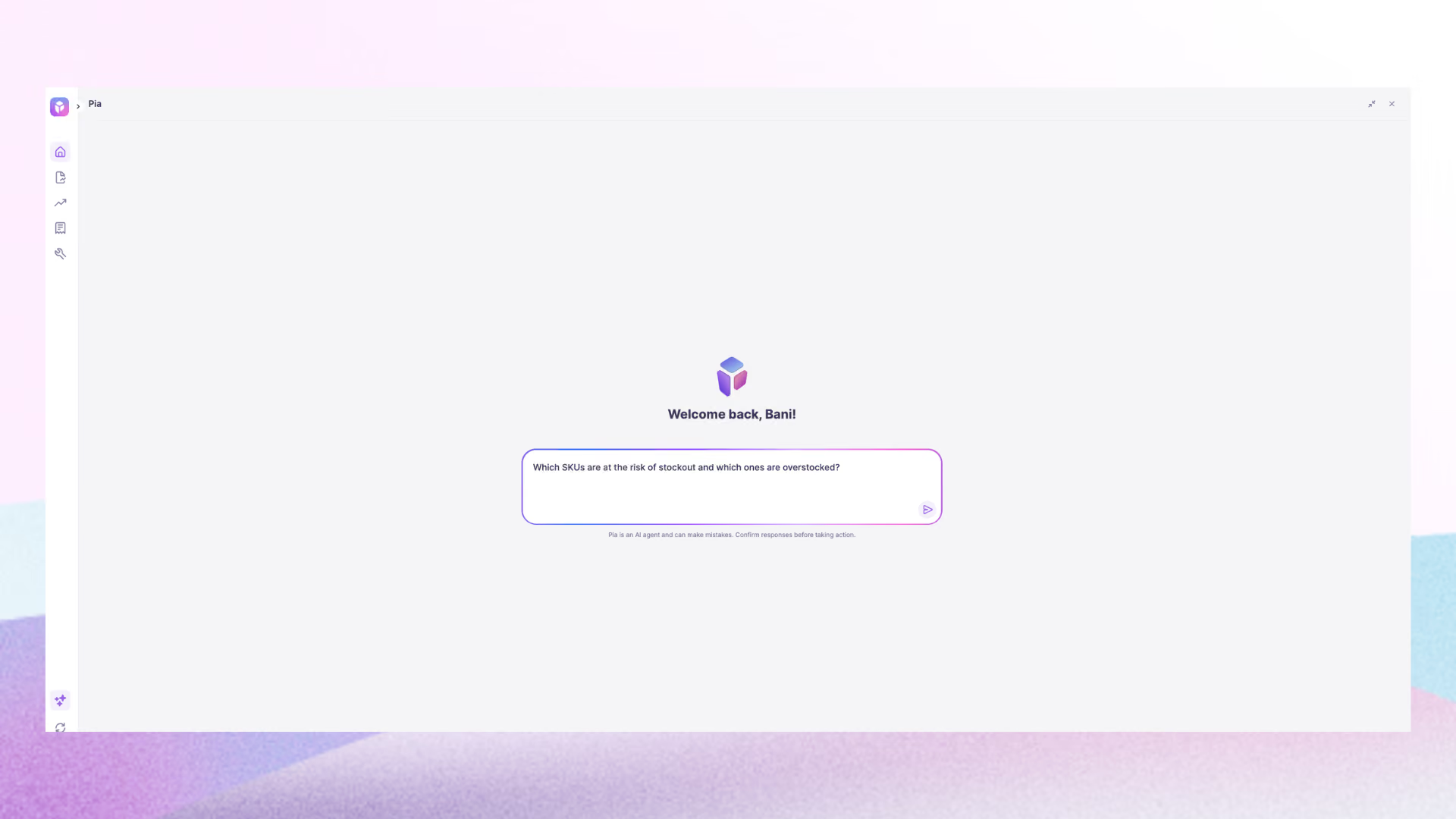
- Chat-based inventory operations: Prediko’s AI agent, Pia, executes commands like refreshing demand plans, selecting SKUs, and generating reports, reducing manual work so your team focuses on the decisions that matter.
With that in place, you get an inventory that's always readable, always accurate, and always ready for whatever the next AI channel throws at it.
The Bigger Picture
Here's the thing about agentic commerce: it doesn't grade on a curve.
A human shopper who hits your out-of-stock page might bookmark you and come back. An AI agent won't. It routes the order to whoever has reliable availability right now and over time, that reliability score becomes a moat.
You don’t wanna lose a sale because your bestseller is out of stock. In agentic commerce, the stakes are even higher because you might not even know the sale was there to lose.
The next wave of Shopify growth is coming through AI channels and your inventory is what determines whether you're in or out.
Start a 14-day free trial of Prediko to see how it makes your inventory agentic-ready.
Frequently Asked Questions
What is agentic commerce?
Agentic commerce is when AI agents shop on behalf of customers. They browse catalogs, compare products, check stock and delivery timelines, and can complete purchases without the shopper manually clicking through every step.
Why does inventory accuracy matter so much for agentic commerce?
AI agents rely on real-time product data, including stock availability. If your inventory is stale or wrong, your product may get skipped, fail at checkout, or lose trust with the platform over time.
What’s the difference between conversational commerce and agentic commerce?
Conversational commerce helps shoppers make decisions through chat. Agentic commerce goes further: the AI agent can compare options, choose products, and complete the purchase based on the shopper’s preferences.
How can I tell if my Shopify store is agentic-ready?
Check three things: your inventory syncs in real time, you have enough safety stock for demand spikes, and your replenishment cycle can recover quickly from stockouts. If any answer is “not sure,” start there.
How does Prediko help with agentic commerce readiness?
Prediko helps Shopify brands forecast demand, see multi-location stock clearly, and create POs faster. That means fewer reactive stockouts and cleaner inventory data for AI shopping channels.









.avif)