Brand Updates
Follow Prediko’s latest product launches, partnerships, milestones and behind-the-scenes updates as the team builds better inventory tools for modern ecommerce brands.
.avif)
Limited Supply Slack Channel + Community Webinar Part 1 - How to Deal with Suppliers?
This is part 1 of a two part blog series based on the webinar we did with the team behind Limited Supply Podcast.
At Prediko, we recently collaborated with Limited Supply Slack community to do a webinar on Inventory operations titled "5 Ways to Boost Your Cashflow by Improving Your Inventory Ops."
We share the main insights and takeaways from the webinar as well as channel on helping business owners and supply chain managers.
If you prefer learning by watching over reading, watch the YouTube video below 👇
Here are 5 important pieces of information shared in the Limited Supply Slack channel and webinar that can transform your inventory strategy:
Importance of Supplier Relationships
1. a) Establishing strong foundations
Successful inventory management begins with solid relationships with your suppliers. By setting up strong, reliable connections with suppliers, businesses ensure a steady flow of products, that is essential for maintaining consistent service levels and customer satisfaction.
We shared with the Limited Supply Slack channel and community that personal engagement, such as visiting suppliers and interacting with them face-to-face, significantly strengthens these relationships.
Here are some practical tips shared with Limited Supply Slack channel:
- Sell Your Vision:
Communicating your business vision to your suppliers is crucial. It’s about making them a part of your journey, ensuring they are as committed to your success as their own. This involves more than just contract negotiations; it's about inspiring your suppliers with your brand story and future goals.
- Personal Visits:
While digital communication has become a norm. We advise making the effort to meet suppliers in person. Whether they are located in Asia, Mexico, or Europe, taking the time to visit can leave a lasting impact and foster a deeper commitment to your business.
- Mutual Growth and Support:
Engaging suppliers is not just about getting them to fulfil your immediate product needs. It’s also about discussing future growth and how they can continue to meet your evolving demands.

1. b) Navigating supplier negotiations and partnerships
Effective negotiation is an important part of good inventory management. One practical advice shared with the Limited Supply community is that every order placed with a supplier presents an opportunity to renegotiate terms that can lead to significant improvements in cost, quality, or delivery timelines.
Specific strategies from the webinar hosted by Limited Supply Slack Channel:
- Continuous Improvement:
The importance of viewing each interaction as a chance to negotiate for improvements, whether in unit costs, production times, or payment terms. This approach ensures that operations become more efficient and cost-effective over time.
- Be Upfront and Honest:
Being transparent with your suppliers about what you're looking to achieve from each negotiation. This clarity helps in aligning goals and expectations, fostering a relationship based on trust and mutual benefit.
- Leverage volume for better deals:
As your business grows, use increased order volumes as leverage to negotiate better terms. Suppliers are often willing to offer favourable conditions in exchange for the promise of more substantial and consistent business.
1. c) Mitigating Risks Through Diversification
Diversifying your supplier network is a strategic move that strongly advocates for enhancing supply chain resilience.
Diversification helps mitigate these risks by ensuring that if one supplier faces issues, others can step in to fill the gap, thus maintaining a continuous supply chain.
- Broader Geographic Spread:
We suggest considering suppliers from different geographic regions to avoid the pitfalls of regional disruptions, such as political instability, natural disasters, or pandemics. For example, if a primary supplier is in Asia and there are delays or shutdowns, having a secondary supplier in Mexico or Europe can maintain the flow of goods.
You can use email to get in touch with other suppliers in different geographies. Check this blog to learn how to choose the right suppliers. In order to reach to the right suppliers, learn the main email best practices.
- Reducing Dependency:
We emphasize importance of not letting any single supplier become too critical to your operation. This approach not only strengthens bargaining power but also gives companies the flexibility to negotiate better terms and ensure product availability under various circumstances.
.avif)
1.d)Choosing Suppliers Strategically
Choosing right suppliers involves more than evaluating cost-effectiveness; it's about strategic alignment with your business goals. We offer the following advice on how to select suppliers that can truly add value to your business:
- Alignment with business objectives: It’s crucial to select suppliers who understand and align with your business goals and customer commitments. This ensures they can meet your quality standards and delivery schedules, which is vital for maintaining customer satisfaction and loyalty.
- Capability and Reliability: Assessing a supplier's capacity to meet your needs now and in the future is vital. This includes their production capabilities, quality control processes, and ability to scale operations in response to your growth.
- Cultural Fit: A supplier's culture should align with yours, especially in terms of communication, work ethics, and corporate responsibility. A strong cultural fit enhances collaboration and the long-term sustainability of the partnership.
1. e) Practical Steps for Supplier Diversification
We detail several practical steps businesses can take to effectively diversify their supplier base:
- Conduct Thorough Market Research:
Understand capabilities and strengths of different suppliers in various regions. This research helps you identify potential new partners who can meet your specific requirements.
- Develop Multiple Supplier Relationships: Gradually build relationships with multiple suppliers by starting with small orders to test their reliability and service quality before committing to larger volumes.
- Regular Supplier Reviews: Continuously evaluate your suppliers based on performance metrics such as delivery times, quality, cost, and responsiveness.
This practice helps identify risks and opportunities for improvement and ensures that your supplier base remains robust and adaptable.
Advanced Inventory Planning Techniques
Advanced inventory planning helps in preventing common issues such as stock-outs and excess inventory, both of which can have detrimental effects on cash flow and customer satisfaction.
Effective inventory planning not only ensures that products are available when customers need them but also helps in managing resources efficiently, thereby saving costs and optimizing operations.
- Forecasting and Demand Planning: Accurate forecasting is foundational to inventory planning. We suggest leveraging historical sales data, market trends, and upcoming events to predict future demand accurately. This approach allows businesses to adjust their inventory levels proactively rather than reacting to stock issues after they occur.
- Technology Integration: Implementing sophisticated inventory management software can significantly enhance the accuracy of inventory forecasts.
These tools can automate data analysis, track sales trends in real-time, and update inventory needs dynamically.
In the Limited Supply Slack channel, we also discuss how brands can move beyond manual spreadsheet management to more precise, automated systems that reduce errors and time spent on inventory management.
Leveraging Technology
The importance of using technology to streamline inventory operations, making them more efficient and less prone to human error. There are several technological strategies and tools that can be instrumental in enhancing inventory planning:
- Real-time Inventory Tracking: Advanced systems provide real-time visibility into stock levels, that is crucial for timely decision-making and efficient supply chain management.
This visibility helps prevent both overstocking and stockouts by allowing businesses to respond swiftly to changes in demand or supply.
- Integrating POS Systems: Integrating point-of-sale (POS) systems with inventory management software can provide valuable insights into customer purchasing behavior, that can further refine forecasting models and inventory strategies.
- Automated Replenishment: Automated replenishment tools can help in maintaining optimal inventory levels by automatically placing orders when stock falls below predetermined thresholds. This ensures continuous availability of products without manual intervention.
Strategic Inventory Reviews
Regular reviews and adjustments of inventory policies are vital. We recommend these practices for maintaining effective inventory control:
- Scheduled reviews: Conduct regular inventory reviews to assess the health of your stock levels and identify any discrepancies or opportunities for improvement. This should include analyzing inventory turnover rates, carrying costs, and the performance of different product lines.
- Adapting to market changes: Stay adaptable by continuously monitoring market conditions and customer preferences. This agility allows you to adjust your inventory planning accordingly, ensuring that your business can respond effectively to external changes and maintain a competitive edge.
- Collaborative planning: Engage with suppliers, customers, and internal teams to ensure that your inventory plans are aligned with broader business goals and market demands. Collaboration helps in fine-tuning your strategies and making informed decisions that benefit the entire supply chain.
Effective Strategies to Manage Inventory Levels
There are a lot of pre-sale strategies to manage stockouts. Stockouts can significantly hinder sales and damage customer relationships. Pre-sale strategies can be an effective tool to manage customer expectations and maintain sales momentum even when inventory levels are low.
Here's how businesses can implement this approach:
- Transparent Communication: Clearly inform customers about the availability timelines of products. This transparency builds trust and can even enhance the perceived value of products as customers feel they are worth waiting for.
- Incentivize Pre-orders: Offer special discounts, exclusive access, or additional benefits for customers who opt to pre-order out-of-stock items. This not only secures sales in advance but also helps in forecasting demand more accurately.
- Automated Updates: Keep customers in the loop with automated updates about their order status, expected shipping dates, and any changes to the delivery timeline. This proactive communication can greatly enhance customer satisfaction and loyalty.
Managing excess inventory is equally crucial as it ties up capital and incurs storage costs. Here are a couple of ways to do it practically
- Mystery Boxes: This strategy involves selling products at a discounted price without specifying the exact items in each box. It's an exciting way for customers to receive more value for their money while helping businesses clear out excess stock.
.avif)
- Flash Sales and Promotions: Temporarily reduce prices to clear excess inventory quickly. This tactic can be particularly effective when paired with targeted marketing campaigns to drive traffic and convert high volumes of sales in a short period.
- Bundle Offers: Package slower-moving items with best-sellers. This not only helps in moving excess stock but also increases the average order value, improving overall sales metrics.
Join the Limited Supply Slack Channel today to stay updated on similar webinars and inventory management strategies. Read part 2 of this blog series with the Limited Supply Podcast team.
.avif)
Limited Supply Podcast Webinar Part 2 - Understand Pre-sale Strategies & Financial Metrics
This is part 2 of a two part blog series based on the webinar we did with the team behind Limited Supply Podcast.
This is post No.2 in the blog post series of the webinar done with Limited Supply Podcast team. Full webinar available: Cash is King - Cash Flow Boosting Tips for D2C brands.
Get rest of the insights, takeaways and strategies from webinar that can help Shopify business owners and supply chain managers to learn about Pre-sale and D2C financial metrics.
1. Pre-sale strategies to manage stockouts
Effectiveness of pre-sale strategies as a proactive approach to managing stockout can be particularly disruptive to both revenue and customer satisfaction.
Here is how businesses can implement these strategies to maintain sales momentum and manage customer expectations:
- Transparent Communication: Initiating a pre-sale allows businesses to continue selling products even when they are out of stock by clearly communicating the future availability. Transparency is crucial.
We recommend informing customers about the expected wait times and the reasons for delays. This open communication builds trust and can even enhance customer loyalty, as buyers appreciate the honesty and are more willing to wait.
- Create Urgency and Exclusivity:
Offering products on pre-sale can create a sense of urgency and exclusivity, encouraging customers to purchase before the items officially come back in stock.
This tactic not only secures sales in advance but also generates excitement and anticipation for the product release.
- Incentivize Pre-orders: To make pre-sales more attractive, we suggest providing incentives such as discounts, free shipping, or exclusive bonuses for customers who place orders during the pre-sale period.
These incentives can significantly increase the conversion rate of pre-orders.
One of the listeners of Limited Supply podcast, Srdjan Popovic, asked this question: Does anyone have a good pre-order solution for when variants go out of stock?

Youri discussed this question during the webinar at 19:35 highlighting Haven Athletic's approach to pre-sale strategy:
1. Test demand before launch: Haven Athletic creates product pages with images and descriptions for potential products to gauge interest before manufacturing. This method allows them to assess demand and make informed production decisions.
2. Managing pre-sale orders: Haven Athletic implemented email automation to keep customers informed about pre-sale orders, including expected shipping times.
3. Engaging customers duraing wait times: By maintaining communication throughout pre-sale period, Haven Athletic keeps customers engaged and informed, enhancing satisfaction despite longer wait times.
2. Optimizing Inventory Levels
Careful monitoring and managing of inventory levels plays a critical role in ensuring operational efficiency.
- Demand Forecasting Accuracy: Accurate demand forecasting is critical to maintaining optimal inventory levels. Learn the importance of leveraging historical sales data, market trends, and even customer feedback to predict future sales accurately. Technologies that incorporate AI and machine learning can significantly enhance forecasting accuracy, allowing businesses to adjust their inventory levels proactively.
- Safety Stock Calculation: Learn importance of calculating safety stock accurately to avoid potential stockouts during unexpected fluctuations in demand or supply chain disruptions. Use statistical models that consider both the variability of demand and the reliability of supply to determine the appropriate level of safety stock.
- Lead Time
Understanding supplier lead times and maintaining appropriate levels of stock are vital to prevent stockouts.
- Inventory Turnover Ratio: This metric is vital for assessing how quickly inventory is sold and replaced over a period. A higher turnover rate typically indicates efficient inventory management, as it suggests that products are selling quickly and not sitting on shelves.Set targets for inventory turnover and closely monitoring this ratio to ensure inventory levels are optimized to meet customer demand without leading to overstock. In this post, you can easily learn how to calculate inventory turnover.
Youri's insights provide a roadmap for businesses to not only react to current market conditions but also proactively plan for future inventory needs.
3. Managing Financial Metrics
Financial metrics are often discussed by Moiz Ali and Nik Sharma in a lot of seasons of Limited Supply Podcast. Brands must stay on top of these to maintain an optimal cash flow.
- Margin Analysis: It’s important to regularly analyze the profit margins associated with different inventory items. This helps in identifying which products provide the best return on investment and should be prioritised in stock levels.
Use detailed analytics to track product performance and adjust inventory purchases based on profitability rather than just sales volume.
- Cash-to-Cash Cycle Time:
Understand the duration between outlaying cash for inventory and receiving cash from sales can help businesses manage their cash flow more effectively.
Youri points out that reducing this cycle time can significantly enhance liquidity, allowing businesses to reinvest in other areas more quickly.
Strategies such as negotiating better payment terms with suppliers or offering discounts for early payment from customers can effectively shorten this cycle.
- Inventory to Revenue Ratio: This ratio is essential for understanding how much of your business's working capital is tied up in inventory versus how much it's generating in revenue.
- Cost Considerations: It's crucial to consider both the direct and indirect costs associated with maintaining inventory levels. Direct costs include purchase price of the goods, while indirect costs involve storage, insurance, and potential obsolescence.
We have seen both these topics being discussed with a lot of guest speakers on the Limited Supply Podcast. These speakers have a lot of past experience of dealing with inventory numbers and financial metrics.
Become a part of the Limited Supply Slack Channel to stay informed about future webinars and inventory management techniques. This was part no.2 of the blog from our webinar with the Limited Supply Podcast team. Click on the link in case you haven't checked part no.1.
Hope you enjoyed reading this post and took away some key takeaways from this webinar.
Inventory Glossary Handbook by Prediko
Inventory Glossary containing definition of all the important terms related to inventory management.
It’s time to go back to class
Our goal is to create content that resonates with the community and help them improve the efficiency of inventory operations ten fold.
We understand building an eCommerce business is tough. And we also know that it becomes overwhelming to keep track of all the modern day jargon and terms around inventory management and operations. That's why we wanted to create this handy mini pocketbook to help you quickly brush up on your inventory knowledge.
Best use-case of this mini guide: Share this with your new joinee or rest of the teams (finance, marketing or support) so that no one goes pale when the word SKU enters the chat :)
Here is a list of all the important terms under Inventory Management
Top Revenue Terms
- Revenue: The total income gained
- Forecast revenue: A prediction of what the income gained could be over a specific time period, based on the purchase orders outstanding and replenishment rates
- Sales: The number of units sold historically
- Forecast sales: A prediction of the future sales done over a specific time period, based on the purchase orders outstanding and replenishment rates. It is closely related to demand planning and forecasting
Product and SKU related terms
- COGS (Cost of Goods Sold): The historical cost of goods sold
- Retail Price: The price the consumer will pay for a good
- Unit Costs: The cost of an individual unit
- Category: A grouping of certain products
- Product: An article or substance that is manufactured or refined for sale
- Raw Materials: The basic material from which a product is made
- SKU/Variant: Stands for Stock Keeping Unit. These are used by retailers to identify and track inventory and goods.
Made up of a unique combination of letters and numbers that determine the characteristics of the product.
They allow companies to more accurately and efficiently account for all stock.
Payment Terms and Purchase Order
- Collection: A grouping of products
- Days on Hand: This is a measure of how much time is needed for a business to run through its inventory
- Purchase Order / PO: An official document issued by a buyer committing to pay the seller for the sale of specific products or services to be delivered in the future.
See the list of the top purchase order tracking and management apps in Shopify
- Minimum Order Quantity / MOQ: The minimum number of products required for purchase.
- Lead time: The time it takes for production to start and finish
- Payment terms: This takes the form of a document that details how and when goods should be paid for
This glossary is updated every quarter. If you enjoyed reading this mini guide and did scroll till this point, feel free to reach out to us if you would like us to include terms that we have missed out on
We have also created a list of apps to help you solve inventory management issues on Shopify.
Prediko wants to democratise inventory operations. That's why we created this modern inventory app in a heavily competitive space. Also learn why we are one of the top Inventory Planner alternatives.
Limited Supply Podcast Episodes With Most Pressing Inventory Management Questions
Get insights on inventory-specific queries discussed in different episodes of the Limited Supply Podcast by Nik Sharma and Moiz Ali.
If you’re in the D2C space, chances are you’ve already heard about the Limited Supply Podcast. Hosted by Moiz Ali, the founder of Native, and Nik Sharma, the mastermind behind Sharma Brands, the podcast has been a go-to resource and a favorite for D2C entrepreneurs.
These two industry experts don’t just talk about D2C, they’ve lived it, and they bring their no-nonsense advice and unfiltered opinions straight to their listeners every episode.
In this article, we explore some of the most frequently discussed inventory management topics and questions featured in Season 5, Episode 1, as well as insights from other episodes of the Limited Supply Podcast.
Top 5 Inventory Questions Asked on Limited Supply Podcast Episodes
Below are some of the most popular inventory questions that have been asked on the Limited Supply Podcast.
We decided to document the answers for you, blending insights shared on the podcast with everything we’ve learned from helping 100+ Shopify businesses.
Podcast Question 1: How much inventory should a business hold?
Nik Sharma and Moiz Ali offer some actionable advice throughout the podcast about how much inventory a business should hold. One useful discussion happened on this particular podcast episode which gave D2C entrepreneurs four important things to keep in mind
1. Start with small quantities
Moiz recalled being told to order 5,000, 10,000, and 20,000 plastic components for deodorants at Native, which made him worry about storage and the risk of business failure.
For Native, he decided to buy smaller quantities at a higher price. To play it safe, one must place orders in smaller quantities in the beginning, even if it costs more per unit.
2. Plan for delays
Make sure you always consider lead times and seasonal blockers.
Moiz shares how festive delays affected their supply chains, "We realized the lead time doubled because suppliers in China were booked up, and it caught us off guard. After that, we made sure to forecast better and plan around these periods."
We also covered this topic in more detail during our webinar for Limited Supply channel members, where we discussed how apps like Prediko can help optimize forecasting and minimize the impact of delays.
3. Scale gradually
Nik chimed in with advice for scaling inventory once the business gains traction “You have to start with small orders and use sales data to inform your decisions. Once you have consistent demand, then it makes sense to order in bulk, negotiate better pricing, and build relationships with suppliers.
But even then, always factor in lead times, especially during things like Chinese New Year, when everything slows down.”
4. Focus on liquidity
Holding too much inventory could tie up your cash flow and limit growth opportunities. Moiz points out, “The goal isn’t just to have inventory. The goal is to have inventory that moves.”
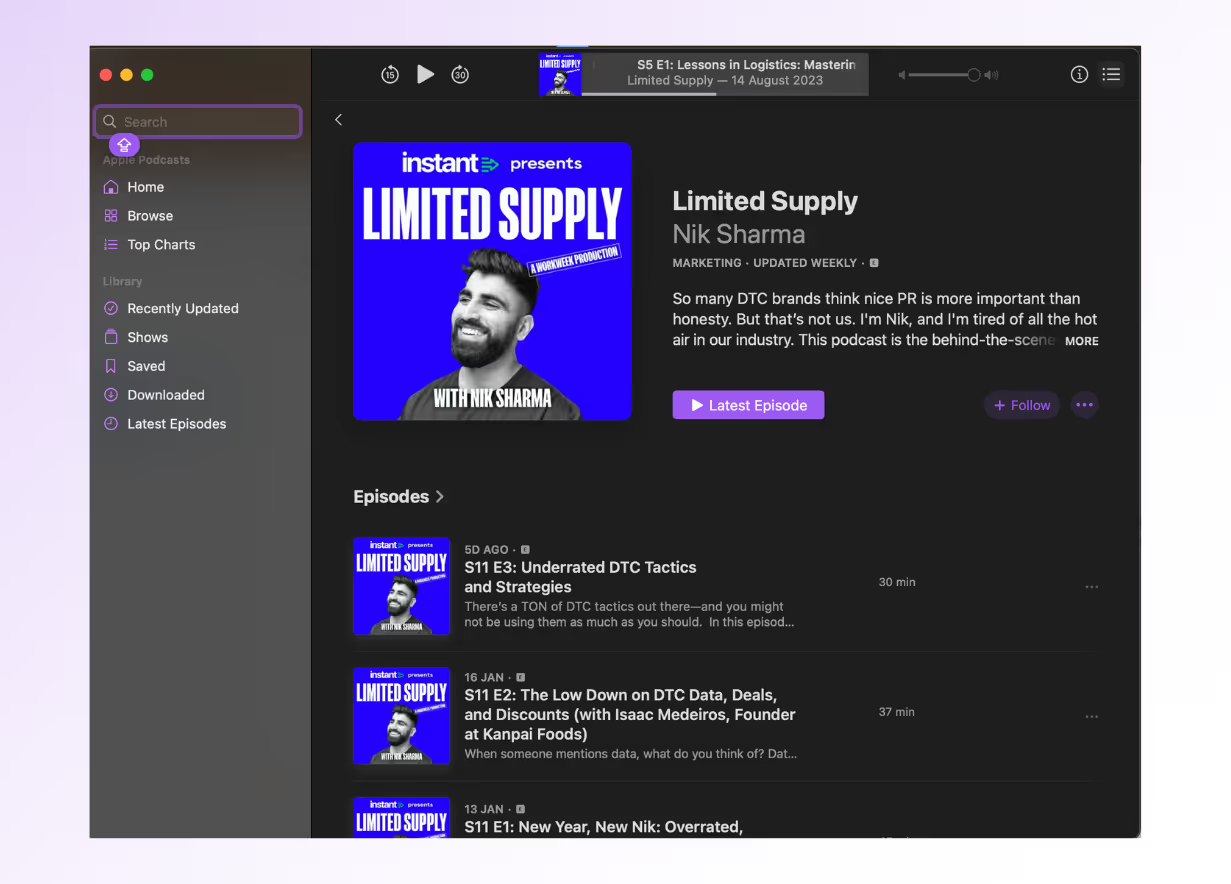
Hear the full conversation on Apple Podcasts
Podcast Question 2: How can businesses navigate lead time challenges?
Staying on top of lead times is important to maintain a smooth supply chain and meet customer demands without delays. Nik Sharma and Moiz Ali shared some great tips for handling lead times in Season 5, Episode 1
1. Account for seasonality in your forecasts
Moiz shares an incident when lead times unexpectedly doubled due to the Chinese New Year, causing delays for Native, "We realized the lead time went from six weeks to 12 or 18 weeks because suppliers in China were booked up.”
This experience taught them the importance of forecasting and accounting for potential seasonal delays.
2. Build supplier relationships
Both hosts highlight the value of strong supplier partnerships. Moiz talked about agility, "Early on, you need a ton of flexibility. We were able to call our contract manufacturer and say, ‘Tomorrow, switch production from lavender and rose to coconut and vanilla because we’re running out.’ That kind of flexibility was critical for us.”
However, he noted this comes at a cost since flexible suppliers typically charge higher prices.
3. Plan buffer stock smartly
To mitigate delays, Moiz recommends maintaining buffer stock during peak periods like Black Friday.
"You want to stock up with maybe 90 to 120 days of inventory going into Black Friday but drop to 30 to 60 days during slower months. That way, your cash isn’t tied up unnecessarily, but you’re prepared for spikes in demand."
4. Optimize communication
Nik emphasized the importance of real-time communication with suppliers and 3PLs.
"Work with partners who you can call or text at any time. If there’s an issue, you want someone who feels responsible enough to lose sleep over it, not just pass the problem to tomorrow."
Podcast Question 3: What role does pricing strategy play in inventory management?
Pricing strategy is an important component in effective inventory management, as highlighted by Moiz Ali in Season 5, Episode 1.
His experience at Native gave insight into how D2C entrepreneurs can approach pricing decisions
1. Ensure it covers Initial costs
He recalled how Native's early pricing decisions revolved around managing high costs while ensuring the product would sell.
When Native was starting out, the cost per unit of deodorant components was steep, around $10 for production and shipping. Moiz decided to price the deodorant at $12, a figure that left just a small profit margin while keeping the product accessible to consumers. “I was making a dollar or two in profit, and that seemed fair at the time,” he said.
2. Accommodate dynamic costs
Your pricing needs to accommodate not just inventory costs but the broader operational ecosystem, including marketing expenses to run a profitable business.
As Native’s production scaled, their per-unit cost dropped to $2 at 100,000 units per run. Moiz in the podcast recollected, “As our prices went down, our customer acquisition costs went up. So whatever we saved on production, we ended up spending on Facebook.”
3. Set new standards for market and customer expectations
When Native was acquired by P&G, its $12 price point set a new benchmark in the deodorant market. Moiz remarked, “P&G raised the prices of their own brands like Old Spice and Secret because they realized people were willing to pay more.”
This highlights the long-term influence of pricing on your brand positioning, consumer behavior, and competitors.
Podcast Question 4: How can businesses manage excess inventory or overstock?
Managing excess inventory or overstock is a critical challenge for D2C entrepreneurs, and this is something that Nik Sharma and Moiz Ali have discussed multiple times on the podcast.
In Season 5, Episode 1 Moiz highlighted how overstock problems often stem from misaligned forecasts, saying, “What happened during COVID was that everyone’s e-commerce business exploded. Companies started over-ordering for 2021, and when demand normalized in 2022, they were stuck with excess inventory.”
To tackle such situations, the duo offered practical solutions.
- Moiz emphasized the importance of maintaining inventory turnover, “My goal has always been three or four turns of inventory per year. This means your stock is sold and replaced three or four times annually, ensuring you don’t have cash sitting idle in the form of unsold goods.”
- He advised businesses to stock strategically based on seasonal demand. For example, “Going into Black Friday, you might hold 90 to 120 days of inventory, but during slower months like July, you only need 30 to 60 days”.
- Creative strategies such as bundling and clearance sales can be highly effective for clearing excess stock. They also discussed innovative approaches like offering "mystery bundles," which allow businesses to offload slow-moving inventory while surprising and delighting customers.
Precisely put, managing overstock requires a mix of proactive planning and reactive strategies. Aligning inventory levels with demand forecasts, being flexible, and using creative sales tactics can convert your excess inventory from a liability into an opportunity.
Podcast Question 5: What tools or software can help optimize inventory management?
Nik Sharma and Moiz Ali have frequently emphasized the importance of using the right tools to optimize operations and prevent costly mistakes.
Moiz Ali in Season 8, Episode 1 said, “You can’t scale a business without systems that replace manual effort with automation. The more data-driven and automated your processes are, the fewer mistakes you make, and the faster you can grow.”
Across several episodes, they outlined the categories of tools that are essential for scaling businesses while maintaining operational efficiency.
1. Inventory and order management software
Managing stock levels is a recurring theme in their discussions. Moiz talked about how tools that automate stock tracking are invaluable, "For Native, I needed to know when I was running low on lavender deodorant versus vanilla and send a reorder before it became a problem. Automating that was a game-changer."
Inventory management tools are designed to track inventory levels, orders, and warehouse activities. They provide real-time visibility across your supply chain and automate processes like purchase order creation, reorder alerts, and inventory forecasting. This prevents stockouts or overstock, ensuring orders are fulfilled quickly while lowering the risk of errors.
2. Enterprise resource planning (ERP) systems
Nik and Moiz often stressed the value of ERP systems that act as a central hub for inventory, orders, and accounting. These are primarily for record keeping and bringing together data across channels and tools for operations.
In Season 8, Episode 6, Moiz highlighted how ERP systems allow brands to handle multi-channel sales efficiently "You need a single source of truth that integrates everything, inventory, warehouse management, purchase orders, even EDI operations. Without it, you’re flying blind when scaling.”
3. Demand forecasting tools
In Season 5, Episode 1, Moiz explained how forecasting tools help businesses align inventory with future demand, "You can’t wait for Black Friday to realize you’re out of stock. With good forecasting, you can predict spikes and ensure you’re holding just enough inventory to meet demand.”
Nik added that these tools minimize cash flow issues by preventing overstock during slow seasons.
4. Warehouse management systems (WMS)
Nik often brought up the importance of streamlining warehouse operations. In Season 8, Episode 6, he highlighted the role of tools in managing logistics effectively, "If your warehouse isn’t efficient, whether it’s picking, packing, or shipping, you’re losing time and money. A WMS that tracks bins, routes, and real-time stock can make a massive difference."
5. Analytics and reporting tools
Understanding what sells and what doesn’t is important for managing inventory effectively. Data analysis and reports help you make educated decisions that positively impact your operations.
.avif)
Check out Nik and Moiz break down various DTC strategies
Moiz highlighted this in Season 6, Episode 3, saying "Data is everything. If you don’t know your sell-through rates or which SKUs are dead stock, you’re making decisions blind. Good reporting tools can save you from wasting money on the wrong inventory.”
How Prediko Tackles the Key Questions from Limited Supply Podcast
Prediko is an end-to-end inventory planning and management software that helps you handle multiple stores, warehouses, and bundles. Trusted by over 500+ brands, Prediko caters to Shopify stores of all sizes and types, solving most of the above questions
1. How much inventory should a business hold?
Prediko’s AI Demand Planning feature helps you break down your annual sales target into editable monthly forecasts across all your products, taking into account growth trends, seasonality, and historical sales data.
This helps you determine how much inventory to hold, avoiding both overstock and stockouts.
2. How can businesses navigate lead time challenges?
Prediko makes it easier to keep your stock aligned with lead time expectations. With its Purchase Order Management and Restock Alerts, you can track and manage all your purchase orders in one place, ensuring timely reordering before lead times stretch too long.
Plus, Prediko integrates seamlessly with 50+ 3PLs and WMS, giving you real-time visibility into potential delays.
3. What role does pricing strategy play in inventory management?
Pricing directly impacts inventory turnover, and Prediko’s Insights and Analytics help Shopify businesses adjust pricing based on product performance.
By monitoring sell-through rates, inventory health, and stock movements, you can easily identify slow-moving items and optimize your pricing or run promotions to clear out excess stock.
4. How can businesses manage excess inventory or overstock?
Prediko helps you manage excess inventory by offering analytics, accurate sales forecasts, and an intuitive Buying Table.
Through real-time tracking and health status, you can identify slow-moving stock early and take action to clear it out.
By forecasting demand based on past trends, Prediko ensures you're not overstocking during slower months while staying prepared for spikes in demand during peak seasons.
5. What tools or software can help optimize inventory management?
Prediko is an all-in-one inventory management solution that combines AI demand forecasting, purchase order management, production planning, and analytics. Its features work together to streamline and optimize your entire supply chain.
Plus, with over 50 integrations, including WMS and 3PLs, it reduces manual effort and brings all aspects of inventory management into one platform for real-time updates and better decision-making.
Wish to know how Prediko can help your business? Book a demo with our team today.





.avif)