Apparel Inventory Management
Improve apparel inventory management by planning stock across sizes, colors and styles more accurately, helping fashion brands keep bestsellers available without overbuying slow-moving variants.
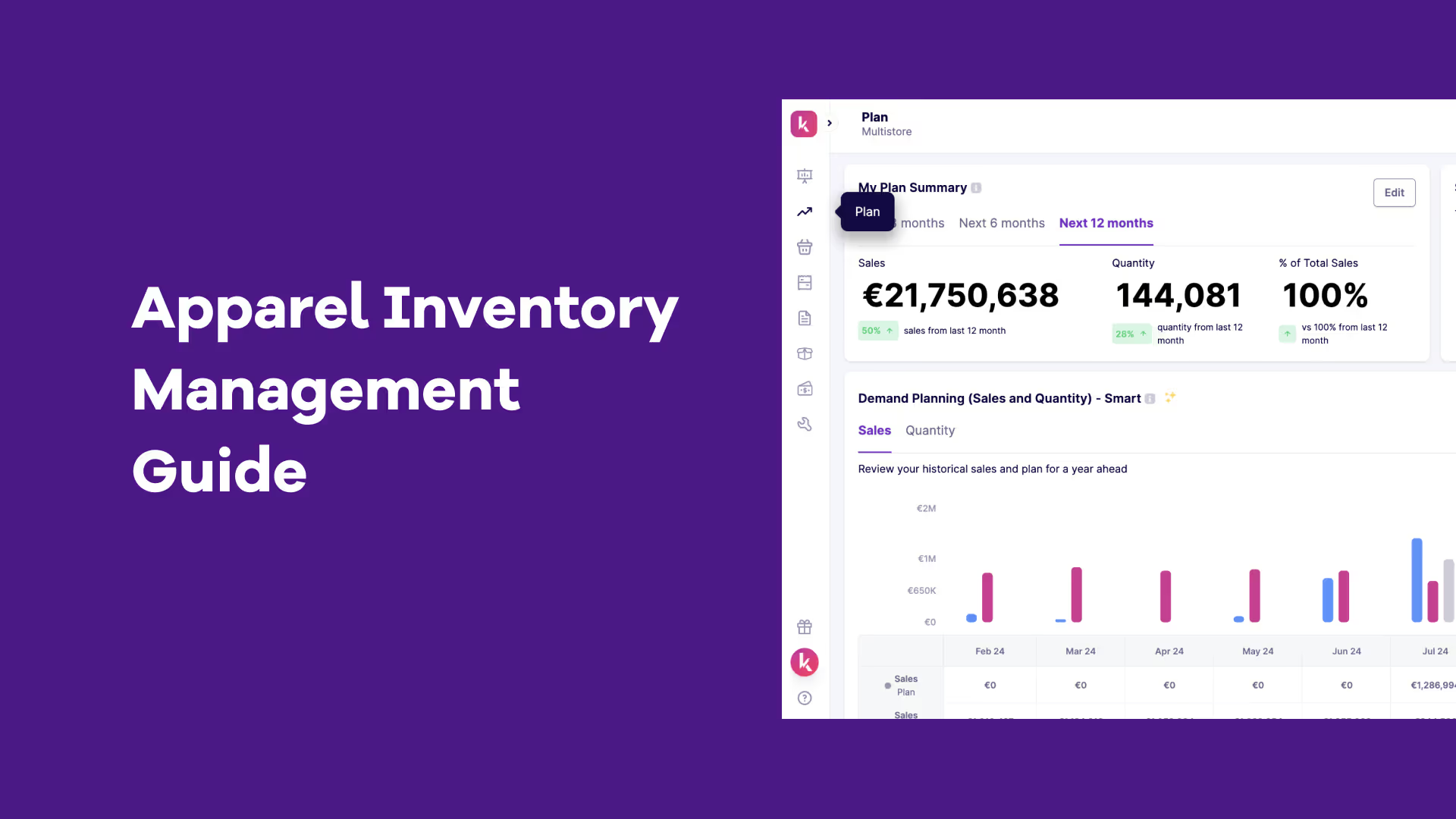
Apparel Inventory Management: Complete Guide for Brands
Learn everything to know about Apparel Inventory management including free excel templates and tools.
In fashion retail, managing inventory effectively is critical to maintaining profitability, meeting customer demand, and minimizing waste. Clothing brands must track thousands of product variations across sizes, colors, and styles while responding to constantly changing consumer trends.
Apparel inventory management, also commonly called clothing inventory management, helps retailers maintain the right stock levels, avoid costly stockouts, and reduce excess inventory.
Apparel Inventory Management vs Clothing Inventory Management
The two terms describe the same processes. The only difference is context. "Apparel inventory management" shows up more in supply-chain and manufacturing settings. "Clothing inventory management" is more common among retailers and store owners. Either way, it means managing clothing stock across its lifecycle, from purchasing through to replenishment.
Why Apparel Inventory Management Matters
Efficient inventory management helps apparel brands improve revenue, customer satisfaction, and operational performance.
A well-managed inventory system helps ensure:
- Every product is accounted for
- Inventory movement is tracked in real time
- Popular SKUs stay in stock
- Slow-moving inventory is identified earlier
- purchasing decisions are based on better data
In the fashion industry, where trends shift quickly and demand can change by season, strong inventory planning is essential.
This is where inventory forecasting becomes especially important for Shopify fashion brands, allowing teams to plan proactively instead of reacting after issues happen.
Apparel Inventory Management Examples
Different types of retailers benefit from specific inventory management approaches. For example:
What are the Key Types of Apparel Inventory Management Systems
Which system do most clothing stores use? Most run a perpetual inventory system because stock updates automatically on every sale, return, or restock. That gives real-time visibility and cuts oversell risk.
Challenges in Apparel Inventory Management
The fashion industry presents unique inventory management challenges due to seasonal demand shifts, complex SKU structures, and fast-changing trends. The table below summarizes the most common issues faced by apparel brands.
Importance and Benefits of a Smart Apparel Inventory Management System
Apparel inventory management is particularly complex due to product variations such as size, color, and style, as well as quickly changing trends and seasonal demand.
Manually managing this complexity often fails, which is why you need a smart apparel inventory management system that brings the following core benefits for your brand.
1. Enhanced inventory accuracy
A smart system keeps inventory data updated in real-time, reducing human error and ensuring that every item is accurately accounted for.
This prevents common issues such as overselling, stock discrepancies, and stockouts, while giving teams better visibility across warehouses and sales channels.
For the warehouse side specifically, warehouse inventory management for clothing and apparel covers how to organize variants, receive stock, manage picking, run cycle counts, and keep physical inventory accurate.
2. Increased efficiency in reordering
Apparel brands can set automated reorder points and replenishment triggers based on sales velocity and demand forecasts, reducing the risk of missed sales opportunities due to unavailable items.
3. Improved inventory visibility across variants
Since apparel products come in multiple variants such as sizes, colors, and fits, a smart inventory system allows businesses to track inventory at the SKU level. This way, brands can quickly identify which variants are selling faster and replenish them accordingly.
Bundle tools like FoxSell extend this further for apparel by syncing inventory at the variant level inside the bundle itself, so a size sold as part of a bundle and the same size sold standalone stay perfectly in sync.
4. Streamlined inventory audits
Conducting a successful clothing inventory audit involves more than simply counting items.
Retailers can improve audit efficiency by using barcode scanning, mobile inventory tools, and scheduled cycle counts to validate stock levels.
This makes sure that system data accurately reflects physical inventory and minimizes discrepancies.
5. Cost savings and reduced waste
By accurately forecasting demand and monitoring stock levels, smart inventory systems minimize the risk of overstocking or understocking.
This leads to significant cost savings, as unsold apparel inventory often results in markdowns, clearance sales, or write-offs.
6. Better decision-making with data insights
Smart inventory platforms provide analytics on product performance, demand trends, and stock turnover.
These insights help apparel brands make informed decisions about purchasing, merchandising, and production planning.
Also Read: Shopify Variant Inventory Tracker: Automate to Reduce Manual Oversight
How do clothing stores keep track of inventory?
Retail stores use different methods to keep track of their inventory.
1. Using a POS system to track inventory in real-time
A Point-of-Sale (POS) system is one of the most effective ways to manage inventory. It automatically updates stock levels whenever a sale is made, making it easier to track what’s selling well and what’s not. By using a POS system, stores can reduce errors, avoid over-ordering, and always have the right products available.
2. Inventory with Barcodes and RFID Tags
Barcode scanning and RFID (Radio Frequency Identification) technology help streamline inventory management.
- Barcode scanners allow employees to update stock levels with a quick scan, making checkout and restocking easier.
- RFID tags help stores track inventory without needing direct line-of-sight scanning. These tags send real-time location updates, making them useful for preventing theft and managing stock across multiple locations.
3. Set up automated stock alerts
Running out of popular items or overstocking slow-moving products can hurt a store’s sales. Automated stock alerts notify store owners when inventory is running low, so they can reorder on time.
By using these automated alerts, stores can manage their stock more efficiently and avoid lost sales due to stockouts.
4. Keep track of inventory across multiple locations
For stores that have both physical retail and online stores, keeping inventory synced is essential. An integrated inventory system helps businesses track stock levels across all sales channels. This also helps when managing returns—if an online customer returns an item, the stock is automatically updated, ensuring the store doesn’t reorder unnecessarily.
Apparel Inventory Management Checklist
Before launching a new collection or preparing for a peak sales period, apparel brands should review the following:
- Confirm SKU-level inventory accuracy
- Review demand forecasts for top products
- Check reorder points and safety stock levels
- Validate supplier lead times
- Review warehouse capacity
- Confirm inventory sync across channels
- Prepare backup plans for delayed stock
- Check slow-moving inventory for markdown risk
This kind of checklist is useful for both daily operations and seasonal planning.
What Are the Effective Strategies for Clothing Inventory Management?
Implementing the right strategies can help businesses maintain optimal stock levels, reduce holding costs, and improve customer satisfaction.
1. Demand forecasting
Accurate demand forecasting is essential so that apparel businesses can predict future sales in advance based on historical data, market trends, and seasonal patterns.
By analyzing past performance and external factors such as fashion trends and promotional campaigns, companies can ensure they stock the right products in the right quantities, minimizing overstocking and stockouts.
2. SKU-level inventory tracking
Apparel products often have multiple variations like size, color, and fit, making SKU-level tracking essential.
Managing and forecasting inventory at the SKU level helps businesses maintain visibility across all product variants, identify fast-moving items, and prevent imbalances in stock availability.
3. Seasonal inventory planning
The apparel industry operates on seasonal cycles such as spring/summer and fall/winter collections.
Strategic seasonal planning helps businesses align purchasing and production with expected demand, reducing the risk of excess inventory once the season ends.
4. Just-in-time (JIT) replenishment
Just-in-time inventory management is a strategy that focuses on replenishing stock only when needed.
This helps reduce storage costs and excess inventory while ensuring products remain fresh and aligned with current fashion trends.
5. Safety stock management
Maintaining safety stock acts as a buffer against demand spikes, supply chain disruptions, or delayed shipments.
6. Inventory segmentation (ABC Analysis)
ABC analysis categorizes products based on their value and sales frequency. High-value or fast-selling items (Category A) require tighter monitoring and frequent replenishment, while lower-priority items (Categories B and C) can be managed with less frequent oversight.
Apparel inventory formulas
- Reorder point: (Average daily sales × Lead time in days) + Safety stock
- Safety stock: (Max daily sales × Max lead time) − (Avg daily sales × Avg lead time)
- Economic Order Quantity: √((2 × Annual demand × Order cost) ÷ Holding cost per unit)
- Sell-through rate: (Units sold ÷ Units received) × 100
- Inventory turnover: COGS ÷ Average inventory
- Days Sales of Inventory (DSI): (Average inventory ÷ COGS) × 365
- GMROI: Gross margin ÷ Average inventory cost
Worked example, reorder point: 8 units a day × 14-day lead time + 40 safety stock = reorder at 152 units.
Apparel inventory KPIs
Key Features of Prediko for Apparel Inventory Management
1. Real-Time Inventory Visibility Across Apparel Variants
Apparel brands manage 1000s of variants in terms of size, colour and style which increases SKU complexity
Prediko syncs with Shopify to provide real-time visibility across apparel SKUs helping teams:
- track stock by style, size, and color
- monitor inventory across locations
- identify low-stock variants before stockouts
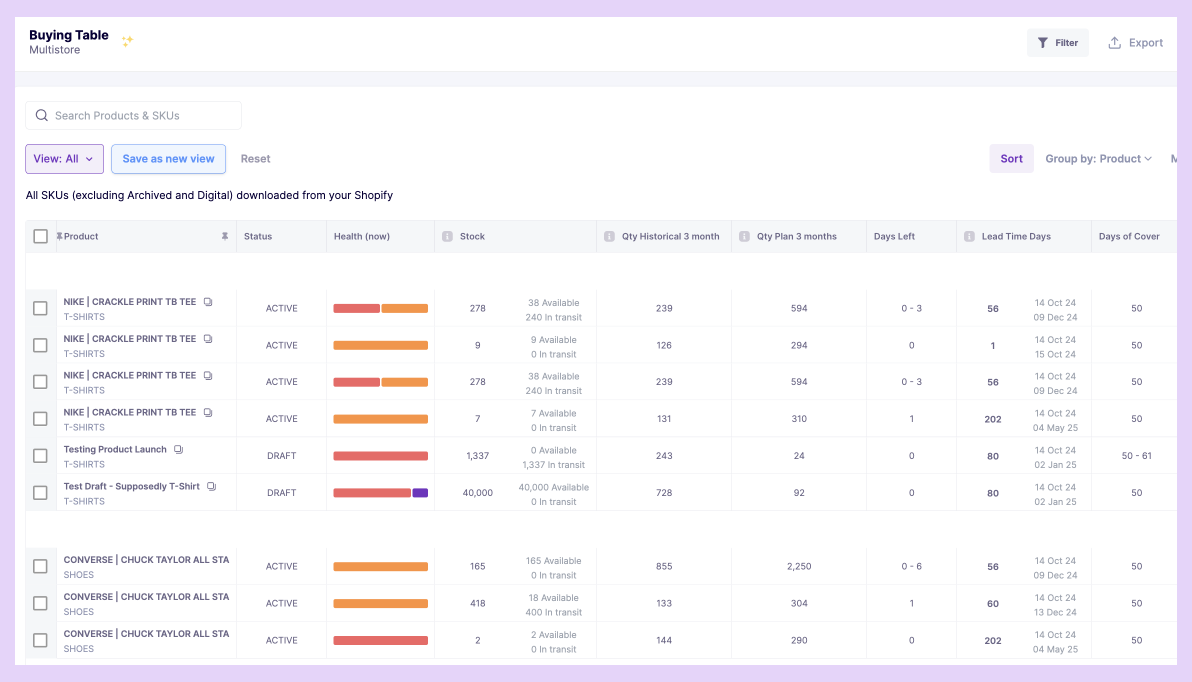
2. Timely Reordering Updates
Apparel demand often varies across sizes and colors within the same product.
Prediko’s Buying Table analyzes SKU-level sales and inventory data to generated recommendation unites to reorder
It helps teams determine:
- which styles need replenishment
- which sizes or color variants are selling fastest
- how many units to reorder
Because apparel brands typically order at the style-color level rather than by individual size, Prediko lets you set minimum order quantities at that level too, so a recommendation to reorder a style respects the real MOQ your supplier requires.
This helps maintain balanced inventory across apparel collections.
3. Demand Forecasting for Fashion Collections
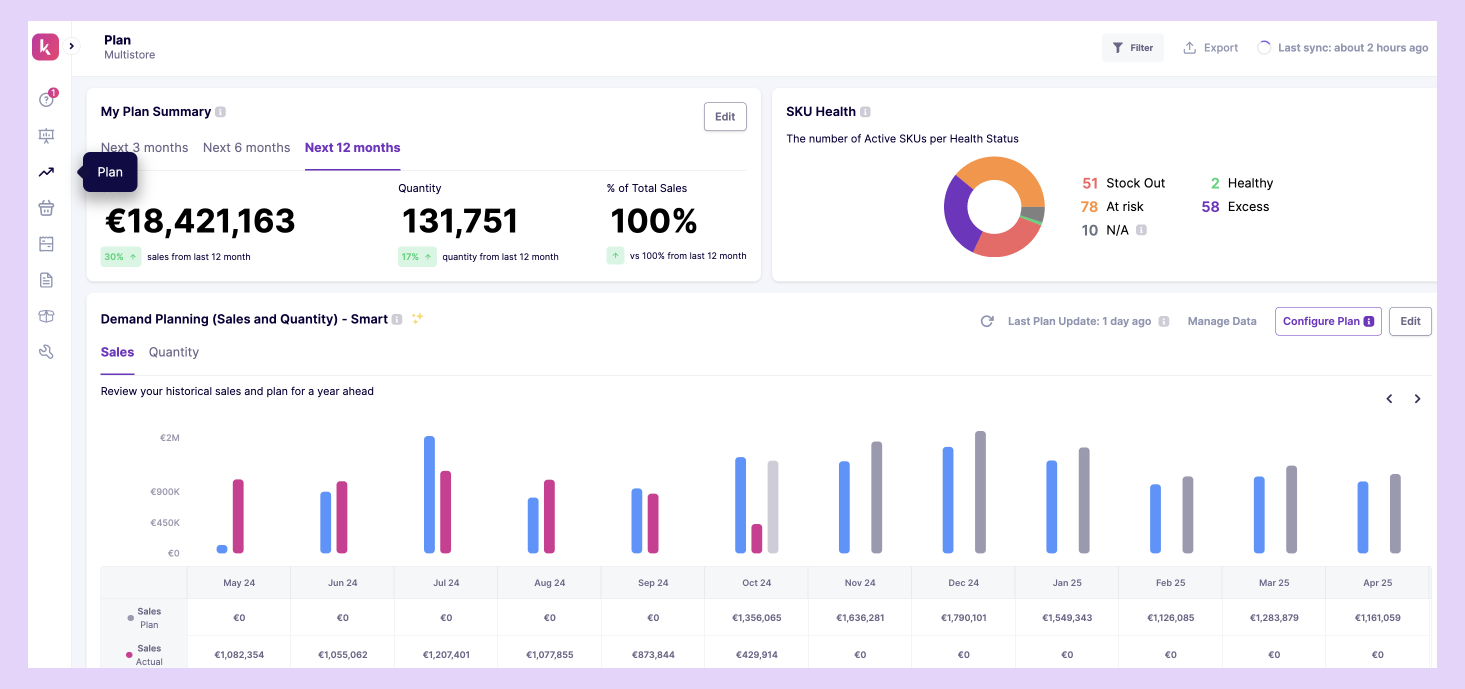
Fashion demand changes with seasons, promotions, and product launches.
Prediko forecasts demand using historical Shopify sales data and seasonal trends.
The model accounts for:
- SKU popularity
- seasonal campaigns (e.g., Black Friday)
- launch performance of new styles
- demand shifts between similar products
4. Apparel Inventory Performance Insights
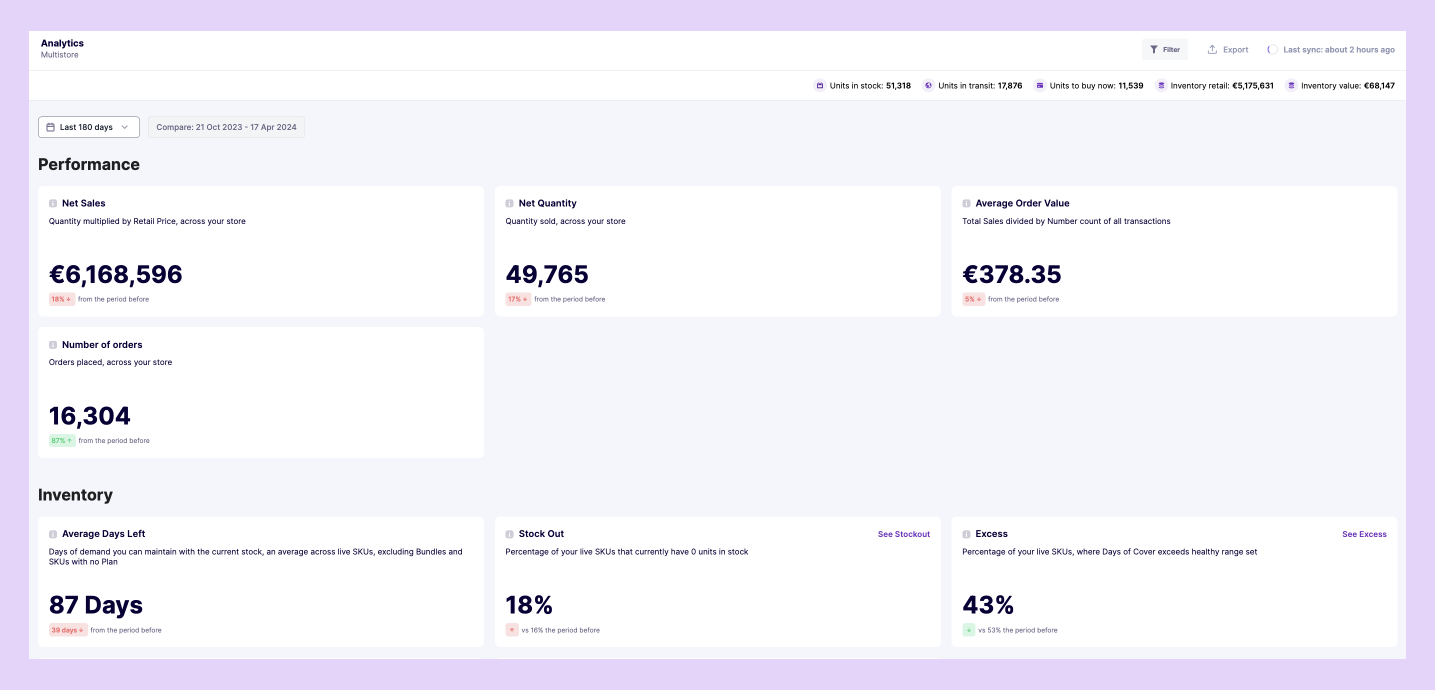
Prediko provides analytics on sell-through rate, inventory turnover, and SKU performance.
Teams can use these insights to:
- identify best-selling styles and variants
- detect slow-moving apparel SKUs
- adjust purchasing decisions
- plan markdowns for excess inventory
Using Data for Strategic Replenishment: By analyzing historical data, Prediko enables retailers to predict demand more accurately and avoid common
Free Apparel Inventory Management Templates & Excel Spreadsheet
Templates can simplify the inventory process, especially for smaller brands or boutiques that need a user-friendly solution. To streamline clothing inventory stock management, retailers can utilize these templates created by Prediko.
Retailers can get started with a free inventory tracking sheet to manage apparel SKUs, sizes, and reorder levels without needing advanced software
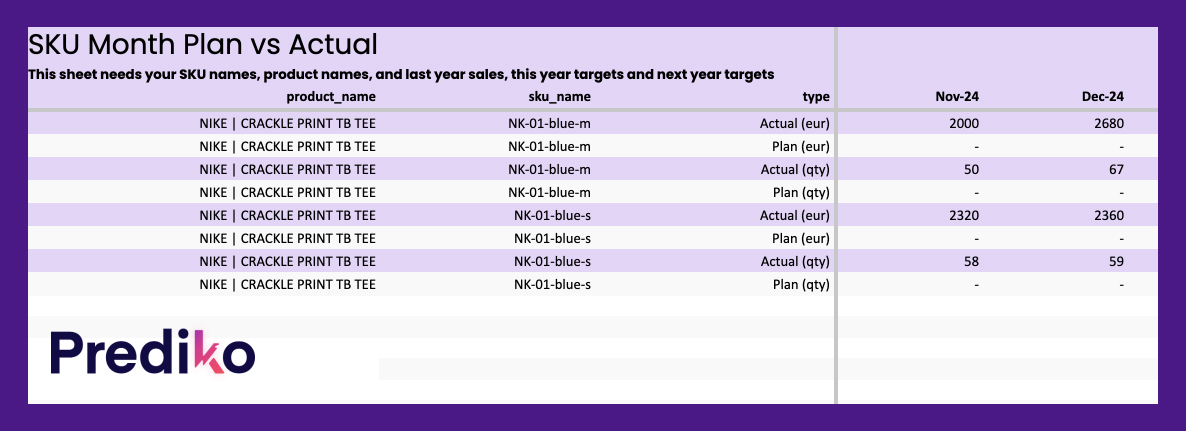
1. Apparel Inventory Management Template
Customizable template that allows retailers to track apparel SKUs, sizes, categories, and quantities.
2. Clothing Inventory Management Excel and Spreadsheet
This Excel template features columns for product ID, SKU, product description, quantity on hand, reorder level, and supplier details. Retailers can also add formulas to automate calculations, such as stock level alerts and reorder points.
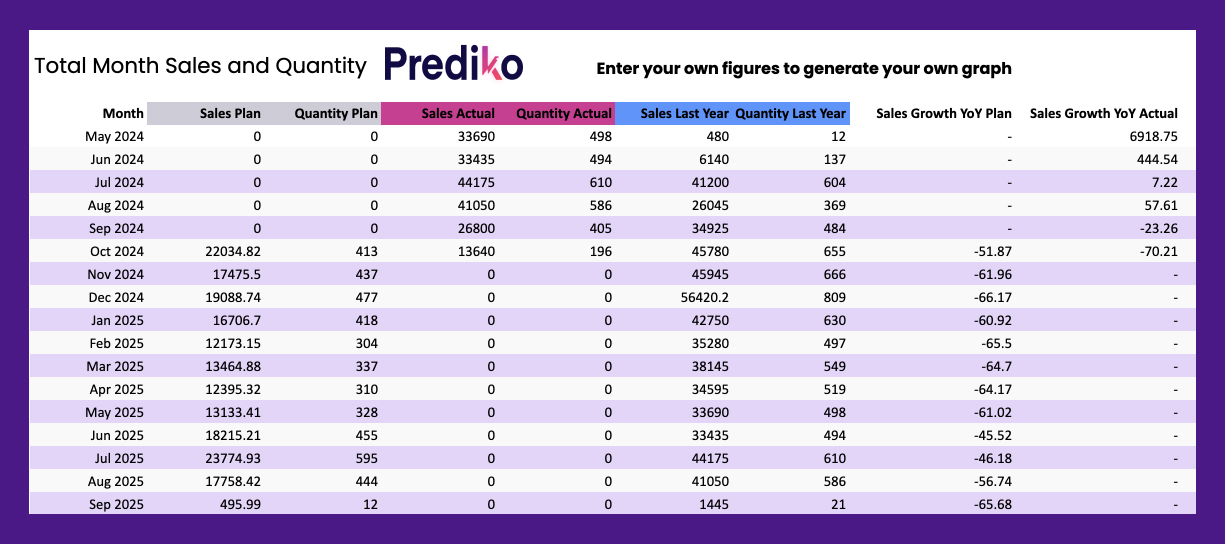
Download this Excel template in the form of an Excel using the button above. You can download both of these spreadsheets as Excel files after copying the spreadsheet via File > Download.
Apparel Brands Boosting Inventory Efficiency with Prediko [Case Studies]
Prediko has helped several fashion brands optimize their inventory processes. Here’s how two retailers successfully tackled inventory challenges with Prediko:
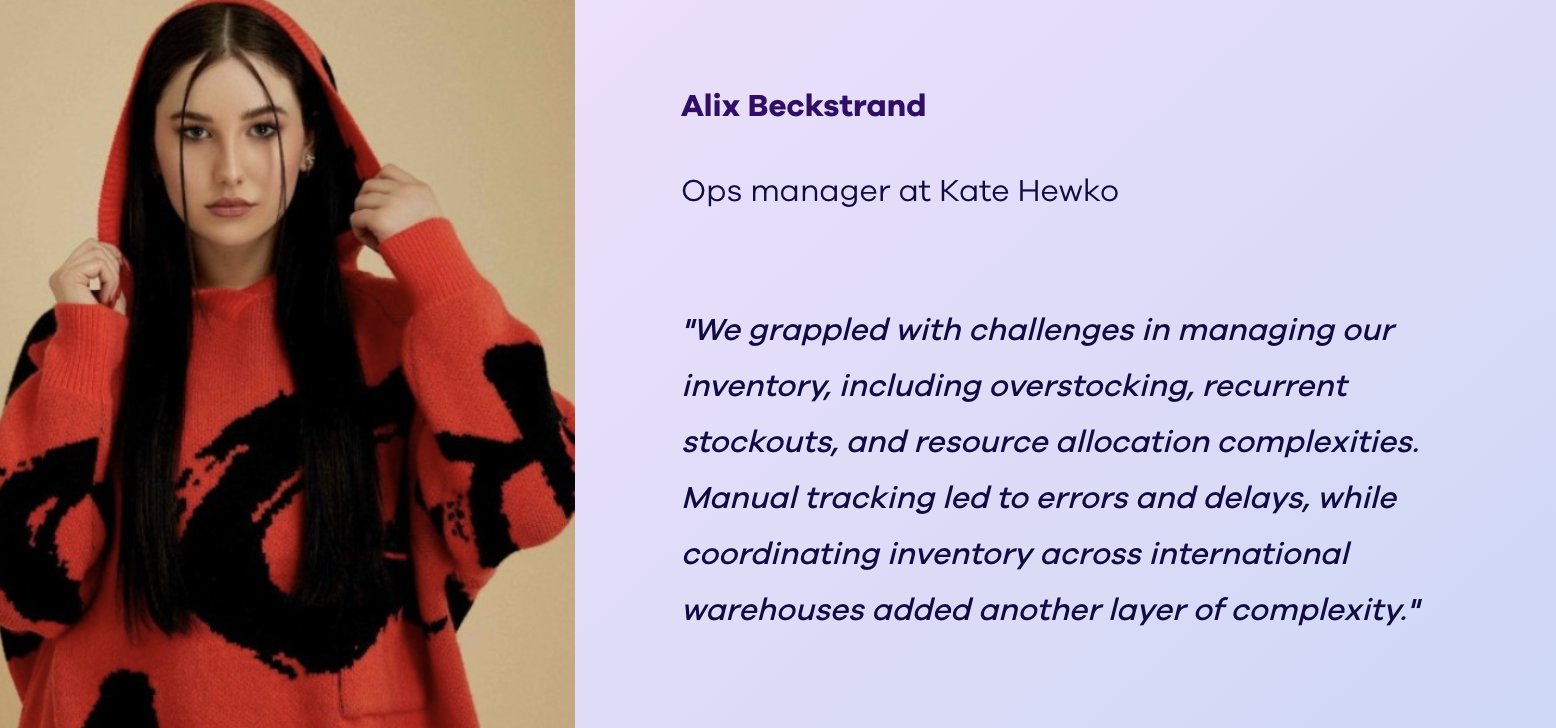
1. Kate Hewko : Boosting inventory efficiency by 40%
Problem
Kate Hewko, a well-known fashion brand, was facing challenges with inventory inefficiency and inaccurate demand forecasting. This made it difficult to plan purchases and maintain the right stock levels across products.
Solution
The brand implemented Prediko’s planning and purchasing platform to improve demand forecasting and streamline procurement. Prediko’s reporting tools provided better visibility into sales trends and inventory performance.
Result
With more accurate forecasting and smarter purchasing decisions, Kate Hewko improved inventory turnover by 40% while reducing stockouts by 20%.
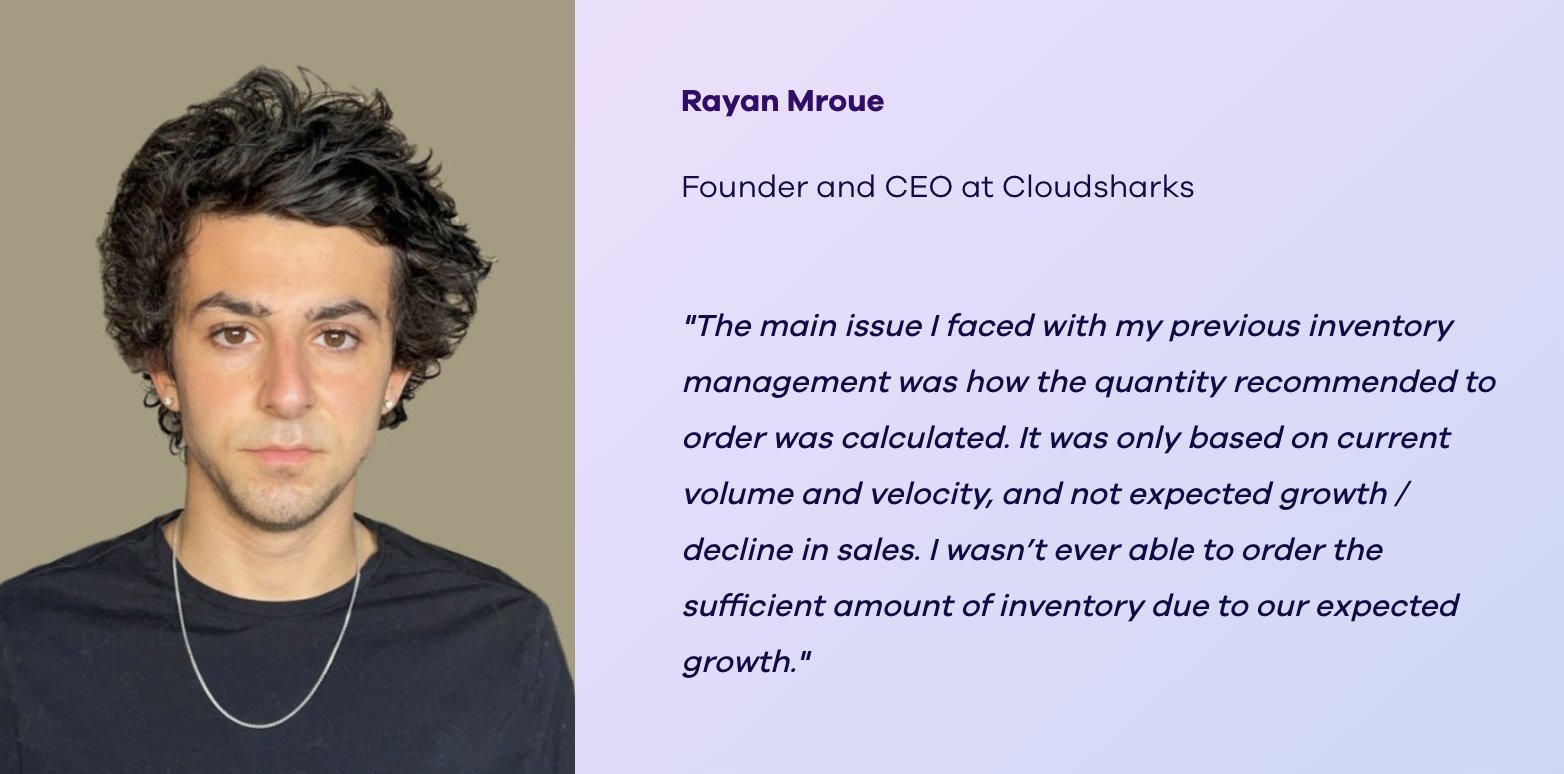
2. Cloudsharks: Reducing stockouts by 35%
Problem
Cloudsharks, a growing eCommerce brand known for its shark-shaped slides, struggled to manage a rapidly expanding catalog of over 500 SKUs. Their previous system, Cogsy, lacked the forecasting depth required to manage demand fluctuations effectively.
Solution
Cloudsharks switched to Prediko, which combines real-time sales data with 12-month demand forecasts. This allowed the team to generate more accurate purchase plans and order quantities.
Result
With improved forecasting and planning, Cloudsharks reduced stockouts by 35%, ensuring better product availability and a smoother customer experience.
Implementing an Apparel Inventory Management System
Successfully implementing a fashion inventory management system requires planning and a step-by-step approach to ensure seamless integration into existing processes.
- Assess Your Needs:
Start by evaluating your current inventory management processes and identifying areas for improvement. Consider specific challenges unique to your store—such as frequent stockouts, seasonal variations, or high SKU counts—to determine which features will best address your needs. - Research and Select a System:
Once you’ve outlined your needs, research systems that meet those criteria. Look for platforms that align with your requirements in terms of scalability, integration capabilities, user experience, and cost. Prediko, for example, is highly rated on the Shopify App store for its seamless support and inventory management capabilities. - Plan Implementation:
Develop a detailed implementation plan that includes a timeline, resource allocation, and training schedules. This plan should outline all necessary steps for data migration, employee training, and system testing, which will ensure the system is fully functional before going live. - Test and Optimize:
Testing is essential to verify that the system functions as expected. Encourage feedback from team members who will be using the system daily and make any necessary adjustments based on their input. Testing will help you identify potential issues, optimize performance, and refine processes for long-term efficiency. - Monitor and Maintain:
After implementation, continuously monitor the system’s performance. Regularly reviewing analytics and reports will help you identify further improvement opportunities, ensuring that inventory management remains efficient and adaptable to changing business needs.
List of the rest of the top Apparel Inventory Software
To make decisions, comparing other inventory management tools on the market is part of the process. Here’s an overview of the top software options:
1. Magestore
Magestore is a POS system for clothing stores native to Magento and also integrates with Shopify.
Key features:
- Centralized product data
- Product management:
- Bin location
- Inventory sync
- Multi-warehouse tracking
- POS features
2. NetSuite Inventory Management
This inventory management solution provides warehousing capabilities to allow for control over your stock distribution process.
Key features:
- Multi-location fulfillment
- Replenishment
- Inventory counting
- Traceability
3. Lightspeed Retail
Lightspeed is an eCommerce platform that allows you to manage both in-store and online inventory, get a unified view of customers, and track omnichannel sales performance.
Key features include:
- Inventory synchronization
- Mobile extensions
- Product tracking with SKUs
- Additional customer service features
4. Fishbowl
Fishbowl provides a business management solution tailored for growing clothing companies. Optimizes and automates processes such as purchasing, production, accounting, and inventory management.
- Control inventory
- Multiple locations
- Order management
- Sales and purchasing
We have created an in-depth list with pros, cons, and pricing of the best tools and software for apparel inventory management.
Preparing for Peak Sales Seasons (Black Friday & Cyber Monday and Beyond)
Apparel retailers need a strategic approach to inventory management, especially during peak sales seasons like Black Friday and Cyber Monday (BFCM). Here are some effective strategies:
1. Data-Driven Demand Forecasting:
Using historical sales data from previous peak seasons can help you anticipate demand spikes and plan inventory accordingly. By leveraging Prediko’s demand forecasting, retailers can ensure they have sufficient stock of popular items and avoid costly stockouts.
2. Pre-Season Stock Audits:
Conducting an inventory audit before peak seasons ensures that current stock levels match what’s recorded in your system. This step helps identify any discrepancies and prepares your store for high demand.
3. Strategic Reordering:
Use Prediko’s interactive buying table to get real-time restocking recommendations for high-demand items. Planning restocks based on real-time insights can help balance inventory needs and avoid overstocking. Consider increasing safety stock for popular items and planning for anticipated growth.
4. Optimize Promotions and Marketing with Inventory Insights:
Align your promotional campaigns with inventory insights. Knowing which items have sufficient stock levels allows you to confidently promote high-demand products, maximizing sales and ensuring stock availability.
Effective apparel inventory management is the cornerstone of success in the fashion retail industry. From selecting the right system to leveraging data analytics, each element of inventory control contributes to improved efficiency, customer satisfaction, and profitability. As the fashion industry evolves, investing in a smart, adaptable inventory management system is a strategic decision that can provide significant operational advantages.
Bonus: Once you are done learning about managing inventory effectively for Apparel brands, we have also written a guide on which Shopify theme to pick for your clothing store.
Frequently Asked Questions
Best Apparel Inventory Management Tools for Fashion & Clothing Brands
Get the list of the best apparel inventory management tools for your clothing store on Shopify in 2026.
In this dynamic world of apparel retail, inventory management is a critical function. Effective inventory management ensures right products are available at the right time.
Managing inventory in an apparel retail store is complex. It involves multitude of variables and requires meticulous attention to detail. Traditional methods of inventory management, such as manual tracking or spreadsheets, are no longer sufficient. They are always prone to errors and inefficiencies.
This post has the list of the top apparel inventory management tools. We explore their importance, features, and how to use those tools to optimize entire inventory management process.
Comparison of Best Appareal Inventory Management Tools & Software
Importance of Inventory Management Tools in Apparel Retail
Apparel retail management tools are crucial for several reasons. They help apparel retailers maintain optimal stock levels, meet customer demand without overstocking or understocking, drive sales, enhance customer experience, improve profitability, and respond to market trends effectively.
These tools provide real-time inventory data, enable informed decision-making about product assortment, pricing, and promotions, and offer features like categorization, integration with POS systems, analytics capabilities, inventory forecasting, demand planning, purchase order management, and raw materials management.
Additionally, retail SMS marketing drives sales, enhances engagement, and streamlines customer communication.
Why Is Apparel Inventory Management important?
Apparel inventory management is crucial for retailers for several reasons. First, it affects customer satisfaction. When customers find the products they want in the right sizes and colors, they are likely to make a purchase. This not only drives sales but also enhances customer experience, leading to repeat business.
Secondly, apparel inventory management affects a retailer's profitability. By maintaining optimal stock levels, retailers can avoid the costs associated with overstocking or understocking.
Finally, apparel inventory management plays a key role in a retailer's ability to respond to market trends. With real-time inventory data, retailers make informed decisions about product assortment, pricing, and promotions.
Manual vs. Software Tools for Apparel Inventory Management
Apparel retail inventory management has traditionally been a manual process. However, with right software tools, a lot of other software tools have emerged as the winner.
1. Manual Inventory Management Tool
Manual inventory management involves physically counting items & recording stock levels on paper. While this method is feasible for small retailers, it is time-consuming and prone to human error.
However, manual inventory management does not provide real-time data. This leads to delay in decision-making and missed opportunities to respond to market trends.
Spreadsheet Inventory Management
Many retailers upgrade from manual to spreadsheet inventory management. Spreadsheets allow for more organized record-keeping and easier data analysis.
Spreadsheet inventory management also has its limitations. Like manual methods, it is susceptible to human error. Additionally, maintaining up-to-date spreadsheets can be labor-intensive, especially for retailers with large inventories.
2. Software Inventory Management
Software inventory management is a more advanced tool. Such a tool automates many of the tasks associated with manual and spreadsheet methods, reducing risk of human error.
For apparel retailers evaluating their tech stack, exploring the best fashion inventory software can provide clarity on which platform best suits their operational complexity and growth stage.
Inventory management tools provides real-time data, enabling retailers to make timely decisions. It also offers features such as categorization, that aids in stock organization, and integration capabilities with POS systems for seamless inventory tracking.
Moreover tools come with analytics capabilities. These provide valuable insights into sales trends, helping retailers optimize their inventory management strategies.
Still got questions? Get answers to the 5 most pressing inventory questions from the Limited Supply Podcast in this article.
Key Features of Apparel Inventory Management Tools for 2026
The right apparel inventory management tool offers a range of features designed to streamline and optimize inventory processes. These features significantly enhance efficiency and accuracy of inventory management in apparel retail:
Inventory Forecasting
Inventory forecasting is an essential aspect of retail management, particularly in the dynamic apparel industry. It involves predicting future inventory needs based on a combination of historical sales data, seasonal trends, and market demands. Accurate forecasting is crucial for ensuring that the right products are available at the right time, minimizing the risks associated with stockouts or excess inventory.
A strong apparel demand forecasting process also accounts for seasonality, trend shifts, product launches, and SKU-level demand when planning future stock.
AI in inventory management go beyond traditional forecasting, enabling apparel retailers to process vast datasets, detect complex demand patterns, and adapt quickly to market changes.
Prediko's Advantage
Prediko elevates the inventory forecasting process through its advanced predictive analytics capabilities. Our AI has been trained on 15 million SKUs across 25+ industries to identify patterns and trends that may not be immediately apparent.
This approach enables apparel retailers to generate highly accurate and tailored forecasts that align with their specific product lines and customer behaviors. With Prediko, businesses can optimize inventory levels, better respond to market changes, and ultimately drive higher profitability and operational efficiency.
Demand Planning
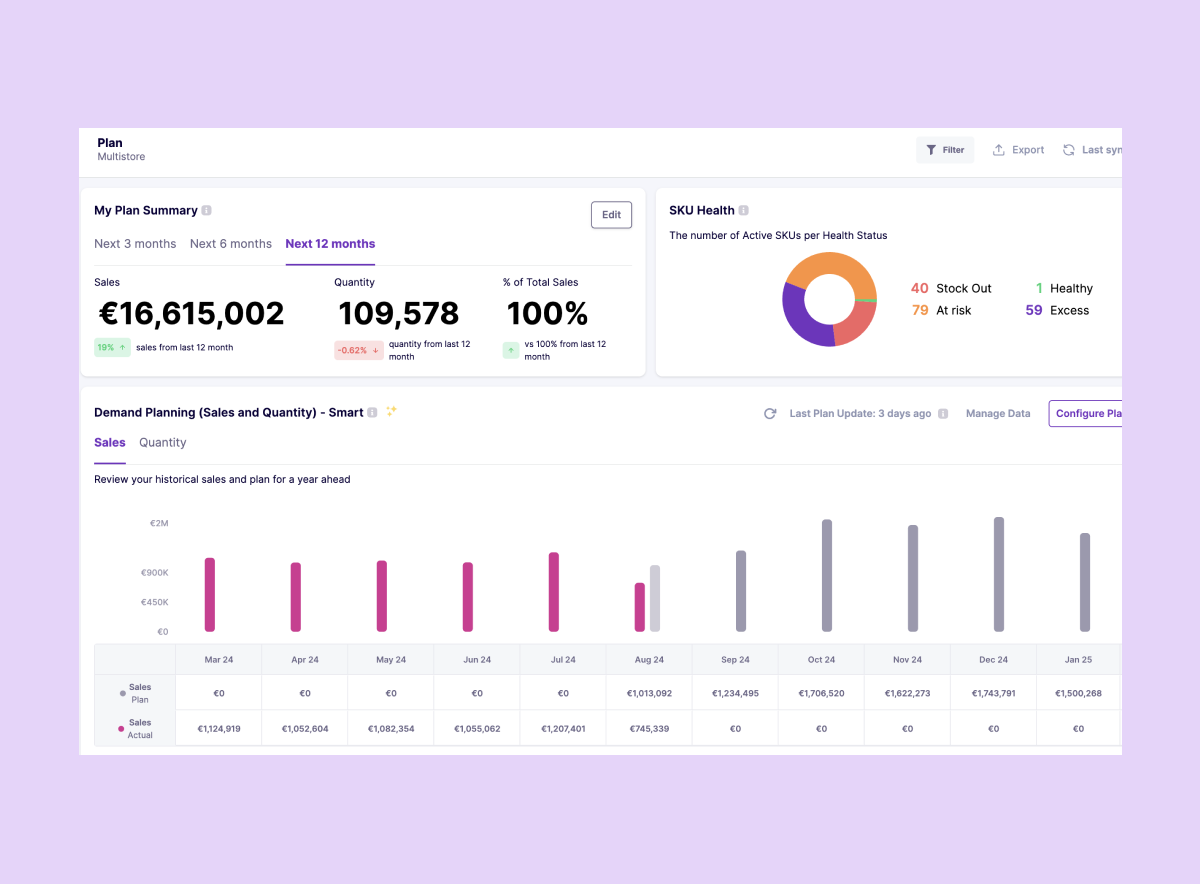
Demand planning is a strategic process that involves predicting future customer demand to ensure that the right products are available in the right quantities at the right time.
In the apparel industry, where trends shift rapidly and customer preferences are unpredictable, effective demand planning is crucial for maintaining inventory balance and minimizing waste. Accurate demand planning helps retailers align their inventory with market needs, reduce excess stock, and avoid missed sales opportunities due to stockouts.
Prediko's Advantage
Prediko enhances demand planning process by leveraging its advanced data analytics and machine learning capabilities. The platform integrates various data sources, including historical sales, market trends, and external factors, to produce precise demand forecasts. Prediko's AI goes beyond traditional methods by continuously learning and adapting to new data, ensuring that demand plans are always aligned with current market conditions.
Purchase Order Management
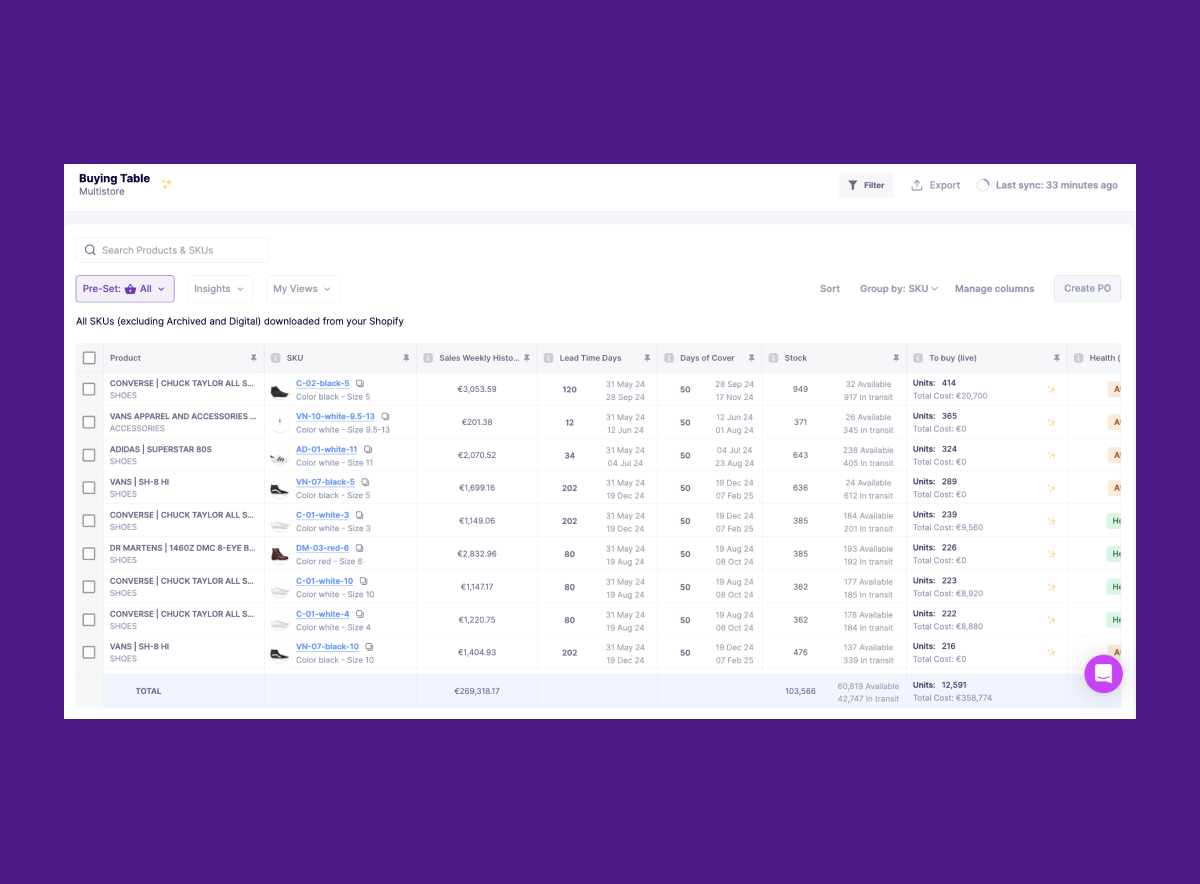
Purchase Order management is an important function in retail operations that involves creation, tracking, and management of purchase orders from suppliers. In the apparel industry, where inventory needs fluctuate rapidly due to changing trends and seasonal demands, efficient purchase order management is essential.
Prediko's Advantage
Prediko's approach to purchase order management is by integrating advanced analytics and automation into the process. The app provides real-time insights into inventory levels and sales trends, enabling retailers to make informed decisions about when and what to order. Prediko’s system automates many aspects of purchase order creation, reducing risk of errors and saving valuable time.
Raw Materials Management
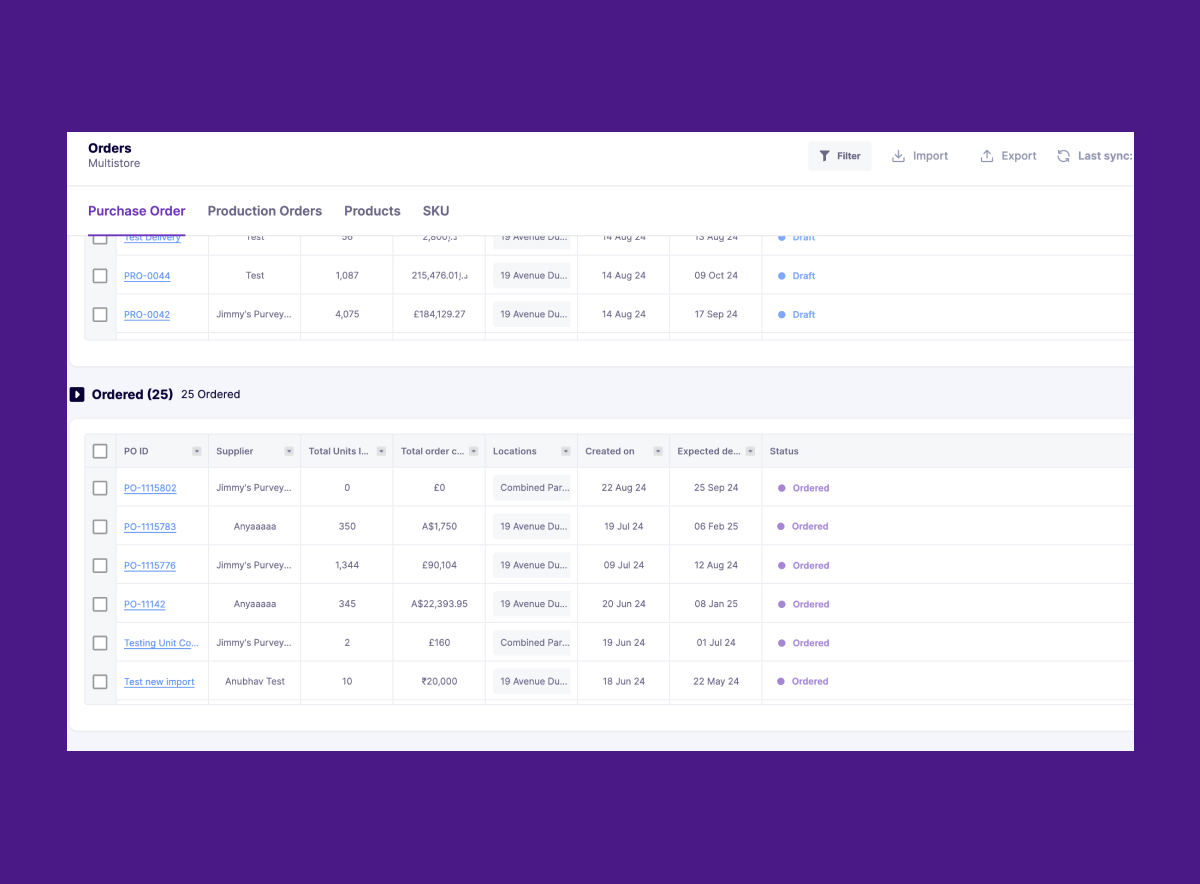
Raw materials management is fundamental aspect of the supply chain in the apparel industry. It involves efficient procurement, storage, and utilization of raw materials, such as fabrics, threads, and other essential components required for manufacturing apparel. Effective raw materials management ensures that production processes are not disrupted due to material shortages or delays.
Prediko's Advantage
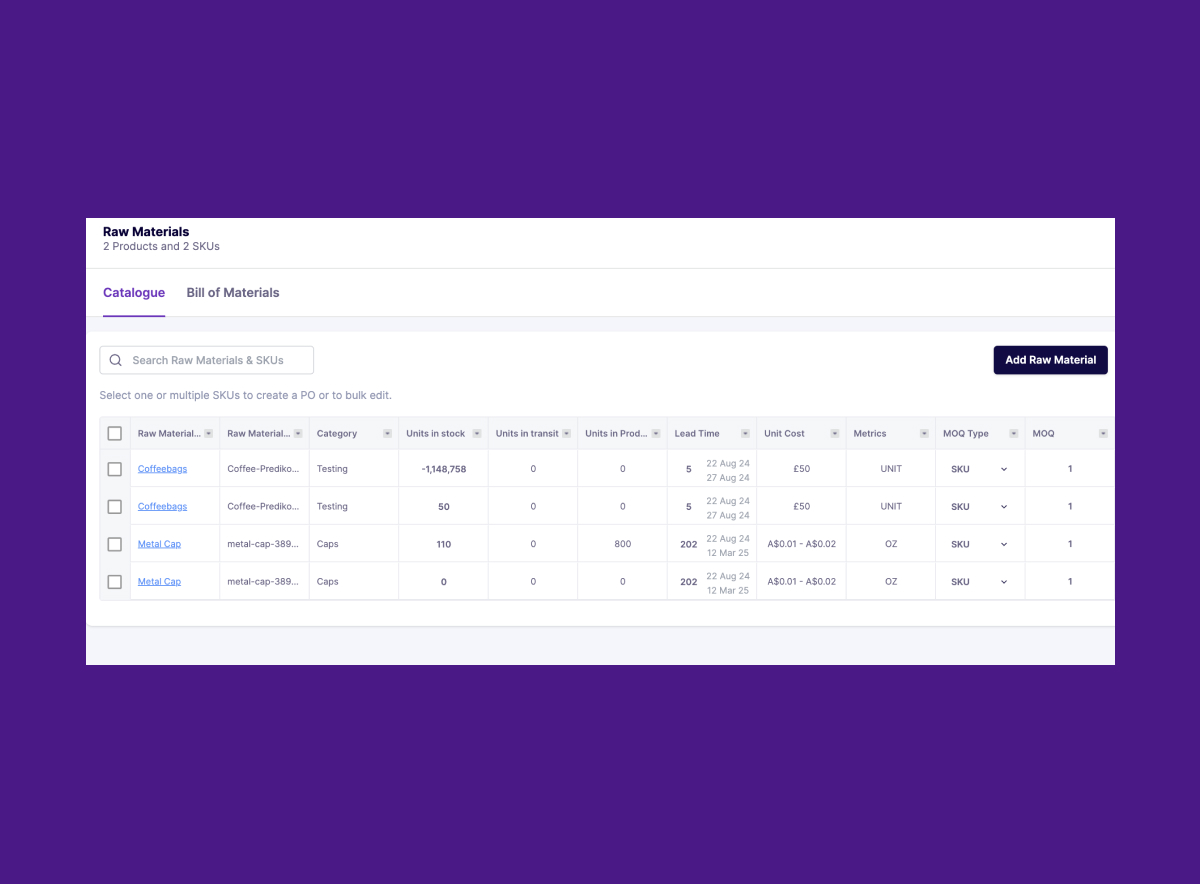
Prediko offers a comprehensive solution for managing raw materials in the apparel industry. With the ability to create and maintain a detailed raw materials catalogue, Prediko provides retailers and manufacturers with tools needed to manage their inventory effectively.
This app emphasizes real-time tracking of material levels and usage rates, ensuring that businesses have up-to-date insights into their stock. We have also covered the list of the best raw materials management apps.
Best Apparel Inventory Management Tools
The current Shopify ecosystem offers multiple apparel inventory management tools, each with its unique features and capabilities. These tools significantly enhance the efficiency and accuracy of inventory management in apparel retail space.
1. Prediko
4.9 ⭐ (250+ Reviews on Shopify Store)
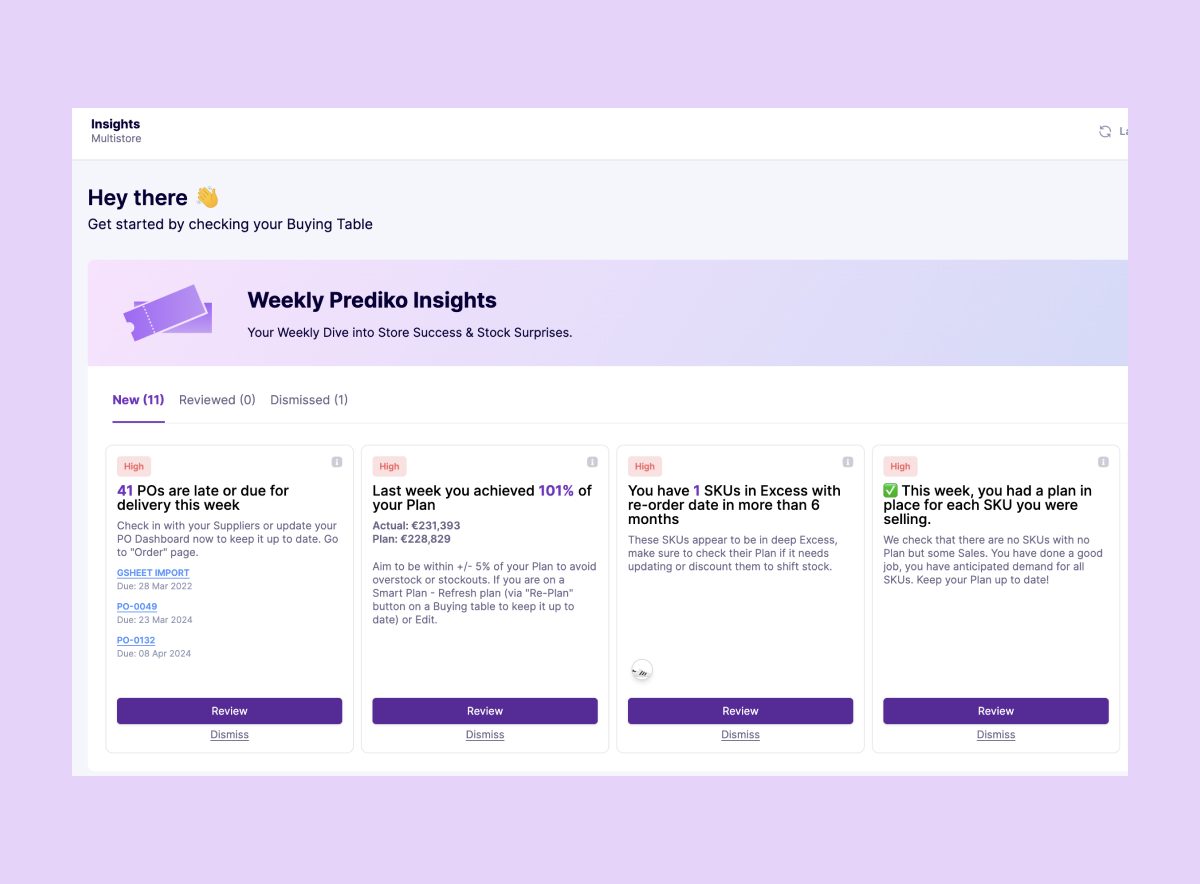
Prediko combines AI-powered inventory forecasting, planning, and purchase order management into one easy-to-use app. Say goodbye to spreadsheets and save up to 3 hours each day with real-time syncing to Shopify.
Stay ahead with automated inventory alerts and stock health indicators, so you can quickly create data-driven purchase orders and avoid running out of stock or overstocking.
Pros
1. AI Sales Forecasting: Easily plan demand for SKUs and products, ensuring you always have the right inventory levels.
2. Proactive Inventory Planning: Stay ahead of stock issues with out-of-stock alerts and a smart buying planner that helps you make informed purchasing decisions.
3. Efficient PO Management: Simplify your purchasing process by creating, tracking, and bulk-editing purchase orders with ease.
4. Detailed Inventory Reports: Generate accurate, customizable inventory reports in CSV or PDF format, with over 100 filters for precise data insights.
5. Bill of Materials Management: Streamline production by creating BOMs and ordering components directly for your finished goods.
6. Starts at just $49/month — budget-friendly for small and growing Shopify brands.
Pricing
Our pricing scales with revenue of our customers. Our plans start from $49/month.
A quick demo of Prediko 👇
2. Magestore
Magestore offers inventory management app tailored for the apparel sector. It provides features such as multi-warehouse management, stock transfer, and demand forecasting. Magestore's user-friendly UI and robust reporting capabilities makes it a popular choice among apparel retailers.
Pros
- Wide range of extensions: Offers collection of magento extensions tailored for various eCommerce needs, including inventory management, SEO, and customer engagement.
- Customization: Customization for Magento stores, allowing businesses to enhance their online store's functionality.
- Integration: Integrates with Magento, making it a natural choice for Magento-based stores looking to extend their functionality
Cons
- Magento Dependency: Mage Store extensions are specifically designed for Magento, so they are not useful for businesses using other e-commerce platforms.
- Complex Setup: Some extensions may require technical expertise to install and configure, which could be challenging for users without a development background.
- Cost Accumulation: While individual extensions might seem affordable, the cost can add up quickly if you need multiple extensions or ongoing updates
Pricing
Magestore has flexibile POS pricing and it depends upon the number of stores.
3. Lightspeed
Lightspeed retail is cloud-based inventory management tool that offers range of features including stock ordering, inventory tracking, and sales reporting. Particularly beneficial for apparel retailers due to its size matrix feature, that simplify management of apparel items of different sizes and colors.
Furthermore, Lightspeed Retail's integration capabilities with eCommerce platforms make it a versatile tool for omnichannel retailers.
Pros
- Cloud-based: Accessible from anywhere with internet connection, allowing for real-time updates & management
- Omnichannel capabilities: Integrates in-store and online sales channels, providing seamless experience across both.
- Integrations: Works well with various e-commerce platforms, accounting software, and other business tool
Cons
- Learning Curve: While user-friendly, the system has a learning curve, particularly for users who are not tech-savvy.
- Limited Customization: Some users find that the customization options for reports and workflows are limited compared to other POS systems.
Pricing
Basic plan starts at $69 per month for one register.
4. Fishbowl
Fishbowl is inventory management app that integrates with QuickBooks, making it ideal choice for retailers seeking to streamline their inventory and accounting processes. It offers features such as barcode scanning, order management, and advanced reporting.
Pros
- QuickBooks Integration: Integrates with QuickBooks, making it a powerful choice for businesses already using QuickBooks for accounting.
- Advanced Inventory Management: Handles complex inventory needs, including multi-location management, barcode scanning, and order management.
- Manufacturing Capabilities: Offers robust features for manufacturing businesses, including work orders, bill of materials, and inventory tracking through the production process.
Cons
- High upfront cost: The initial cost of purchasing Fishbowl can be prohibitive for small businesses, especially when considering the need for multiple user licenses.
- User Interface Some users find the interface outdated and not as intuitive compared to more modern software solutions.
- QuickBooks dependence: While integration with QuickBooks is strength, it also means that businesses not using QuickBooks may not get as much value out of Fishbowl.
Pricing
Available on their website.
5. Zoho
Zoho Inventory is cloud-based inventory management tool that offers features such as multi-channel selling, order fulfilment, and inventory control. It's cloud-based nature facilitates remote access, making it a flexible solution for businesses with multiple locations.
Zoho Inventory's robust integration capabilities with various eCommerce platforms and shipping carriers make it a comprehensive solution for managing inventory in the apparel retail sector.
Pros
- User-friendly interface: Easy to navigate, making it accessible even for users with little technical knowledge.
- Multi-channel sales management: Manages inventory and sales across multiple platforms like Amazon, eBay, Shopify, and Etsy.
- Automation: Automates many routine tasks, such as order fulfilment and stock updates, saving time and reducing error.
Cons
- Limited advanced features: While Zoho Inventory is robust for small to medium businesses, it lacks some advanced features needed by larger enterprises or businesses with very complex inventory needs.
- User limitations: The number of users and orders in the lower-tier plans might be restrictive for growing businesses, forcing them to upgrade to more expensive plans.
- Integration issues: While it integrates well with other Zoho products, integrating Zoho Inventory with non-Zoho third-party apps is sometimes be challenging or limited.
Pricing
$79 per organization per month, which includes 1,500 orders per month and two users.
Also learn about the best 10 themes on Shopify for fashion clothing stores in 2025 & Shopify Inventory Forecasting for Fashion & Apparel Brand
Choose the Right Apparel Inventory Management Software
Inventory needs in the apparel industry are different for different types of brands.
A fast-fashion brand launching new SKUs weekly operates very differently from a luxury label managing small-batch, high-value pieces.
That’s why choosing the right software starts with understanding your business model and operational needs.
For fast fashion brands
Speed & agility define fast fashion. You’re turning trends into sellable stock in weeks, not months, so the inventory system must
- Automate reorder alerts & replenishment workflows
- Handle large SKU counts efficiently
- Enable real-time data visibility across sales channels
- Offer strong demand forecasting to reduce overproduction
- Track performance by SKU category
Prediko, for example, is a good fit here. Its AI-powered demand forecasting, multi-store visibility, & quick PO workflows make it ideal for brands dealing with rapid stock turnover.
For Luxury Apparel Brands
Luxury fashion is about precision, not speed. Collections are released in seasons, each SKU carries high value, and the cost of inventory errors is much higher.
Your software should focus on:
- SKU-level visibility for precise reordering
- Forecasting that accounts for seasonality, exclusivity, and smaller sales volumes
- Integration with production needs and supplier lead times
- Analytics to track sell-through, profit margin, and slow movers
Luxury brands benefit from a planning-first inventory platform; one that connects forecasting with purchasing, lets you manage raw materials (if needed), and provides deep insights without overwhelming you with excess features.
Prediko works for luxury too, thanks to its accurate demand planning, reorder alerts, built-in raw material forecasting and tracking, and customizable reports.
Common problems fixed by the right apparel inventory management tool
Two immediate issues that are fixed by having the right apparel inventory management tool:
1. Preventing excess inventory and reducing carrying costs.
2. Reducing stockouts and overstocks.
Top 10 Clothing Stores on Shopify for 2026
A shortlist for the top 10 Clothing Stores on Shopify in 2026
Innovative fashion brands are gaining popularity due to their product design, contribution to social causes, and how they create their digital presence.
Shopify has played a big role in online fashion retail in recent years.
Independent boutiques and established fashion powerhouses alike are leveraging Shopify's user-friendly tools to create stunning Shopify clothing stores, offering unique experiences and customer service.
Here is a clip of Shopify’s president, Harley Finkelstein, on an interview on “After Earnings”
If you're a fashion brand on Shopify that is looking for inspiration for growth, this post shares the stories of the best Shopify fashion stores as per GMV in 2026. We have gone through multiple sources and compiled a list of top clothing stores on Shopify by GMV.
Here is a list of popular Shopify clothing stores you can draw inspiration from:
Comparison of Top Shopify Fashion Stores by Unique Value Drivers
Deep Dive into Each Shopify Fashion Store
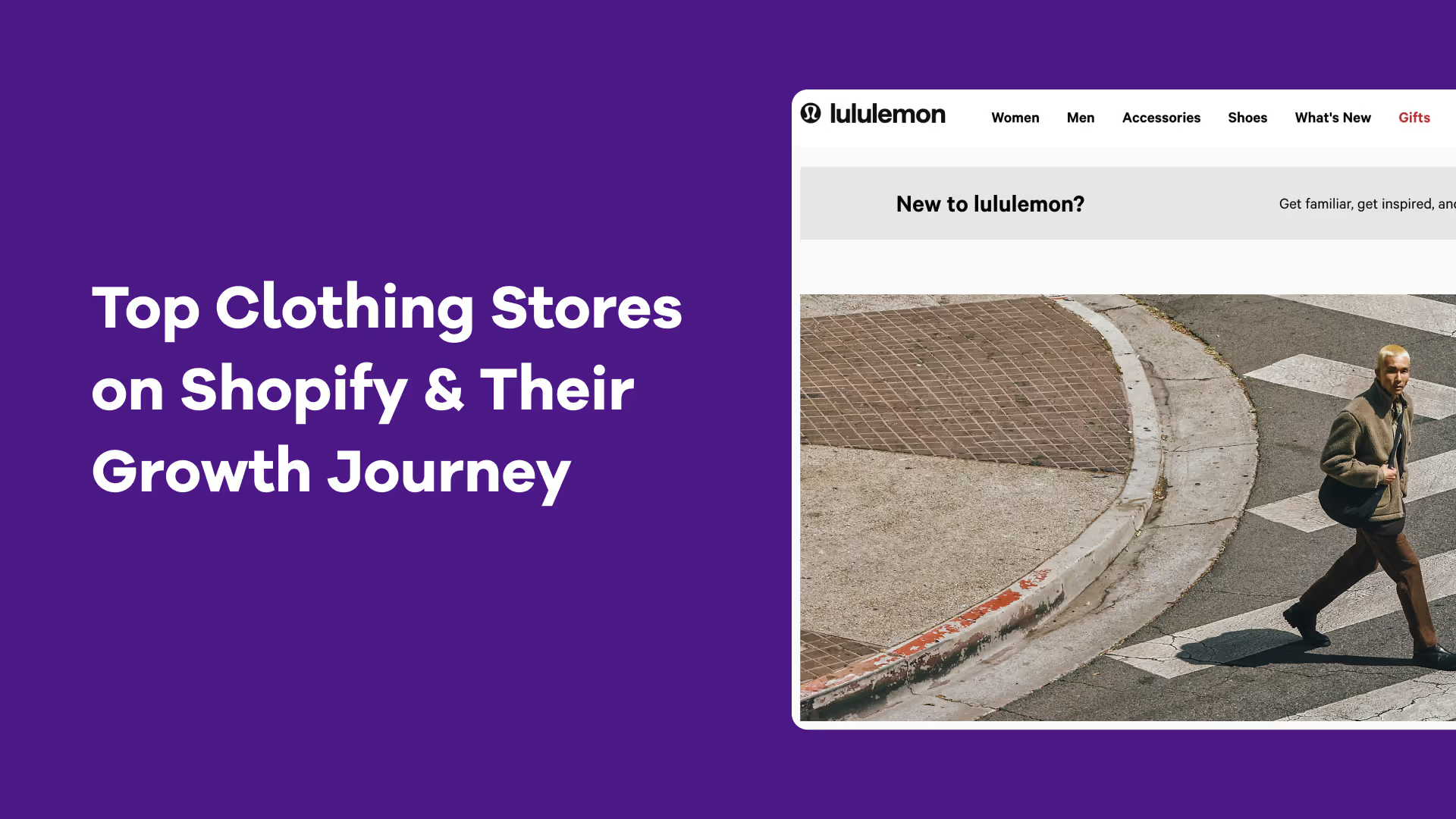
1. Lululemon
TL;DR: From yoga community roots to a $12B athleisure icon, fueled by community-driven design, ambassador partnerships, and Shopify loyalty programs.
Lululemon, a prominent lifestyle brand, has successfully carved out a niche in the competitive athletic apparel market dominated by giants like Nike and Adidas.
Their strategic approach has been instrumental in their growth. Initially, they were the yoga community with high-quality activewear, moving into the athleisure market with products that seamlessly blend into everyday life.
Growth story
A key factor in Lululemon's success has been its strategic partnerships. By collaborating with yoga teachers, fitness influencers, and other industry leaders, they've cultivated a dedicated community of brand advocates.

All in all, Shopify’s rewards and loyalty programs have helped Lululemon establish itself in a crowded space, and grow from 0 to $12 billion in revenue since 1998.
What we love about Lululemon’s Shopify website
Lululemon's website goes beyond selling athletic apparel; it fosters a community around health and wellness. The site features inspirational stories, workout guides, and ambassador programs that connect users with instructors and other enthusiasts. This focus on community building strengthens customer loyalty and keeps users engaged with the brand.
Best-selling products
Lululemon’s standout products continue to drive customer loyalty, with key offerings that blend comfort, functionality, and style. Among their best-sellers are:
- Dance Studio Pants: Known for their versatility and comfort, these pants are a favorite for both active and casual wear.
- Align Pants: These leggings are highly popular for their buttery-soft fabric and ability to provide comfort during yoga or everyday activities.
- Scuba Hoodie: Another customer favourite, this hoodie offers warmth and a relaxed fit, perfect for post-workout or casual outings.
By launching a mobile app using a Shopify mobile app builder, fashion brands can offer a more personalized shopping experience, boosting conversions, repeat purchases, and retention.
2. MNML
TL;DR: Minimalist streetwear label that scaled by selling near-cost luxury alternatives, building a cult following, and later acquired by A.K.A Brands for $48.6M.
The name "MNML" is a shortened version of the word "minimal," reflecting the brand's commitment to a minimalist philosophy. This philosophy emphasises simplicity, clean lines, and a focus on essential elements.
Growth Story
MNML aims to address the overwhelming culture of consumerism and excess by promoting a more minimalist lifestyle.
By offering clothing at just above manufacturing cost, MNML provides a more affordable alternative to traditional luxury brands. This approach aligned with the brand's minimalist ethos and encouraged consumers to focus on quality and simplicity rather than excessive consumption.
Due to Mnml’s popularity and success, it was acquired by A.K.A Brands for $48.6 million in 2021.
What we love about MNML’s Shopify website
Shopify’s themes have helped them design a site that speaks to their customers and fit their brand image.
MNML's website effectively reflects its brand identity through a minimalist design, high-quality product photography, a curated selection, and potential storytelling elements.
This combination creates a seamless user experience that resonates with the brand's audience.

Best-selling products
MNML’s minimalist and affordable approach is reflected in their top products. The following items have garnered consistent popularity among their audience:
- Sweatpants: These are sought-after for their sleek, minimalist design and comfort, making them a staple in streetwear.
- Flared Pants: A bold choice in fashion, MNML’s flared pants combine retro vibes with a modern twist, appealing to the fashion-forward crowd.
3. T.O.A.S.T
TL;DR: British ethical fashion pioneer blending sustainability, artisan craftsmanship, and Shopify storytelling to thrive against fast fashion.
T.O.A.S.T is a British fashion brand renowned for its commitment to ethical and sustainable practices. Established in West Wales in 1997, the company has built a reputation for timeless, classic designs and high-quality craftsmanship.
T.O.A.S.T is committed to sourcing materials ethically and using organic and recycled options whenever possible. In contrast to fast fashion brands that create tonnes of waste each year, Toast is focusing on creating pieces that are designed to last.

Growth story
With the growing negative sentiments against fast fashion and its impact on the environment, T.O.A.S.T captured the growing consumer demand for sustainable fashion.
Their commitment to supporting local communities and artisans further solidifies their position as a leader in the ethical fashion industry.
What we love about Toast’s Shopify website
T.O.A.S.T's website effectively conveys the brand's aesthetic and values through its editorial style, earthy color palette, and focus on lifestyle imagery. By highlighting quality craftsmanship and appealing to a specific target audience, the website contributes to the brand's success.
Best Selling products
T.O.A.S.T’s sustainable and timeless pieces stand out in a market increasingly focused on environmental consciousness. Their best-selling products include:
- Knits: High-quality, long-lasting knitwear, especially sweaters, remain in high demand for their durability and style.
- Woolen Sweaters & Cardigans: These items are perfect for colder months, and their craftsmanship ensures they stand the test of time.
- Enamel Tableware: In addition to clothing, T.O.A.S.T also sells lifestyle products like enamel tableware, which is both functional and aesthetically pleasing.
4. Skinnydip
TL;DR: Nostalgia-fueled, playful fashion brand using quirky designs + Shopify email automation to capture millennial and Gen Z loyalty.
Drawing inspiration from the latest trends, Skinnydip London has established itself as more than just a brand selling "cool clothing and accessories." They've carved a unique niche by offering playful and eye-catching products that resonate with a growing community of fashion enthusiasts.Skinnydip London embraces a forward-thinking philosophy, aiming to empower women and spark conversation.

Growth story
Skinnydip has capitalized on the trend of nostalgia to achieve success. Nostalgia marketing is a strategy that uses elements from the past to evoke positive emotions in consumers.
Skinnydip's products, which often feature playful and kitschy designs, resonate with millennials and Gen Z looking for products that remind them of their childhoods.
In addition to nostalgia marketing, Skinnydip has also been successful in targeting specific customer categories. For example, the brand offers a wide range of phone cases and other accessories that appeal to young women. By focusing on these niche markets, Skinnydip has created a strong brand identity and attracted a loyal customer base.
Skinnydip relies heavily on Shopify email drip campaigns for conversion.
Personalized emails and targeted recommendations ensure Skinnydip stays top-of-mind, encouraging repeat purchases and driving brand loyalty.
What we love about SkinnyDip’s Shopify website
Skinnydip London has created a seamless user experience through its user-friendly navigation, categorized product selection, and dynamic design (featuring interactive elements).
They’ve highlighted influencers and celebrities and used a colorful palette on the website to reinforce the brand's upbeat and optimistic vibe.
Best Selling products
- iPhone Cases: Known for vibrant and quirky designs, Skinnydip’s phone cases are a must-have accessory for their loyal fans. These cases combine fun with functionality, catering to a young and trendy audience.
5. Victoria Beckham
TL;DR: Celebrity-founded luxury label proving even high-end brands can scale on Shopify with strategic collaborations and curated digital presence.
Victoria Beckham's personal brand has undoubtedly played a significant role in the success of her eponymous label. However, the success of her clothing store cannot be attributed to the influence of her personal brand alone.
Growth story
The brand has strategically used partnerships with celebrities and retail stores alike.
Victoria Beckham has leveraged her celebrity status to attract high-profile endorsements and collaborations with other influential figures. The brand has forged strategic partnerships with major department stores and boutiques worldwide. These collaborations provided access to a wider customer base when it started.

Victoria Beckham's brand has a strong presence on social media platforms, allowing them to connect directly with customers and share behind-the-scenes content. Additionally, effective PR strategies also helped it generate media coverage, build brand awareness, and manage public perception.
Despite being a luxury brand, Victoria Beckham chose Shopify, breaking the stereotype that big brands don’t rely on the simple platform, as it can provide easy access to an app ecosystem, and many in-built features that get the job done.
For fashion brands building that ecosystem, these best Shopify apps for clothing stores cover inventory, fulfillment, returns, conversion, marketing, and checkout.
If you're scaling your brand and want to manage inventory with similar control and precision, adopting a purpose-built fashion inventory management software can streamline stock planning and prevent lost sales.
What we love about Victoria Beckham’s Shopify website
Victoria Beckham's website exudes an aura of luxury through its carefully curated aesthetic. The neutral tones and minimalist design create a sophisticated and refined atmosphere.
Victoria Beckham's website offers comprehensive size guides and recommendations, allowing customers to find the perfect fit. Additionally, the availability of virtual try-on features could provide a more personalized and immersive shopping experience, emphasizing the brand's attention to detail and bespoke approach.
Best Selling products
Victoria Beckham’s luxury fashion line continues to attract high-end customers. The following items top the charts in her collection:
- Midi Dresses: Known for their elegant design and flattering fit, these dresses are a signature staple for the brand.
- Trousers: Tailored to perfection, her trousers offer a polished look for both casual and formal settings.
- Coats: These luxurious outerwear pieces are highly sought after for their timeless style and quality craftsmanship.
6. Lazy Oaf
TL;DR: Cult streetwear brand built through community engagement, playful designs, and Shopify-first D2C sales, bypassing traditional celebrity-driven marketing.
Lazy Oaf is a streetwear brand with playful, irreverent, and often humorous designs.
Unlike its competition which relies on celebrity endorsements or high-profile campaigns, Lazy Oaf has cultivated a loyal following by focusing on a strong online presence and community engagement.

Lazy Oaf has used interactive elements, behind-the-scenes glimpses, and genuine brand storytelling. It partners with like-minded artists, musicians, and even fast-food chains to generate excitement and reach new audiences.
Its direct-to-consumer model on Shopify allows them to build closer relationships with their audience. This fresh approach to design and marketing has propelled Lazy Oaf from a humble garage operation to a cult favorite with a dedicated global fanbase.
What we love about Lazy Oaf’s Shopify Website
Lazy Oaf's product pages are designed to foster a fun and informative shopping experience. Their detailed descriptions go beyond just technical specifications. They likely use humor, references to pop culture, and a playful tone that aligns with the brand's identity.
Lazy Oaf also prioritizes customer service by including helpful size guides directly on the product page. This transparency empowers customers to choose the right size, minimizing the need for returns. The return policy is also readily available, easing any concerns about fit or style leading to a better user experience leading to a purchase.
Best Selling products
Lazy Oaf’s irreverent and quirky designs are a hit with their dedicated fanbase. Their best-selling products are:
- Faux Fur Jackets: These playful and bold jackets are a key piece in Lazy Oaf’s collection, combining fun with functionality.
- Bombers and Fleece Jackets: Perfect for cooler weather, these jackets add an element of whimsy to everyday outfits.
7. Outdoor Voices
TL;DR: Activewear disruptor prioritizing inclusivity and community-driven movement over technical perfection, growing through Shopify loyalty programs
Outdoor Voices is an activewear brand that built a dedicated following by prioritizing a lifestyle focused on movement and community over traditional athletic apparel marketing tactics.
Primarily, they celebrate women and encourage them to be active in their own way. This focus on inclusivity and the enjoyment of movement resonates with a wide audience.
Growth story
Outdoor Voices fostered their community through customer engagement on social media and events focusing on "Doing Things" – a philosophy that encouraged getting active and having fun, not just chasing fitness goals.
While high-quality, functional activewear remains essential, Outdoor Voices doesn't prioritize technical features above everything else.
Their designs are stylish and comfortable, encouraging women to wear their clothes both in and out of the gym.
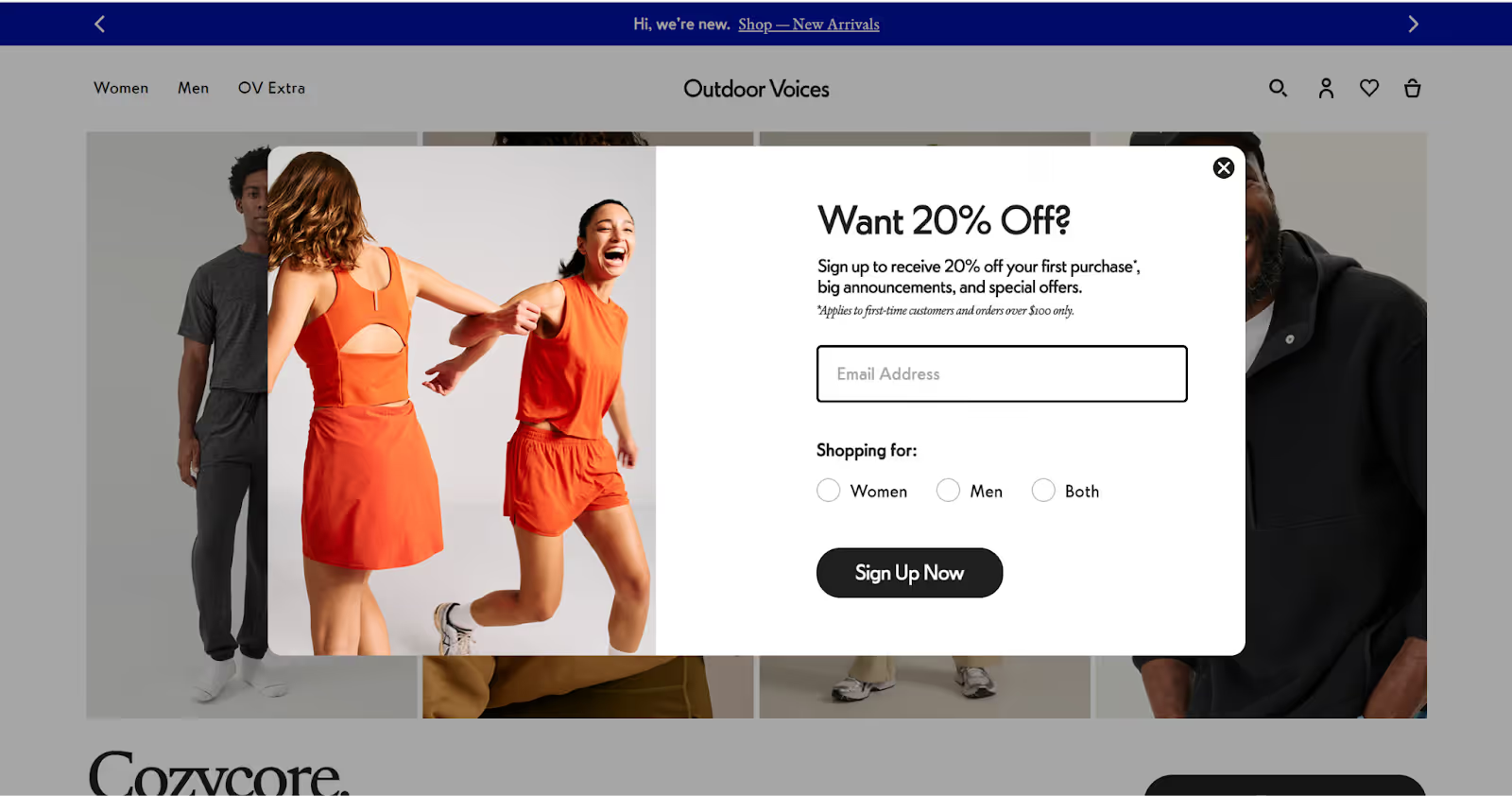
What we love about Outdoor Voices’ Shopify website
They use popups to promote membership throughout their Shopify website. It helps them build email lists to improve sales and provide better customer service post-purchase. They also promote their loyalty program on their product pages. They mention the OV reward points earned with each purchase.
Outdoor Voices outdoes its competitors with pre-purchase customer service. They collect reviews that include the reviewer's height and the size they ordered. This real-world fit feedback helps potential customers visualize how the garment will fit their body type and reduces the need for guesswork when choosing a size.
The product page offers a dedicated Q&A section. This allows customers to ask specific questions about the product and receive answers directly from the brand or other customers. This reduces the burden on customer service and fosters a sense of community around the product.
Best Selling products
Outdoor Voices promotes comfort and movement through its popular activewear. Their best-selling items include:
- Exercise Dress: A versatile piece that seamlessly transitions from activewear to casual wear, perfect for women who want both style and function.
- Long-Sleeve Tops: These tops are a favourite for layering, offering warmth and style for cooler workouts.
- Sweatpants: Known for their softness and comfort, these sweatpants are popular for both lounging and exercising.
8. Mavi
TL;DR: Turkish denim leader balancing sustainability, cutting-edge design, and Shopify-powered resale to stay relevant in a crowded denim market.
Mavi Jeans is a denim brand founded in Turkey. They carved a unique path to success by leveraging a strategic combination of product quality and a focus on brand identity. Initially, they focused on the Turkish market, establishing a reputation for high-quality, well-fitting jeans at a competitive price point.
Growth story
Mavi positioned itself as a modern, stylish brand that catered to a confident and fashion-forward audience.
They also recognized the importance of building a distinct brand identity beyond just the product. Mavi didn't simply churn out generic denim styles. They focused on cutting-edge design and innovation, offering a variety of fits, washes, and trends to cater to diverse customer preferences.

Mavi is committed to creating sustainable denim fabric, targeting a market that increasingly values brands with a social cause. This commitment to design and sustainability kept them relevant in the competitive denim market.
What we love about Mavi’s Shopify website
Mavi Rewards: The website highlights its points-based rewards program, encouraging repeat purchases with "Mavi Rewards Dollars" redeemable on future purchases. This incentivizes customers to engage with the brand and fosters loyalty.
They’ve also used their website to extend their commitment to sustainability, Mavi offers a resale platform (Mavi Market) where customers can sell pre-loved Mavi clothing. This allows customers to refresh their wardrobes and reduce their environmental footprint, aligning perfectly with Mavi's focus on eco-conscious practices.
Best Selling products
Mavi Jeans stands out with its stylish yet sustainable denim. The following items are customer favorites:
- Bootcut Jeans: These jeans offer a flattering fit and a timeless style, making them a staple in many wardrobes.
- Cargo Pants: Fashion-forward and functional, Mavi’s cargo pants appeal to customers looking for both utility and style.
- Straight-Leg Jeans: This classic fit remains a top seller, offering a versatile and comfortable option for any occasion.
9. Sir the Label
TL;DR: Minimalist Aussie brand scaling globally through clean designs, omnichannel expansion, and Shopify rewards-driven retention.
Sir is a minimalist fashion brand that creates elevated everyday essentials, becoming a favorite among minimalists worldwide.
Growth story
Emphasis on clean lines, high-quality materials, and timeless designs likely contributes to their brand identity, making them stand out amongst other minimalist labels. Their designs are rooted in the relaxed Aussie aesthetic but have a clean, contemporary feel that resonates with minimalists worldwide.
Sir's success isn't confined to the digital realm. They've transitioned from a purely online brand to a more robust business model. This includes wholesale partnerships, international pop-up stores, and a flagship store in Sydney's Bondi Beach.
This omnichannel approach allows them to reach a wider customer base and cater to different shopping preferences.
What we love about Sir’s Shopify website
Much like Mavi, Sir has relied on a point-based rewards program on Shopify to drive retention and improve customer experience. Their rewards system allows shoppers to move through tiers and access special offers during birthdays, seasonal gifts, and early access to product releases.

Best Selling products
Sir the Label’s minimalist and high-quality designs resonate with their audience, and these products top the list:
- Mini Dresses: Known for their clean lines and effortless elegance, these dresses are a favorite for women seeking simple yet stylish outfits.
- Bikini Tops: Perfect for beachgoers, Sir’s bikini tops combine functionality with minimalist design, making them a hit during the summer months.
10. Triangl Bikini
TL;DR: Swimwear sensation achieving explosive growth via influencer gifting and Shopify’s visual storytelling — turning bikinis into a lifestyle.
Triangl is a swimwear brand that makes patterned, dreamy swimsuits for women of all shapes and sizes.
Growth story
They achieved explosive growth by pioneering a unique influencer marketing strategy. They opted against traditional paid endorsements and instead gifted their products to a targeted pool of influencers. This strategy allowed them to tap into the reach and credibility of influencers without incurring significant upfront costs.
Their approach to influencer marketing was about building long-term relationships with influencers. This fostered genuine brand advocacy, as influencers organically showcased Triangl's products to their engaged audiences.
The key to this strategy was to target micro-influencers. These influencers, with smaller but highly engaged followings, offered a more cost-effective approach.

Triangl generated a wave of positive social proof- seeing celebrities, fashion bloggers, and everyday individuals sporting their bikinis fueled consumer desire, driving brand awareness and ultimately, sales.
What we love about Triangl’s Shopify website
Triangl's product pages prioritize visually engaging storytelling. High-quality photos showcase the bikinis in vibrant locations, often featuring diverse models with a focus on movement and lifestyle. This approach goes beyond simply presenting the product; it helps customers envision themselves wearing the bikinis and experiencing the confidence and fun that Triangl embodies.
Triangl's website also offers a user-friendly navigation system with clear filtering options. This allows users to quickly find the types of bikinis they're interested in based on cut, color, or pattern. And while the focus leans towards visuals, Triangl's product descriptions provide essential information in a concise and easy-to-read format. This includes details like fabric composition, care instructions, and size guides.
Bonus: Check out TrueProfit’s margin benchmarks for apparel stores to see if your profitability is on track.
Best Selling products
Triangl’s vibrant and stylish swimwear has a loyal following, and their best-sellers include:
- Patterned Bikinis: Known for their unique and eye-catching patterns, these bikinis are a must-have for beach lovers.
- Crochet Bikinis: These bikinis add a textured and bohemian touch to swimwear, setting them apart in the market.
- Coverups: Perfect for completing a beach look, Triangl’s coverups are both functional and fashionable.
Bonus: We have also covered the list of best themes for fashion stores on Shopify
Here’s How Prediko Ensures The Success of Your Shopify Fashion Store
As your apparel store grows, managing product variants and keeping up with inventory demands can become overwhelming. That’s where Prediko steps in.
Designed specifically for Shopify stores, Prediko simplifies inventory management with AI-powered tools that help you forecast demand, track stock in real time, and make data-driven decisions.
Fashion is a fast-moving industry and Prediko automates processes so you can focus on scaling your business without worrying about stock outs or overstock.
- Real-time Inventory Tracking: You’re invariably dealing with product variants in different colors and sizes.
It’s easy to lose track of product variants when you have a large number of SKUs. Prediko provides up-to-the-minute inventory updates so you can stay ahead of customer demand and prevent stockouts. - AI-Powered Demand Forecasting: Take the guesswork out of inventory management.
Prediko’s AI analyzes past sales data and seasonal trends in fashion to recommend optimal stock levels, ensuring you’re always on top of current trends and ready to meet customer needs. - Automated Insights & Reports: Make smarter decisions with Prediko’s detailed reports.
Gain insights into stock performance, inventory value, and upcoming purchasing needs—all designed to help you grow efficiently.
Ready to scale your Shopify store with ease? Book a demo with Prediko today and take your inventory management to the next level.
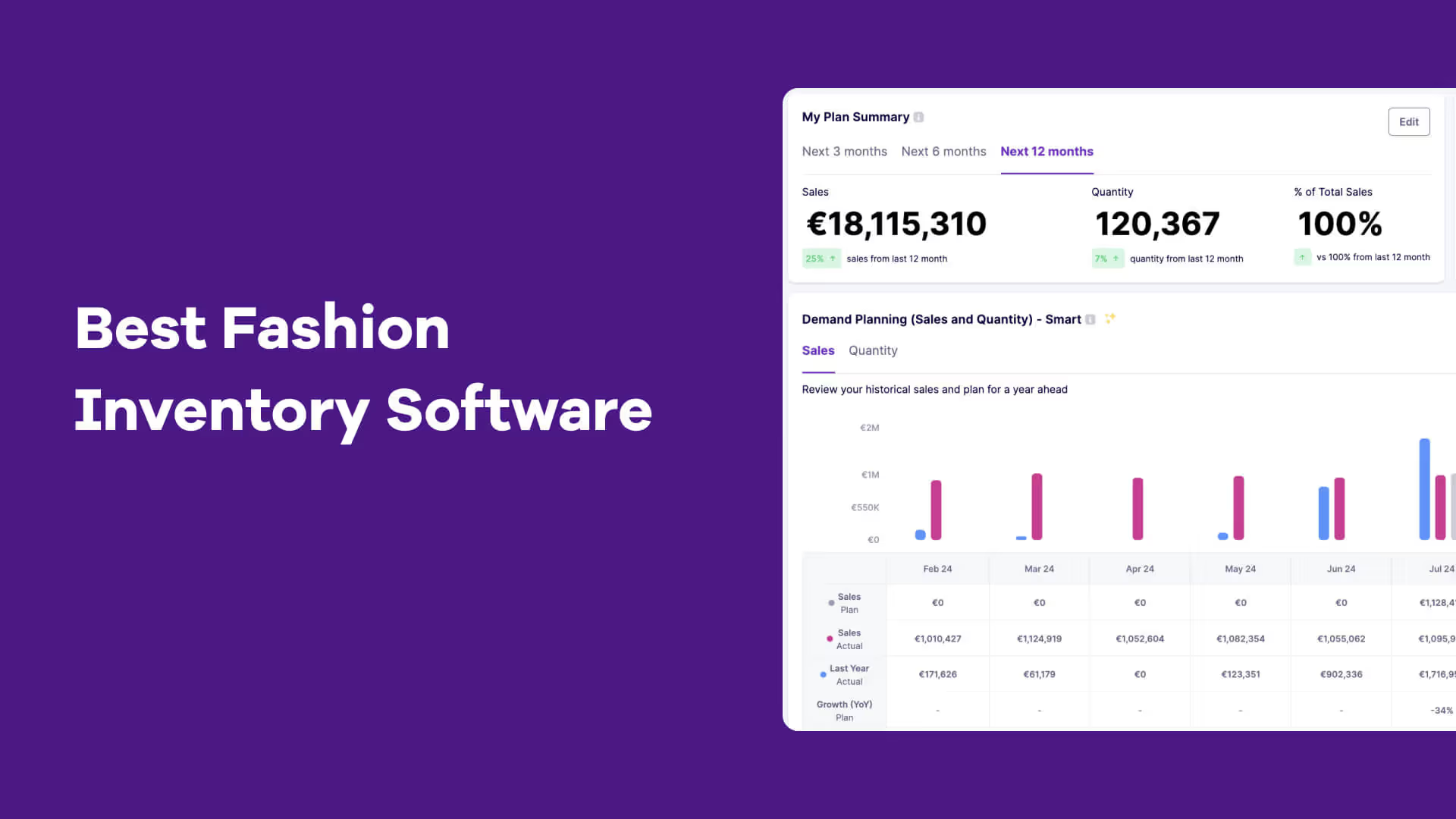
10 Best Fashion Inventory Management Software for 2026
The best fashion inventory software helps apparel brands manage size, colour and seasonal stock with real‑time tracking, AI‑driven forecasting, automated purchase orders and multi‑channel sync, with tools like Prediko, Shopify POS, Lightspeed, FishBowl and Zoho boosting accuracy and efficiency.
Managing inventory for fashion brands is a complex process that requires precision, efficiency, and real-time data. Enter fashion inventory management software.
The right fashion inventory software offers features tailored to the unique needs of fashion retailers. From tracking size and colour variations to managing seasonal trends, these tools are important for apparel inventory management on Shopify and other eCommerce platforms.
With a lot of software options available, how do you choose the right one? What features should you look for? How can it impact your bottom line?
Quick Comparison of the Top Fashion Inventory Software
List of Top 10 Fashion Inventory Management Software
- Prediko's AI Inventory Management Software
- Shopify POS
- Lightspeed Retail
- FishBowl
- Oracle NetSuite ERP
- Zoho Inventory
- TallyPrime
- NetStock
- Intuit QuickBooks
- Orion ERP
No.1 👉 Prediko's AI Inventory Management Software for Fashion Brands
TL;DR: AI-powered fashion inventory software with advanced demand forecasting, raw material tracking, and real-time PO automation for Shopify brands.
4.9 ⭐ (250+ Reviews on Shopify Store)
Features that set apart Prediko from other fashion inventory management software
- AI-driven sales forecasting for precise demand planning at SKU and category levels for your fashion brand.
- Smart fashion inventory planning with automated out-of-stock alerts and buying recommendations
- Streamlined purchase order management for easy creation, tracking, and bulk editing of POs for your fashion brand.
- Detailed fashion inventory reports with over 100+ customizable filters (CSV or PDF)
- Track and manage your raw materials required to make your apparel products.
- Assign more than one supplier to the same SKU (handy for fashion brands juggling multiple factories), each with its own lead time and pricing
Prediko also has a big advantage over other fashion inventory software: Brands can easily forecast the required raw materials quantity for their products and SKUs.
Pricing
New: Starter Plans now just at $49/Month
Best For
- Shopify brands
- Apparel brands
- Beauty brands
- DTC brands
- Wholesale + DTC brands
How We are Jolies uses Prediko's fashion inventory software
We are Jolies, a sustainable fashion brand, utilized Prediko to transform their fashion inventory. Prior to Prediko, We are Jolies struggled with inaccurate inventory data, leading to inefficient ordering and frequent stockouts.
By implementing Prediko's integrated fashion inventory system, they achieved a 25% reduction in stockouts and a 15% increase in inventory turnover. Additionally, Prediko's forecasting tools helped We are Jolies align their inventory with market demand, resulting in a 10% increase in sales.
How Cloudsharks uses Prediko's fashion inventory software?
Cloudsharks, a dynamic footwear brand, experienced substantial growth by leveraging Prediko.
Before implementing Prediko, Cloudsharks faced frequent stockouts and overstock issues, leading to lost sales and high carrying costs.
With Prediko's real-time inventory tracking and advanced fashion analytics, Cloudsharks optimized their stock levels, reduced excess inventory by 30%, and increased their sales by 20% in the first year of implementation.
G2 User Ratings : 4.9/5
A quick demo of Prediko 👇
2. Shopify POS
TL;DR: Streamlines in-store and online inventory with barcode scanning, low-stock alerts, and centralized product transfers.
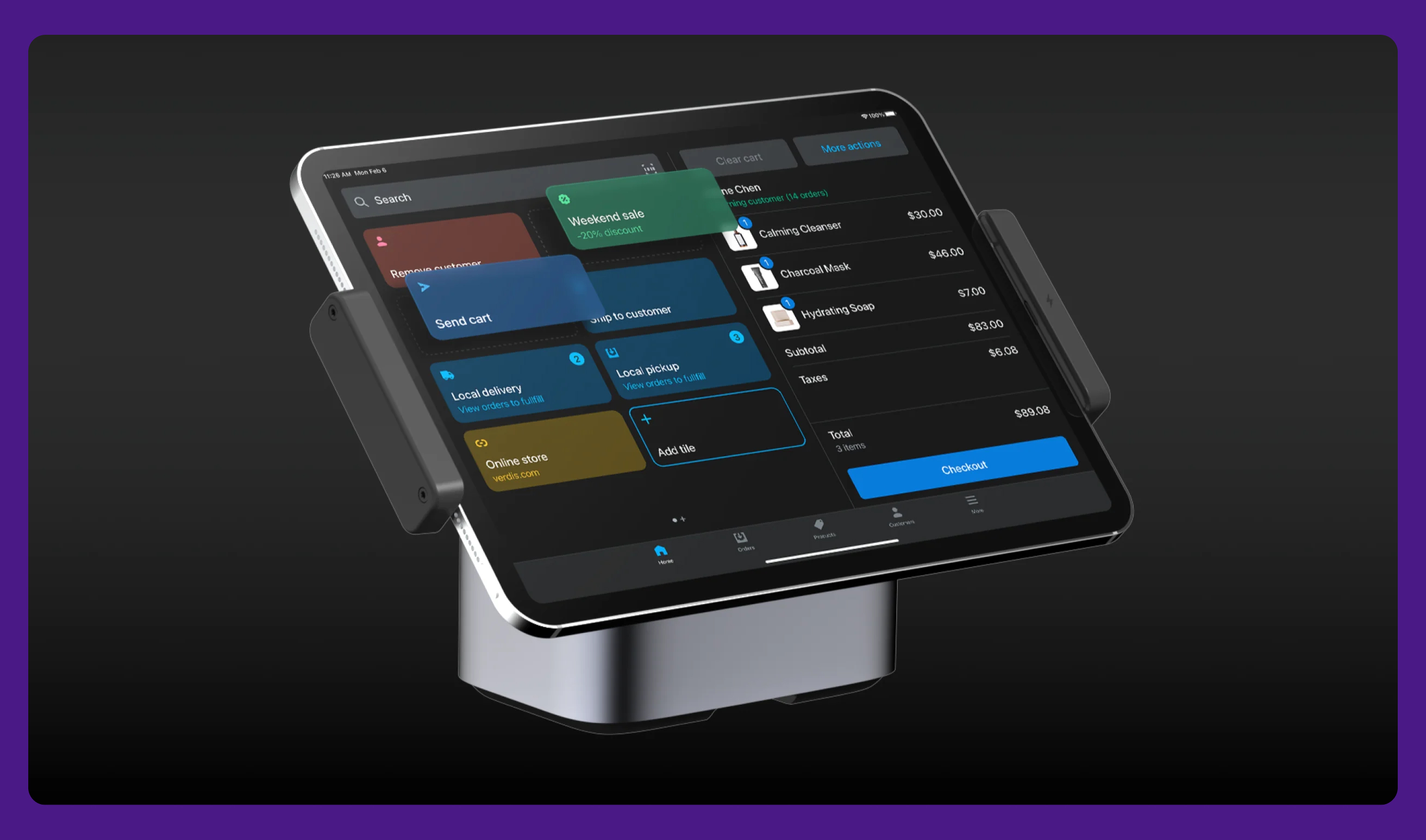
Shopify POS is a fashion inventory management software preferred by merchants for its ability to unify customer experiences seamlessly across both online and physical sales channels.
Main Features
- Conduct precise inventory counts for incoming shipments using a barcode scanner.
- Identify underperforming products to free up capital and stock.
- Receive low-stock alerts tailored to each vendor's sales velocity and lead time.
- Monitor minor adjustments to stock levels.
- Analyze trends and plan ahead with comprehensive location and inventory reports.
- Transfer products between various sales channels and locations.
- Process exchanges for purchases made online or at other locations, with real-time inventory updates.
- Manage and fulfill in-store pickup orders directly within the Shopify POS system.
Pricing
Basic plans start at $39/month.
3. Lightspeed Retail
TL;DR: Cloud-based POS with built-in supplier catalogs and multi-location tracking tailored for apparel retailers.
Lightspeed Retail is cloud-based POS and inventory management platform packed with powerful features tailored for apparel retailers. One standout feature allows retailers to explore and purchase from integrated supplier catalogs. With built-in purchase order functionality, ordering inventory becomes a quick and seamless process.
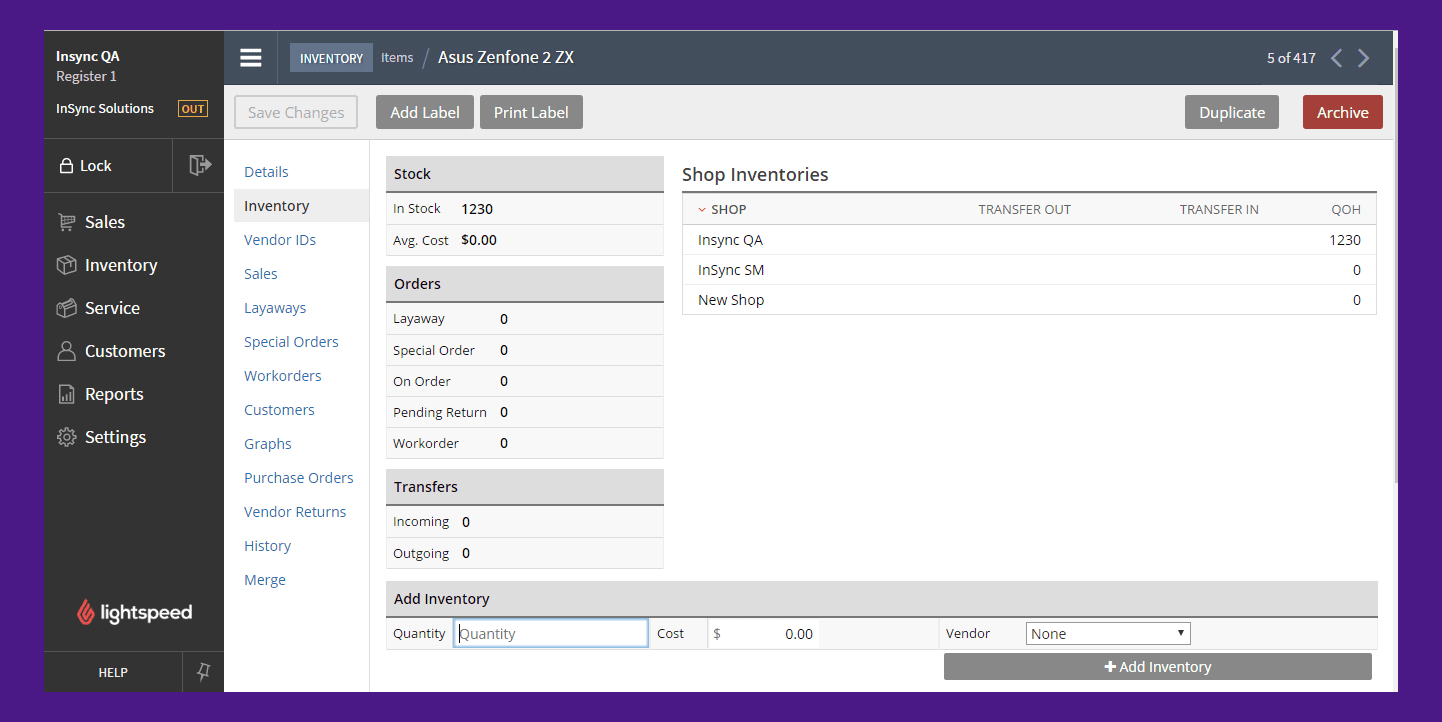
Main Features
- Track products across multiple locations, with detailed attributes like size, color, and style.
- Sync your in-store and online inventory to minimize the risk of stockouts.
- Access comprehensive reports on product performance, slow movers, and customer preferences to optimize inventory planning.
- Centralize management of multiple stores with tools for inventory, reporting, and more.
Pricing
Basic plans start at $89/month.
4. FishBowl
TL;DR: Ideal for fashion businesses with complex SKUs, offering barcode automation and end-to-end inventory control.
Fishbowl is good for businesses needing tracking and manufacturing solutions, making it a choice for apparel retailers with complex inventory demands, such as managing various product sizes and styles. It integrates with other tools to build a unified inventory management system.
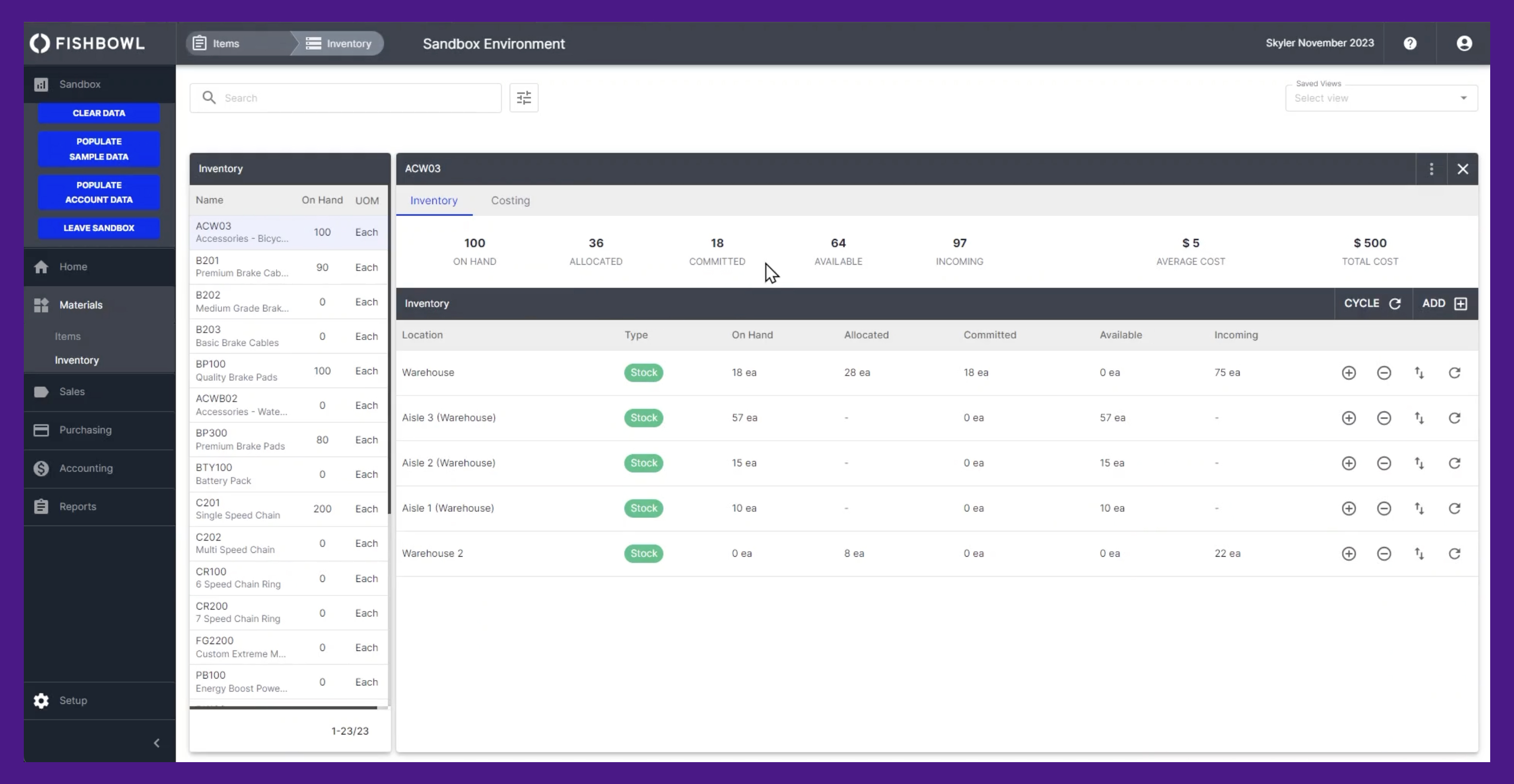
Main Features
- Handle inventories by tracking multiple attributes, including size, color, and style, across various locations.
- Automate entire order process from inventory to shipping, minimizing errors and saving time.
- Simplify receiving, picking, and stocking with barcode scanning capabilities.
- Access in-depth reports on inventory patterns, sales, and more.
Pricing
Fishbowl offers customized pricing based on business size and needs––contact them for a quote.
5. Oracle NetSuite ERP
TL;DR: Enterprise-grade ERP for fashion brands with demand-based planning, real-time visibility, and cost-optimized stock control.
NetSuite Inventory Management provides a single view of inventory across all locations and sales channels, allowing businesses to reduce inventory on hand to free up cash while avoiding stockouts.
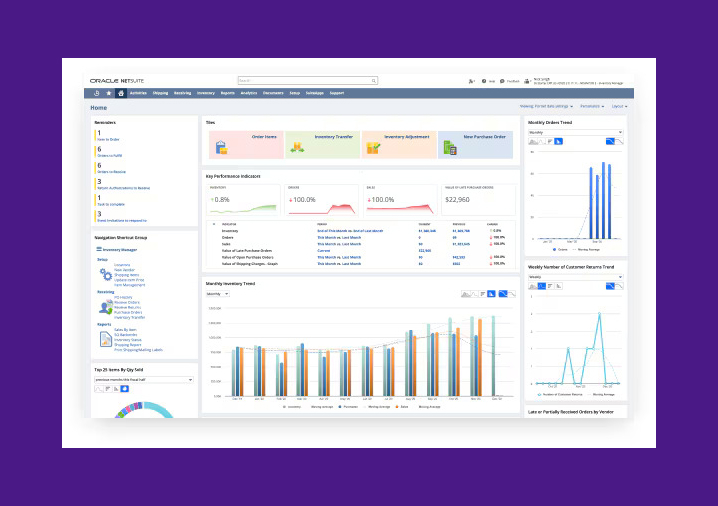
Main Features
- Optimize Stock Levels: Demand-based planning leverages historical data, sales projections, and seasonality to maintain stock quantities.
- Increase Profit Margins: Company-wide visibility into inventory makes management more efficient and cost-effective.
- Reduce Cost of Goods Sold: Fulfillment practices help lower handling costs and shipping expenses.
- Manual Reporting: Outdated, error-prone inventory reports will no longer be an issue.
- Inefficient Stock Allocation: Avoid surplus inventory in one location while another runs out.
- Poor Planning: Reduce issues caused by inadequate planning, such as stock shortages, overstock, increased markdowns, and write-offs.
- Unnecessary Handling: Cut down on extra handling processes that raise the cost of goods sold (COGS).
- Limited Visibility: Tracking and tracing products from suppliers to customer orders will no longer be a challenge.
Pricing
Contact Orcale Netsuite for a quote.
6. Zoho Inventory
TL;DR: Affordable inventory solution for small to mid-sized fashion brands with built-in automation, analytics, and Zoho integrations.
Zoho Inventory simplifies retail operations, offering one of the most intuitive apparel inventory solutions for small to mid-sized fashion brands, covering everything from tracking to fulfillment. Zoho Inventory’s built-in integrations with other Zoho applications make it an excellent option for retailers already using Zoho CRM or related tools.
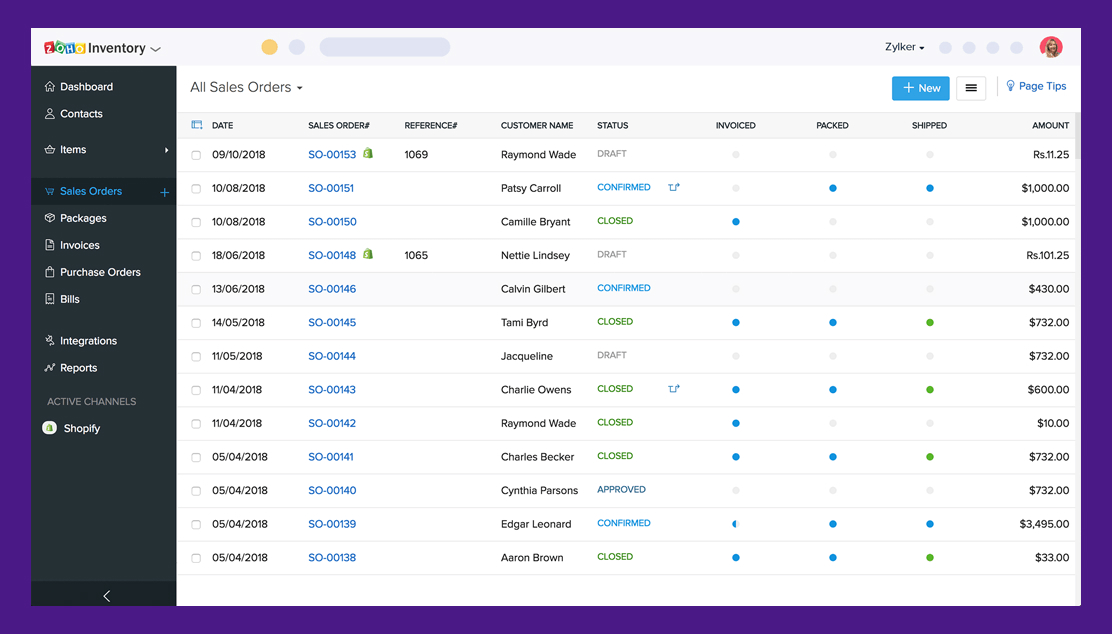
Main Features
Pricing
Standard plans begin at $29/month.
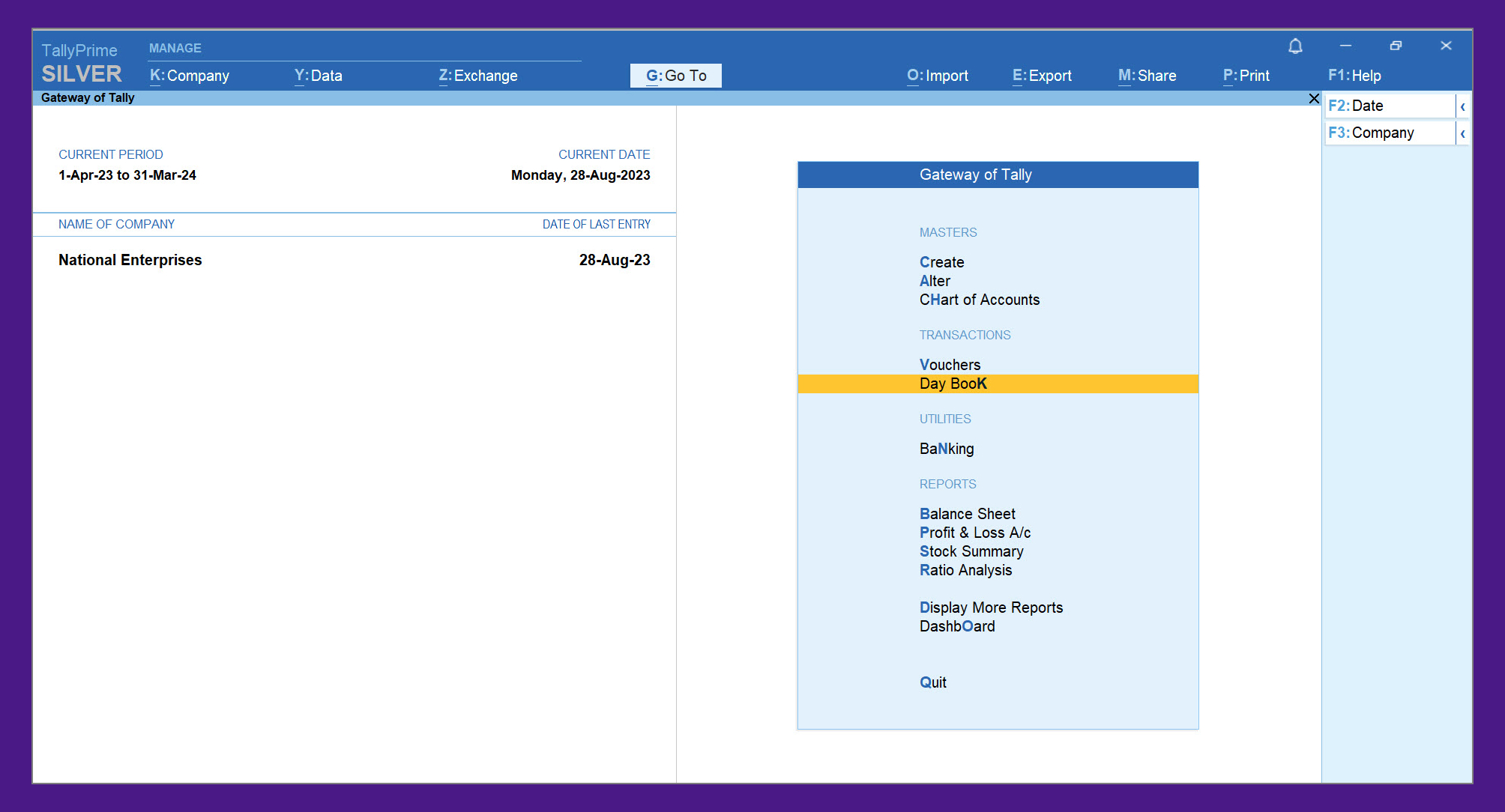
7. TallyPrime
TL;DR: Simplifies apparel inventory tracking by managing variants, categories, and supplier records with granular control.
TallyPrime is a tool that simplifies fashion and apparel inventory management, making it easier for businesses to stay on top of their stock and meet customer expectations.
Main Features
- Comprehensive Inventory Tracking: Manage inventory specifically by tracking different apparel categories like shirts, pants, dresses, and accessories, ensuring each type is adequately stocked.
- Variant Management: Categorize inventory by individual sizes (S, M, L, XL), colors (red, blue, black), and styles (casual, formal, seasonal collections) to maintain precise stock information.
- Reorder Alerts: Set reorder levels for specific items, such as popular t-shirt sizes or seasonal best-sellers, to ensure they are always available during peak demand.
- Sales and Purchase Management: Streamline sales and purchase processes by easily managing bulk orders for new seasonal collections and tracking individual supplier details for each product line.
- Reports and Insights: Access specific business reports like stock movement by apparel type, aging analysis for slow-moving clothing, and profitability by product variant for informed decision-making.
Pricing
Starts from $10/month.
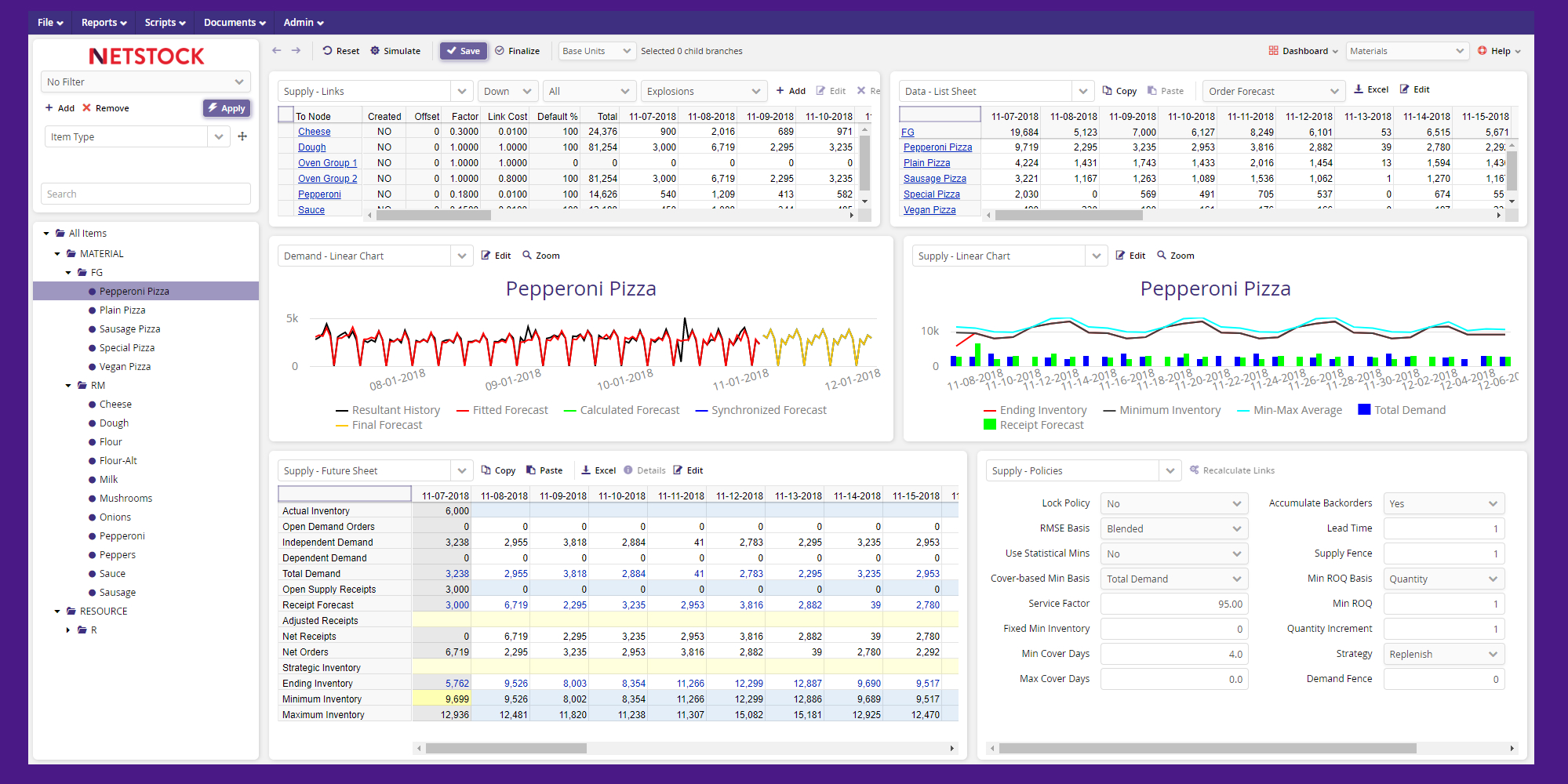
8. NetStock
TL;DR: Demand planning software that helps fashion brands reduce excess inventory and improve forecasting accuracy.
Supply and demand planning software designed to unlock working capital through smart planning. Accurately predict demand, prevent stock shortages, and lower inventory levels.
Main Features
- Faster Order Placement: Streamline planning, forecasting, and ordering to save time.
- Prevent Stock-Outs: Reduce stock shortages to retain customers and drive sales.
- Reduce Excess Inventory: Free up cash by minimizing surplus stock.
- Accurate Demand Forecasting: Utilize flexible, customized demand planning.
Pricing
Contact Netstock to get a quote for their pricing.
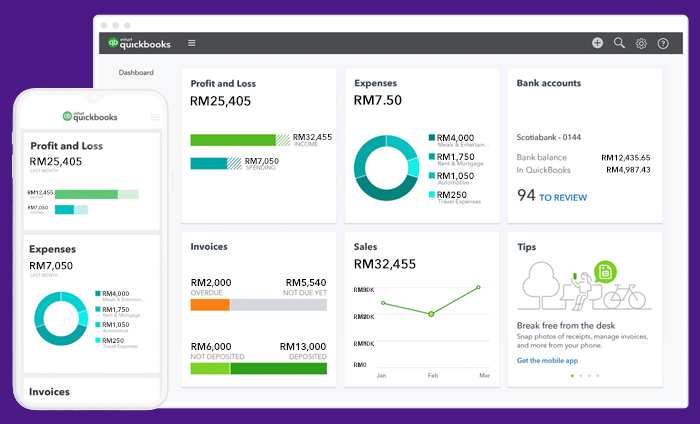
9. Intuit QuickBooks
TL;DR: Combines financial tools and inventory tracking to help apparel businesses manage stock, orders, and finances in one place.
With its easy-to-use interface and features, QuickBooks helps apparel businesses efficiently manage their inventory, alongside everyday financial tasks such as invoicing, expense tracking, payroll, and financial reporting. The software offers cloud-based accessibility, allowing business owners to manage their accounts and inventory from anywhere.
Main Features
- Invoicing: Create & send professional invoices to clients, and track payments.
- Expense tracking: Automatically track expenses and categorize them for accurate bookkeeping.
- Payroll management: Manage employee payroll, including taxes, deductions, and direct deposits.
- Inventory Tracking: Manage apparel inventory, including tracking stock levels, product variants (sizes, colors, styles), and receiving low-stock alerts.
- Financial Reporting: Generate essential reports like profit and loss, balance sheets, and inventory valuation reports to get a clear picture of business health
Pricing
The basic plan starts at around $30 per month
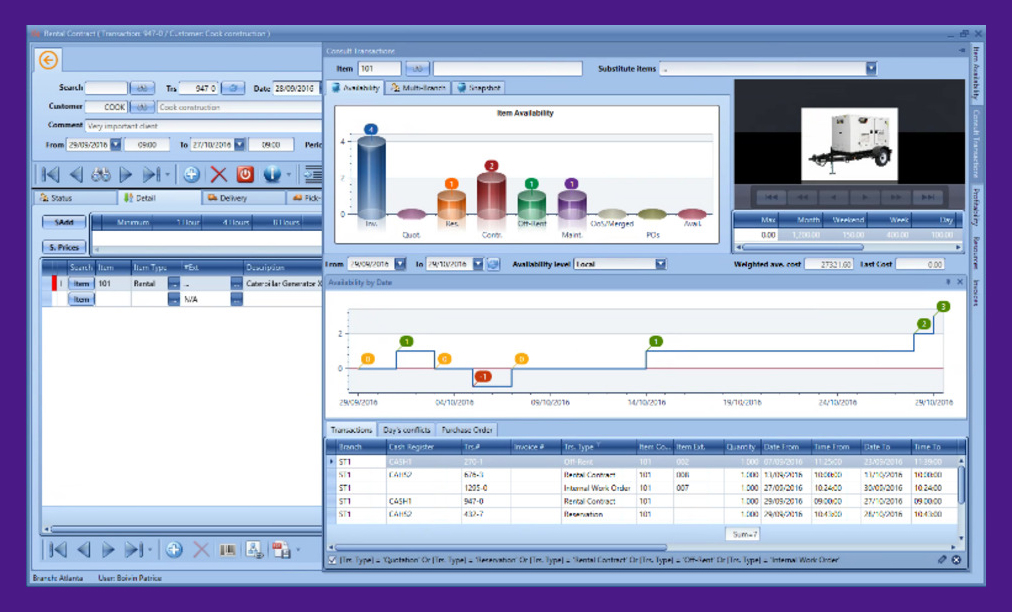
10. Orion ERP
TL;DR: Apparel-focused ERP that manages inventory, manufacturing, and supply chain across size, color, and style variants.
Orion ERP is a enterprise resource planning solution that can be effectively utilized as apparel inventory software to meet unique challenges of apparel industry. It offers extensive features to manage inventory across multiple product variants like sizes, colors, and styles, ensuring fashion businesses stay on top of their stock and meet customer demand without overstocking or understocking.
Main Features
- Supply Chain Management: Manages procurement, order processing, logistics, and supplier relationships.
- Manufacturing management: Supports production planning, scheduling, and monitoring for improved operational efficiency.
- Inventory management: Tracks inventory levels in real time, optimizing stock and minimizing costs.
Pricing
Orion ERP pricing is typically customized based on the size and requirements of the business.
Impact of the right fashion inventory management software on business outcomes
Implementation of fashion inventory software has a direct impact on your operations, key metrics, bottom-line and business functions
1. Cost reduction and profit maximization
One of the main benefits of a fashion inventory software is cost reduction. By automating and optimizing inventory management process, the right software can significantly reduce labour costs and manual errors.
The right fashion inventory management software helps in identifying slow-moving items and dead stock, enabling you to implement effective markdown strategies and free up valuable storage space. Ultimately, these cost savings can translate into profit maximisation.
2. Data-driven decision making and forecasting
Fashion inventory software can also facilitate data-driven decision making. A good fashion inventory management software provides real-time inventory data and reporting, offering valuable insights into your inventory performance.
These insights can guide your purchasing, pricing, and merchandising decisions, ensuring alignment with market demand and trends. It will also help you identify opportunities for improvement and growth.
Brands should use this list to help identify the best inventory software for clothing brands that aligns with their specific business needs.. A lot of these software offer free trial, so they can take their own time to reach a conclusion.
Frequently Asked Questions (FAQs) on Choosing the Right Fashion Inventory Software
1. How does fashion inventory software compare to using Excel for inventory tracking?
Excel works for basic inventory tracking, but it doesn't provide demand forecasting, automated replenishment, or real-time inventory visibility. Fashion inventory software helps apparel brands track stock, forecast demand, and optimize inventory across sales channels and warehouses.
2. How do clothing stores keep track of inventory?
Clothing stores use inventory management software, POS systems, and barcode or RFID technology to track inventory. These tools automatically update stock levels after each sale and help maintain accurate inventory across physical stores, warehouses, and ecommerce channels.
3. Which software would you recommend for small fashion businesses?
Recommended software for small fashion businesses includes:
- Prediko: AI-driven forecasting and automated replenishment for fashion brands.
- Shopify POS: Multi-channel selling, real-time inventory updates, and order tracking.
- Lightspeed Retail: Cloud-based POS with supplier catalog access and advanced reporting.
- FishBowl: Strong for tracking and manufacturing, handles complex product attributes.
- Oracle NetSuite ERP: Comprehensive stock visibility and demand-based planning.
- Zoho Inventory: Affordable, user-friendly, with strong integration options.
4. What inventory software integrates with Shopify?
Prediko, Cogsy, Inventory Planner, Katana, Cin7, and Brightpearl all offer Shopify integrations.
5. Can fashion inventory software forecast demand?
Yes. Modern platforms use historical sales data, seasonality, lead times, and growth trends to forecast future demand.
6. How much does fashion inventory software cost?
Pricing ranges from under $49 per month for small businesses to several thousand dollars monthly for enterprise ERP solutions.
7. What inventory KPIs should fashion brands track?
Key metrics include:
- Inventory turnover
- Sell-through rate
- Stockout rate
- DSI (Days Sales of Inventory)
- GMROI
- Forecast accuracy





.avif)