

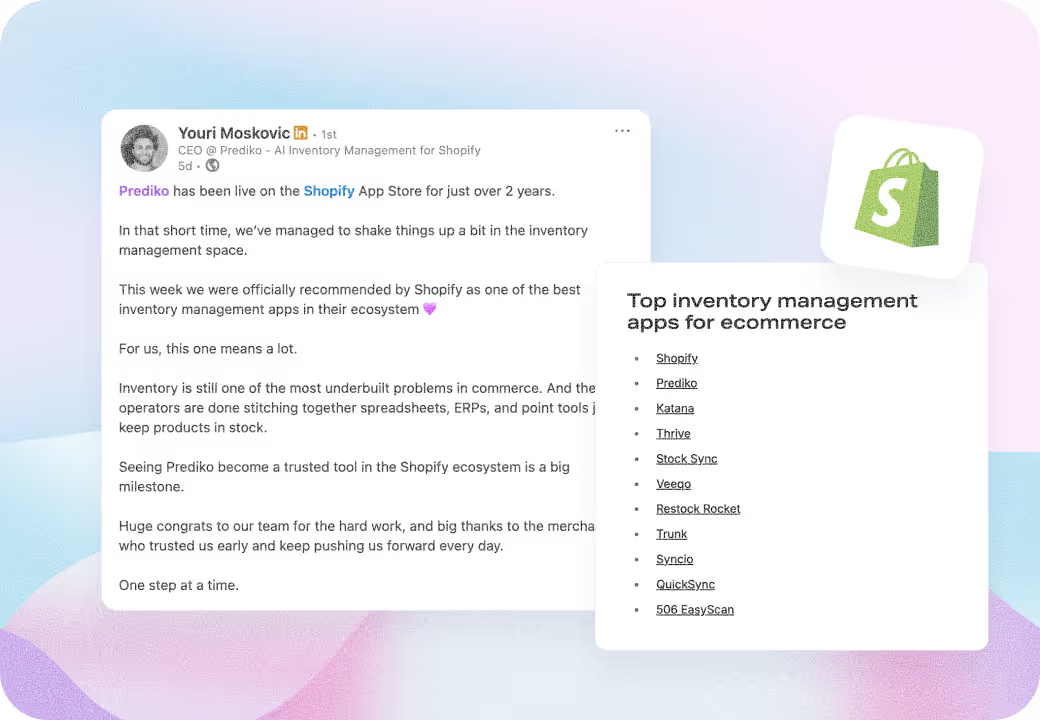
If you search "inventory" in the Shopify App Store, Shopify literally tells you to get ready for BFCM with apps that help you forecast inventory.
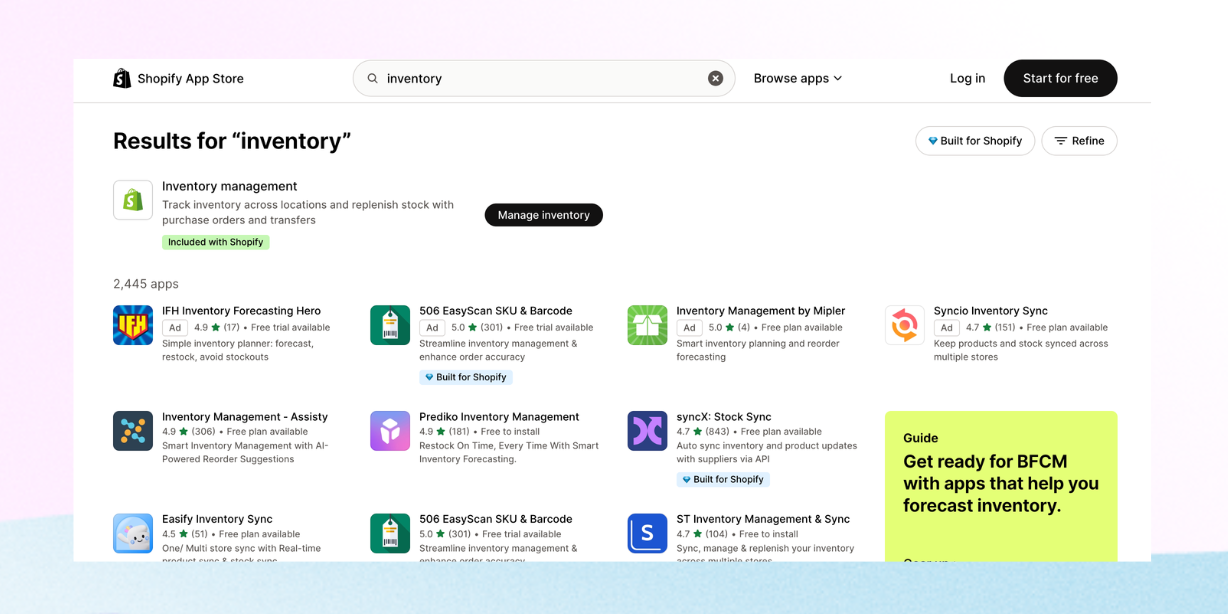
And that's exactly what Prediko does. Except forecasting isn't just a BFCM problem anymore. In 2026, demand will shift faster than ever, especially with the introduction of Shopify's agentic commerce; lead times will stay unpredictable, and one stockout would derail weeks of momentum.
After working with 2500+ brands, we share six practical tips to help everyone in the ecosystem forecast smarter and avoid stockouts year-round.
Why Brands Still Stock Out Even With Forecasting?
Even with forecasting in place, brands still stock out because a forecast is only a plan, not a guarantee of availability. Stockouts happen because
- Demand can change faster than forecast cycles due to promotions, viral spikes, competitor moves, or unexpected seasonality shifts.
- On top of that, forecasts depend heavily on clean inputs like accurate inventory counts, stable lead times, and consistent sales signals; when any of those are wrong or delayed, the right forecast still leads to the wrong replenishment decisions.
- When execution and supply realities don't match the forecast. Suppliers may have long production windows, capacity limits, or new MOQs that reduce flexibility, while brands often keep safety stock low to protect cash flow.
- In many cases, inventory exists but is in the wrong place, misallocation across warehouses, regions, or channels also creates out-of-stocks where customers are buying, even if total inventory looks healthy on paper.
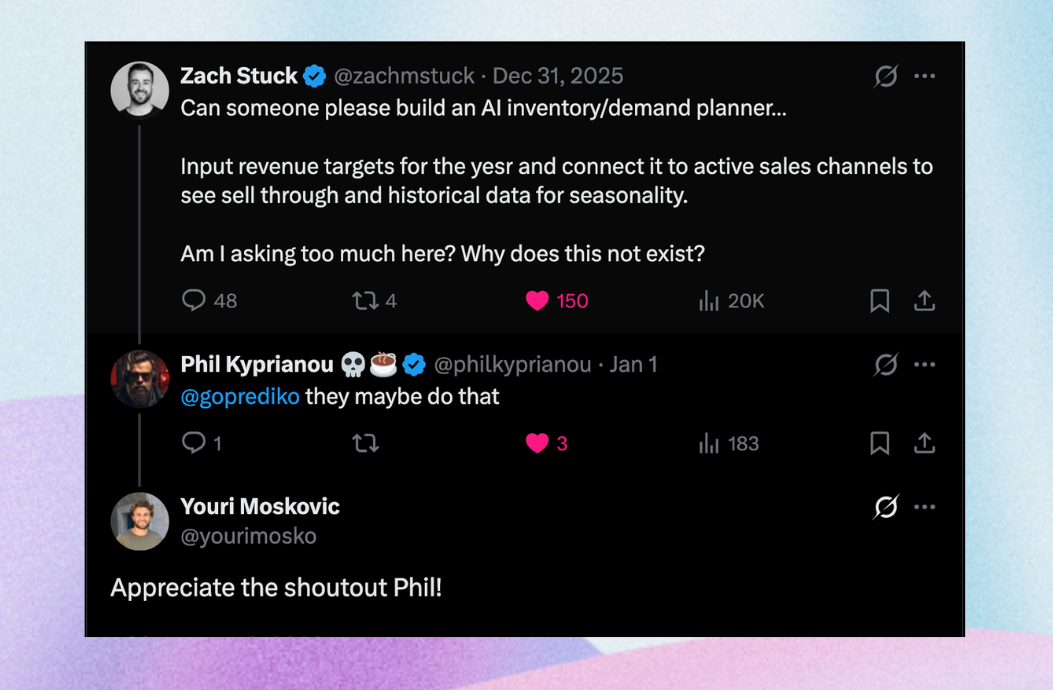
6 Tips for Shopify Brands to Forecast & Avoid Stockouts in 2026
With these challenges in mind, what brands need isn't just forecasting; they need a forecast that's built on the following tips and principles.
1. Layer variables on top of your baseline forecast
The biggest forecasting mistake brands make is trying to predict final demand in one shot.
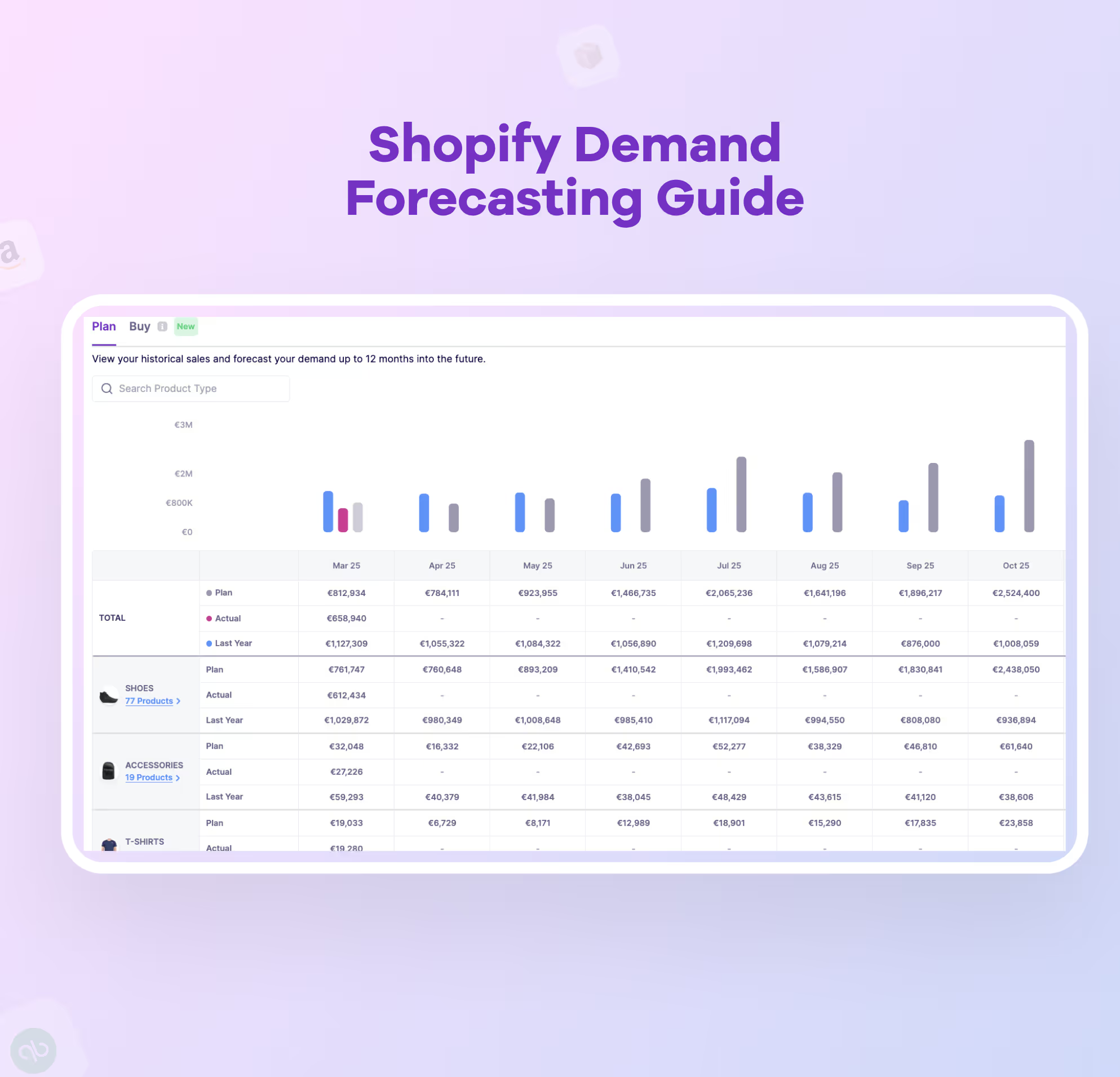
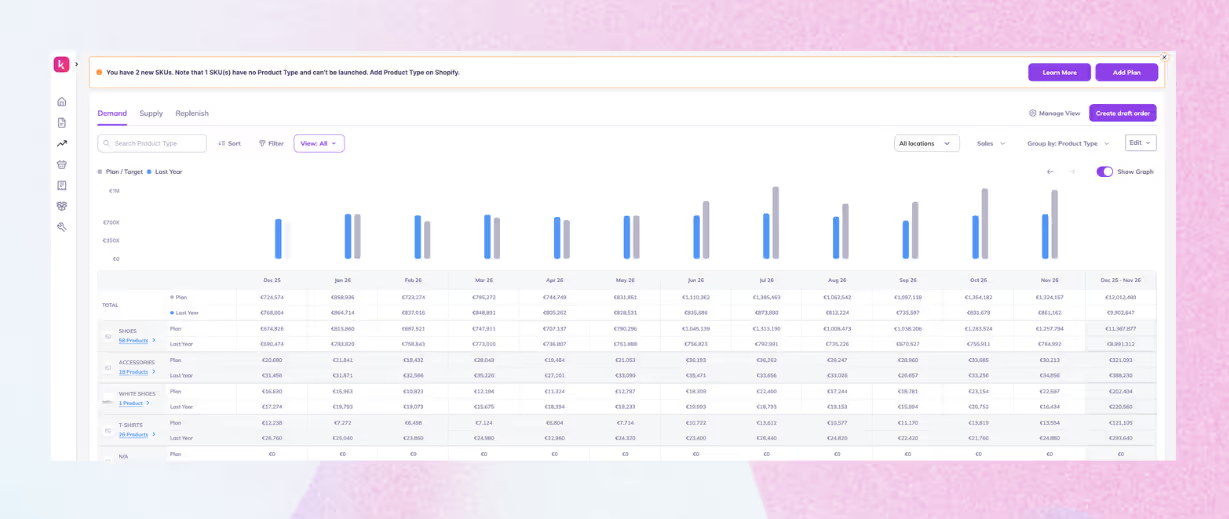
A more reliable approach is to start with a baseline forecast at the SKU x location level, since demand varies by region, warehouse, store, or fulfillment node. The baseline reflects normal sales patterns from historical data, and then you layer in variables like seasonality and growth.
Seasonality captures predictable shifts like BFCM and regional peaks, while growth keeps the forecast aligned with real business momentum. This approach makes the forecast more accurate, easier to explain, and far more actionable for restock decisions.
Prediko applies this approach automatically by capturing growth patterns, seasonality, and sudden demand spikes in its AI-generated demand plan, then recommending exactly what to buy and when based on current velocity, so you stay in stock without over-ordering.
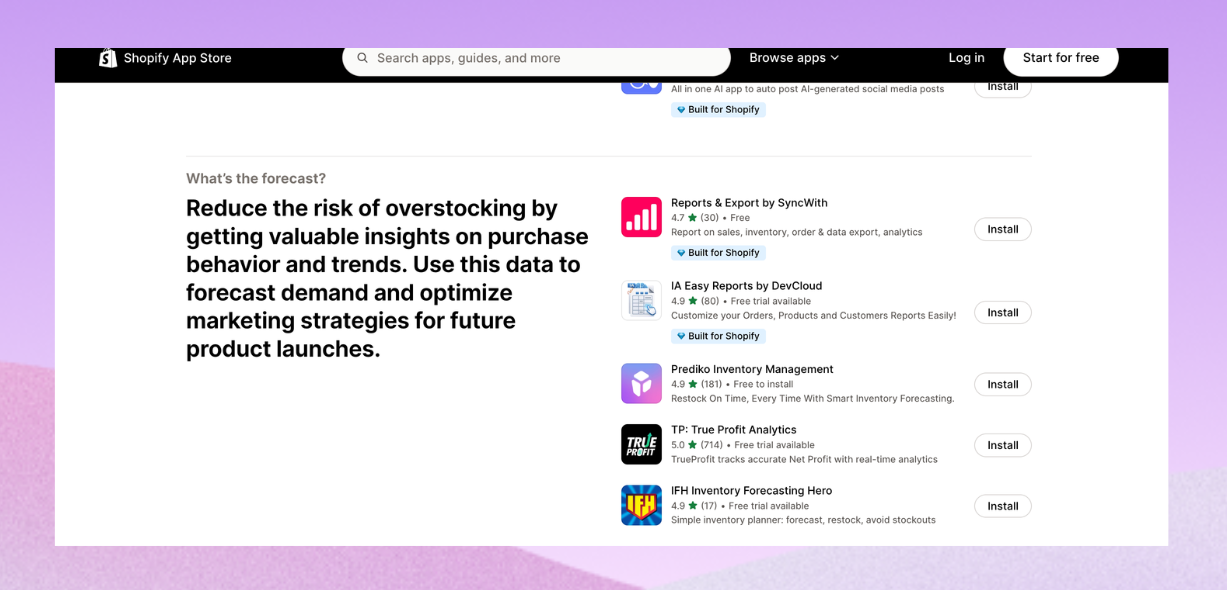
And forecasting doesn't stop with existing products. Even new launches need a demand plan and Prediko supports that as well. Shopify has echoed this by featuring Prediko's app in its "Drive Demand for New Products" guide.
2. Prioritize POs based on stockout costs
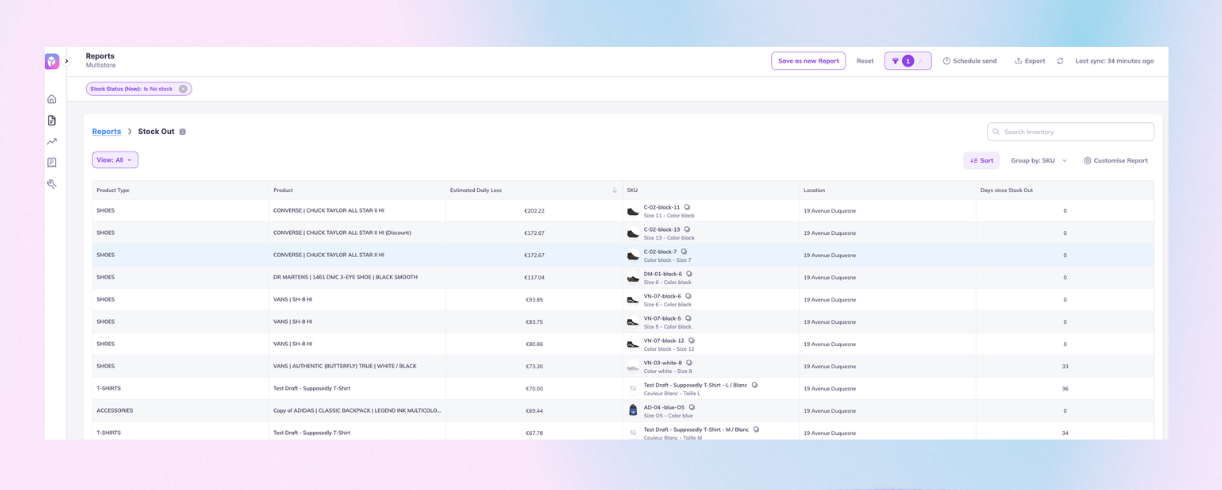
A lot of times, Shopify brands treat every stockout the same, but running out of one SKU can be far more expensive than another. Instead of placing POs based only on what's below the reorder point, prioritize purchases based on stockout cost: the real business impact of being at 0 quantity.
At a basic level, stockout cost is the profit you lose when you can't fulfill demand, plus any downstream impact.
A practical formula is Stockout Cost (per day) = Lost Sales Units × Contribution Margin per Unit.
This means bestsellers, high-margin products, subscription components, and SKUs with low substitutability should be replenished first. Stocking out on these leads to delayed revenue, lost customers, poor conversion rates, wasted ad spend, and long-term loss as shoppers switch to competitors.
Prediko automatically calculates stockout cost for your at-risk and stocked-out SKUs, so you can prioritize the right POs and reorder with confidence.
3. Make forecasting budget-aware and connect it to purchasing
A forecast is only useful if you can actually act on it, so it has to be budget-aware. Alongside "what will we sell?", the forecast should also answer "what can we afford to buy, and what should we buy first?"
This means tying your demand plan to real purchasing constraints like available cash, payment terms, MOQs, lead times, and inventory already on order.
Once those constraints are built in, your plan becomes actionable: it tells you exactly which POs to place, when to place them, and how much to order, without blowing the budget or starving critical SKUs.
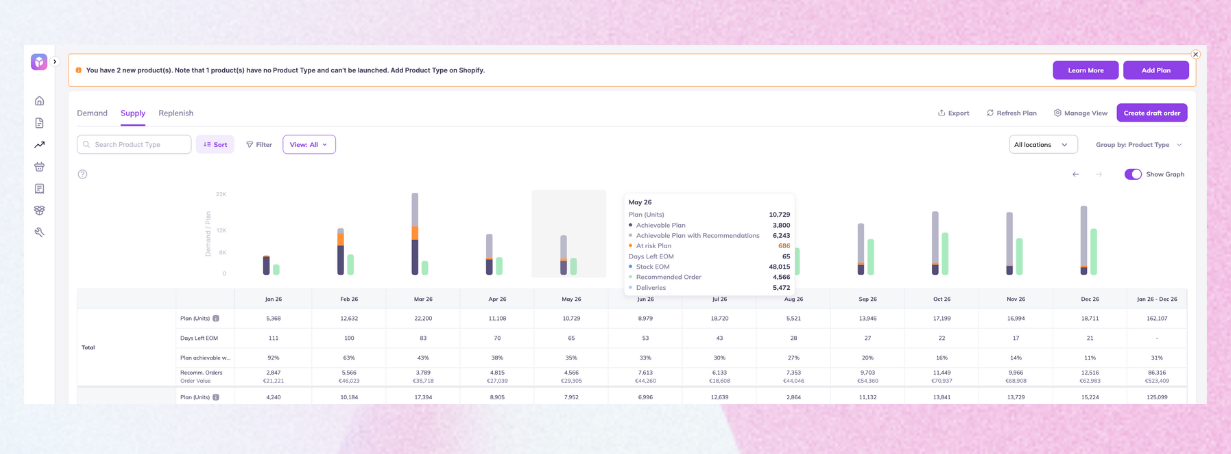
Prediko connects demand plans to supply planning for budget validation and then to purchasing with its buying recommendations, so you can place accurate POs and stay in stock and budget.
This sequence is formalized in Prediko’s three-tab inventory planning system, moving teams from Demand to Supply to Replenish.
Brand success story
Lori Beds saw this in action after switching to Prediko. By tying demand forecasts directly to budget-aware purchasing, they brought unexpected stockouts to zero and made supply planning 90% more reliable than before.
4. Forecast components & raw materials, along with finished goods
If you manufacture or assemble products in-house, forecasting finished goods is just half the picture. Stockouts also happen because a critical raw material runs out first. Even with clear demand visibility, you can't produce or replenish in time without upstream planning.
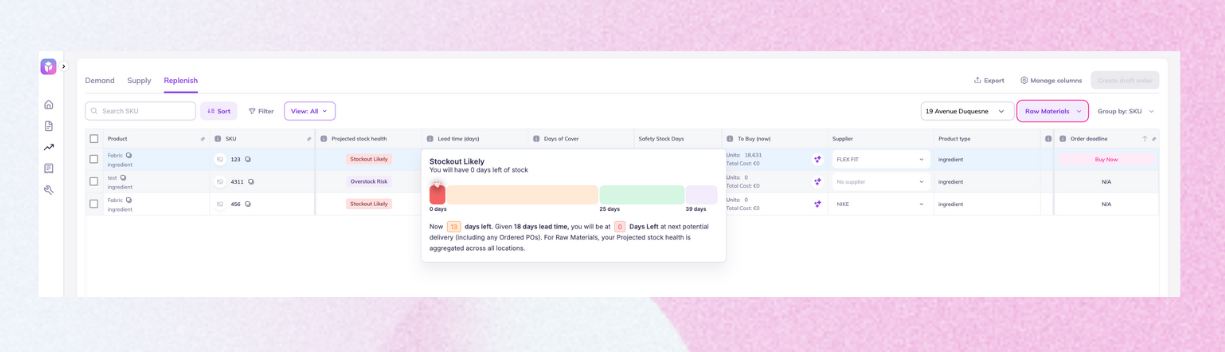
To prevent this, extend your forecasting beyond finished goods into the inputs that power them, like packaging, labels, or ingredients. Start by mapping each finished SKU to its bill of materials (BOM), then translate your finished-goods demand plan into component-level requirements.
This makes it easier to spot blockers early, place supplier orders on time, and avoid last-minute production delays.
Prediko helps you forecast both finished goods and their underlying components, and lets you build BOMs to map raw materials. This way, demand and supply plans stay aligned end-to-end, and production doesn't get blocked by missing inputs.
Brand success story
Bright Body, a clean skincare brand, used Prediko to forecast 170+ raw materials alongside finished goods, eliminating gut-based planning entirely. The result: 75% less time spent on forecasting and purchasing, tighter cash-flow control, and on-time production.
5. Set up real-time low-stock and stockout alerts
Forecasting sets the plan, but alerts protect execution. Even the most accurate forecast can't prevent unexpected demand spikes, delayed POs, or sudden changes in sell-through.
To catch such risks early before they impact your sales, you need real-time low-stock and stockout alerts.
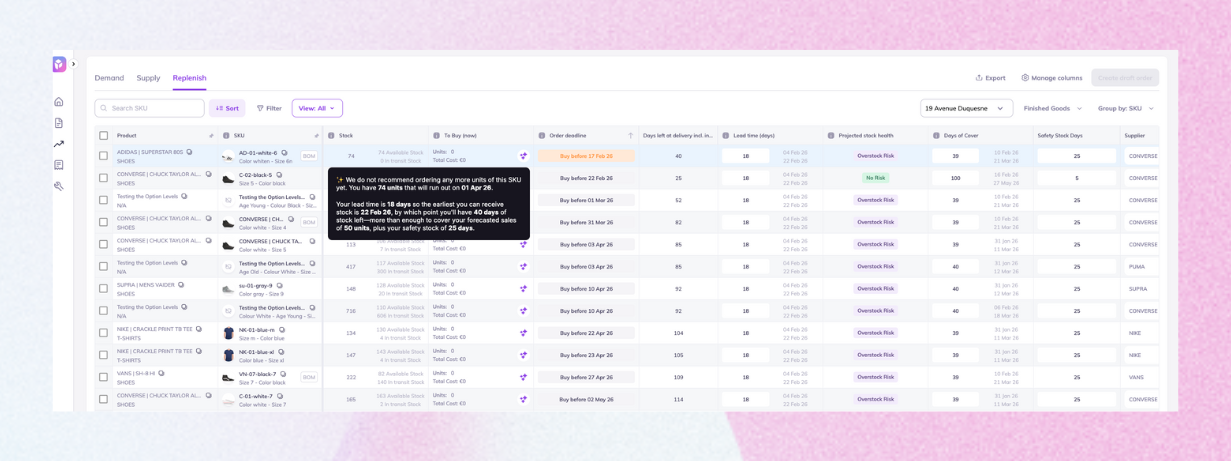
Set alerts based on days of cover and lead time, not just units on hand. For example, if a SKU has a 14-day lead time, getting notified when it drops below 14 days of cover (with some safety stock available) gives you enough time to respond by expediting a PO, reallocating inventory, or adjusting promotions.
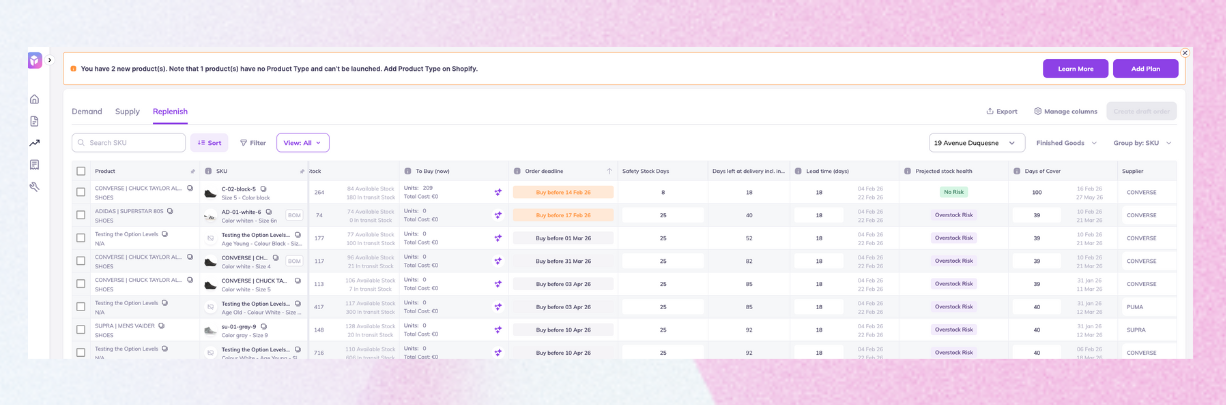
Prediko monitors inventory health and sales velocity in real time, alerts you when SKUs are at risk, and tells you how much and when to reorder, so you can act early and avoid stockouts.
Brand success story
Varusteleka, an outdoor gear brand, relies on Prediko's stock health views and real-time recommendations daily to stay ahead of risk across long lead times. This helped the team cut manual guesswork and planning time by 70%.
6. Maintain safety stock with current economic volatility and lead times
Safety stock shouldn't be static, especially in volatile economic conditions. Shifts in demand variability, supplier reliability, lead times, and cash availability directly change how much buffer you need. And relying on last year's settings can either cause stockouts or tie up excess cash.
Review safety stock at the SKU level, factoring in demand variability and lead times. SKUs with long or unstable lead times, high velocity, or limited substitutes should carry higher buffers, while slower-moving or easily replaceable items can run leaner.
Revisit these settings regularly as conditions change, and treat safety stock as a dynamic layer that protects availability without over-investing in inventory.
Prediko lets you set safety stock at the SKU level and factors it directly into purchase recommendations, so your buying decisions reflect the right buffer without over-ordering.
2000+ Brands Avoid Stockouts with Prediko
There you have it: the six principles every forecast needs to incorporate in today's environment. Miss even one, and forecasting quickly becomes reactive, inventory decisions fall apart, and stockouts (or excess) follow.
Prediko helps you check off all six items on the list by combining AI-driven demand planning with purchasing recommendations that you can execute with 100% confidence.
Shopify brands like Bright Body, Healf, Varusteleka, and Kuppa Joy have seen meaningful results: fewer stockouts, time saved, fewer errors, and smoother scaling.
The Kuppa Joy case study shows this in detail, including a 90% reduction in ordering errors and 10 hours saved per week on inventory tasks.
Prediko can be your partner in success, too. Forecast demand and supply for the entire year with a 14-day free trial.