


See our AI-powered demand planning software guide for AI-first, enterprise-grade software options.
Comparison of the Best Demand Planning Software & Tools (Overview)
Pricing and features verified based on the source websites & third party vendor listing sites such as G2 & Capterra
How We Evaluated This List
- Forecasting accuracy
- Depth of inventory and purchasing features
- Integration coverage - Shopify, Amazon, ERP, accounting, WMS, pricing transparency, and ease of setup.
The tools are grouped by business size and complexity. Although Prediko appears at the top of the list, however that doesn't mean it is ranked as first. We have suggested our software to be overall as a good option for most businesses.
Which Are the Best Demand Planning Software or Tools Available in 2026?
1. Demand planning software that fits well for most eCommerce brands: Prediko
Prediko is a demand planning software for modern D2C brands that allow you to plan demand for both finished goods and raw materials.
4.9 ⭐ (250+ Reviews)
We have kept ourselves at the top of this list because our software is trusted by 3000+ brands planning demand for 15 million+ SKUs across 25+ industries.
Key Features
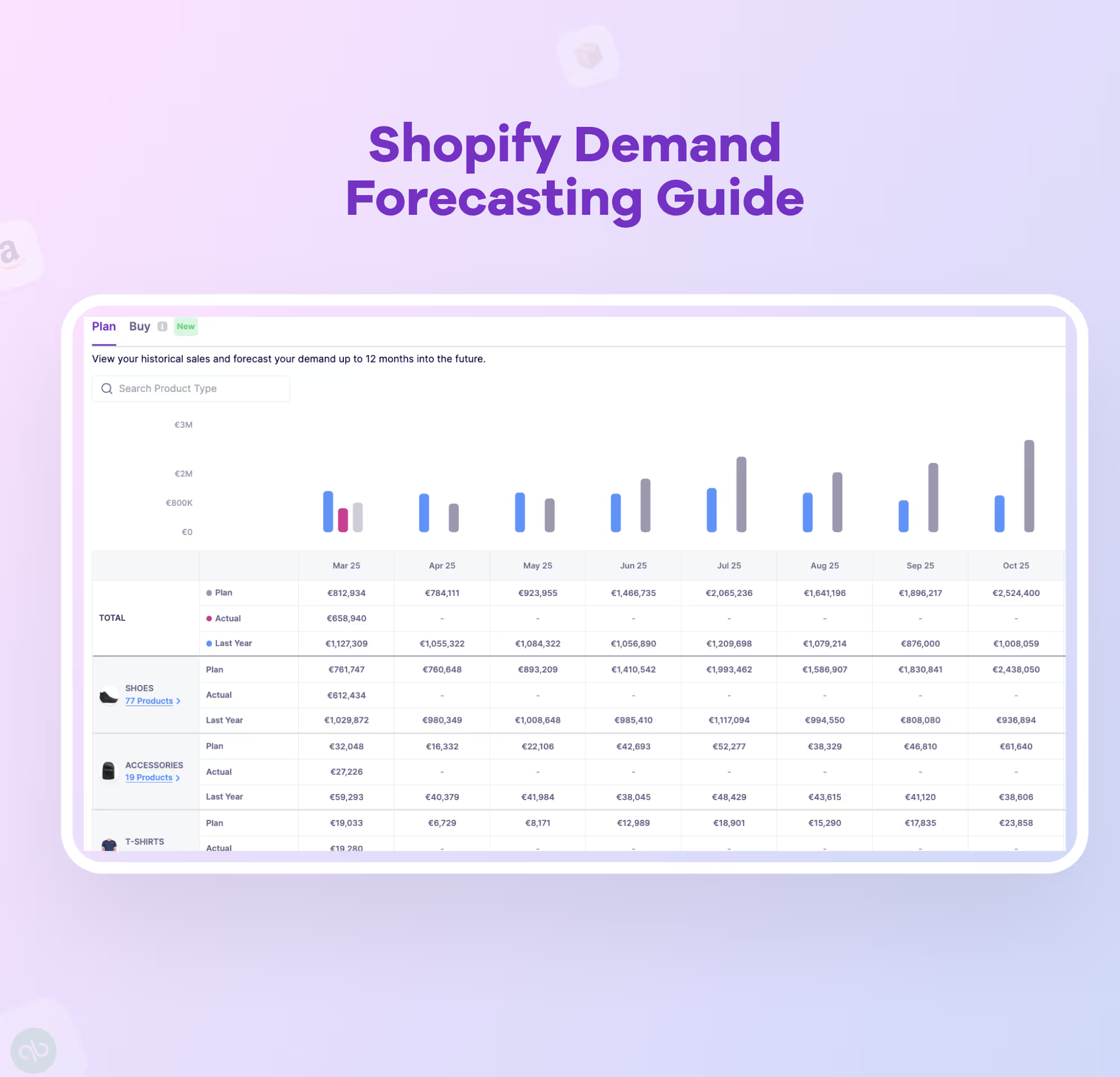
- AI-Demand Planning: Prediko deeply integrates with your eCommerce store to pull in all your data. Simply set a sales or revenue target, and the tool will automatically generate monthly forecasts based on seasonality, growth trends, and historical data.
- Make edits to your demand plan based on your revenue target for the year or any planned campaigns.
- Production Planning: Brands can easily link the demand plan of the finished goods SKUs to the raw materials and get an overview of the material that needs to be reordered on time.
Pricing
Plans start at $49 per month (billed annually)
Pros
- Forecasts and demand plans using your sales data, seasonality, and growth trends.
- Creates and tracks purchase orders. Inventory syncs back to Shopify.
- Links finished-goods demand to raw materials via BOM-focused production planning.
Cons
- Demand plans are monthly-only. Weekly views are not available.
- Dedicated onboarding or support is limited to higher-priced plans.
Best for
D2C and ecommerce brands needing forecasting and PO execution.
Reviews
G2 User Ratings: 4.9/5. Shopify App Store: 4.9/5
2. Inventory Planner by Sage
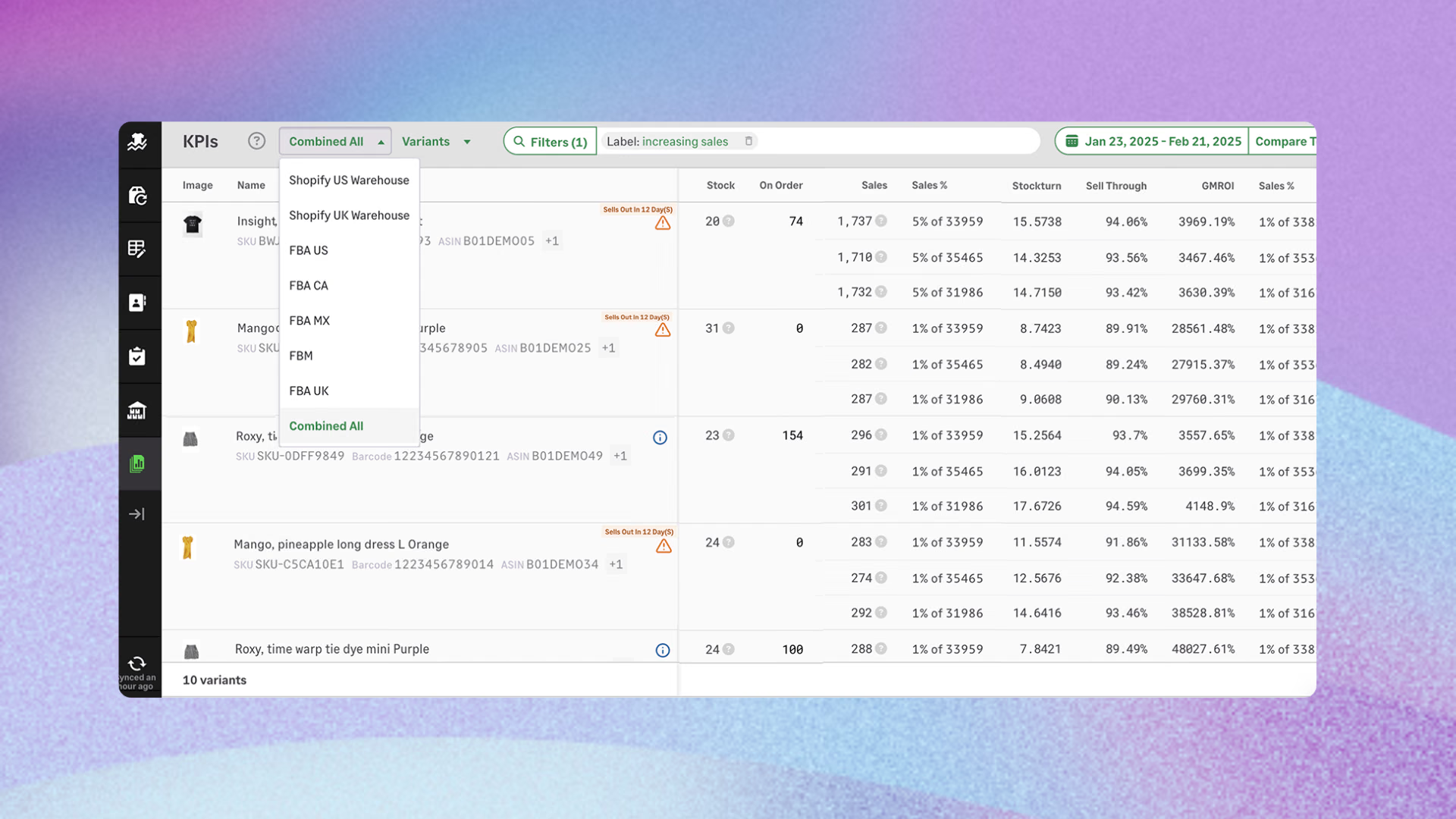
Inventory Planner is a renowned name in ecommerce demand forecasting. It's strong on replenishment planning and gives you detailed control over forecasting parameters.
Key features
- Demand forecasting with detailed parameter control
- Replenishment planning across Shopify, Amazon, and wholesale channels
- Multi-currency and multi-location support
- Integrations with 30+ platforms, including NetSuite and WooCommerce
- Purchase order creation and supplier management
Pros
- Forecasting logic is reliable and the interface makes it easy to turn data into POs
- Highly responsive support team
Cons
- Customers report that pricing can feel steep for smaller businesses
- Occasional delays in syncing data from ecommerce platforms, requiring careful monitoring
Pricing
Available on request
Best for
Established, multi-channel operations that need deep replenishment control and can absorb a longer setup.
Reviews
Shopify App Store: 4.3/5 based on 154 reviews.
3. Cogsy
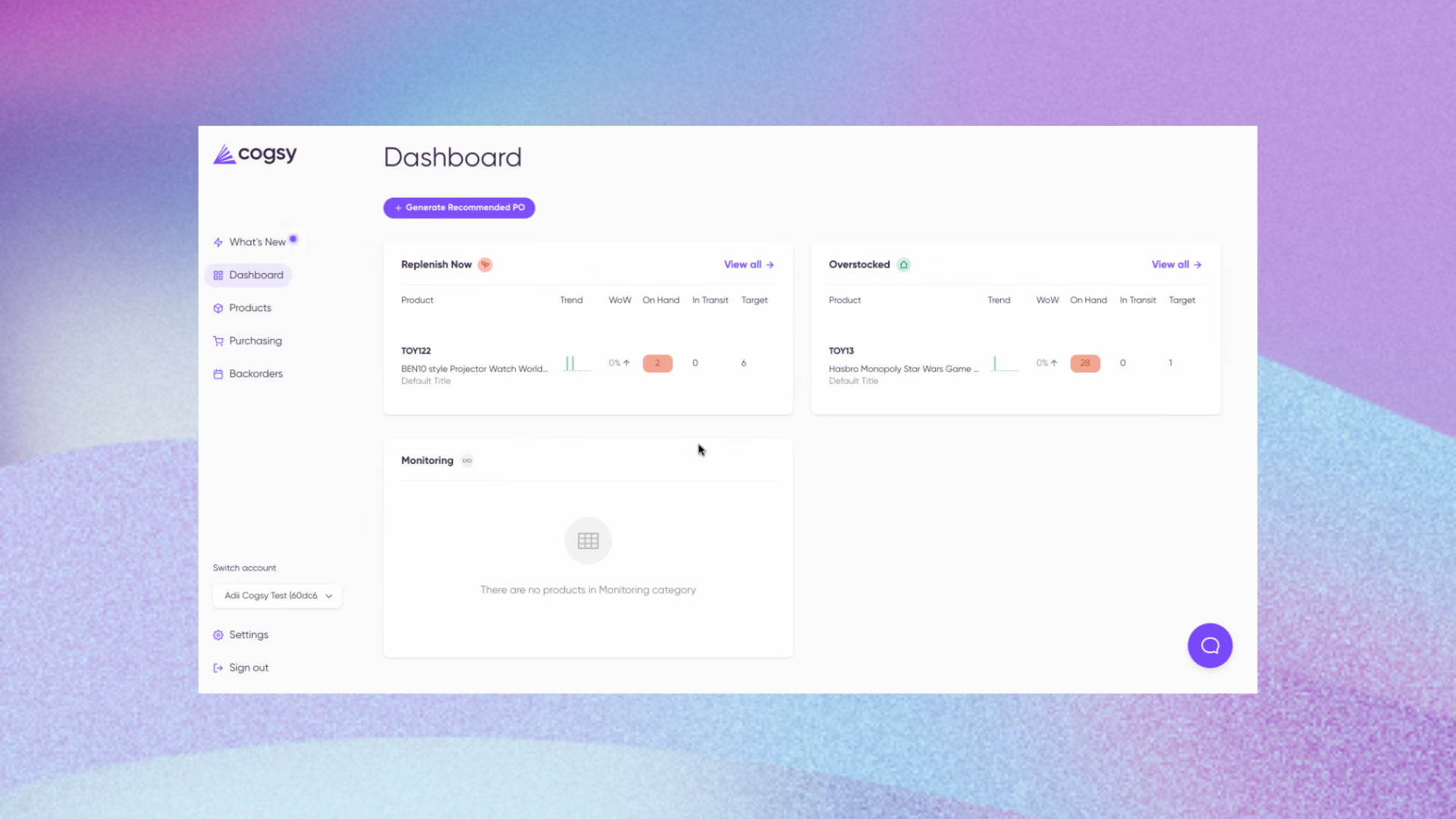
Cogsy takes a different approach to forecasting. Instead of just projecting from historical data, it lets you model scenarios: What does your inventory position look like if growth accelerates, if a product goes viral, or if a supplier delays? That makes it genuinely useful for brands that need to plan months ahead, not just weeks.
Key features
- Scenario-based demand planning with what-if modelling
- Revenue-driven inventory coverage forecasting
- Automated replenishment recommendations
- Vendor order automation
- Clean Shopify-native interface
Pros
- Forward-looking scenario planning
Cons
- Limited review volume on Shopify App Store
- Focused on planning and coverage rather than full PO management and accounting integration
Pricing
Starts around $199/month
Best for
Brands that want to model scenarios (growth spikes, supplier delays) rather than just extrapolate from history.
Reviews
Shopify App Store: 4.9/5 based on 12 reviews.
4. Flieber Inventory Planning
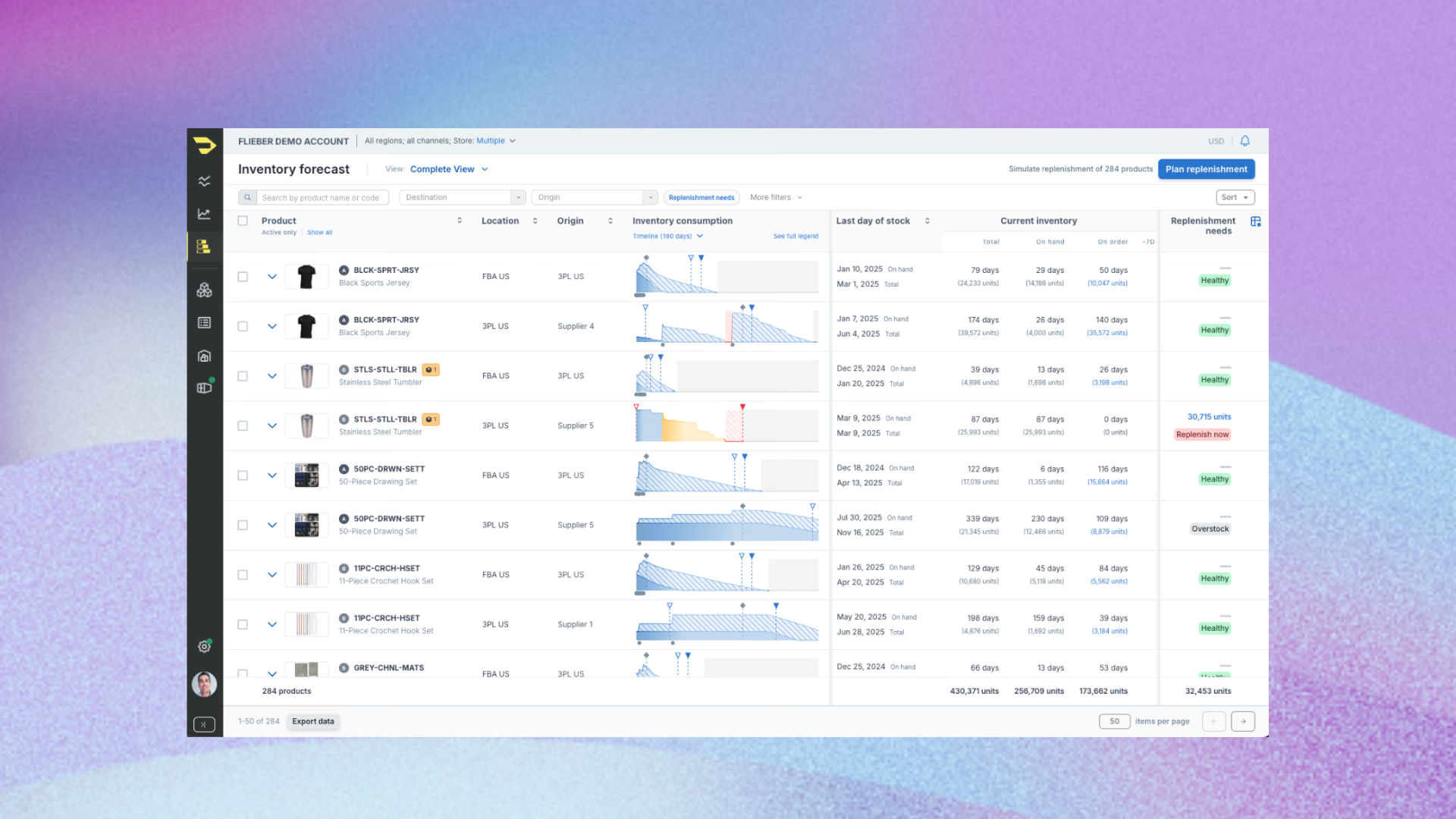
Flieber is a multichannel inventory planning software designed to help brands easily make demand plans.
Key Features
- Omnichannel (marketplaces, DTC, and wholesale) demand planning
- Multichannel inventory planning, anomaly-adjusted & consolidated by warehouse
- Reorder recommendations (for bundles, backorders, as well)
Pricing
Plans start at $209 per month.
Pros
- Unifies data from multiple sources into a single actionable view.
- Accurately predicts demand across various sales channels with omnichannel forecasting.
Cons
- G2 reviewers report steep learning curve for complex forecasting workflows.
- Users want more APIs and connections to additional channels
Best For
Omnichannel brands needing forecasts and reorder recommendations
Reviews
G2 Rating: 4.7/5 based on 30 reviews.
5. Assisty
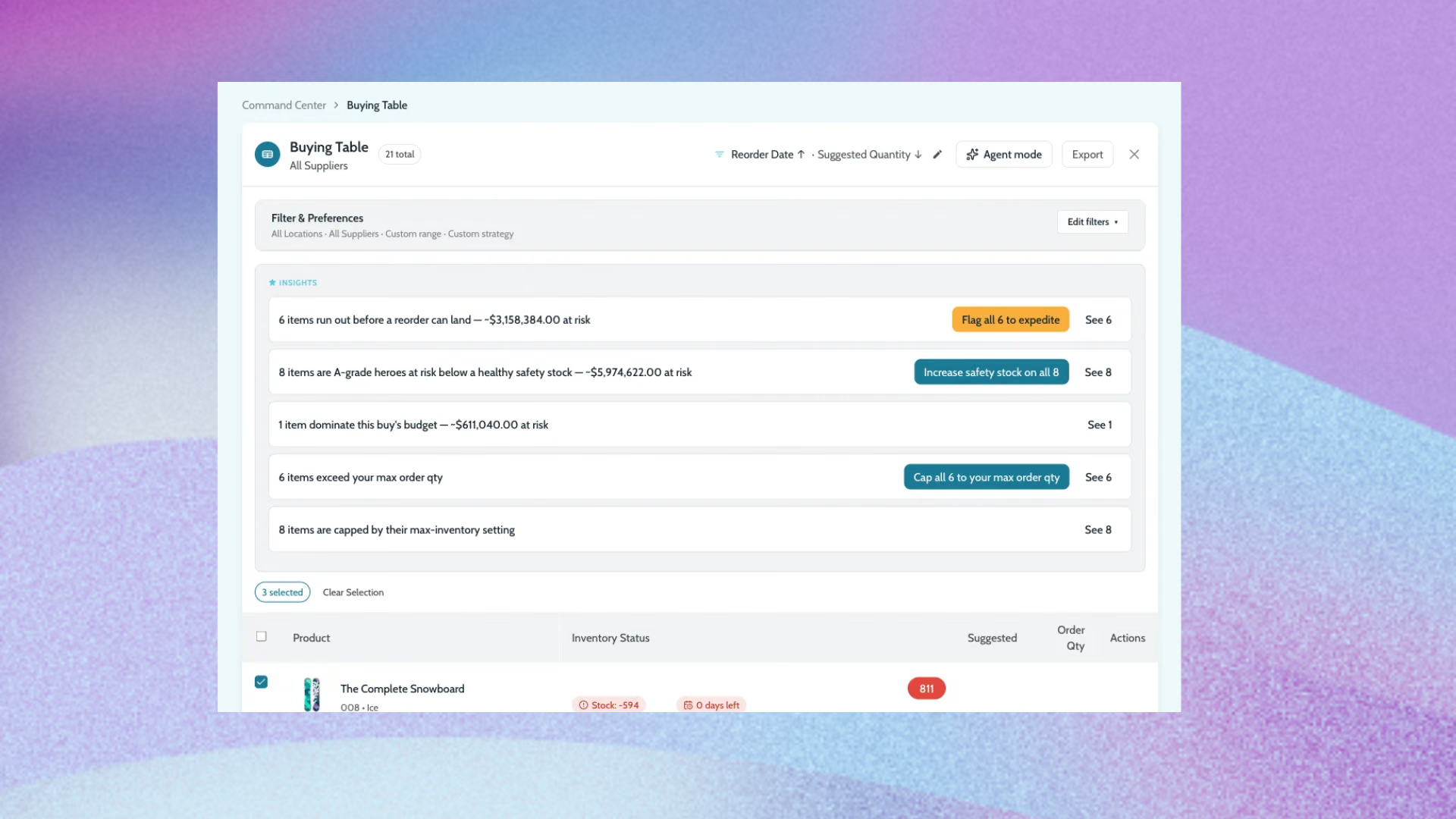
Assisty is a demand planning and inventory management software designed for multi-store, multi-location businesses.
Key Features
- AI restock predictions (including bundles) based on historical data and demand
- Data integration with multiple Shopify apps for integrated demand planning
Pricing
Depends on the Shopify Plan you’re on, with the Basic Shopify plan starting at $19 per month.
Pros
- Predictive sales insights provide accurate demand forecasting and replenishment decisions.
- Automates replenishment and schedules customised reports delivered via email.
Cons
- Merchants report many features and reports can feel overwhelming initially.
Best For
Multi-store brands wanting demand planning with bundles and reports.
Reviews
Shopify App Rating: 4.9/5 based on 320 reviews
6. Fabrikatör
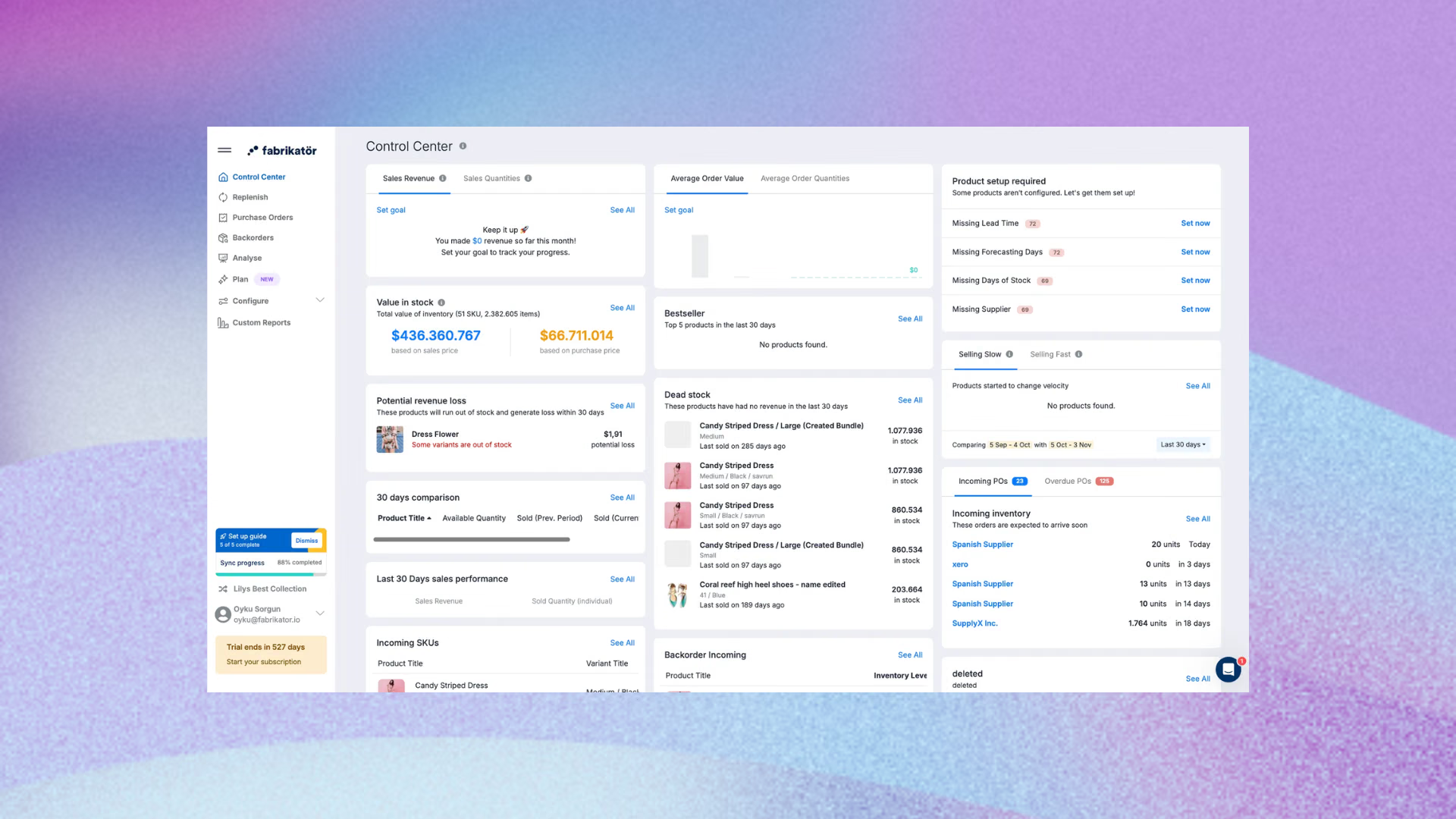
Fabrikatör is a Shopify-native demand planning software that covers the basics well.
Key features
- Demand forecasting based on sales history
- Replenishment recommendations with reorder point alerts
- Purchase order creation and tracking
- Shopify-native integration with real-time sync
Pros
- Intuitive interface with strong onboarding support
- Solid preorder and backorder management
Cons
- Forecasting depth is less sophisticated for brands with complex demand patterns
Pricing
From $99/month
Best for
Shopify brands wanting a faster, more affordable setup than Prediko or Inventory Planner, without needing the deepest AI forecasting.
Reviews
Shopify App Store: 4.8/5 based on 105 reviews.
7. Monocle AI Inventory Forecasts
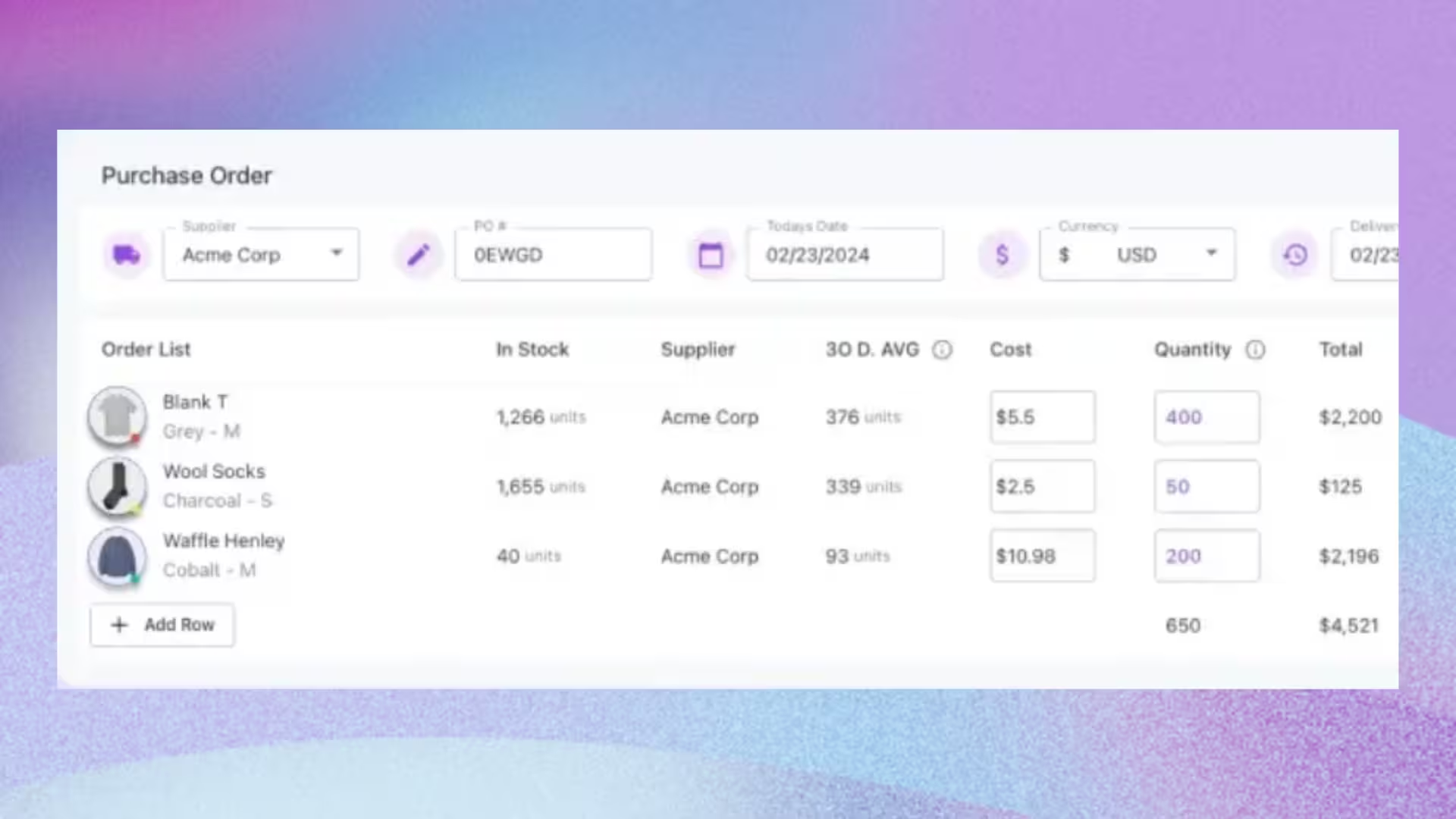
Monocle is a demand planning software that calculates reorder points and predicts stock-out dates.
Key Features
- Plan future demand across the entire product catalog
- Automated sales pattern detection
- Recommendations for reorder quantities and times
Pricing
Plans start at $47 per month for up to 600 orders.
Pros
- Provides data-driven demand plans and inventory forecasts for smarter stocking.
- Includes market basket analysis and ABC-XYZ analysis for insights.
- Supports easy purchase order creation and tracking within Shopify.
Cons
- Starter plan limited to stores under 600 average monthly orders.
- Only English listed, and works mainly with bundling apps.
Best For
Lean teams wanting demand plans and quick PO
Reviews
Shopify App Store Rating: 4.3/5 based on 27 reviews
8. Sensible Inventory Forecasting
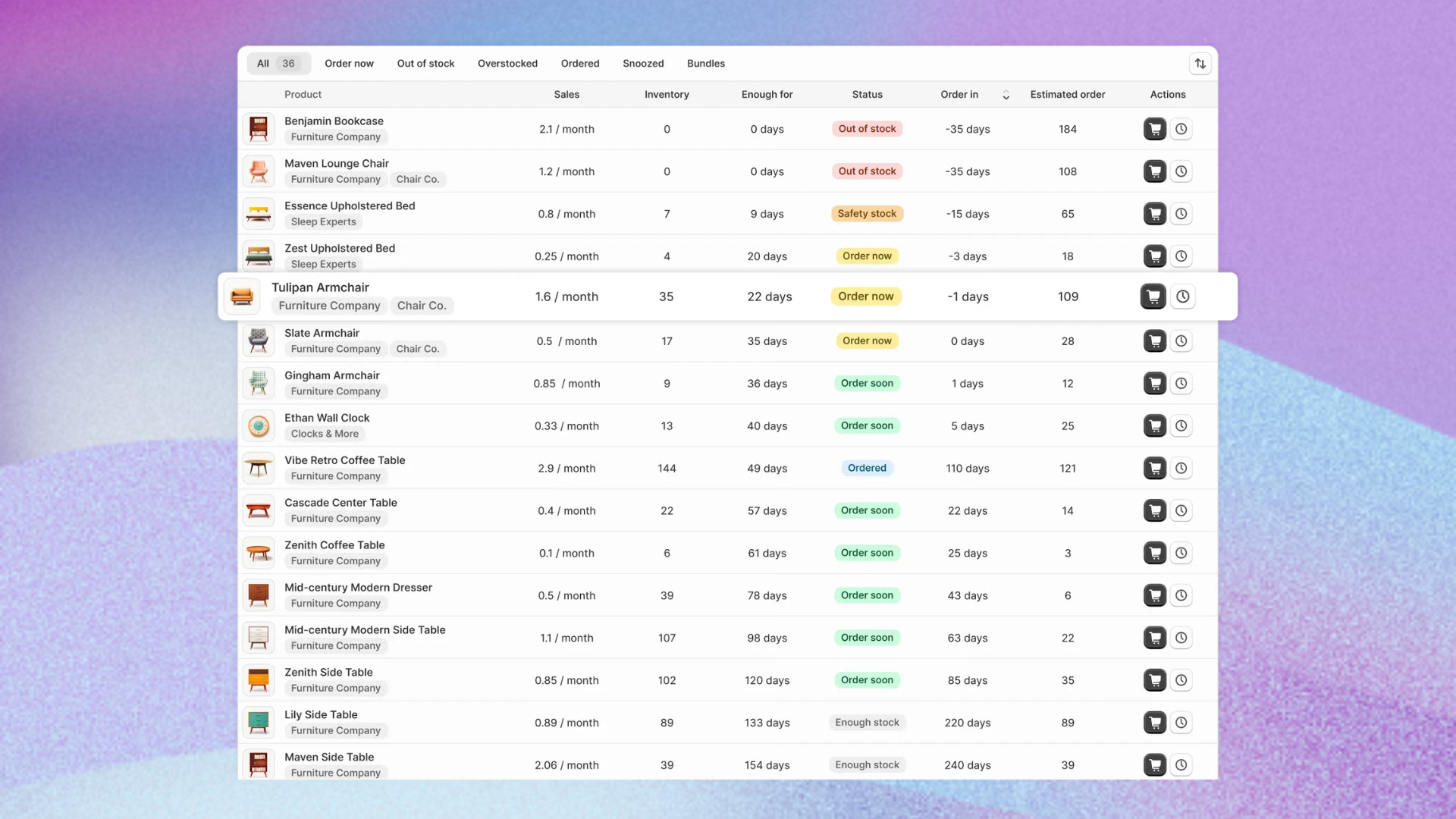
Sensible is a demand planning software that helps plan demand and stay on track with your inventory plan.
Key Features
- Inventory status to know when products need to be reordered
- Reordering quantity suggestions based on previous sales history and demand plan
- Ability to add multiple suppliers for a single product
Pricing
Plans start at $29 per month
Pros
- Rule-based settings establish reorder points using lead time and days of stock.
- Suggests reorder quantities based on previous sales history and demand plans.
Cons:
- Works with Shopify Admin, Bundles.app, and STOQ
- Only English language is listed on the Shopify App Store.
Best for
Small teams needing rule-based reordering
Reviews
Shopify App Store Rating: 5.0 based on 10 reviews
9. Cin7
Cin7 is a software with demand planning, purchase order management, warehouse management, and multi-location tracking all built in.

Key features
- Built-in demand planning
- Multi-location stock tracking and transfers
- Integrations with Shopify, Amazon, Xero, and major ERPs
Pros
- Comprehensive feature depth covering inventory, warehouse, and order management
Cons
- Customer support responsiveness is the most consistently cited complaint
- Implementation is complex and time-consuming; expect 2 to 8 weeks minimum
Pricing
From around $349/month. Implementation costs apply.
Best for
Operations that have outgrown a pure planning layer and need warehouse, 3PL, and multi-location stock management in the same system.
Reviews
G2 Rating: 4.1/5 based on 458 reviews.
10. Logility Demand Planning for Supply Chains
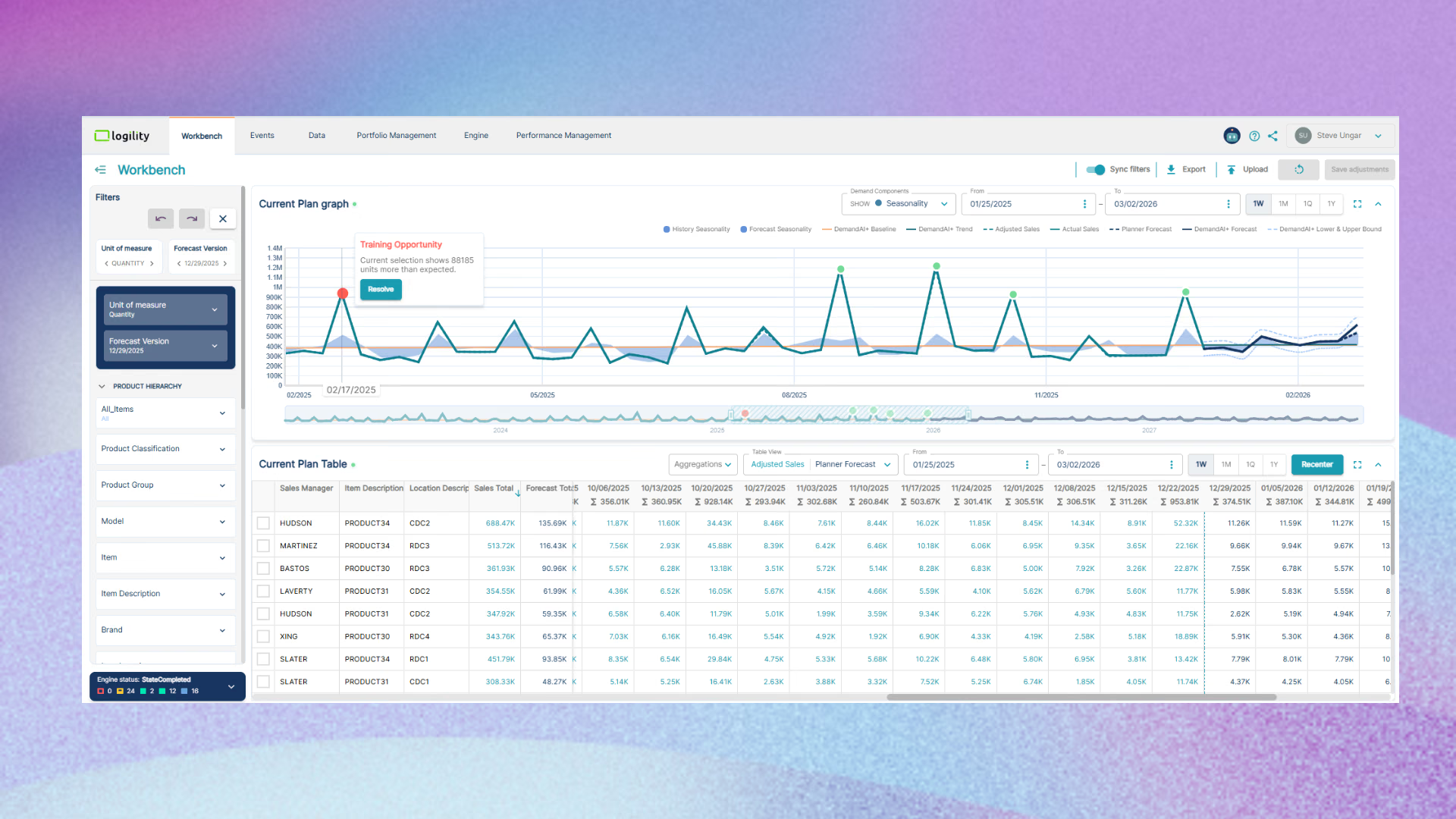
Logility is enterprise supply chain planning software that connects demand planning with inventory optimization and S&OP across multiple divisions, locations and supply chain tiers.
Key Features
- Scenario demand planning to test different plans
- Automatic detection of anomalies in historical demand
- Real-time visibility and insights into shorter-term demand
- S&OP that aligns plans across divisions and locations with budgets and financial goals
Pricing
Available on request
Pros
- Scenario demand planning and anomaly detection improve short-term demand visibility.
- Built for complex industries such as life sciences and wholesale distribution
Cons
- Capterra reviewers report complex setup requiring significant time and training.
- Users report upgrades can break dashboards, requiring repeated fixes.
Best For
Enterprises that need multi-tier demand and scenario planning connected to inventory and S&OP.
Reviews
Capterra rating: 4.5/5 based on 63 review
Real Cost of Getting A Wrong Demand Planning Software
The financial impact of choosing the wrong demand planning tool is direct and measurable. A stockout on your best-selling SKU during peak season doesn't just lose that sale. It loses the customer to a competitor and can tank your ranking on Shopify search and Amazon.
An overstock position ties up cash in slow-moving inventory, eats into your margin, and often ends in a discount that hurts your brand positioning.
Read More: 8 Best Amazon Inventory Forecasting Tools you should try
Frequently Asked Questions On Selecting a Demand Planning Software
What is the difference between demand planning and demand forecasting?
Demand forecasting predicts future sales demand. Demand planning extends forecasting by helping organizations make inventory, purchasing, and production decisions based on those forecasts.
Which demand planning software is best for Shopify stores?
Prediko, Assisty, Monocle, Flieber, Cogsy, Cin7, and Inventory Planner by Sage are among the most commonly used demand planning solutions for Shopify merchants, ranging from pure forecasting tools to full order-management platforms.
Which demand planning software is best for enterprise supply chains?
Best demand planning software solutions such as Logility, Oracle Fusion, SAP Business One, OMP Unison.
Can AI improve demand forecasting accuracy?
Yes. Modern AI forecasting models can identify seasonality patterns, demand shifts, and historical trends more effectively than manual spreadsheet-based forecasting.
Is there free demand planning software?
Excel and Google Sheets can work as free, manual demand planning tools, but they lack the automation, integrations, forecasting accuracy, and replenishment capabilities of dedicated software.
What's the difference between a demand planning solution, platform, and system?
The terms overlap, but each means something slightly different:
- Demand planning solution = broad term for a tool that solves demand-planning needs.
- Demand planning platform = usually a broader environment combining forecasting, analytics, collaboration and integrations.
- Demand planning system = the software/process infrastructure used to manage demand planning.
How much does demand planning software cost?
Pricing varies significantly:
- Small-business tools: $19–$99/month
- Mid-market platforms: $100–$500/month
- Enterprise platforms: Custom pricing
What features should demand planning software include?
The most important features include:
- Forecasting
- Inventory planning
- Replenishment recommendations
- Multi-location support
- Analytics
- Scenario planning
- ERP and ecommerce integrations
Can demand planning software reduce stockouts?
Yes. Demand planning software helps businesses anticipate future inventory requirements and generate replenishment recommendations before stockouts occur.
Which demand planning tools connect forecasting, inventory, and purchasing into one workflow?
Software such like our app, Prediko, can link the three directly: a forecast generates a reorder recommendation, which turns into a purchase order without switching systems. Standalone forecasting tools that don’t connect to purchasing leave that last step manual.
What demand planning software works well for teams without a dedicated data science team?
Tools built for D2C and mid-market brands, such as Prediko, Monocle, and Assisty, are designed to run without a data analyst. Forecasts are generated automatically from your sales data, and recommendations are presented as plain reorder suggestions rather than raw statistical output.
Which demand planning tools handle thousands of SKUs across multiple locations?
Prediko, Cin7, and enterprise platforms like Logility all forecast at the SKU and location level across large catalogs. The difference is setup time: Prediko is built to handle SKU complexity without the multi-month implementation enterprise platforms require.
Is there demand planning software with a fast time-to-value?
Yes. D2C-native tools like Prediko, Monocle, and Assisty typically deploy in hours since they connect directly to your store. Enterprise platforms (SAP, Oracle, Logility) usually take months because they require IT-led implementation.
Which demand planning platforms have a track record of reducing stockouts and excess inventory?
Look for a vendor with a published case study, not just a claimed accuracy number. For example, Prediko’s customer We Are Jolies cut stockouts by 60% after switching from manual tracking.
Do any demand planning vendors offer interactive dashboards for forecast scenarios?
Yes. Logility and Unison-style platforms are built around scenario dashboards for enterprise planning teams. Prediko offers a lighter-weight version through its Buying Table and plan-vs-actuals reporting, aimed at teams that need to see and adjust forecasts, not build complex simulations.
Can demand planning software integrate with legacy systems?
Enterprise platforms like SAP Business One and Oracle Fusion are built specifically to sit on top of legacy ERP systems. D2C-native software such as Prediko can connect directly to your storefront and modern WMS/3PL systems instead, which is faster to set up but assumes you’re not running an older on-premise ERP.
Which demand planning tools work with both Shopify and Amazon?
Prediko, Cin7 & Inventory Planner all three integrate directly with Shopify and Amazon, syncing sales and stock data from both channels into one forecast. See our guide on the best Amazon inventory forecasting tools.
Is there demand planning software available under $1,500 a month?
Yes, most of the tools on this list fall well under that budget. Prediko starts at $49/month and scales with your revenue tier, Flieber starts at $209/month, Cogsy starts around $199/month, and Fabrikator starts at $99/month. You only hit enterprise custom pricing (Logility, Oracle Fusion, SAP Business One) once you need multi-tier supply chain planning, not standard demand and supply planning.
What are the best tools to decide which products to reorder and which to discontinue?
Look for a tool with SKU-level classification, not just a demand forecast. Monocle includes market-basket and ABC-XYZ analysis to flag slow movers versus SKUs worth prioritizing, and Prediko evaluates each SKU's velocity, profitability, and margin contribution to recommend what to keep reordering versus discontinue. For a deeper breakdown of the method, see our guide on AI SKU optimization.
Does Shopify have built-in demand planning?
No. Shopify tracks inventory and reports on sales but doesn’t forecast demand, generate reorder recommendations, or create purchase orders. Those need a third-party inventory management app.
How do demand planning tools handle seasonality?
They analyze historical sales data to identify patterns and adjust forecasts accordingly. They will account for seasonal spikes, promotional lifts, and trend direction so recommendations reflect what you’re likely to sell next, not just a recent average.









.avif)