




The West Coast handles roughly 40% of US container imports through the Port of Los Angeles and Long Beach complex alone. A West Coast 3PL is not just a warehouse. It's the first point of contact for goods arriving from Asia, the fastest path to getting product onto US soil and into distribution, and the logical base for reaching 60 million consumers across California, Washington, and Oregon.
For D2C brands importing from China, Vietnam, or South Korea, the West Coast 3PL decision is often the most consequential logistics choice they make. Get it right and you cut two to five days off your inbound lead time. Get it wrong and every supply chain problem compounds from the moment containers clear customs.
Who Are the Top 3PL Companies on the West Coast?
Here are the top West Coast 3PL providers across California, Washington, and Oregon, ranked for D2C and eCommerce brands in 2026.
Which West Coast 3PL Providers Are Worth Considering?
1. ShipBob
ShipBob operates fulfilment centres across Los Angeles, San Francisco, and Seattle, giving West Coast D2C brands a multi-node network that reduces transit time to West Coast consumers while also enabling fast two-day delivery to the rest of the US. Their native Shopify integration and real-time inventory platform are purpose-built for online retail.
Key Services:
Best For: eCommerce brands seeking multi-node West Coast coverage with native Shopify integration and the ability to scale nationally from a single 3PL relationship.
Pricing: Custom, based on order volume and service scope.
Pro: Three West Coast cities in a single contract with native Shopify integration; the most complete out-of-the-box solution for DTC brands scaling in California and the Pacific Northwest.
Con: Pricing can be high for low-volume brands; minimum volume requirements may exclude early-stage businesses.
2. Weber Logistics
Weber Logistics has operated on the West Coast for over 60 years, with facilities in California, Oregon, and Washington purpose-built around the region's specific freight patterns. Their expertise in the LA/Long Beach port complex, Puget Sound shipping lanes, and California Air Resources Board (CARB) compliance makes them a specialist that national 3PLs can't replicate.
Key Services:
Best For: Brands that need genuine West Coast supply chain expertise, particularly those managing inbound container volume through LA/Long Beach or Seattle.
Pricing: Custom, based on service scope and volume.
Pro: Six decades of West Coast operations means Weber understands port congestion, CARB compliance, and regional freight patterns in ways that national 3PLs operating in California as one market among many simply don't.
Con: Less technology-forward than ShipBob or Extensiv; better suited to brands where operational expertise matters more than platform integrations.
3. West Coast Prep 3PL
West Coast Prep 3PL specialises in Amazon FBA and FBM prep services, providing the labelling, poly-bagging, carton configuration, and compliance documentation that Amazon requires before goods enter their fulfilment network. For brands selling on Amazon from West Coast inventory, this eliminates the most common FBA rejection reasons at the source.
Key Services:
Best For: Amazon sellers sourcing from Asian manufacturers through West Coast ports who need FBA-compliant prep before goods enter the Amazon network.
Pricing: Per-unit prep pricing; competitive for standard FBA SKU profiles.
Pro: Purpose-built for FBA compliance; reduces Amazon rejection rates by catching labelling and packaging issues before goods ship to Amazon warehouses.
Con: Primarily Amazon-focused; brands with significant non-Amazon DTC volume may need a separate fulfilment partner or a 3PL with broader capability.
4. GoBolt
GoBolt provides sustainable eCommerce fulfilment across West Coast markets with ISO 14001 environmental management certification backing genuine carbon-neutral operations. Their green carrier partnerships and eco-packaging options make them the most credentialled sustainability-focused 3PL on the West Coast.
Key Services:
Best For: D2C brands with genuine sustainability commitments that extend to their fulfilment operations, not just their products.
Pricing: Custom; reflects premium for verified sustainable operations.
Pro: ISO 14001 certification provides verified environmental credentials; not just marketing claims but audited standards.
Con: Sustainability-first model may restrict carrier flexibility in locations where green options have longer transit times than conventional carriers.
5. Westhub Logistics
Westhub Logistics operates in the San Francisco Bay Area, offering personalised 3PL services for SMBs that find enterprise 3PLs either too expensive or too inflexible. Their focus on the Bay Area market and dedicated account management makes them a practical choice for early-to-mid-stage DTC brands based in Northern California.
Key Services:
Best For: Small to mid-sized DTC brands in the Bay Area that want a local 3PL with genuine relationship-based service rather than enterprise call centre support.
Pricing: Custom, typically lower minimums than enterprise providers.
Pro: Bay Area-specific relationships and local carrier knowledge; accessible account management that larger providers don't offer at this volume tier.
Con: Limited scale beyond the Bay Area; not suitable for brands that need West Coast multi-node coverage or national distribution.
6. Extensiv
Extensiv provides technology-first 3PL management with WMS software that connects warehouses, marketplaces, and eCommerce platforms into a single operational view. Their platform powers many West Coast 3PLs, and their direct fulfilment offering serves brands that want advanced data connectivity alongside physical storage.
Key Services:
Best For: Brands that prioritise technology integration depth and data connectivity alongside fulfilment, particularly those running complex multi-channel operations.
Pricing: SaaS pricing for the platform; fulfilment pricing based on volume.
Pro: Technology-first approach means Extensiv's integrations are typically deeper and more reliable than traditional 3PLs that have retrofitted platform connectivity.
Con: Platform complexity can be excessive for early-stage brands with straightforward single-channel fulfilment needs.
7. Fulfill
Fulfill operates as a 3PL matching platform rather than a direct warehouse operator, connecting D2C brands with vetted West Coast 3PLs based on their specific requirements. For brands unsure which West Coast provider fits their needs, Fulfill's matching service replaces weeks of RFP processes with a structured evaluation.
Key Services:
Best For: Brands that are new to outsourced fulfilment or expanding to the West Coast and want an independent evaluation of provider options rather than direct outreach to multiple 3PLs.
Pricing: Matching service is typically free; fulfilment pricing is set by the matched provider.
Pro: Independent matching service removes the information asymmetry of evaluating 3PLs; you know what each provider actually delivers before committing.
Con: You're dependent on Fulfill's provider network; if the best provider for your needs isn't in their network, you may not see them as an option.
8. Hopkins Distribution
Hopkins Distribution provides warehousing and fulfilment services with online inventory management capability, targeting SMBs that need reliable West Coast distribution without the scale requirements of enterprise 3PLs. Their experienced workforce and real-time inventory system make them a solid mid-market option.
Key Services:
Best For: SMBs needing reliable West Coast warehousing and fulfilment with real-time inventory visibility and accessible account management.
Pricing: Custom, SMB-friendly pricing structure.
Pro: Experienced workforce and accessible management make Hopkins a reliable choice for brands that have had service consistency issues with larger, higher-volume providers.
Con: Scale constraints mean Hopkins is not suitable for high-volume brands or those needing multi-node West Coast coverage.
9. Red Stag Fulfillment
Red Stag Fulfillment focuses on eCommerce fulfilment for heavy, oversized, or high-value goods, backing their service with a compensation guarantee for any fulfilment errors. For West Coast D2C brands selling furniture, fitness equipment, or other large SKUs, Red Stag's specialised handling capability is a meaningful differentiator.
Key Services:
Best For: West Coast D2C brands selling heavy, oversized, or high-value goods that need specialist handling and a 3PL willing to back their accuracy with financial guarantees.
Pricing: Custom, based on SKU profile and volume.
Pro: Error compensation guarantee is a meaningful operational commitment that most 3PLs don't offer; reduces the financial risk of fulfilment errors on high-value orders.
Con: Higher costs for smaller shipment volumes; primarily optimised for brands with larger, heavier products rather than standard eCommerce SKUs.
10. Speed Commerce
Speed Commerce provides mid-market fulfilment and customer care services, offering an unusual combination of physical order processing and outsourced customer service in a single 3PL relationship. For DTC brands where customer support and fulfilment are closely linked, this reduces the number of vendor relationships to manage.
Key Services:
Best For: Mid-market DTC brands that want to consolidate fulfilment and customer service under one operational partner.
Pricing: Custom, based on volume and service scope.
Pro: Combining fulfilment and customer care in one provider eliminates the coordination overhead of managing separate operations and customer service vendors.
Con: Customer service capability may not match specialist customer support outsourcing providers; best evaluated against your specific support quality requirements.
How Do You Choose the Right 3PL on the West Coast?
Choosing a West Coast 3PL comes down to three decisions: which state or city fits your inbound and outbound logistics pattern, whether you need Amazon FBA capability alongside DTC fulfilment, and how much platform integration depth your operations actually require.
Step 1: Choose your geography based on import origin and customer concentration. California (LA or the Bay Area) is the default for brands importing from Asia via the Port of LA/Long Beach, the busiest port complex in the Western Hemisphere. Washington (Seattle) suits brands with Pacific Northwest customer concentration or Canadian cross-border volume, given proximity to the Port of Seattle and Vancouver. Oregon sits between the two and lacks major port access; it's primarily a distribution play for brands already in the Pacific Northwest.
Step 2: Decide whether Amazon is part your channel mix. West Coast Prep 3PL is purpose-built for brands that import through West Coast ports and sell on Amazon. If Amazon represents more than 30% of your revenue, FBA prep capability at your 3PL removes one of the most error-prone handoffs in the supply chain.
Step 3: Match your technology requirements before your volume requirements. Extensiv is for brands that need deep WMS integration and multi-channel data connectivity. ShipBob is for brands that want Shopify-native integration with minimal setup. Weber is for brands where operational expertise and port relationships matter more than platform features. Don't evaluate these providers purely on price without understanding what operational gap you're solving.
How Does Prediko Help Once You've Chosen a West Coast 3PL?
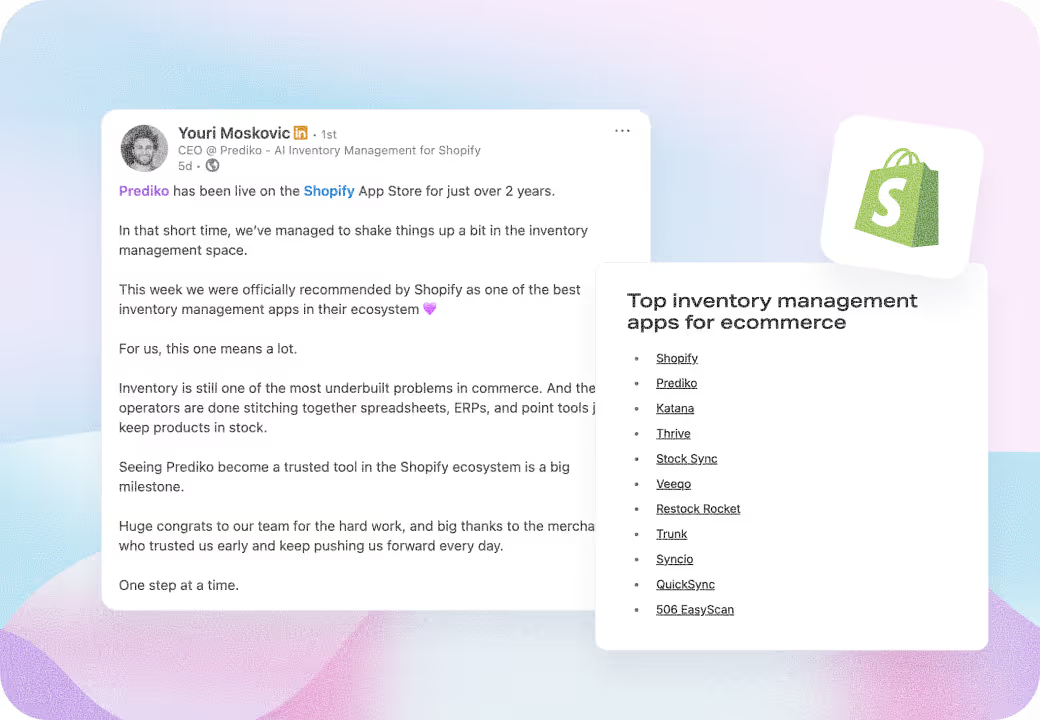
Your West Coast 3PL handles the physical receipt of goods and outbound fulfilment. Prediko handles what happens before the goods arrive and after they ship: demand forecasting, purchase order management, and real-time inventory health monitoring.
Prediko connects to your Shopify store and your West Coast 3PL's WMS to generate demand forecasts based on your actual sales history, automatically recommend purchase orders when reorder points are approaching, and flag stockout risks through Pia, Prediko's AI inventory agent. For brands managing long Asia-to-West-Coast lead times, Prediko's inbound PO tracking is particularly valuable: you know exactly what's on the water, when it's expected, and whether it'll arrive before you run out.
Book a demo to see how Prediko works alongside your West Coast 3PL: prediko.io/contact
What Are the Benefits of Using a 3PL on the West Coast?
The West Coast 3PL advantage is specific: it's about inbound import proximity and outbound access to the 60 million consumers living in California, Washington, and Oregon.
First point of contact for Asia imports. The Port of LA/Long Beach handles roughly 40% of US container imports. A West Coast 3PL positioned near that port cluster can deconsolidate, inspect, and begin fulfilling orders within 24 to 48 hours of container clearance. A Midwest or East Coast warehouse adds three to five transit days before product reaches US consumers.
Access to 60 million West Coast consumers. California alone is the world's fifth-largest economy. Brands selling to West Coast consumers at scale cannot afford the transit time penalty of fulfilling from a Midwest or East Coast warehouse. West Coast fulfilment cuts one to two days off every order going to a California, Oregon, or Washington address.
Pacific Rim trade route access. The West Coast ports connect to the Pacific Rim's manufacturing base in a way that no other US coastal geography can replicate. For brands with Asia-Pacific supply chains, West Coast 3PLs offer supplier relationships, drayage networks, and customs expertise built specifically for Pacific container freight.
Technology-forward 3PL market. California's tech ecosystem has produced a disproportionate share of the eCommerce-native 3PLs with advanced WMS, API-first integration, and real-time inventory management. Brands on Shopify, WooCommerce, or marketplaces will find the most technically capable providers concentrated on the West Coast.
Competitive carrier pricing from high-volume ports. High container volume through West Coast ports creates carrier density that keeps drayage and regional LTL rates competitive. Brands using West Coast 3PLs with strong carrier relationships typically secure better per-shipment rates than they could negotiate independently.
Frequently Asked Questions About West Coast 3PLs
Which West Coast state is best for a 3PL warehouse?
California is the default for brands importing from Asia, given Port of LA/Long Beach proximity and the largest consumer market in the US. Washington makes sense for brands with Pacific Northwest concentration or Canadian cross-border volume, given Port of Seattle access. Oregon suits regional distribution within the Pacific Northwest but lacks major port access for inbound international freight.
What is the difference between LA and San Francisco for 3PL warehousing?
Los Angeles is the import gateway: Port of LA/Long Beach is the largest port complex in the Western Hemisphere and the entry point for most Asia-Pacific goods. San Francisco/Bay Area suits brands serving Northern California consumers and tech-focused brands that prioritise 3PL technology integration. Los Angeles has lower warehouse costs than the Bay Area but serves a different geographic distribution pattern.
Do West Coast 3PLs handle Amazon FBA prep?
Yes. West Coast Prep 3PL is purpose-built for FBA compliance prep, and several others offer FBA prep as an add-on service. For brands importing through LA/Long Beach and selling on Amazon, FBA prep at the West Coast 3PL before goods ship to Amazon reduces rejection rates and turnaround time.
How do West Coast 3PL costs compare to East Coast?
California warehouse lease rates are among the highest in the US, particularly in LA and the Bay Area. West Coast all-in fulfilment costs per order are typically higher than Midwest or Southeast alternatives. However, for brands where Asia-import proximity or West Coast consumer concentration drives the location decision, the freight savings from reduced inbound transit time often offset the higher warehouse cost.
Can a West Coast 3PL handle cross-border shipping to Canada?
Yes, particularly Washington-based providers with proximity to the Canadian border at Blaine, WA. ShipBob operates in Canada and can fulfil cross-border orders from its US network. Confirm whether your provider has established relationships with Canada Post, Purolator, or UPS Canada for final-mile delivery.
How does lead time from Asian factories affect West Coast 3PL planning?
Asia-to-West-Coast ocean transit typically runs 12 to 18 days from Chinese ports to LA/Long Beach. Port clearance adds one to three business days on average, though this varies with port congestion. West Coast 3PLs near the port complex can begin receiving and processing containers within 24 hours of clearance. Total lead time from factory to available stock is typically 20 to 30 days for standard ocean shipments.
Operating in more than just the West Coast? Here are the best 3PL providers in other US markets:











.avif)