




In the ever changing world of Shopify eCommerce, understanding and implementing effective forecasting significantly increases the success of your business growth.
Forecasting is about creating a proper roadmap for inventory management, financial planning, and market positioning. Quickly learn about the basics of forecasting.
We have narrowed down the four essential types of forecasting every eCommerce business should be familiar with, how Prediko helps with each of these forecasting and the top tools & businesses to do these forecasting
1. Demand Forecasting
At the heart of inventory management lies eCommerce inventory forecasting.
The goal is to determine the future demand for a business's products or services, based on historical sales data, current market trends, and external factors like seasonality and economic conditions.
For most Shopify brands, this is the most practical inventory forecasting technique because it directly connects expected demand with purchasing, stock planning, and replenishment decisions.
An effective demand forecasting empowers brands to optimize their inventory levels, ensuring they can meet customer demand without the risk of overstocking or stockouts. Cloudsharks, a US brand in hypergrowth, implemented Prediko and saw a 35% decrease in stockouts thanks to the understanding Prediko’s AI had of historical seasonal performance
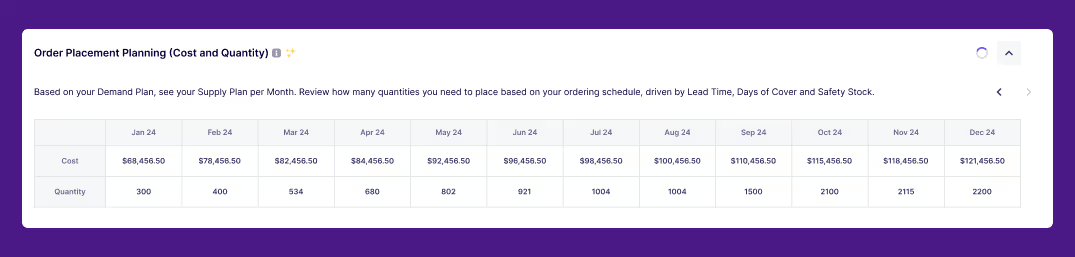
See how Prediko uses AI forecasting to help Shopify brands predict demand and make better inventory decisions.
2. Financial & Sales Forecasting
Financial forecasting is crucial for any eCommerce business in 2024, providing insights into future revenue, expenses, and capital requirements.
This type of forecasting helps businesses plan their budgets, identify potential financial challenges, and make informed decisions regarding investments and growth strategies.
At Prediko, here is how we help with financial forecasting. We give you a sales forecast for your next 12 months.
Your finance & accounting team can easily take an export of this forecast and then make data-informed decisions regarding budget allocation for marketing, growth channels and other forms of investments. We have compiled a list to find the best app for your finance & accounting team.
For large brands with finance teams like TM Lewin, the advanced financial planning features of Prediko enabled the finance and merchandising teams to collaborate much more effectively on one platform.
3. Supply Chain Forecasting
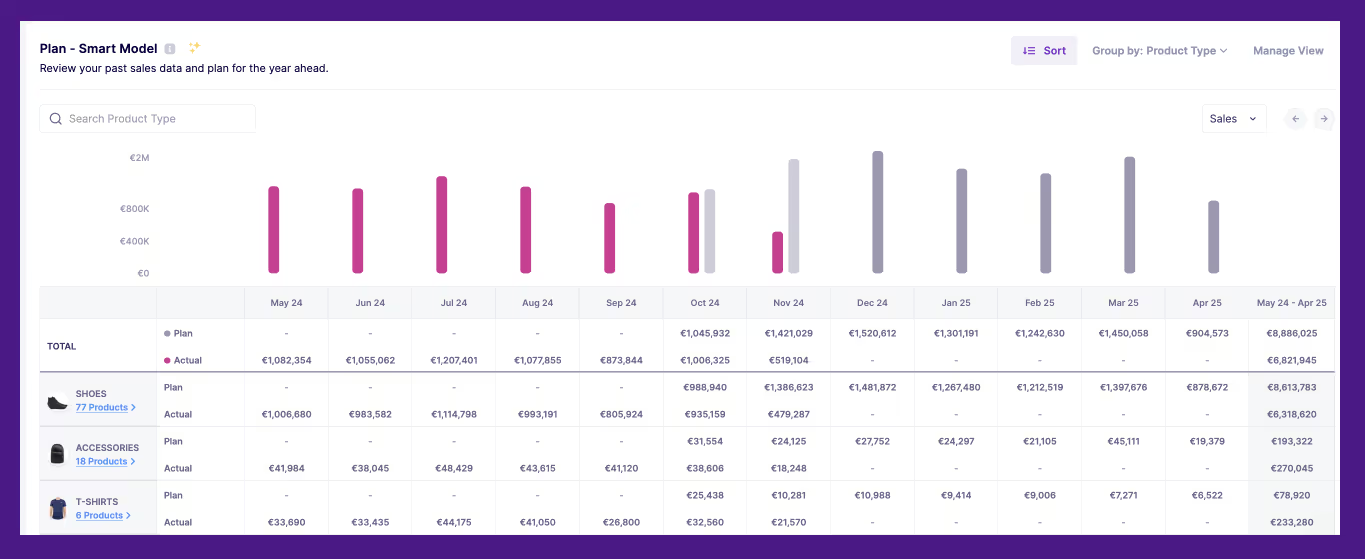
Supply chain forecasting focuses on predicting the future needs and efficiencies for a Shopify D2C business's supply chain. This process involves anticipating the demand for raw materials, managing supplier relationships, and optimising logistics and distribution. With a good forecast, you can also build supply chain resilience for the future.
Effective supply chain forecasting ensures that D2C eCommerce businesses maintain smooth operations, are able to reduce costs, and improve customer satisfaction by delivering orders promptly and accurately.
To do this effectively, many Shopify brands turn to the best supply chain management tools that offer real-time visibility, predictive planning, and integrated workflows.
4. Trend Forecasting
Trend forecasting goes beyond mere numbers; it's about predicting shifts in consumer behaviour, market trends, and technological advancements. A notable example of this is the growing importance of mobile apps in converting and retaining customers. For more insights, check out Appbrew.
This type of forecasting is invaluable for product development, marketing strategies, and overall business innovation. Cooee uses AI to give brands real-time insights into customer journeys, helping them adapt quickly to changing preferences. By analyzing real time intent data of each visitor on your Shopify store, it uncovers trends for better conversions.
eCommerce businesses must adapt their offerings and strategies to meet evolving customer needs.
Some of the tools that can help brands and businesses with Trend forecasting are Google Trends and Exploding Topics.
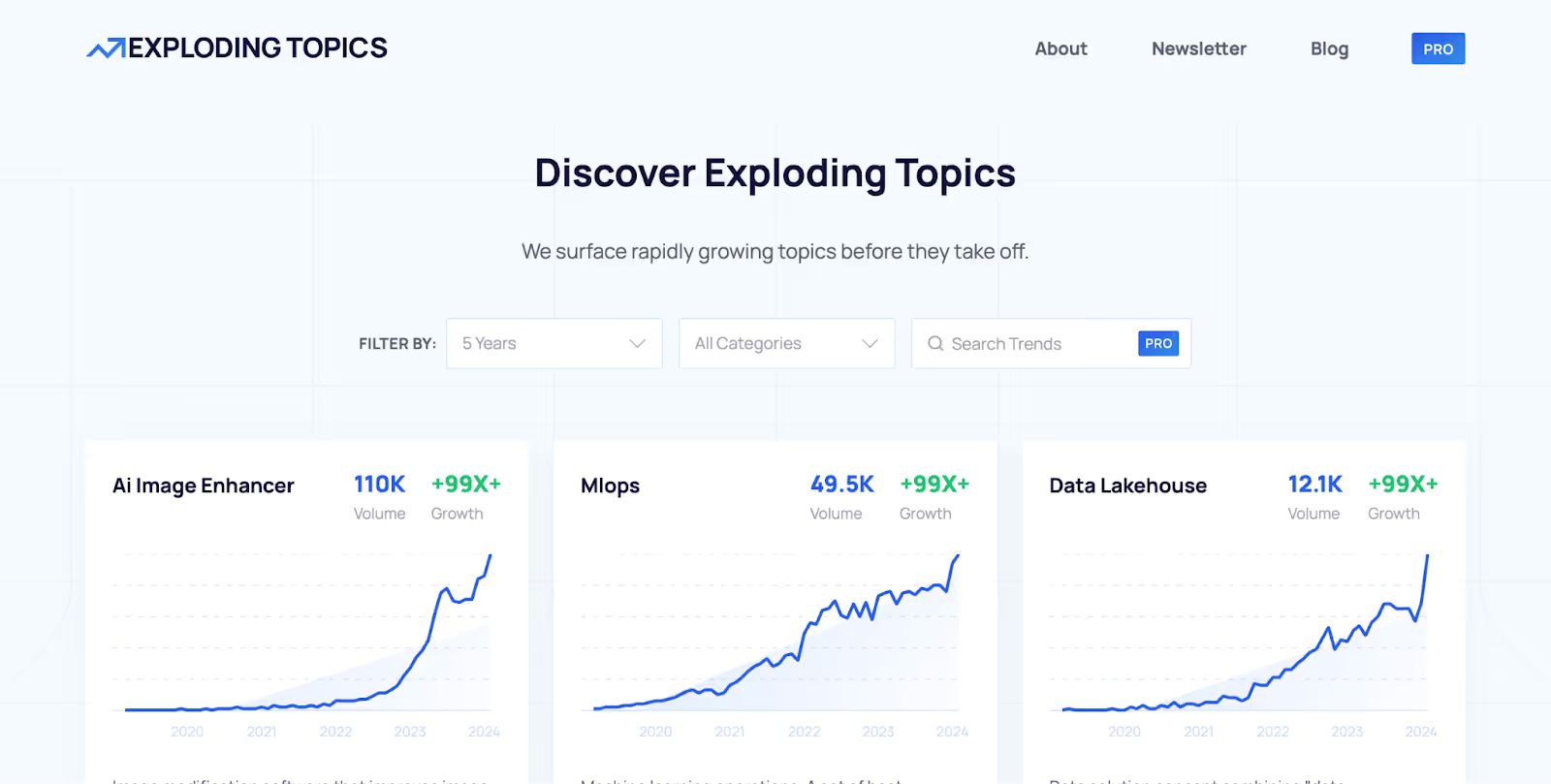
Tools to help you with different types of forecasting
Understanding and implementing these four types of forecasting can be overwhelming for a business. That’s why we have created a list of the top inventory forecasting apps and software for Shopify D2C eCommerce businesses.
From managing inventory with precision to making strategic financial decisions and staying ahead of market trends, forecasting is an indispensable part of planning for growth and sustainability.
We understand that learning about different types of forecasting can be overwhelming. So here is an Inventory Glossary for you to carry with you at all times.
As eCommerce continues to evolve, the ability to forecast accurately will remain a key differentiator for successful businesses. By incorporating these forecasting types into your strategic planning, you're not just predicting the future; you're actively shaping it.










.avif)